After revisiting $100,000, Bitcoin formed a bearish engulfing pattern, which may start a correction below $90,000.After revisiting $100,000, Bitcoin formed a bearish engulfing pattern, which may start a correction below $90,000.

Will the price of Bitcoin plummet again?

2025/01/09 11:32
3 min read

Will the price of Bitcoin plummet again?

Original text: Biraajmaan Tamuly , Cointelegraph

Compiled by: Yuliya, PANews

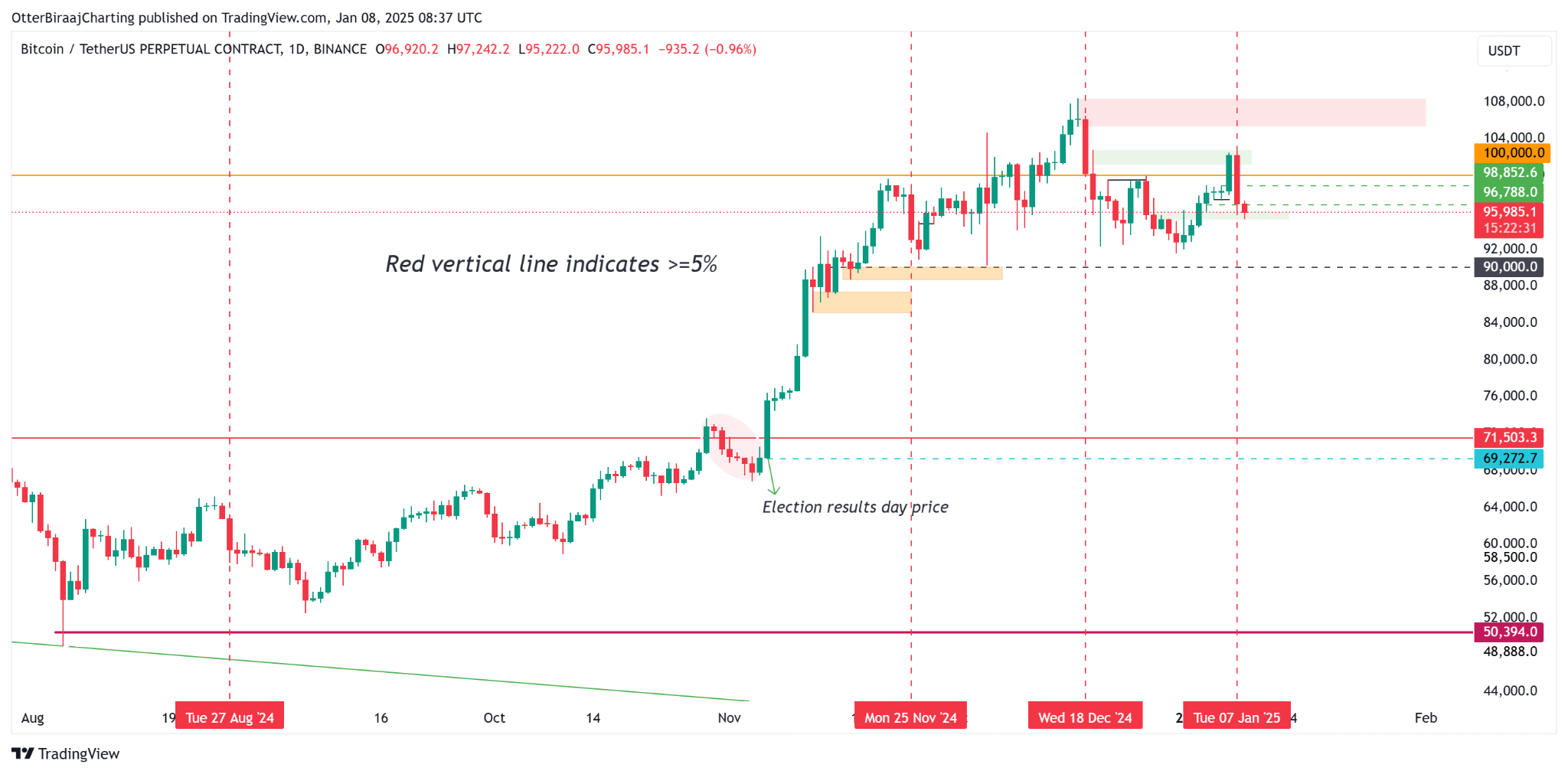
Bitcoin (BTC) price fell again on Jan. 8, forming a bearish engulfing candlestick pattern on the daily chart. This intraday drop was BTC’s second-largest drop in nearly 19 weeks.
Will the price of Bitcoin plummet again?

Amid uncertainty surrounding market dynamics, Bitcoin traders and commentators offered their insights on a possible correction below $90,000.

Stablecoin supply enters the "price discovery" stage

Data from the U.S. Bureau of Labor Statistics showed that job creation reached 8.1 million at the end of November, higher than the expected 7.74 million. This data showed that the U.S. economy is improving, causing the stock market and cryptocurrency market to weaken, and Bitcoin immediately crashed from $102,760 to $92,500.

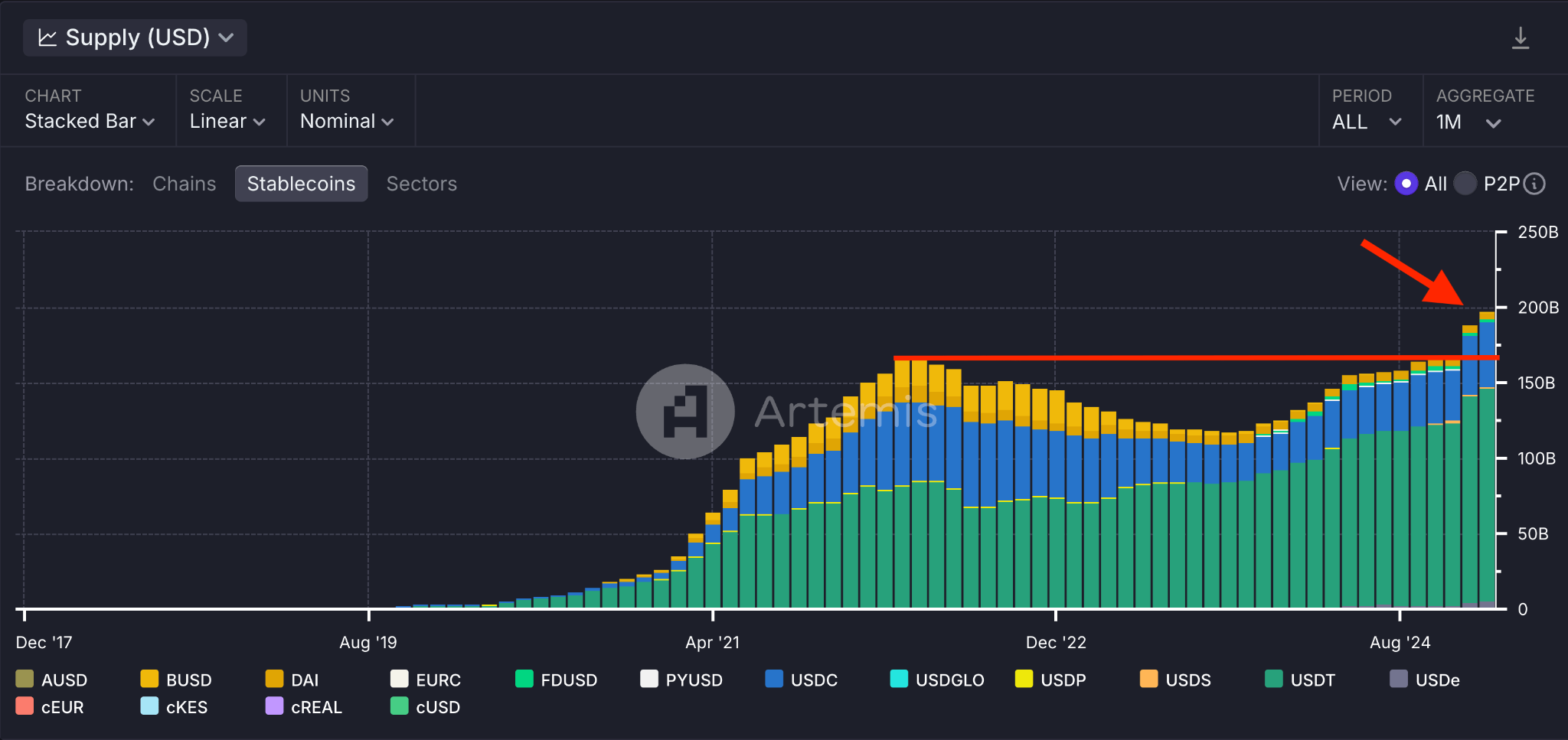
While this development has sparked broader bearish expectations, cryptocurrency analyst Miles Deutcher noted that stablecoin supply has entered the "price discovery" phase, meaning there is more liquidity available in the current crypto ecosystem. The increase in stablecoin supply suggests that more funds may flow in in the coming months.
Will the price of Bitcoin plummet again?

Market analyst Jamie Coutts holds a similar view, believing that more liquidity will flow in, which may lead to higher BTC prices in six months. Based on the strength of the US dollar, Coutts said that Bitcoin could have fallen to $80,000, but the potential strength of BTC market buying shows that market expectations are still high.

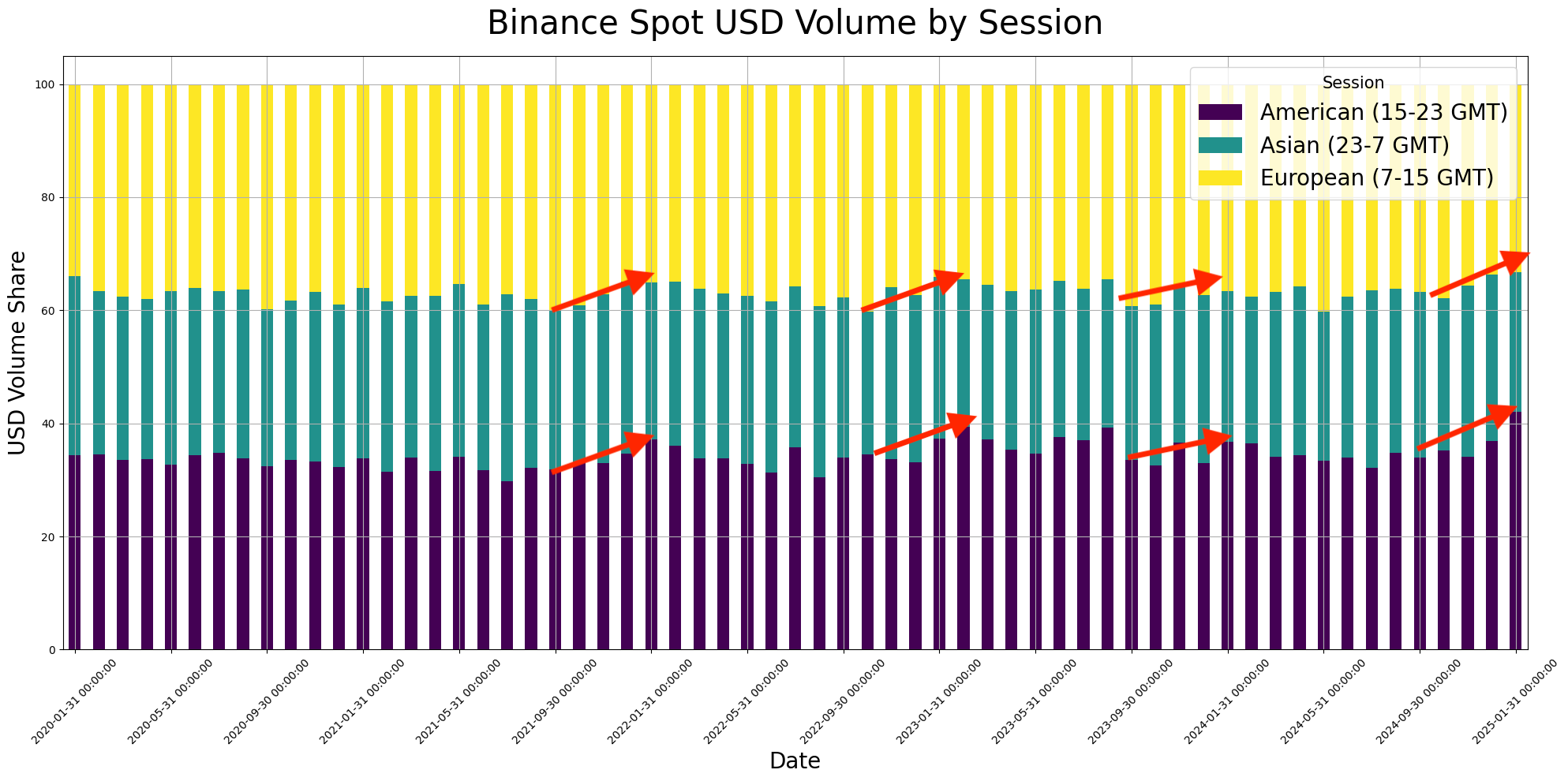
The current bull run has shown more liquidity compared to previous bull runs. Data analyst Roman Zinovyev recently highlighted that the USD volume of Binance spot markets has gradually increased since 2020. As shown in the chart, the Americas market share reached an all-time high of 42% during the 2024-2025 period.
Will the price of Bitcoin plummet again?

Does On-Chain Data Point to a Bitcoin Rally?

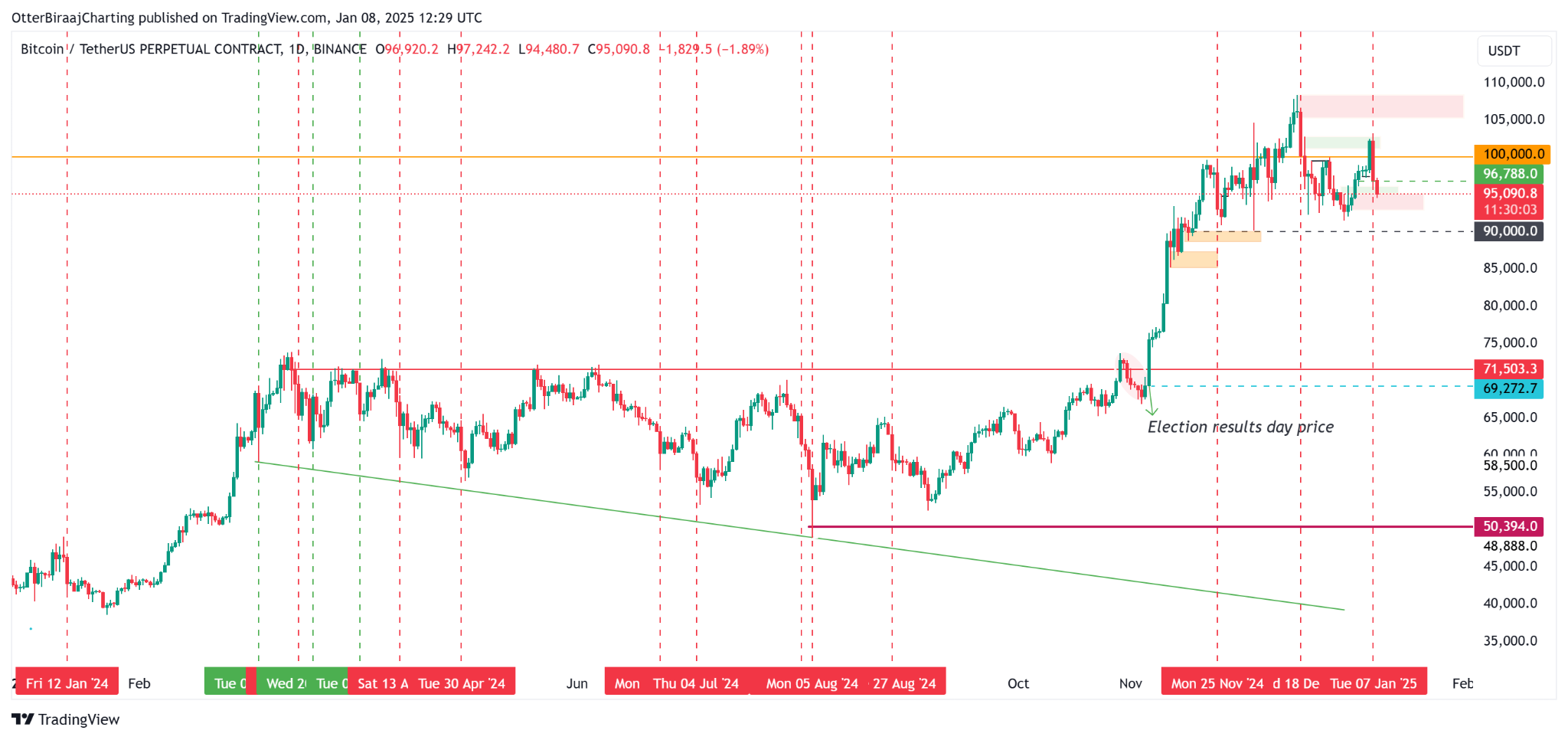
Strong on-chain developments do not negate the fact that Bitcoin’s 5.15% drop wiped out four days of gains. The probability of an immediate rebound after a drop of 5% or more is also not optimistic.
Will the price of Bitcoin plummet again?

As shown in the figure, Bitcoin has experienced 15 pullbacks of 5% or more since January 2024. Of these 15 times, BTC has rebounded immediately only 3 times, which is only a 20% probability. Therefore, from a probability perspective, it is unlikely that BTC will experience a strong rise immediately.

Cryptocurrency trader Krillin mentioned that Bitcoin could accumulate between $92,000 and $90,000 in January before seeing a market pullback in the coming month.

Cryptocurrency and stock investor Jelle expressed a similar view after market buying failed to keep BTC above $100,000. The investor expects lows near $90,000 to be hit and said: "Back to the original plan; wait for the lows to be hit before making new highs."

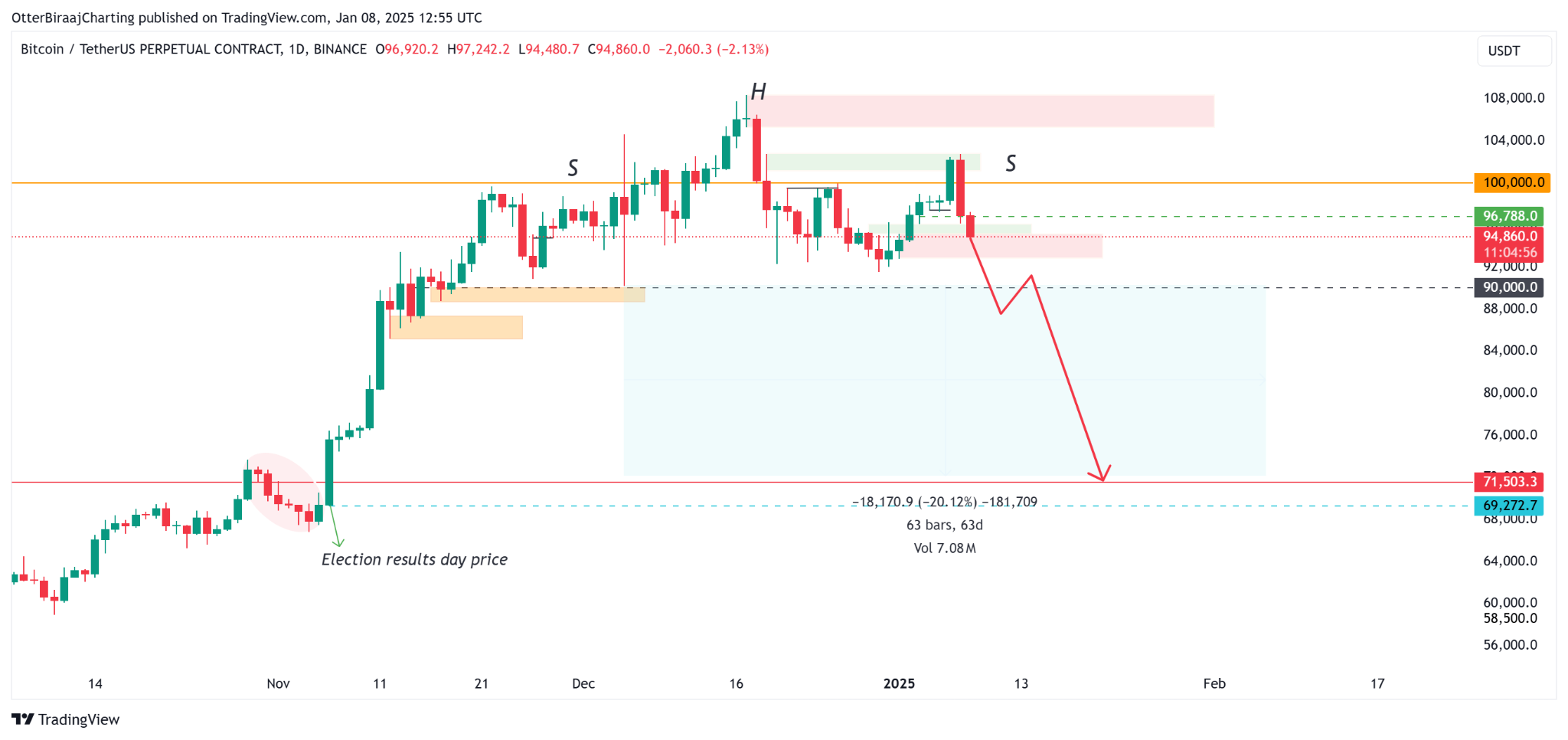
A deeper Bitcoin plunge could occur if there is a daily close below $90,000. Such a level would confirm an inverse head and shoulders pattern, which could have serious consequences. For example, BTC could fall further by 20% with a price target of $71,500.

Will the price of Bitcoin plummet again?

Disclaimer: The articles reposted on this site are sourced from public platforms and are provided for informational purposes only. They do not necessarily reflect the views of MEXC. All rights remain with the original authors. If you believe any content infringes on third-party rights, please contact [email protected] for removal. MEXC makes no guarantees regarding the accuracy, completeness, or timeliness of the content and is not responsible for any actions taken based on the information provided. The content does not constitute financial, legal, or other professional advice, nor should it be considered a recommendation or endorsement by MEXC.

You May Also Like

Cashing In On University Patents Means Giving Up On Our Innovation Future

Cashing In On University Patents Means Giving Up On Our Innovation Future

The post Cashing In On University Patents Means Giving Up On Our Innovation Future appeared on BitcoinEthereumNews.com. “It’s a raid on American innovation that would deliver pennies to the Treasury while kneecapping the very engine of our economic and medical progress,” writes Pipes. Getty Images Washington is addicted to taxing success. Now, Commerce Secretary Howard Lutnick is floating a plan to skim half the patent earnings from inventions developed at universities with federal funding. It’s being sold as a way to shore up programs like Social Security. In reality, it’s a raid on American innovation that would deliver pennies to the Treasury while kneecapping the very engine of our economic and medical progress. Yes, taxpayer dollars support early-stage research. But the real payoff comes later—in the jobs created, cures discovered, and industries launched when universities and private industry turn those discoveries into real products. By comparison, the sums at stake in patent licensing are trivial. Universities collectively earn only about $3.6 billion annually in patent income—less than the federal government spends on Social Security in a single day. Even confiscating half would barely register against a $6 trillion federal budget. And yet the damage from such a policy would be anything but trivial. The true return on taxpayer investment isn’t in licensing checks sent to Washington, but in the downstream economic activity that federally supported research unleashes. Thanks to the bipartisan Bayh-Dole Act of 1980, universities and private industry have powerful incentives to translate early-stage discoveries into real-world products. Before Bayh-Dole, the government hoarded patents from federally funded research, and fewer than 5% were ever licensed. Once universities could own and license their own inventions, innovation exploded. The result has been one of the best returns on investment in government history. Since 1996, university research has added nearly $2 trillion to U.S. industrial output, supported 6.5 million jobs, and launched more than 19,000 startups. Those companies pay…
Share
BitcoinEthereumNews2025/09/18 03:26
Trump foe devises plan to starve him of what he 'craves' most

Trump foe devises plan to starve him of what he 'craves' most

A longtime adversary of President Donald Trump has a plan for a key group to take away what Trump craves the most — attention. EX-CNN journalist Jim Acosta, who
Share
Rawstory2026/02/04 01:19
Why Bitcoin Is Struggling: 8 Factors Impacting Crypto Markets

Why Bitcoin Is Struggling: 8 Factors Impacting Crypto Markets

Failed blockchain adoption narratives and weak fee capture have undercut confidence in major crypto projects.
Share
CryptoPotato2026/02/04 01:05