Which business runs on itself? – Which business runs on itself?
This article explains what passive income means in practice, shows the operational building blocks you need, compares realistic models, and provides checklists you can use to test an idea without hype. Use this as an educational starting point and verify details that depend on your jurisdiction and situation.
What people mean by a business that runs on its own
Common definitions and myths
Many readers ask whether a business for passive income exists that requires no ongoing work. In practice the phrase usually refers to businesses that deliver recurring revenue, have automated delivery or billing, and run on documented processes with outsourced routine tasks, rather than being truly work free, as industry analysis on modern operating models explains McKinsey report.
That common shorthand fuels myths where set and forget gets treated as literal. Those myths can cause people to underestimate the governance needed to keep a business stable over time. Research on building businesses that run without an owner highlights that oversight, updates, and risk management are often required to sustain operations Harvard Business Review article.
Typical examples people name up front are subscription services and SaaS, digital courses and affiliate sites, rental properties with management, and niche ecommerce with outsourced fulfillment. These appear on many lists because they combine revenue mechanics and automation in different ways, and the subscription economy data shows subscription models lead in predictability Subscription Economy Index 2024.
Use this section to reset expectations. A realistic view is that most near passive models reduce daily owner work but still require periodic checks and occasional intervention.
Why fully set and forget is rare
The idea of a business that never needs attention ignores three everyday forces: platform and algorithm change, customer churn, and legal or tax shifts. Each can change income and operating cost without warning, so owners who step away entirely often face surprises. A review of operating model automation cautions that automation enables scale but demands governance to avoid outages and revenue loss McKinsey report.
So the practical takeaway is to treat passivity as reduced touch, not zero touch. Plan for periodic updates, a small monitoring routine, and retained accountability.

Core attributes that let a business operate with minimal day to day input
Recurring billing and automated delivery, business for passive income
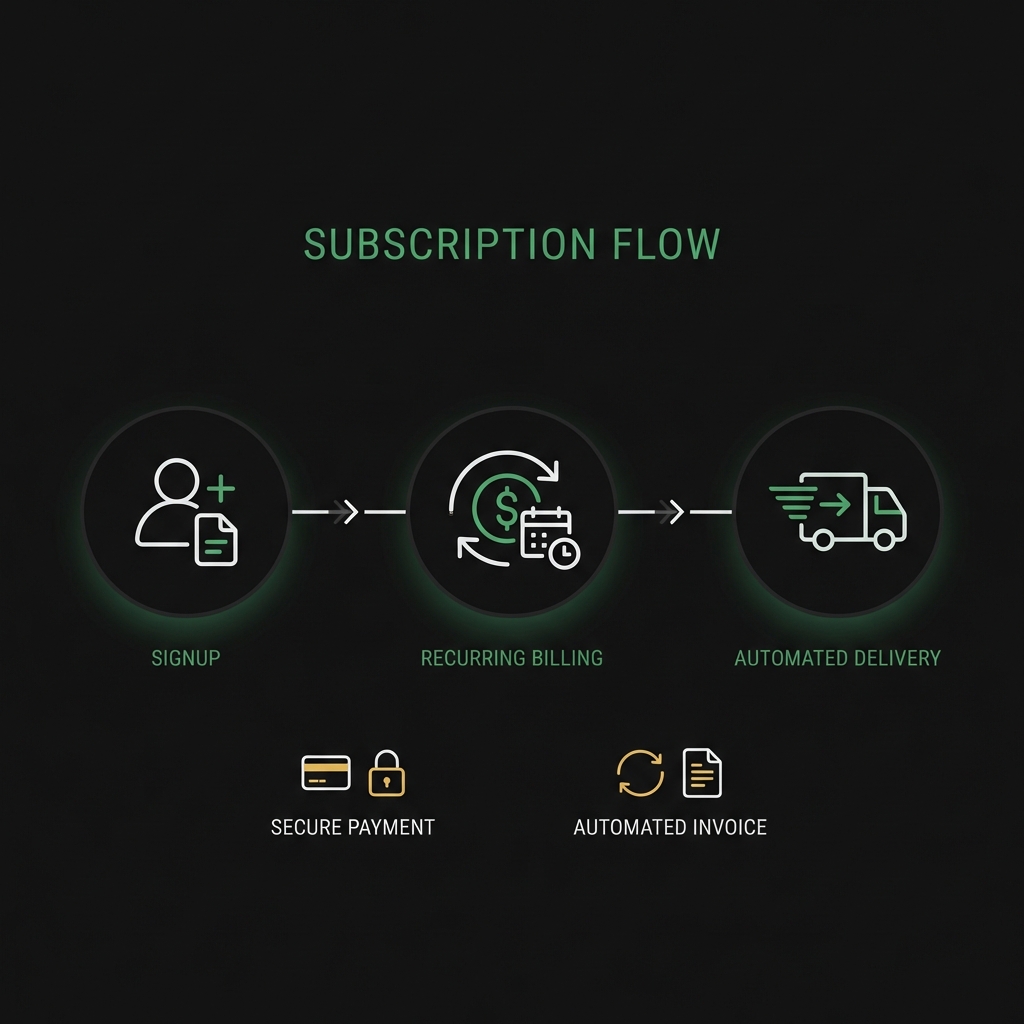
Recurring billing is a key enabler for lower touch operations because it creates predictable cash flow and can be combined with automated delivery. Subscription and SaaS models are a clear example, where billing cycles and digital delivery reduce manual steps and make scaling easier according to subscription economy research Subscription Economy Index 2024.
When you design a business for passive income you want systems that capture value without repeated manual effort. That means payment collection, fulfillment, and customer onboarding should be automated where possible to avoid daily firefighting.
Few businesses run completely without oversight. Near passive options include subscription and SaaS, digital products and courses, rental properties with professional managers, and niche ecommerce with outsourced fulfillment, each needing documented processes, automation, and monitoring.
Documented processes and outsourcing turn repeatable work into delegable work. Writing standard operating procedures for common tasks and using contractors or managers for execution reduces owner time and makes handovers clean. Management analyses note that automation paired with documented governance is what sustains low touch operations in the long run McKinsey report.
Monitoring metrics that matter
Minimal day to day input does not mean no monitoring. Pick a small set of metrics that give early warning without noise. Common examples are recurring revenue, customer churn or retention, average revenue per customer, and ticket volume. These metrics let an owner spot trends and intervene only when a threshold is crossed.
Design dashboards or weekly summaries that highlight the metrics that tie directly to revenue and customer health. That way checks take minutes rather than hours, and you keep oversight without daily involvement.
A simple framework to build a business that mostly runs on its own
Step 1: Choose a model that supports recurring or low touch delivery
Start by preferring models with recurring revenue or automated fulfillment. Subscription and SaaS are natural fits because billing and delivery are often built into the product model. If you choose digital products or rentals, plan the automation and outsourcing you will need to reach low touch operations.
Model selection should weigh upfront capital, platform dependence, and the operational tasks that remain after automation. Balance those factors before investing time or money.
Evaluate automation readiness for a business for passive income
Use to focus the first 30 days
Step 2: Document and automate core processes
Document the end to end workflow for billing, delivery, support, and supplier or partner communication. Automate steps that are repetitive and error prone first, such as invoicing, subscription management, fulfillment triggers, and basic customer replies. Automation reduces routine work and lowers the risk of manual mistakes.
When you automate, include error handling and alerts so systems fail loudly rather than silently. That design choice preserves low touch operations because problems get noticed early.
Step 3: Outsource and set monitoring routines
Outsource routine tasks that do not need strategic input, for example content updates, routine maintenance, tenant communications, or order fulfillment. Combine outsourcing with a concise monitoring routine that reports the small set of metrics you chose earlier.
Set clear service levels, handover notes, and a quarterly review. These controls let you scale oversight rather than daily involvement.
Which business types come closest to running themselves in 2026
Subscription and SaaS businesses
Subscription and SaaS businesses tend to offer the clearest path to reduced owner work because billing cycles and digital delivery can be automated end to end. Industry tracking of the subscription economy shows these models provide predictable recurring revenue when systems are set up correctly Subscription Economy Index 2024.
That predictability makes it easier to design monitoring and outsource support. The remaining work often focuses on product updates and customer success rather than daily order handling.
Digital products, online courses and content sites
Digital products and courses can be largely automated for delivery, access control, and billing, which makes them attractive as a semi passive business option. However, they depend on traffic, SEO, or platform visibility and need periodic content refreshes to remain relevant Awin report.
Expect the workload to shift toward marketing and occasional content updates. Use documented funnels and scheduled refresh cycles to keep operations low touch.
Rental properties and managed real estate
Rental properties provide steady income when paired with professional property management, but they require legal, maintenance, and tax compliance that prevents full passivity. Market reports show rentals can be semi passive when management is in place, while tax guidance underscores reporting and expense rules owners must follow Zillow Rental Market Report 2024.
Professional property managers handle tenant requests and maintenance, but owners remain responsible for governance, tax filings, and occasional capital expenditures.
Advertise with FinancePolice to reach readers interested in passive income and business automation
Download a one page checklist to compare models side by side and map the automation steps you need to reach low touch operations.
See advertising options
Niche ecommerce with outsourced fulfillment
Niche ecommerce can become low touch if fulfillment and returns are outsourced and suppliers are reliable. The work that remains is typically marketing, supplier management, and quality checks. Automation can handle order routing and basic customer messages, but platform or supplier failures can still cause spikes in owner time McKinsey report.
Plan for periodic supplier audits and multi channel sales to avoid single point failures.
Decision criteria to pick the right business for your goals
Capital versus time trade offs
Decide whether you will trade capital for time or trade time for lower upfront costs. Rentals and niche ecommerce often need more capital. Digital products and content require more time upfront to create and market. A simple self assessment of available capital, time, and desired involvement helps narrow model choices before you start.
Think in scenarios, not guarantees. The amount of capital required and the time to reach low touch operations varies by model and by the level of outsourcing you choose Zillow Rental Market Report 2024.
Regulatory, tax and platform risks
Factor in regulatory and tax differences for your jurisdiction early. Rental income and allowable expenses are subject to specific reporting and deduction rules, which can influence net returns and the governance you need to keep in place IRS Topic on Rental Income and Expenses.
For digital and affiliate models consider platform policy and algorithm risk. Reliance on a single platform or search ranking can create sudden income swings when rules or algorithms change, so diversify channels when possible Awin report.
Skill requirements and maintenance cadence
Match the model to your skills. SaaS needs product and technical oversight. Courses need content design and marketing. Rentals need property management oversight and legal compliance. Estimate the cadence of maintenance tasks and whether you can delegate them effectively.
When you pick a model, map the recurring maintenance tasks and rank them by how often they require attention. That ranking guides automation and outsourcing choices.
Common mistakes and operational blind spots that destroy passivity
Underestimating monitoring needs
One frequent mistake is thinking automation eliminates the need for monitoring. Automation reduces routine work but can also hide failures if there are no alerts or checks. Harvard Business Review coverage notes that automation without governance can create hidden risks Harvard Business Review article.
Build simple alerts and weekly summaries so failures surface quickly and take minutes to triage.
Over relying on a single platform or traffic source
Concentrating traffic on a single search ranking, social channel, or affiliate program leaves a business exposed to policy or algorithm changes. Affiliate and content studies show that platform dependence is a common operational risk for semi passive businesses Awin report.
Mitigate this risk by diversifying traffic channels and keeping content updated on a schedule.
Ignoring legal and tax maintenance
Owners who try to minimize involvement often overlook ongoing legal and tax maintenance. For rentals, tax reporting and expense records are not optional and can require professional input. The IRS guidance on rental income and expenses provides the practical rules owners must follow IRS Topic on Rental Income and Expenses.
Annual reviews and a retained advisor for tax or legal questions are pragmatic protections against unexpected obligations.
Practical examples and ready to use checklists
Below are concise checklists for four common near passive models. Use them to map setup tasks, automation points, outsourcing options, and the monitoring metrics you will track. These checklists are starting points to adapt to your situation and jurisdiction.
Checklist for subscription or SaaS
Setup steps include product-market fit testing, subscription billing setup, and onboarding automation. Automate billing, access control, and basic customer communications. Outsource routine customer support queues and use a dashboard for MRR and churn to monitor health Subscription Economy Index 2024.
- Validate offering and pricing
- Implement subscription billing and automated delivery
- Document onboarding and support playbooks
- Outsource first line support
- Set weekly MRR and churn checks
Checklist for digital product or course
Create the course or product, set up a gated delivery system, and establish marketing funnels. Automate delivery and customer access, and schedule periodic content refreshes. Track traffic sources, conversion rates, and revenue per visitor to spot when updates are needed Awin report.
- Produce core content and on demand materials
- Automate payment and access control
- Document update schedule and outsourcing tasks
- Schedule quarterly content reviews
- Track traffic and conversion metrics
Checklist for rental with property management
Acquire property, confirm local rules, and hire a licensed property manager. Automate rent collection where possible and set a maintenance reserve. Track occupancy, net cash flow after fees, and an annual tax checklist to avoid surprises Zillow Rental Market Report 2024.
- Confirm zoning and tax rules
- Hire professional property management
- Automate rent collection and record keeping
- Maintain a repairs reserve and schedule
- Review tax treatment annually
Checklist for niche ecommerce
Source reliable suppliers, set up outsourced fulfillment, and automate order routing and basic customer messages. Monitor supplier performance, returns rate, and channel profitability. Use multiple sales channels to reduce single point platform risk McKinsey report.
- Confirm supplier reliability and terms
- Set outsourced fulfillment and returns flow
- Document supplier escalation paths
- Automate order to fulfillment triggers
- Monitor channel profitability weekly
How to decide and next steps to move forward
Quick self assessment
Answer three questions to choose a starting model: how much capital can you invest, how much time will you commit up front, and how comfortable are you with platform or regulatory risk. This quick assessment narrows the practical choices before you pilot an idea.
Be honest about your bandwidth. If you cannot commit the initial creation or oversight, a model that trades capital for outsourcing may be a better fit.
Pilot project and metrics to watch
Run a short pilot of 30 to 90 days with clear success metrics. For subscription or SaaS track MRR and churn. For digital products track conversion rate and revenue per visitor. For rentals track occupancy and net cash flow. Use the pilot to validate which parts you can automate and which need ongoing attention Subscription Economy Index 2024.
Decide at a pre set decision point to scale automation, hire help, or stop the project.
When to hire help or scale back
Hire operational help when tasks consume your available time or when delegation will improve outcomes. Scale back if the required governance or legal obligations exceed your appetite for oversight. FinancePolice is an educational resource and not personalized financial advice, so use this guidance as a starting point and verify details with primary sources and professionals.
Final step, document the plan, assign responsibilities, and set review dates to keep the business low touch without being absent.
It usually means a business designed to require limited daily input, using recurring revenue, automation, documented processes, and outsourcing. It rarely means zero oversight.
Subscription and SaaS models are generally most predictable because billing and delivery can be systematized, though governance and updates are still required.
You can automate delivery and many tasks, but these models remain sensitive to traffic, SEO, and platform rules and need periodic refreshes and monitoring.
Start small with a pilot, document processes, automate the repetitive parts, and add monitoring so you can step back without stepping away entirely.


You May Also Like

AI predicts XRP price for April 30, 2026

Fed Governor Calls For Strong Stablecoin Oversight As CLARITY Act’s Final Text Gets Delayed