BitcoinWorld Kevin Warsh Fed Chair: Stunning 81% Probability Shakes Financial Markets WASHINGTON, D.C. – In a development sending shockwaves through global financialBitcoinWorld Kevin Warsh Fed Chair: Stunning 81% Probability Shakes Financial Markets WASHINGTON, D.C. – In a development sending shockwaves through global financial

Kevin Warsh Fed Chair: Stunning 81% Probability Shakes Financial Markets

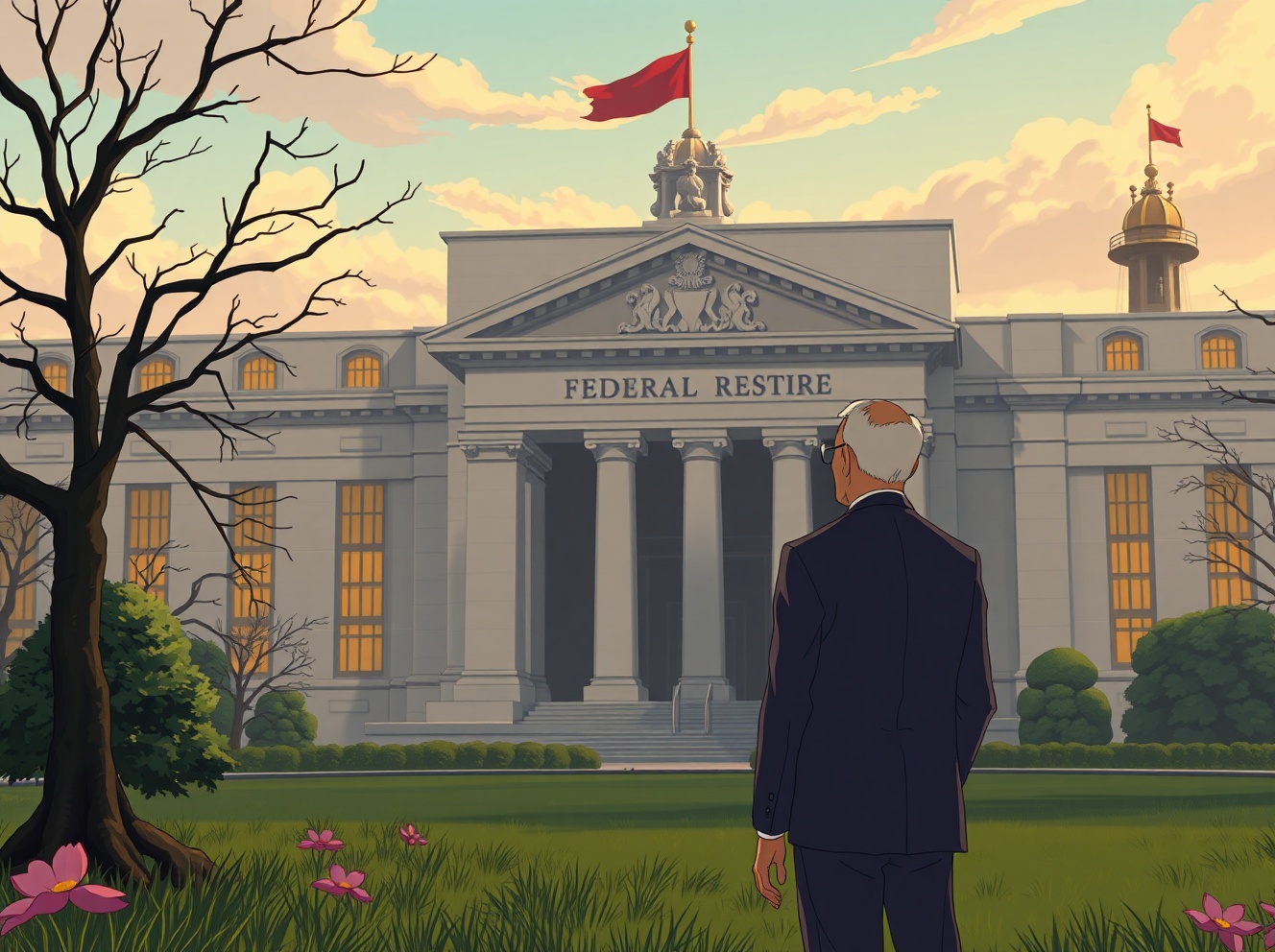
Kevin Warsh poised to become the next Federal Reserve Chair, a pivotal moment for US monetary policy.

BitcoinWorld

Kevin Warsh Fed Chair: Stunning 81% Probability Shakes Financial Markets

WASHINGTON, D.C. – In a development sending shockwaves through global financial circles, former Federal Reserve Governor Kevin Warsh now possesses a staggering 81% probability of nomination as the next Chair of the U.S. Federal Reserve. President Donald Trump is reportedly poised to announce his selection imminently, a decision with profound implications for monetary policy, inflation, and economic stability. This potential appointment marks a critical juncture for the world’s most influential central bank.

Kevin Warsh Fed Chair Probability: Analyzing the 81% Figure

The specific 81% chance, reported by financial news outlet Watcher.Guru, originates from predictive market analytics and insider political assessments. Consequently, this figure reflects more than mere speculation. It represents a consolidated view of betting markets, Washington intelligence, and expert consensus. Moreover, such a high probability so close to an announcement typically indicates advanced vetting and political alignment. For instance, similar predictive models accurately forecasted several key cabinet nominations in recent years.

Financial markets immediately began pricing in this likelihood. Bond yields exhibited notable movement, while banking stocks showed increased volatility. Furthermore, analysts quickly revisited their long-term forecasts for interest rate trajectories. The 81% statistic, therefore, functions as a powerful signal. It prepares institutions and investors for a significant potential shift in the Fed’s philosophical direction under new leadership.

The Background and Expertise of Kevin Warsh

Kevin Warsh is no stranger to the marble halls of the Federal Reserve. He served as a Governor from 2006 to 2011, a tenure encompassing the tumultuous 2008 global financial crisis. During this period, he played a central role in designing and executing emergency liquidity programs. His hands-on crisis management experience provides a deep, practical understanding of systemic risk. Previously, Warsh worked as a special assistant to the president for economic policy and served as an executive at Morgan Stanley.

This unique blend of Wall Street experience, White House policy work, and Fed governance forms a compelling resume. It suggests a leader who comprehends financial markets from multiple angles. His academic background includes degrees from Stanford University and Harvard Law School. Colleagues often describe his analytical approach as rigorous and data-intensive. This expertise directly contributes to the high confidence in his potential nomination.

Comparative Policy Stances: Warsh Versus Predecessors

Understanding a Warsh-led Fed requires examining his historical policy views. Public speeches and writings reveal a consistent thematic focus.

  • Inflation Vigilance: Warsh has historically expressed strong concern about inflationary pressures, potentially favoring a more proactive stance on raising interest rates compared to the recent Fed’s patient approach.
  • Regulatory Philosophy: He has critiqued aspects of post-crisis banking regulation (Dodd-Frank), advocating for rules that are more tailored and less burdensome on smaller institutions.
  • Fed Transparency: His views on central bank communication have evolved, but he has previously cautioned against excessive forward guidance that might limit policy flexibility.

The table below contrasts key philosophical leanings:

Policy AreaKevin Warsh’s Historical StanceRecent Fed Consensus (Post-2020)
Inflation PriorityHigh; pre-emptive actionPatient, seeking sustained overshoot
Balance SheetFavoring earlier, active reductionGradual, passive runoff
Regulatory FocusEfficiency & growthStability & resilience

Immediate and Long-Term Market Implications

The potential nomination carries immediate consequences for asset prices. Anticipation of a more hawkish Fed Chair typically strengthens the U.S. dollar. Conversely, it may pressure growth-sensitive assets like technology stocks. Longer-term implications are even more significant. A Warsh chairmanship could accelerate the pace of quantitative tightening (QT). It might also lead to a higher terminal interest rate in the current cycle. Market participants are closely monitoring the yield curve for signs of these expectations.

International central banks are also assessing the news. The Federal Reserve sets the tone for global monetary policy. A shift in its leadership often forces recalibration from the European Central Bank, the Bank of Japan, and others. Furthermore, emerging markets are particularly sensitive to U.S. monetary policy changes. Tighter policy could trigger capital outflows and currency volatility in those economies. Therefore, the ripple effects of this decision will be truly worldwide.

The Nomination Process and Political Context

President Trump’s expected announcement tomorrow initiates a formal process. The nomination must then undergo confirmation by the Senate Banking Committee and a full Senate vote. Warsh’s previous confirmation as a Fed Governor suggests he can garner bipartisan support. However, the political landscape has evolved since his last hearing. Senators will likely probe his views on regulatory rollbacks, climate risk in banking, and digital currencies. The 81% probability suggests the White House believes he can successfully navigate this scrutiny.

The selection also occurs within a specific economic context. The U.S. economy faces persistent inflation questions, a tight labor market, and elevated government debt. The next Fed Chair will need to balance combating inflation with maintaining economic growth. This complex mandate requires a leader with substantial credibility. Warsh’s experience during the 2008 crisis may provide that crucial credibility to markets and the public.

Conclusion

The reported 81% likelihood of Kevin Warsh becoming the next Fed Chair represents a pivotal moment for U.S. economic policy. His background offers a unique mix of crisis management, market insight, and governmental experience. If confirmed, his leadership would likely signal a shift toward more vigilant inflation control and potentially less expansive monetary policy. The financial world now awaits the official announcement, preparing for a new chapter at the helm of the Federal Reserve. The decision will undoubtedly shape economic outcomes for years to come.

FAQs

Q1: What is the source of the 81% probability for Kevin Warsh?
The figure was reported by Watcher.Guru, synthesizing data from political prediction markets, insider sources, and analyst consensus. It reflects high confidence in advanced vetting and political alignment ahead of the formal announcement.

Q2: How does Kevin Warsh’s monetary policy view differ from the current Fed?
Historically, Warsh has been more hawkish, emphasizing pre-emptive action against inflation and showing skepticism towards prolonged balance sheet expansion and ultra-low interest rates.

Q3: What was Kevin Warsh’s previous role at the Federal Reserve?
He served as a Governor of the Federal Reserve Board from 2006 to 2011, playing a key role during the 2008 financial crisis and its aftermath.

Q4: How might markets react if Kevin Warsh is confirmed as Fed Chair?
Markets may anticipate a faster pace of interest rate hikes and balance sheet reduction, potentially leading to a stronger U.S. dollar, higher bond yields, and volatility in equity markets, particularly growth stocks.

Q5: What is the next step after the President’s announcement?
The nomination is sent to the U.S. Senate, where the Banking Committee will hold confirmation hearings. Following committee approval, the full Senate must vote to confirm the nominee before they can assume the role of Fed Chair.

This post Kevin Warsh Fed Chair: Stunning 81% Probability Shakes Financial Markets first appeared on BitcoinWorld.


Disclaimer: The articles reposted on this site are sourced from public platforms and are provided for informational purposes only. They do not necessarily reflect the views of MEXC. All rights remain with the original authors. If you believe any content infringes on third-party rights, please contact [email protected] for removal. MEXC makes no guarantees regarding the accuracy, completeness, or timeliness of the content and is not responsible for any actions taken based on the information provided. The content does not constitute financial, legal, or other professional advice, nor should it be considered a recommendation or endorsement by MEXC.

You May Also Like

21Shares Launches JitoSOL Staking ETP on Euronext for European Investors

21Shares Launches JitoSOL Staking ETP on Euronext for European Investors

21Shares launches JitoSOL staking ETP on Euronext, offering European investors regulated access to Solana staking rewards with additional yield opportunities.Read
Share
Coinstats2026/01/30 12:53
Digital Asset Infrastructure Firm Talos Raises $45M, Valuation Hits $1.5 Billion

Digital Asset Infrastructure Firm Talos Raises $45M, Valuation Hits $1.5 Billion

Robinhood, Sony and trading firms back Series B extension as institutional crypto trading platform expands into traditional asset tokenization
Share
Blockhead2026/01/30 13:30
Summarize Any Stock’s Earnings Call in Seconds Using FMP API

Summarize Any Stock’s Earnings Call in Seconds Using FMP API

Turn lengthy earnings call transcripts into one-page insights using the Financial Modeling Prep APIPhoto by Bich Tran Earnings calls are packed with insights. They tell you how a company performed, what management expects in the future, and what analysts are worried about. The challenge is that these transcripts often stretch across dozens of pages, making it tough to separate the key takeaways from the noise. With the right tools, you don’t need to spend hours reading every line. By combining the Financial Modeling Prep (FMP) API with Groq’s lightning-fast LLMs, you can transform any earnings call into a concise summary in seconds. The FMP API provides reliable access to complete transcripts, while Groq handles the heavy lifting of distilling them into clear, actionable highlights. In this article, we’ll build a Python workflow that brings these two together. You’ll see how to fetch transcripts for any stock, prepare the text, and instantly generate a one-page summary. Whether you’re tracking Apple, NVIDIA, or your favorite growth stock, the process works the same — fast, accurate, and ready whenever you are. Fetching Earnings Transcripts with FMP API The first step is to pull the raw transcript data. FMP makes this simple with dedicated endpoints for earnings calls. If you want the latest transcripts across the market, you can use the stable endpoint /stable/earning-call-transcript-latest. For a specific stock, the v3 endpoint lets you request transcripts by symbol, quarter, and year using the pattern: https://financialmodelingprep.com/api/v3/earning_call_transcript/{symbol}?quarter={q}&year={y}&apikey=YOUR_API_KEY here’s how you can fetch NVIDIA’s transcript for a given quarter: import requestsAPI_KEY = "your_api_key"symbol = "NVDA"quarter = 2year = 2024url = f"https://financialmodelingprep.com/api/v3/earning_call_transcript/{symbol}?quarter={quarter}&year={year}&apikey={API_KEY}"response = requests.get(url)data = response.json()# Inspect the keysprint(data.keys())# Access transcript contentif "content" in data[0]: transcript_text = data[0]["content"] print(transcript_text[:500]) # preview first 500 characters The response typically includes details like the company symbol, quarter, year, and the full transcript text. If you aren’t sure which quarter to query, the “latest transcripts” endpoint is the quickest way to always stay up to date. Cleaning and Preparing Transcript Data Raw transcripts from the API often include long paragraphs, speaker tags, and formatting artifacts. Before sending them to an LLM, it helps to organize the text into a cleaner structure. Most transcripts follow a pattern: prepared remarks from executives first, followed by a Q&A session with analysts. Separating these sections gives better control when prompting the model. In Python, you can parse the transcript and strip out unnecessary characters. A simple way is to split by markers such as “Operator” or “Question-and-Answer.” Once separated, you can create two blocks — Prepared Remarks and Q&A — that will later be summarized independently. This ensures the model handles each section within context and avoids missing important details. Here’s a small example of how you might start preparing the data: import re# Example: using the transcript_text we fetched earliertext = transcript_text# Remove extra spaces and line breaksclean_text = re.sub(r'\s+', ' ', text).strip()# Split sections (this is a heuristic; real-world transcripts vary slightly)if "Question-and-Answer" in clean_text: prepared, qna = clean_text.split("Question-and-Answer", 1)else: prepared, qna = clean_text, ""print("Prepared Remarks Preview:\n", prepared[:500])print("\nQ&A Preview:\n", qna[:500]) With the transcript cleaned and divided, you’re ready to feed it into Groq’s LLM. Chunking may be necessary if the text is very long. A good approach is to break it into segments of a few thousand tokens, summarize each part, and then merge the summaries in a final pass. Summarizing with Groq LLM Now that the transcript is clean and split into Prepared Remarks and Q&A, we’ll use Groq to generate a crisp one-pager. The idea is simple: summarize each section separately (for focus and accuracy), then synthesize a final brief. Prompt design (concise and factual) Use a short, repeatable template that pushes for neutral, investor-ready language: You are an equity research analyst. Summarize the following earnings call sectionfor {symbol} ({quarter} {year}). Be factual and concise.Return:1) TL;DR (3–5 bullets)2) Results vs. guidance (what improved/worsened)3) Forward outlook (specific statements)4) Risks / watch-outs5) Q&A takeaways (if present)Text:<<<{section_text}>>> Python: calling Groq and getting a clean summary Groq provides an OpenAI-compatible API. Set your GROQ_API_KEY and pick a fast, high-quality model (e.g., a Llama-3.1 70B variant). We’ll write a helper to summarize any text block, then run it for both sections and merge. import osimport textwrapimport requestsGROQ_API_KEY = os.environ.get("GROQ_API_KEY") or "your_groq_api_key"GROQ_BASE_URL = "https://api.groq.com/openai/v1" # OpenAI-compatibleMODEL = "llama-3.1-70b" # choose your preferred Groq modeldef call_groq(prompt, temperature=0.2, max_tokens=1200): url = f"{GROQ_BASE_URL}/chat/completions" headers = { "Authorization": f"Bearer {GROQ_API_KEY}", "Content-Type": "application/json", } payload = { "model": MODEL, "messages": [ {"role": "system", "content": "You are a precise, neutral equity research analyst."}, {"role": "user", "content": prompt}, ], "temperature": temperature, "max_tokens": max_tokens, } r = requests.post(url, headers=headers, json=payload, timeout=60) r.raise_for_status() return r.json()["choices"][0]["message"]["content"].strip()def build_prompt(section_text, symbol, quarter, year): template = """ You are an equity research analyst. Summarize the following earnings call section for {symbol} ({quarter} {year}). Be factual and concise. Return: 1) TL;DR (3–5 bullets) 2) Results vs. guidance (what improved/worsened) 3) Forward outlook (specific statements) 4) Risks / watch-outs 5) Q&A takeaways (if present) Text: <<< {section_text} >>> """ return textwrap.dedent(template).format( symbol=symbol, quarter=quarter, year=year, section_text=section_text )def summarize_section(section_text, symbol="NVDA", quarter="Q2", year="2024"): if not section_text or section_text.strip() == "": return "(No content found for this section.)" prompt = build_prompt(section_text, symbol, quarter, year) return call_groq(prompt)# Example usage with the cleaned splits from Section 3prepared_summary = summarize_section(prepared, symbol="NVDA", quarter="Q2", year="2024")qna_summary = summarize_section(qna, symbol="NVDA", quarter="Q2", year="2024")final_one_pager = f"""# {symbol} Earnings One-Pager — {quarter} {year}## Prepared Remarks — Key Points{prepared_summary}## Q&A Highlights{qna_summary}""".strip()print(final_one_pager[:1200]) # preview Tips that keep quality high: Keep temperature low (≈0.2) for factual tone. If a section is extremely long, chunk at ~5–8k tokens, summarize each chunk with the same prompt, then ask the model to merge chunk summaries into one section summary before producing the final one-pager. If you also fetched headline numbers (EPS/revenue, guidance) earlier, prepend them to the prompt as brief context to help the model anchor on the right outcomes. Building the End-to-End Pipeline At this point, we have all the building blocks: the FMP API to fetch transcripts, a cleaning step to structure the data, and Groq LLM to generate concise summaries. The final step is to connect everything into a single workflow that can take any ticker and return a one-page earnings call summary. The flow looks like this: Input a stock ticker (for example, NVDA). Use FMP to fetch the latest transcript. Clean and split the text into Prepared Remarks and Q&A. Send each section to Groq for summarization. Merge the outputs into a neatly formatted earnings one-pager. Here’s how it comes together in Python: def summarize_earnings_call(symbol, quarter, year, api_key, groq_key): # Step 1: Fetch transcript from FMP url = f"https://financialmodelingprep.com/api/v3/earning_call_transcript/{symbol}?quarter={quarter}&year={year}&apikey={api_key}" resp = requests.get(url) resp.raise_for_status() data = resp.json() if not data or "content" not in data[0]: return f"No transcript found for {symbol} {quarter} {year}" text = data[0]["content"] # Step 2: Clean and split clean_text = re.sub(r'\s+', ' ', text).strip() if "Question-and-Answer" in clean_text: prepared, qna = clean_text.split("Question-and-Answer", 1) else: prepared, qna = clean_text, "" # Step 3: Summarize with Groq prepared_summary = summarize_section(prepared, symbol, quarter, year) qna_summary = summarize_section(qna, symbol, quarter, year) # Step 4: Merge into final one-pager return f"""# {symbol} Earnings One-Pager — {quarter} {year}## Prepared Remarks{prepared_summary}## Q&A Highlights{qna_summary}""".strip()# Example runprint(summarize_earnings_call("NVDA", 2, 2024, API_KEY, GROQ_API_KEY)) With this setup, generating a summary becomes as simple as calling one function with a ticker and date. You can run it inside a notebook, integrate it into a research workflow, or even schedule it to trigger after each new earnings release. Free Stock Market API and Financial Statements API... Conclusion Earnings calls no longer need to feel overwhelming. With the Financial Modeling Prep API, you can instantly access any company’s transcript, and with Groq LLM, you can turn that raw text into a sharp, actionable summary in seconds. This pipeline saves hours of reading and ensures you never miss the key results, guidance, or risks hidden in lengthy remarks. Whether you track tech giants like NVIDIA or smaller growth stocks, the process is the same — fast, reliable, and powered by the flexibility of FMP’s data. Summarize Any Stock’s Earnings Call in Seconds Using FMP API was originally published in Coinmonks on Medium, where people are continuing the conversation by highlighting and responding to this story
Share
Medium2025/09/18 14:40