Global Automotive OEMs and Tier 1 Suppliers’ Cost Reduction and Efficiency Enhancement Strategy Analysis Report 2025: Industry Layoff Plans Exceed 200,000, Highlighting Urgent Need for Cost Reduction – ResearchAndMarkets.com
DUBLIN–(BUSINESS WIRE)–The “OEMs and Tier 1 Suppliers’ Cost Reduction and Efficiency Enhancement Strategy Analysis Report, 2025” has been added to ResearchAndMarkets.com’s offering.
“OEMs and Tier 1 Suppliers’ Cost Reduction and Efficiency Enhancement Strategy Analysis Report, 2025”, summarizes hundreds of cost reduction strategies to provide reference for automotive industry practitioners.
Global Automotive Industry Layoff Plans Exceed 200,000, Highlighting Urgent Need for Cost Reduction
In 2025, the cold winter in automotive industry continues, with frequent news of enterprise closures, bankruptcies, and dissolutions:
- In January 2025, HYCAN Auto suspended operations and was taken over by its parent company GAC Group for subsequent disposal.
- In May 2025, Neta Auto was applied for bankruptcy review and subsequently entered bankruptcy proceedings.
- In July 2025, GAC Fiat Chrysler was formally ruled bankrupt by the court due to no possibility of reorganization, and its core assets failed to sell at auction multiple times.
- In November 2025, Haomo.AI suddenly notified all employees of a work suspension, with accounts frozen, wages and social security payments halted, and operations basically suspended.
Accompanying this is widespread layoff information from enterprises. Over the past year, the global automotive industry chain has seen frequent layoffs, with companies such as Mercedes-Benz, Audi, Volkswagen, Ford, Nissan, ZF Friedrichshafen, and Bosch successively announcing large-scale layoff plans. According to incomplete statistics, the number of planned layoffs by OEMs exceeds 120,000, and that by leading supplier giants exceeds 100,000.
At the same time, declining profit margins caused by price wars and rising R&D costs driven by intelligence have continued to increase pressure on OEMs and suppliers, making the urgency of cost reduction and efficiency enhancement more prominent.
Five Core Strategies for Supply Chain Cost Reduction
“OEMs and Tier 1 Suppliers’ Cost Reduction and Efficiency Enhancement Strategy Analysis Report, 2025” divides enterprise cost reduction strategies into two categories:
In supply chain cost reduction, OEMs often expand their control over the supply chain through vertical integration, component standardization, and transparent supply chains; suppliers often expand their business volume in the supply chain and improve profit space through modular supply and joint R&D.
Supply Chain Cost Reduction Strategy 1: Vertical Integration
Supply chain vertical integration refers to a management strategy in which enterprises achieve a high degree of control over the entire value chain by controlling multiple consecutive links in the supply chain (from raw material procurement, production and manufacturing to sales and distribution). Its core is to reduce dependence on external suppliers and improve efficiency and competitiveness through internalization of key links.
Representative Enterprise 1: BYD
BYD’s vertical integration capability has become an industry benchmark, covering key links such as raw materials (lithium ore resources), core components (IGBT, cathode materials, electrolyte, separators), and core auto parts (batteries, electric drives, chips, automotive electronics), forming a vertical integration model from “ore to vehicle”.
Representative Enterprise 2: Leapmotor
Leapmotor independently develops core components such as three-electric system (battery, motor, ECU), intelligent driving, cockpit system, electric drives, batteries, and EE architecture, covering 70% of the vehicle BOM cost. For example, the electric drive assembly, battery PACK, and intelligent cockpit are all independently developed and produced, reducing the R&D cost per vehicle by 40% compared with the outsourcing mode.
Supply Chain Cost Reduction Strategy 2: Modular Supply
Modular supply refers to a supply chain model in which automakers decompose automotive products into independent functional modules, realize the combination between modules through standardized interfaces, and professional suppliers are responsible for module development, production, and integration. This not only simplifies supply chain management but also reduces costs through bulk procurement. For suppliers, although the profit margin of individual components may be compressed, they can gain more market opportunities by providing overall solutions.
Supply Chain Cost Reduction Strategy 3: Component Standardization
Core of automotive modularization is standardization, such as ensuring module compatibility through standardized interfaces. NIO found that interfaces of various components on the vehicle, such as seats, air conditioners, and reading lights, were different, resulting in high matching costs. Therefore, the R&D team standardized component interfaces, optimizing from hundreds of interfaces to about 40-50. After reducing the types of supplies, the cost per vehicle decreased from 2,000 yuan to about 1,000 yuan.
Supply Chain Cost Reduction Strategy 4: OEMs & Suppliers Joint Cost Reduction
In the battle of cost reduction, while OEMs and suppliers can achieve certain results by acting alone, the effect may be more prominent if both parties cooperate closely. By establishing a close cooperative relationship, both parties can share resources, technologies, and market information, thereby achieving more efficient collaborative innovation and cost optimization.
Supply Chain Cost Reduction Strategy 5: Transparent Supply Chain
A transparent supply chain refers to the realization of real-time, credible, and two-way sharing of core data such as production, quality, logistics, inventory, and production capacity between OEMs and partners with the help of digital technology. Its core is to break industry “data silos”, realize information transparency and sharing between upstream and downstream of the supply chain, and promote real-time and efficient collaboration between enterprises.
Five Core Strategies for Intelligent Driving System Cost Reduction
According to the price distribution of mainstream models in the Chinese market, Zhuoyu Technology believes that the cost range of L2+ intelligent driving systems is 5,000 yuan to 15,000 yuan. Momenta proposed the Moore’s Law for intelligent driving, believing that hardware costs will be halved every two years. For example, for map-free urban NOA, the cost reduction path of intelligent driving domain controllers is: 8,000? ? 4,000? ? 2,000?.
Intelligent Driving Cost Reduction Strategy 1: Vision-Only Solution
The vision-only intelligent driving solution is a technical route that uses cameras as the main perception hardware to achieve environmental perception, decision, and control through algorithms and neural networks. With advantages such as low cost and fast iteration, the vision-only solution has become an important path for the popularization of intelligent driving. Tesla, XPeng, BYD, Huawei, etc. have all launched intelligent driving solutions based on vision-only. Among them, Tesla relies entirely on cameras, while XPeng, BYD, etc. take cameras as the core, supplemented by millimeter-wave radar or ultrasonic radar to enhance perception.
Intelligent Driving Cost Reduction Strategy 2: Integrated Intelligent Driving
Cost reduction through integration of intelligent driving and intelligent cockpit refers to a strategy of integrating intelligent driving functions and intelligent cockpit functions into a single domain controller to achieve centralized function control. Integrated intelligent driving can achieve system cost reduction through sensor sharing, a single SoC, and simplified interfaces, mainly including three directions: driving-parking integration, cockpit-parking integration, and cockpit-driving integration. The development of E/E architecture from distributed to domain controller architecture provides the possibility for it.
Intelligent Driving Cost Reduction Strategy 3: Localized Replacement
Localized replacement of automotive components can significantly reduce costs, and the same applies to intelligent driving systems. Rapid development of local Chinese chip suppliers, sensor suppliers, and system integrators has continuously expanded the space for localized replacement of intelligent driving systems.
Intelligent Driving Cost Reduction Strategy 4: 4D Radar
4D radar is an upgraded form of traditional millimeter-wave radar. “4D” refers to its ability to simultaneously obtain four-dimensional information of the target: distance, speed, horizontal angle, and vertical height. In terms of performance, 4D radar can break through limitations in static target recognition, lateral movement detection, height recognition, distinguishing adjacent objects, and detecting hidden vehicles. Compared with lidar, it is very close in certain performance indicators, and its performance is less affected in harsh weather and environments, with lower cost than lidar.
Intelligent Driving Cost Reduction Strategy 5: LiDAR-Vision System
The LiDAR-vision system is an innovative sensor design jointly developed by Zhuoyu Technology and Fuyao Glass, integrating lidar, front-facing trinocular camera, and inertial measurement unit into a single module, which can achieve higher-precision “spatiotemporal synchronization” between LiDAR and camera.
Key Topics Covered:
1 Overview of Cost Reduction and Efficiency Enhancement in the Automotive Industry
2 Management Cost Reduction Strategies in the Automotive Industry
3 Intelligent Driving Technology Cost Reduction Strategies
3.1 Cost Reduction for Intelligent Driving Systems
3.2 Cost Reduction for Intelligent Driving Sensors
3.3 Cost Reduction for Intelligent Driving System Testing
4 Cost Reduction Strategies for Intelligent Cockpit Technology
4.1 Overview of Intelligent Cockpit Cost Reduction
4.2 Cost Reduction Strategies for Smart Surfaces
4.3 Cost Reduction Strategies for Automotive Seats
4.4 Cost Reduction Strategies for In-Cabin Monitoring DMS
4.5 Cost Reduction Strategies for AR HUD
4.6 Cost Reduction Strategies for Camera Monitor System (CMS)
4.7 Cost Reduction Strategies for Digital Keys
4.8 Cost Reduction Strategies for T-Box
5 Cost Reduction Strategies for Powertrain and Chassis Technology
5.1 Cost Reduction Strategies for Intelligent Chassis
5.2 Cost Reduction for Brake-by-Wire
5.3 Cost Reduction for Steer-by-Wire
5.4 Cost Reduction for Air Suspension
5.5 Cost Reduction for Commercial Vehicle Intelligent Chassis
5.6 Cost Reduction for Skateboard Chassis
5.7 Cost Reduction for Integrated Batteries
5.8 Cost Reduction for New Battery Technologies
6 Cost Reduction Strategies for Other Technologies
6.1 Cost Reduction for Integrated Die Casting
6.2 Cost Reduction for Humanoid Robots
7 Cost Reduction Strategies for OEMs and Suppliers
7.1 BYD
7.2 Tesla
7.3 Leapmotor
7.4 NIO
7.5 XPeng Motors
7.6 Great Wall Motor
7.7 Toyota
7.8 Li Auto’s Cost Reduction Strategies
7.9 SAIC Group’s Cost Reduction Strategies
7.10 Audi’s Cost Reduction Strategies
7.11 Chery’s Cost Reduction Strategies
7.12 CATL’s Cost Reduction Strategies
7.13 HASCO’s Cost Reduction Strategies
7.14 Joyson Electronics’ Cost Reduction Strategies
7.15 Gotion High-Tech’s Cost Reduction Strategies
7.16 Fuyao Glass’ Cost Reduction Strategies
For more information about this report visit https://www.researchandmarkets.com/r/dlx2t1
About ResearchAndMarkets.com
ResearchAndMarkets.com is the world’s leading source for international market research reports and market data. We provide you with the latest data on international and regional markets, key industries, the top companies, new products and the latest trends.
Contacts
ResearchAndMarkets.com
Laura Wood, Senior Press Manager
[email protected]
For E.S.T Office Hours Call 1-917-300-0470
For U.S./ CAN Toll Free Call 1-800-526-8630
For GMT Office Hours Call +353-1-416-8900


You May Also Like
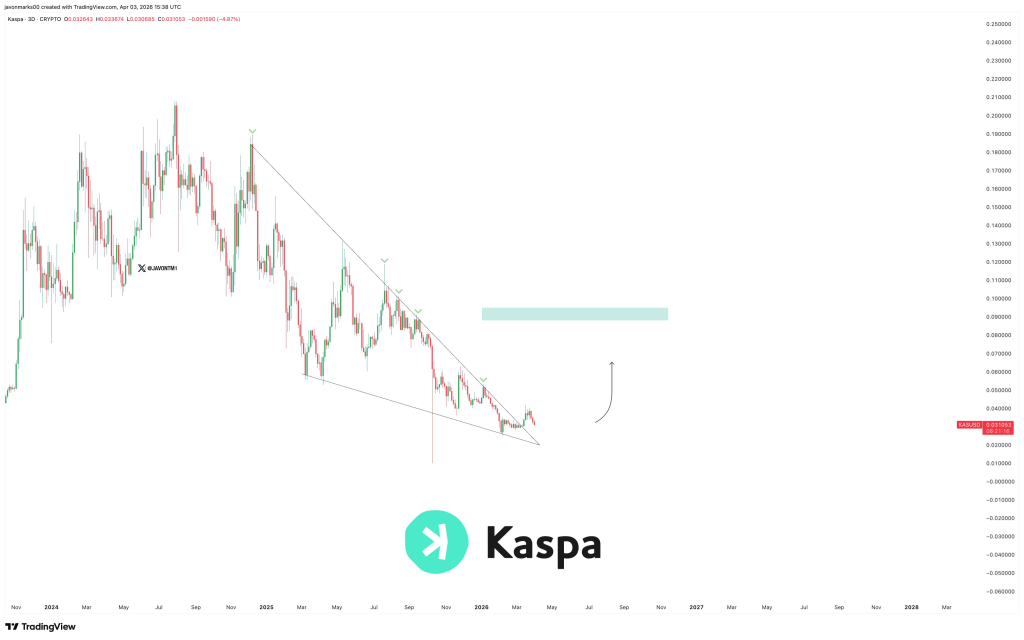
Elite Crypto Trades Updates His Kaspa (KAS) Price Prediction

Leap Wallet to Shut Down by May 28 as Team Winds Down Apps and Validator