Alternative Inflation Data Signals Sharp Cooling for US CPI
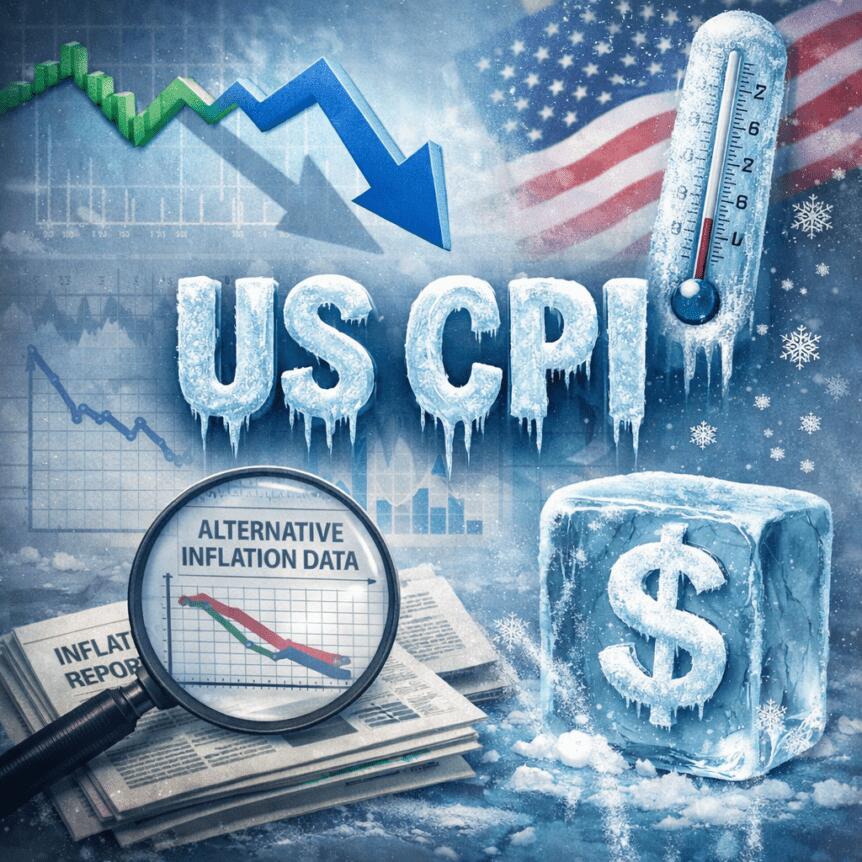
Alternative inflation gauges are signaling a sharp cooling in US price growth, a development that could tilt the Federal Reserve toward policy easing and ripple through risk assets, including cryptocurrencies. After the Fed paused rate cuts last week and offered no clear path to near-term reductions, one real-time tracker suggests the inflation backdrop may be easing more quickly than official data imply. Truflation, which aggregates millions of daily price points from dozens of independent data providers, showed broad-based cooling across its US inflation indexes. As of Sunday, its US CPI reading stood at 0.86% year over year, down from 1.24% the prior day. The tracker’s core PCE reading came in at 1.38%, notably under the Fed’s 2% target.
In the same window, the conventional government data stream remains more persistent. Official figures show annual CPI at 2.7% in December and core PCE at 2.8% in November, underscoring a gap between real-time signals and slower-moving government statistics. The divergence matters because it shapes how traders price future monetary tightening or easing. A recent Market assessment noted that the Fed’s trajectory has significant implications for the US dollar, global liquidity, and broader financial markets. Rate cuts have long been viewed as a headwind for the dollar, a dynamic historically supportive for risk assets such as Bitcoin, the largest crypto by market capitalization, and the broader crypto sector. pausing rate cuts last week remains a central piece of the puzzle as investors weigh the path ahead.
The inflation narrative is complemented by a look at the dollar itself. In recent sessions, the US Dollar Index has carved a path that some technicians interpret as signaling a potential turning point. Data from Barchart show a weekly close below a long-standing support level that had anchored the dollar for more than a decade, a development that could presage further downside if sustained. While currency moves are inherently fluid and multifactorial, a softer dollar tends to lift non-dollar priced assets, including crypto, by reducing hedging costs and broadening the pool of liquidity for investors.
Macro voices have long argued that a weaker dollar is not only tolerable but desirable under the current regime. Figures like Raoul Pal have pointed to a debt-heavy global system where many participants owe dollar-denominated liabilities. A softer dollar can help ease those burdens and, in turn, support asset prices across markets. Pal has also suggested that a weaker dollar could align with broader growth objectives associated with fiscal and industrial policy, as easier financial conditions generally foster liquidity and investment across borders.
Source: BarchartAgainst this backdrop, attention is turning to the crypto market’s own catalysts. Bitcoin, for its part, features prominently in discussions about macro risk sentiment and dollar dynamics. The largest cryptocurrency has repeatedly found itself at the nexus of policy expectations and liquidity cycles, acting as a barometer for risk appetite among both retail and institutional participants. In this context, market observers are watching whether the inflation data and the dollar’s trajectory will converge to create a favorable climate for risk assets, including Bitcoin. The crypto ecosystem is also increasingly watched through the lens of regulated exposure vehicles and institutional products that could channel more capital into digital assets as macro conditions improve.
From a product perspective, investors are also monitoring the potential responses of Bitcoin-linked vehicles. The iShares Bitcoin Trust (EXCHANGE: IBIT) represents one of several initiatives aimed at offering regulated, transparent access to the BTC market. If macro conditions continue to tilt toward risk-on sentiment and the dollar softens further, demand for such instruments could rise as market participants seek diversified exposure to crypto outside direct, custody-intensive trades. This dynamic underscores how macro policy, currency movements, and crypto market structure can interact to shape asset flows in the months ahead.
Key takeaways
- Truflation’s latest readings show a notable deceleration in US price growth, with CPI at 0.86% YoY and core PCE at 1.38% as of Sunday, signaling inflation cooling versus official figures.
- Official data still paints a warmer picture — CPI at 2.7% in December and core PCE at 2.8% in November — highlighting a split between real-time metrics and government statistics.
- The Fed paused rate cuts recently and offered no explicit near-term path, a stance that complicates forecasting for both markets and policy because real-time data may outpace the central bank’s timetable.
- The US Dollar Index recently closed a weekly session below a decade-long support level, suggesting potential downside risk if the breakdown persists, which could bolster risk assets.
- Macro voices argue that a weaker dollar could support global liquidity and ease dollar-denominated liabilities, a narrative that could favor crypto assets such as Bitcoin as part of a broader risk-on backdrop.
- Regulated exposure vehicles, including IBIT, could become more relevant if investors seek diversified, regulated access to BTC amid shifting macro conditions.
Tickers mentioned: $BTC, $IBIT
Sentiment: Neutral
Price impact: Neutral. The data present mixed signals that could widen volatility without establishing a clear, immediate directional move for most assets.
Market context: The inflation picture remains nuanced, with real-time trackers signaling easing while official gauges stay firmer. A softer dollar, if confirmed, could lift risk-on assets and crypto during periods of finite policy clarity, aligning with ongoing debate about the sustainability of growth and liquidity in a post-pandemic economy.
Why it matters
For users and investors, the divergence between alternative inflation readings and government data matters because it shapes expectations for Fed policy and the trajectory of global liquidity. If faster cooling in the pricing data translates into looser financial conditions sooner than anticipated, risk assets could enjoy a reprieve even as the Fed maintains a cautious stance. Crypto markets, which have historically responded to shifts in liquidity and macro sentiment, may benefit from any supportive tilt in the macro environment. However, the absence of an explicit near-term rate-cut timetable keeps a degree of uncertainty intact, meaning traders should remain vigilant for shifts in policy language or new data that could realign expectations.
From a market structure perspective, the dollar’s potential weakness adds another layer of complexity. A softer USD tends to reduce hedging costs for non-dollar investors and can expand the pool of capital available for higher-risk assets, including digital assets. Yet a volatile macro backdrop can also constrain risk appetite in the near term, especially if inflation data remain inconsistent with policy signals. In that sense, the coming weeks could prove telling as traders reconcile divergent inflation gauges, monitor the Fed’s next communications, and observe dollar behavior on technical levels identified by market data providers.
For builders and developers in the crypto space, the scenario underscores the importance of robust risk management, clear regulatory signals, and transparent product design that can withstand shifting macro currents. As institutions look for regulated exposure to Bitcoin through vehicles like IBIT, the quality of liquidity and the integrity of the market infrastructure will matter as much as the direction of the macro tide. The broader takeaway is that inflation dynamics, currency movements, and policy posture remain interlinked drivers of crypto demand, and investors should assess how changes in any one of these variables may ripple through digital-asset markets.
What to watch next
- Upcoming inflation updates, particularly Truflation’s next CPI and core PCE releases, to gauge whether the cooling trend persists or accelerates.
- The Fed’s forward guidance and any changes to the rate-path narrative in the wake of divergent inflation signals.
- Dollar momentum: watch for a sustained move below the long-term support level cited by market data providers and any accompanying risk-on price action in Bitcoin and equities.
- Bitcoin price action alongside broader risk appetite: observe how BTC responds to macro data releases and shifts in liquidity conditions.
Sources & verification
- Truflation US CPI and core PCE readings as of Sunday (0.86% YoY and 1.38%, respectively).
- Official government CPI 2.7% (December) and core PCE 2.8% (November).
- Federal Reserve policy stance described as a pause on rate cuts in the latest communications.
- US Dollar Index movement and technical signals from Barchart indicating a weekly close below long-standing support.
- Macro commentary on currency strength and policy by Raoul Pal and related discussions in market analysis.
Bitcoin, the dollar and inflation: a macro crossroads for crypto
Bitcoin (CRYPTO: BTC) sits at a pivotal crossroads as the inflation narrative evolves and policy expectations shift. The divergence between Truflation’s real-time CPI and core PCE readings and the official numbers underscores the complexity of forecasting the Federal Reserve’s next moves. If the inflation slowdown proves durable, markets could price in a later, more measured path to rate cuts, potentially easing downward pressure on the dollar and providing a more supportive environment for high-risk assets. The dollar’s recent technical breach of a years-long support level adds another layer of potential upside for crypto demand, as investors weigh the balance of macro signals against the structural catalysts in the digital-asset space.
In parallel, regulated exposure options for Bitcoin—such as the iShares Bitcoin Trust (EXCHANGE: IBIT)—offer a potential conduit for institutional capital seeking diversified crypto exposure without direct custody. The first large wave of demand for such vehicles could hinge on the pace of inflation cooling and the dollar’s trajectory. If macro conditions tilt toward liquidity and risk appetite, IBIT inflows may accompany BTC price strength, reinforcing a broader cycle of crypto market participation from mainstream financial markets. This interplay—between inflation signals, currency moves, and regulated crypto access—will likely shape the narrative for Bitcoin and the broader crypto market in the near term, with potential implications for traders, miners, and developers navigating a constantly shifting macro landscape. As ever, investors should anchor decisions in verified data and maintain a disciplined approach to risk management amid evolving policy and market dynamics.
This article was originally published as Alternative Inflation Data Signals Sharp Cooling for US CPI on Crypto Breaking News – your trusted source for crypto news, Bitcoin news, and blockchain updates.


You May Also Like

Samsung Electronics Targets Record Q1 Profit as Memory Chip Supercycle Hits Full Stride

One Of Frank Sinatra’s Most Famous Albums Is Back In The Spotlight