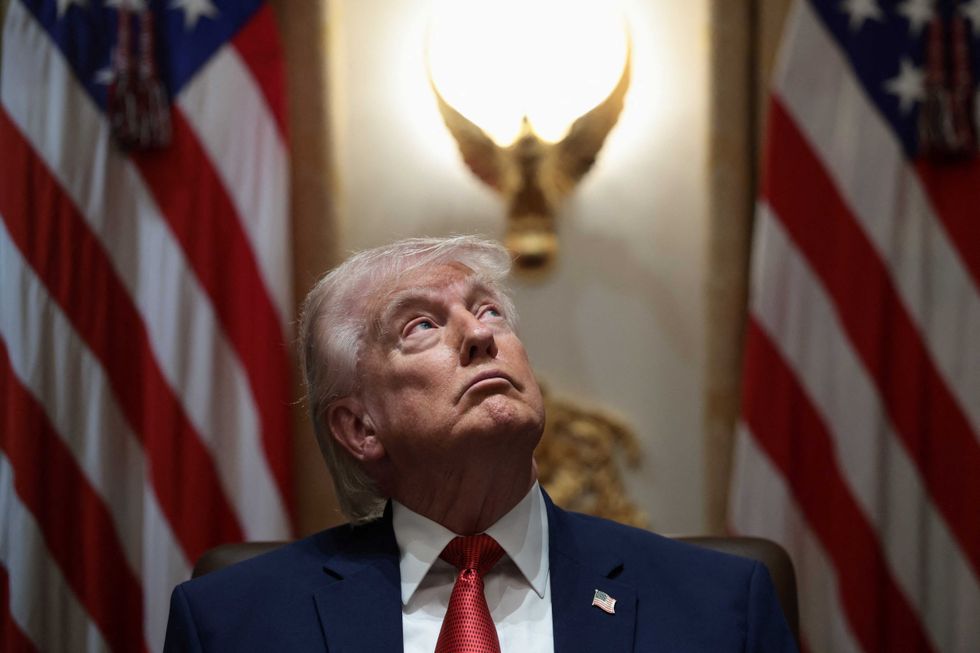
White House Talks With Crypto Executives On Market Structure

The White House hosted senior officials from the administration and leaders across the cryptocurrency and banking sectors to chart how stablecoins and other digital assets might fit within a refreshed market-structure framework under the Digital Asset Market Clarity (CLARITY) Act. The session came after the Senate Banking Committee postponed a markup on the act earlier in the year, a reminder of the legislative complexity surrounding a rapidly evolving space. Attendees from the Digital Chamber, a crypto advocacy group, underscored the need for guardrails on tokenized equities, decentralized finance, and the ethics of elected officials holding digital assets as policy detail is negotiated. The discussions signal a willingness to bridge policy ambitions with industry realities, even as lawmakers prepare for a multichamber, intercommittee process before any final vote.
Key takeaways
- The White House meeting focused on how CLARITY Act provisions on stablecoins and market structure could be reconciled with ongoing regulatory debates in Congress.
- Lawmakers from the Senate Banking Committee and Senate Agriculture Committee are expected to merge their market-structure bills before a full chamber vote, reflecting intercommittee coordination.
- Stakeholders emphasized that clarifying tokenized assets and yield mechanisms will be central to advancing policy that does not stifle innovation in digital markets.
- The Digital Chamber’s leadership framed the discussions as a constructive step toward a level playing field for digital assets in the United States.
- Democrats on the Agriculture Committee previously opposed the passage of their version of the bill, citing concerns about elected officials holding digital assets, signaling continued political sensitivity around asset exposure.
- Expect ongoing policy refinement and negotiations as committees seek to align competing visions on governance, disclosures, and investor protections.
Market context: The policy trajectory for digital assets in the United States remains in a fluid phase, with intercommittee alignment and executive engagement shaping the pace of reform. Stakeholders expect that concrete text and a unified path to a floor vote will depend on how policymakers balance investor protections, market integrity, and the innovative potential of stablecoins and DeFi within a phased, pragmatic framework.
Why it matters
The episode matters because it marks a tangible effort to translate high-level regulatory intent into a legislative framework that could govern stablecoins, tokenized assets, and related crypto activities in the near term. For market participants, a clearer pathway—one that avoids stifling innovation while expanding guardrails—could unlock a broader set of financial products and services linked to digital assets. If policymakers can converge on a bipartisan text that addresses yield dynamics in stablecoins, governance standards for tokenized assets, and ethical considerations for officials, the roadmap for market structure reform could gain momentum after months of stalemate.
From an industry perspective, the discussions signal a shift from abstract debates to policy specifics that directly impact how liquidity, risk, and compliance are managed in the United States. The focus on tokenized equities and DeFi reflects a recognition that traditional market infrastructure may need to adapt to accommodate new asset classes and programmable financial products. Yet the political undertone remains salient: any final framework will require buy-in from lawmakers who are wary of asset exposure by public officials, which could shape the balance of provisions related to disclosures, eligibility, and oversight.
What to watch next
- Whether Banking and Agriculture committees publish a merged market-structure bill in a single text for a floor vote.
- Positions and amendments on tokenized equities, DeFi governance, and stablecoin yield structures to be incorporated into the final draft.
- Any schedule for a markup resumption or formal committee hearings detailing the proposed governance and reporting requirements for digital assets.
- Clarifications around ethics rules for elected officials holding digital assets and how those rules would be enforced in practice.
- Public-facing statements from the White House outlining a concrete timeline for regulatory clarity and potential cross-agency coordination.
Sources & verification
- The Digital Chamber’s post on X describing the White House meeting and policy discussions surrounding the CLARITY Act. Verify at https://x.com/DigitalChamber/status/2018422998034718813
- Cointelegraph coverage noting that the Senate Banking Committee postponed the CLARITY Act markup in January. Verify at https://cointelegraph.com/news/us-senate-banking-cancels-thursday-crypto-bill-markup-for-negotiations
- The Agriculture Committee’s passage of its version of the market-structure bill without Democratic support, as reported by Cointelegraph. Verify at https://cointelegraph.com/news/live-senate-markup-crypto-market-structure-bill
What the article means for the ecosystem
The ongoing policy dialogue highlights an ecosystem-wide emphasis on practical regulation that can accommodate innovation without compromising investor protection. If a unified bill emerges, market participants could see clearer guidance on the treatment of stablecoins, the viability of tokenized securities, and the governance rules that apply to assets held by public officials. These elements are critical in determining whether institutions will participate more broadly, how yield mechanisms will be overseen, and what kinds of disclosures may become standard for digital-asset products.
Key figures and next steps
Central to the discussions is Cody Carbone, CEO of The Digital Chamber, whose comments at the White House session underscored the sector’s appetite for constructive policy alignment. While the exact contours of forthcoming legislation remain unsettled, the consensus among participants is that meaningful progress requires a carefully calibrated balance between encouraging innovation and imposing robust safeguards. The next few weeks are likely to feature renewed committee conversations, potential text releases, and a more explicit schedule for continued negotiations across the Banking and Agriculture panels, all aimed at piercing through political gridlock toward a workable market framework.
Rewritten Article Body: Pathways to CLARITY in US digital-asset policy
The White House hosted a high-level exchange on the future of digital-asset regulation, inviting leaders from both the crypto industry and the traditional banking sector to discuss the Digital Asset Market Clarity (CLARITY) Act in a setting designed to translate policy talk into tangible legislative steps. The dialogue followed a February timeline where the Senate Banking Committee had formally postponed a markup of the act earlier this year, a procedural decision that reflected the intricacies of reconciling innovation with investor protections. In attendance were representatives from advocacy groups like The Digital Chamber, who argued that the evolving policy landscape must not merely react to headlines but create a stable framework for tokenized assets, stablecoins, and DeFi that can function within existing financial markets without compromising safety or compliance.
Central to the conversation were three themes: governance for digital assets held by public officials, the treatment and oversight of stablecoin yield structures within market-structure rules, and the broader implications for tokenized securities and DeFi platforms. The dialogue acknowledged that the policy architecture will need to accommodate a spectrum of digital assets—from collateral-backed stablecoins to more complex programmable instruments—without stymying legitimate innovation. The Digital Chamber’s leadership, including CEO Cody Carbone, stressed that progress depends on translating broad policy goals into specific, workable rules that can withstand the scrutiny of both chambers of Congress and the executive branch. He framed the White House meeting as a constructive step toward a path that could harmonize regulatory intent with market realities, insisting that policy refinement can yield a fair playing field for digital assets in the United States.
The push for a cohesive approach involves both the Senate Banking Committee and the Senate Agriculture Committee. Each panel has stewarded a version of the market-structure bill, with the Banking Committee focusing on the Securities and Exchange Commission’s oversight of digital assets and the Agriculture Committee addressing commodities regulation through the Commodity Futures Trading Commission. The practical challenge lies in stitching together their separate drafts into a single, floor-ready text that can command bipartisan support. The necessity of intercommittee coordination underscores how a single, unified bill may be the vehicle that finally advances a market framework—one that clarifies how tokenized equities, stablecoins, and DeFi could operate within the U.S. financial system while preserving safeguards against abuse and manipulation.
Additionally, the Agriculture Committee’s recent passage of its version—without Democratic votes—spotlights the political sensitivity surrounding digital-asset holdings by public officials. Critics within the Democratic caucus have argued that asset ownership by elected representatives raises conflicts of interest and governance questions, adding another layer of complexity to the policy process. These concerns are not only procedural but potentially substantive: they shape the final contours of disclosure requirements and eligibility restrictions embedded in any final CLARITY Act text. As lawmakers wrestle with these questions, industry participants are watching closely to assess how far the policy framework will extend, where it will draw the line between permissible investment and potential conflicts, and how these decisions will influence the practical rollout of regulated crypto markets in the United States.
In the broader market context, these negotiations occur against a backdrop of evolving liquidity conditions and risk sentiment around digital assets. Institutional participants in particular seek clarity—both in terms of what constitutes compliant behavior and in the precise mechanics of how stablecoins will interact with traditional financial infrastructures. The White House engagement signals that executive and legislative branches are trying to converge on a coherent set of rules that can withstand political scrutiny and market scrutiny alike. The path to a final act will likely hinge on the ability of policymakers to balance consumer protection with innovation, a balance that could determine whether the U.S. remains a leading hub for blockchain-based financial services or if gaps in clarity drive activity to more permissive jurisdictions.
As the process unfolds, key policy questions will define the trajectory of the market. What specific guardrails will govern stablecoin yields, and how will yield distributions be audited and disclosed? How will tokenized equities be treated relative to traditional securities, and what governance protocols will be required for DeFi platforms seeking legitimate access to mainstream markets? And how will ethical standards for asset holdings by officials be codified in a way that is both enforceable and practically enforceable by regulators? These questions will shape the drafting of the final text, the negotiation dynamics between committees, and, ultimately, the degree of certainty that market participants can rely upon in planning product launches, liquidity strategies, and risk management practices. The discussions at the White House mark a notable moment in a longer arc toward regulatory clarity—one that could redefine how digital assets are perceived, regulated, and integrated into the fabric of the U.S. financial system.
https://platform.twitter.com/widgets.js
This article was originally published as White House Talks With Crypto Executives On Market Structure on Crypto Breaking News – your trusted source for crypto news, Bitcoin news, and blockchain updates.


You May Also Like

edgeX (EDGE) Surges 44.9% to All-Time High: Volume Spike Analysis

Governor gives thousands of prisoners commutation hope for first time since 1990s