Two MIT-educated brothers accused of orchestrating the largest MEV bot exploitation in cryptocurrency history will face trial after a federal judge rejected their attempts to dismiss fraud and money laundering charges. Anton Peraire-Bueno, 24, and James Peraire-Bueno, 28, allegedly stole $25 million in cryptocurrency within 12 seconds by manipulating Ethereum’s MEV-Boost protocol in April 2023. Technical Error or Deliberate Exploit? The brothers meticulously planned their operation over several months, studying trading patterns of Ethereum bots and establishing shell companies. They created 16 Ethereum validators using approximately $880,000 in cryptocurrency, then executed what prosecutors called a “bait, block, search, and propagation” scheme targeting three victim traders operating MEV bots. Their exploit involved proposing “lure transactions” to induce victim traders’ bots to purchase illiquid cryptocurrencies worth $25 million. The brothers then sent a false signature to the relay system, gaining premature access to private transaction data. They replaced the lure transactions with their own trades, selling the illiquid tokens and rendering the victims’ holdings worthless. Following the theft, the brothers laundered the stolen funds through complex transactions across multiple addresses and foreign exchanges with limited KYC requirements. They converted the cryptocurrency to DAI stablecoin, then to USDC , before transferring $20 million to U.S. dollar accounts. Foreign law enforcement froze $3 million of the stolen funds. The case comes amid rising concerns about MEV exploitation across blockchain networks. Recent incidents include a $2 million insider attack on Bedrock’s UniBTC protocol by a former Fuzzland employee and a notorious Solana MEV bot named “arsc” that accumulated $30 million in two months through sandwich attacks. Brothers’ Legal Battle Reaches Critical Juncture Federal prosecutors arrested the Peraire-Bueno brothers on May 15, 2024, with Anton taken into custody in Boston and James in New York. U.S. Attorney Damian Williams described the scheme as meticulously planned, noting how the brothers “ used their specialized skills and education to tamper with and manipulate the protocols relied upon by millions of Ethereum users. “ Two Brothers Arrested for Attacking Ethereum Blockchain and Stealing $25M in Cryptocurrency 🔗: https://t.co/rY4No6YUrm pic.twitter.com/2Mlb3zIdpo — U.S. Department of Justice (@TheJusticeDept) May 15, 2024 The brothers face charges of conspiracy to commit wire fraud, wire fraud, and conspiracy to commit money laundering. Each charge carries a potential 20-year prison sentence. A federal judge scheduled their trial for October 14, 2025 , after denying their motions to dismiss the indictment. The court found the wire fraud charges legally sufficient, determining that the brothers’ lure transactions and false signatures constituted material misrepresentations. The judge ruled that the $25 million in stolen cryptocurrency represented a traditionally recognized property interest, not merely contingent profits. IRS Criminal Investigation’s New York Cyber Unit traced the stolen funds back to the brothers despite their sophisticated laundering efforts. Special Agent Thomas Fattorusso noted that investigators “simply followed the money” using cutting-edge technology and traditional investigative methods. Growing MEV Threat Challenges Blockchain Scalability MEV exploitation has emerged as a dominant threat to blockchain scalability, according to recent research from Flashbots. According to a report covered by Cryptonews in June, MEV bots now consume 40% of all blockspace on Solana and over half of the gas usage on Ethereum rollups, such as Base and OP Mainnet. 🔍 MEV bot spam is now the main barrier to blockchain scalability, consuming most new throughput on Ethereum rollups and Solana. #MEV #BlockchainScalability https://t.co/kNRiwwORsU — Cryptonews.com (@cryptonews) June 17, 2025 The Peraire-Bueno case represents the first criminal prosecution of MEV manipulation; however, similar exploits continue to occur across various networks. A Ronin Network breach in August 2024 initially appeared malicious but was later revealed to be a white-hat operation, with the hacker returning $9.8 million after discovering a vulnerability in the bridge. Recent data from EigenPhi shows more than 81,000 users fell victim to sandwich attacks in the last 30 days alone. Source: EigenPhi These attacks now account for nearly $1 billion in weekly trading volume on Ethereum-based decentralized exchanges. Flashbots has proposed new frameworks to address MEV abuse, including explicit MEV auctions and programmable privacy using Trusted Execution Environments. The organization argues that current spam from MEV bots creates artificial fee floors, undermining the promise of near-zero transaction costs on scaled networks. The brothers’ trial, scheduled for October, is likely to set precedents for future MEV-related prosecutions, as it isn’t technically precise whether it can be attributed to an exploit of a technical oversight.Two MIT-educated brothers accused of orchestrating the largest MEV bot exploitation in cryptocurrency history will face trial after a federal judge rejected their attempts to dismiss fraud and money laundering charges. Anton Peraire-Bueno, 24, and James Peraire-Bueno, 28, allegedly stole $25 million in cryptocurrency within 12 seconds by manipulating Ethereum’s MEV-Boost protocol in April 2023. Technical Error or Deliberate Exploit? The brothers meticulously planned their operation over several months, studying trading patterns of Ethereum bots and establishing shell companies. They created 16 Ethereum validators using approximately $880,000 in cryptocurrency, then executed what prosecutors called a “bait, block, search, and propagation” scheme targeting three victim traders operating MEV bots. Their exploit involved proposing “lure transactions” to induce victim traders’ bots to purchase illiquid cryptocurrencies worth $25 million. The brothers then sent a false signature to the relay system, gaining premature access to private transaction data. They replaced the lure transactions with their own trades, selling the illiquid tokens and rendering the victims’ holdings worthless. Following the theft, the brothers laundered the stolen funds through complex transactions across multiple addresses and foreign exchanges with limited KYC requirements. They converted the cryptocurrency to DAI stablecoin, then to USDC , before transferring $20 million to U.S. dollar accounts. Foreign law enforcement froze $3 million of the stolen funds. The case comes amid rising concerns about MEV exploitation across blockchain networks. Recent incidents include a $2 million insider attack on Bedrock’s UniBTC protocol by a former Fuzzland employee and a notorious Solana MEV bot named “arsc” that accumulated $30 million in two months through sandwich attacks. Brothers’ Legal Battle Reaches Critical Juncture Federal prosecutors arrested the Peraire-Bueno brothers on May 15, 2024, with Anton taken into custody in Boston and James in New York. U.S. Attorney Damian Williams described the scheme as meticulously planned, noting how the brothers “ used their specialized skills and education to tamper with and manipulate the protocols relied upon by millions of Ethereum users. “ Two Brothers Arrested for Attacking Ethereum Blockchain and Stealing $25M in Cryptocurrency 🔗: https://t.co/rY4No6YUrm pic.twitter.com/2Mlb3zIdpo — U.S. Department of Justice (@TheJusticeDept) May 15, 2024 The brothers face charges of conspiracy to commit wire fraud, wire fraud, and conspiracy to commit money laundering. Each charge carries a potential 20-year prison sentence. A federal judge scheduled their trial for October 14, 2025 , after denying their motions to dismiss the indictment. The court found the wire fraud charges legally sufficient, determining that the brothers’ lure transactions and false signatures constituted material misrepresentations. The judge ruled that the $25 million in stolen cryptocurrency represented a traditionally recognized property interest, not merely contingent profits. IRS Criminal Investigation’s New York Cyber Unit traced the stolen funds back to the brothers despite their sophisticated laundering efforts. Special Agent Thomas Fattorusso noted that investigators “simply followed the money” using cutting-edge technology and traditional investigative methods. Growing MEV Threat Challenges Blockchain Scalability MEV exploitation has emerged as a dominant threat to blockchain scalability, according to recent research from Flashbots. According to a report covered by Cryptonews in June, MEV bots now consume 40% of all blockspace on Solana and over half of the gas usage on Ethereum rollups, such as Base and OP Mainnet. 🔍 MEV bot spam is now the main barrier to blockchain scalability, consuming most new throughput on Ethereum rollups and Solana. #MEV #BlockchainScalability https://t.co/kNRiwwORsU — Cryptonews.com (@cryptonews) June 17, 2025 The Peraire-Bueno case represents the first criminal prosecution of MEV manipulation; however, similar exploits continue to occur across various networks. A Ronin Network breach in August 2024 initially appeared malicious but was later revealed to be a white-hat operation, with the hacker returning $9.8 million after discovering a vulnerability in the bridge. Recent data from EigenPhi shows more than 81,000 users fell victim to sandwich attacks in the last 30 days alone. Source: EigenPhi These attacks now account for nearly $1 billion in weekly trading volume on Ethereum-based decentralized exchanges. Flashbots has proposed new frameworks to address MEV abuse, including explicit MEV auctions and programmable privacy using Trusted Execution Environments. The organization argues that current spam from MEV bots creates artificial fee floors, undermining the promise of near-zero transaction costs on scaled networks. The brothers’ trial, scheduled for October, is likely to set precedents for future MEV-related prosecutions, as it isn’t technically precise whether it can be attributed to an exploit of a technical oversight.

MIT Brothers Who Exploited MEV Bots for $25M Must Face Trial, Judge Rules

2025/07/24 17:51
4 min read

Two MIT-educated brothers accused of orchestrating the largest MEV bot exploitation in cryptocurrency history will face trial after a federal judge rejected their attempts to dismiss fraud and money laundering charges.

Anton Peraire-Bueno, 24, and James Peraire-Bueno, 28, allegedly stole $25 million in cryptocurrency within 12 seconds by manipulating Ethereum’s MEV-Boost protocol in April 2023.

Technical Error or Deliberate Exploit?

The brothers meticulously planned their operation over several months, studying trading patterns of Ethereum bots and establishing shell companies.

They created 16 Ethereum validators using approximately $880,000 in cryptocurrency, then executed what prosecutors called a “bait, block, search, and propagation” scheme targeting three victim traders operating MEV bots.

Their exploit involved proposing “lure transactions” to induce victim traders’ bots to purchase illiquid cryptocurrencies worth $25 million.

The brothers then sent a false signature to the relay system, gaining premature access to private transaction data.

They replaced the lure transactions with their own trades, selling the illiquid tokens and rendering the victims’ holdings worthless.

Following the theft, the brothers laundered the stolen funds through complex transactions across multiple addresses and foreign exchanges with limited KYC requirements.

They converted the cryptocurrency to DAI stablecoin, then to USDC, before transferring $20 million to U.S. dollar accounts. Foreign law enforcement froze $3 million of the stolen funds.

The case comes amid rising concerns about MEV exploitation across blockchain networks.

Recent incidents include a $2 million insider attack on Bedrock’s UniBTC protocol by a former Fuzzland employee and a notorious Solana MEV bot named “arsc” that accumulated $30 million in two months through sandwich attacks.

Federal prosecutors arrested the Peraire-Bueno brothers on May 15, 2024, with Anton taken into custody in Boston and James in New York.

U.S. Attorney Damian Williams described the scheme as meticulously planned, noting how the brothers “used their specialized skills and education to tamper with and manipulate the protocols relied upon by millions of Ethereum users.

The brothers face charges of conspiracy to commit wire fraud, wire fraud, and conspiracy to commit money laundering.

Each charge carries a potential 20-year prison sentence. A federal judge scheduled their trial for October 14, 2025, after denying their motions to dismiss the indictment.

The court found the wire fraud charges legally sufficient, determining that the brothers’ lure transactions and false signatures constituted material misrepresentations.

The judge ruled that the $25 million in stolen cryptocurrency represented a traditionally recognized property interest, not merely contingent profits.

IRS Criminal Investigation’s New York Cyber Unit traced the stolen funds back to the brothers despite their sophisticated laundering efforts.

Special Agent Thomas Fattorusso noted that investigators “simply followed the money” using cutting-edge technology and traditional investigative methods.

Growing MEV Threat Challenges Blockchain Scalability

MEV exploitation has emerged as a dominant threat to blockchain scalability, according to recent research from Flashbots.

According to a report covered by Cryptonews in June, MEV bots now consume 40% of all blockspace on Solana and over half of the gas usage on Ethereum rollups, such as Base and OP Mainnet.

The Peraire-Bueno case represents the first criminal prosecution of MEV manipulation; however, similar exploits continue to occur across various networks.

A Ronin Network breach in August 2024 initially appeared malicious but was later revealed to be a white-hat operation, with the hacker returning $9.8 million after discovering a vulnerability in the bridge.

Recent data from EigenPhi shows more than 81,000 users fell victim to sandwich attacks in the last 30 days alone.
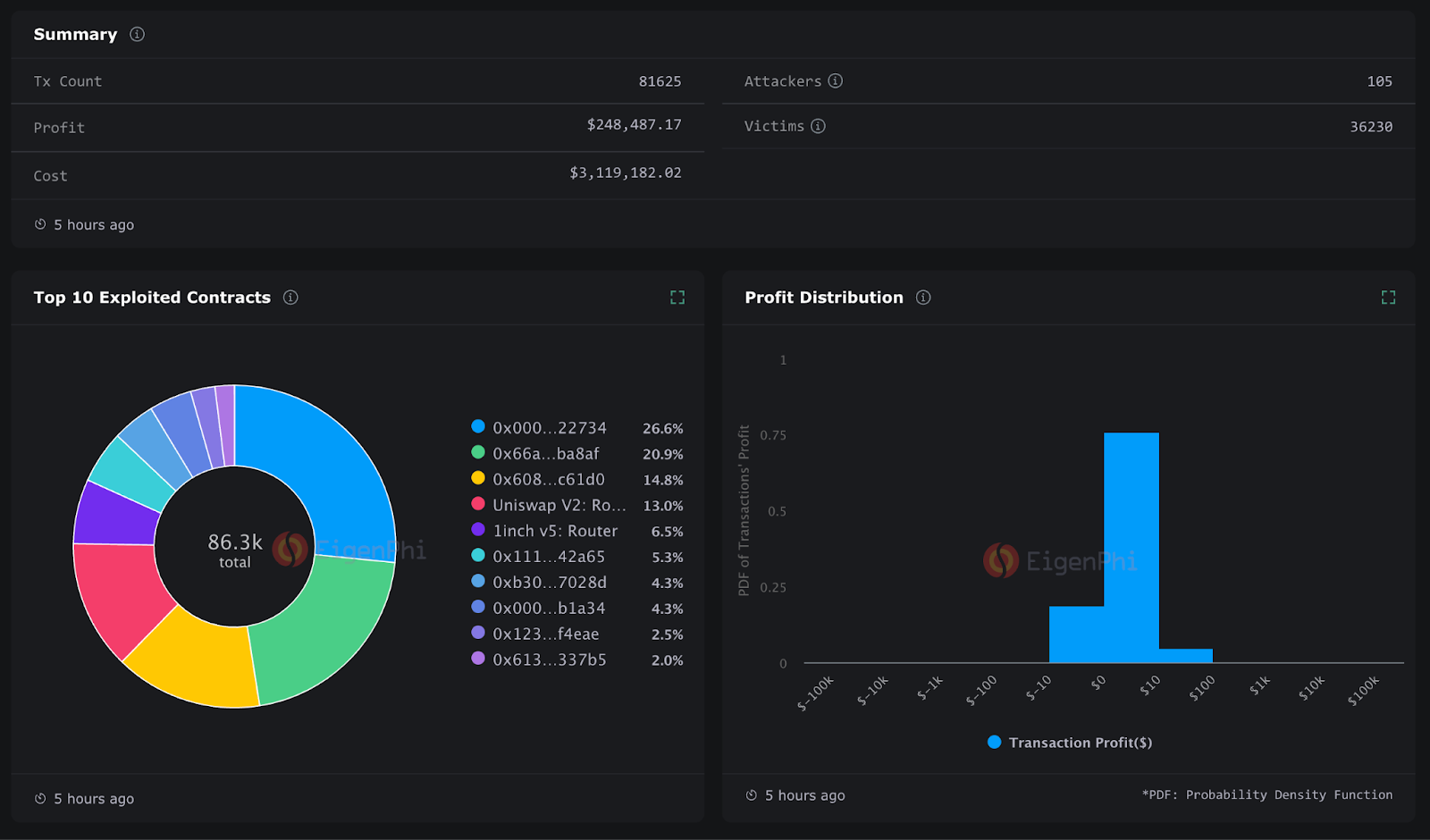
MIT Brothers Who Exploited MEV Bots for $25M Must Face Trial, Judge RulesSource: EigenPhi

These attacks now account for nearly $1 billion in weekly trading volume on Ethereum-based decentralized exchanges.

Flashbots has proposed new frameworks to address MEV abuse, including explicit MEV auctions and programmable privacy using Trusted Execution Environments.

The organization argues that current spam from MEV bots creates artificial fee floors, undermining the promise of near-zero transaction costs on scaled networks.

The brothers’ trial, scheduled for October, is likely to set precedents for future MEV-related prosecutions, as it isn’t technically precise whether it can be attributed to an exploit of a technical oversight.


Market Opportunity
NEAR Logo
NEAR Price(NEAR)
$1,0003
$1,0003$1,0003
+2,79%
USD
NEAR (NEAR) Live Price Chart
Disclaimer: The articles reposted on this site are sourced from public platforms and are provided for informational purposes only. They do not necessarily reflect the views of MEXC. All rights remain with the original authors. If you believe any content infringes on third-party rights, please contact [email protected] for removal. MEXC makes no guarantees regarding the accuracy, completeness, or timeliness of the content and is not responsible for any actions taken based on the information provided. The content does not constitute financial, legal, or other professional advice, nor should it be considered a recommendation or endorsement by MEXC.

You May Also Like

Valour launches bitcoin staking ETP on London Stock Exchange

Valour launches bitcoin staking ETP on London Stock Exchange

The post Valour launches bitcoin staking ETP on London Stock Exchange appeared on BitcoinEthereumNews.com. Valour Digital Securities, a subsidiary of DeFi Technologies, has launched its Bitcoin Physical Staking exchange-traded product (ETP) on the London Stock Exchange, the firm announced on Friday. The listing expands Valour’s yield-bearing bitcoin product beyond mainland Europe, where it has traded since November 2024 on Germany’s Xetra market. The ETP is restricted to professional and institutional investors under current UK regulations, with retail access expected to open on October 8 under new Financial Conduct Authority rules. The product, listed under ticker 1VBS, is physically backed 1:1 by bitcoin held in cold storage with Copper, a regulated custodian. It offers an estimated annual yield of 1.4%, which is distributed by increasing the product’s net asset value (NAV). Yield is generated through a staking process that uses the Core Chain’s Satoshi Plus consensus mechanism. Rewards earned in CORE tokens are converted into bitcoin and added to the ETP’s holdings. Valour has emphasized that while the process involves short-term lockups during stake transactions, the underlying bitcoin is not subject to traditional staking risks such as slashing. The launch comes as the UK begins to loosen restrictions on crypto-linked investment products. Earlier this year, the Financial Conduct Authority moved toward allowing retail access to certain crypto exchange-traded notes and products, a shift that will test demand for regulated, yield-bearing bitcoin exposure. This is a developing story. This article was generated with the assistance of AI and reviewed by editor Jeffrey Albus before publication. Get the news in your inbox. Explore Blockworks newsletters: Source: https://blockworks.co/news/valour-launches-bitcoin-staking-etp
Share
BitcoinEthereumNews2025/09/20 02:48
Duterte drug war victims ‘had to be the poor’

Duterte drug war victims ‘had to be the poor’

The ICC prosecution obtains an excel sheet marking who among the names on the PRRD list have been 'neutralized.'
Share
Rappler2026/02/25 08:51
Solana’s (SOL) Recent Rally May Impress, But Investors Targeting Life-Changing ROI Are Looking Elsewhere

Solana’s (SOL) Recent Rally May Impress, But Investors Targeting Life-Changing ROI Are Looking Elsewhere

The post Solana’s (SOL) Recent Rally May Impress, But Investors Targeting Life-Changing ROI Are Looking Elsewhere appeared on BitcoinEthereumNews.com. Solana’s (SOL) latest rally has attracted investors from all over, but the bigger story for vision-minded investors is where the next surges of life-altering returns are heading.  As Solana continues to see high levels of ecosystem usage and network utilization, the stage is slowly being set for Mutuum Finance (MUTM).  MUTM is priced at $0.035 in its fast-growing presale. Price appreciation of 14.3% is what the investors are going to anticipate in the next phase. Over $15.85 million has been raised as the presale keeps gaining momentum. Unlike the majority of the tokens surfing short-term waves of hype, Mutuum Finance is becoming a utility-focused choice with more value potential and therefore an increasingly better option for investors looking for more than price action alone. Solana Maintains Gains Near $234 As Speculation Persists Solana (SOL) is trading at $234.08 currently, holding its 24hr range around $234.42 to $248.19 as it illustrates the recent trend. The token has recorded strong seven-day gains of nearly 13%, far exceeding most of its peers, as it is supported by rising volume and institutional buying. Resistance is at $250-$260, and support appears to be at $220-$230, and thus these are significant levels for potential breakout or pullback.  However, new DeFi crypto Mutuum Finance, is being considered by market watchers to have more upside potential, being still in presale.  Mutuum Finance Phase 6 Presale Mutuum Finance is currently in Presale Stage 6 and offering tokens for $0.035. Presale has been going on very fast, and investors have raised over $15.85 million. The project also looks forward to a USD-pegged stablecoin on the Ethereum blockchain for convenient payments and as a keeper of long-term value. Mutuum Finance is a dual-lending, multi-purpose DeFi platform that benefits borrowers and lenders alike. It provides the network to retail as well as…
Share
BitcoinEthereumNews2025/09/18 06:23