What Can CX Leaders Learn From Safe Dubai 2026 About Intelligence, Risk, and Experience Design? What happens when systems fail quietly—and no one notices until What Can CX Leaders Learn From Safe Dubai 2026 About Intelligence, Risk, and Experience Design? What happens when systems fail quietly—and no one notices until

Safe Dubai 2026: What Intelligent Infrastructure Teaches CX Leaders About Risk and AI

2026/02/03 19:12
6 min read

What Can CX Leaders Learn From Safe Dubai 2026 About Intelligence, Risk, and Experience Design?

What happens when systems fail quietly—and no one notices until it’s too late?

Picture this.
A metro station looks perfect at launch.
Years later, hairline cracks appear underground.
Data exists. Sensors work. Reports arrive.
Yet decisions lag. Signals stay siloed. Judgment comes late.

Now replace that station with your customer journey.

That uncomfortable parallel sits at the heart of Safe Dubai 2026, a one-day forum on intelligent infrastructure—but its lessons extend far beyond construction. For CX and EX leaders navigating AI adoption, fragmented insights, and trust erosion, the event offers a powerful metaphor and a practical playbook.

Hosted by Encardio Rite on February 13, 2026, at the Grand Hyatt, Dubai, Safe Dubai 2026 convenes global experts to explore how monitoring data becomes intelligence—and intelligence becomes better decisions.

In a world where the UAE’s construction sector alone is projected to reach US$130.8 billion by 2029, the stakes are clear. Bigger systems demand smarter judgment. The same holds true for customer and employee experience ecosystems.


What Is “Infrastructure Intelligence,” and Why Should CX Teams Care?

Short answer: Infrastructure intelligence turns raw monitoring data into predictive, decision-ready insight—and CX teams face the same challenge.

In construction, sensors capture stress, movement, and degradation.
In CX, signals come from touchpoints, sentiment, behavior, and context.

Both fail when data exists but meaning does not travel.

Safe Dubai 2026 spotlights a critical shift:
from data collection to intelligence-driven lifecycle management.
CX leaders should recognize this transition instantly.

Because most CX programs don’t fail due to lack of data.
They fail due to interpretation gaps, organizational silos, and delayed action.


Why Is Data Abundance Still Producing Poor Decisions?

Short answer: Because intelligence is not volume—it’s coherence.

A McKinsey estimate shows global construction inefficiencies cost US$1.6 trillion annually, driven partly by fragmented insights and limited visibility.

CX leaders face an eerily similar tax:

  • Disconnected journey analytics
  • Isolated VOC programs
  • AI models trained without domain judgment
  • Dashboards optimized for reporting, not decisions

As infrastructure systems grow complex and interconnected, Safe Dubai 2026 argues for interpretive intelligence—not more dashboards.

That same principle defines modern CX maturity.


How Does “Intelligent Structures” Map to Intelligent Experiences?

Short answer: Both require sensing, context, judgment, and timely intervention.

Safe Dubai 2026 focuses on intelligent structures—systems that continuously learn, adapt, and signal risk early.

Translate that to CX:

Infrastructure PrincipleCX/EX Parallel
Continuous monitoringAlways-on journey sensing
Early anomaly detectionProactive churn and friction signals
Engineering judgmentHuman-in-the-loop CX governance
Lifecycle decisionsExperience debt management
Safety and resilienceTrust and emotional continuity

This is not metaphorical fluff.
It’s an operational blueprint.


What Makes Safe Dubai 2026 Especially Relevant for CX Leaders Now?

Short answer: It addresses the exact moment CX finds itself stuck—between data and judgment.

According to Arushi Bhalla, Managing Director, Encardio Rite Group of Companies:

Swap construction with customer experience, and the sentence holds.

CX leaders today wrestle with:

  • AI tools that surface insights without context
  • Teams drowning in metrics but starved of meaning
  • Experience decisions delayed until damage becomes visible

Safe Dubai 2026 reframes intelligence as a capability, not a toolset.


What Role Does Human Judgment Play in an AI-Driven World?

Short answer: Judgment converts intelligence into accountability.

One of the forum’s highlights is the keynote by Professor Kenichi Soga, University of California, Berkeley, who brings global project experience to examine how monitoring, intelligence, and engineering judgment shape real-world infrastructure decisions.

This matters deeply for CX.

AI can surface patterns.
It cannot own consequences.

CX leaders must decide:

  • When to intervene
  • Which signal matters more
  • What risk is acceptable
  • How trust is preserved

Experience failures rarely come from missing data.
They come from unowned decisions.


What CX Leaders Can Learn From Infrastructure Risk Management

Short answer: Experience failures behave like structural failures—slow, cumulative, and predictable.

Infrastructure rarely collapses without warning.
Neither do customer relationships.

The warning signs usually include:

  • Repeated friction in the same journey stage
  • Rising effort masked by stable NPS
  • Employee workarounds becoming permanent
  • Exceptions becoming “normal operations”

Safe Dubai 2026 emphasizes early intervention, not post-mortems.

CX leaders should adopt the same posture.


A Practical Framework: From Monitoring to Experience Intelligence

Here’s a CX-adapted framework inspired by the Safe Dubai lens:

1. Sense Continuously, Not Periodically

Move beyond quarterly surveys.
Use real-time journey signals, behavior data, and operational telemetry.

2. Interpret in Context

Data without domain understanding misleads.
Embed CX insights within operational and human context.

3. Assign Judgment, Not Just Ownership

Dashboards don’t decide. Leaders do.
Make decision accountability explicit.

4. Act Early, Not Perfectly

Small, early interventions prevent massive downstream cost.

5. Manage the Lifecycle

Experiences decay.
Plan for maintenance, renewal, and decommissioning.
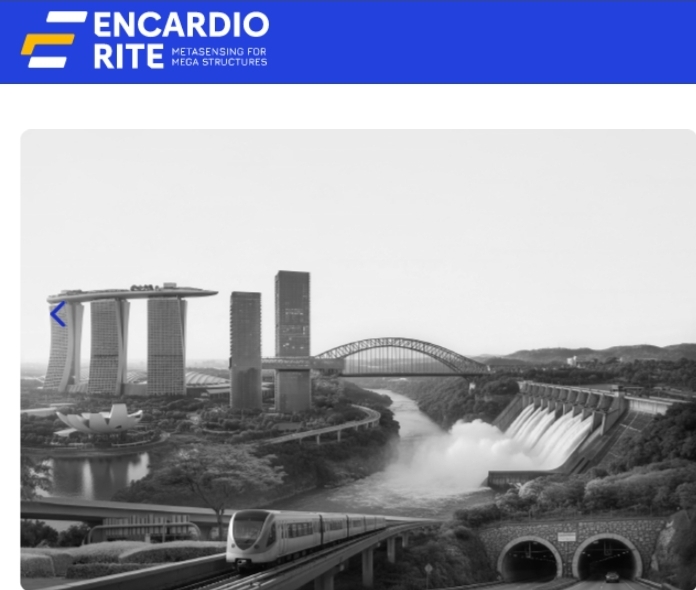

Safe Dubai 2026: What Intelligent Infrastructure Teaches CX Leaders About Risk and AI

Common Pitfalls CX Leaders Share With Infrastructure Projects

Ignoring these leads to silent failure.

  • Treating intelligence as a reporting layer
  • Separating insight teams from operators
  • Over-automating decisions without governance
  • Optimizing locally while risk accumulates globally
  • Confusing visibility with control

Safe Dubai 2026 exists because these mistakes are expensive in concrete and steel.

In CX, they cost trust.


Why CXQuest Views Safe Dubai 2026 as a CX Event in Disguise

CXQuest has long argued that experience is an engineered system, not a soft discipline.

Safe Dubai 2026 reinforces three CXQuest principles:

  • Complex systems fail at the seams
  • Intelligence must travel across silos
  • Accountability defines maturity

Whether you manage bridges or brand trust, the operating logic is the same.


FAQ: CX Intelligence, Risk, and Infrastructure Thinking

How is infrastructure monitoring relevant to CX strategy?

Both rely on continuous sensing, interpretation, and timely intervention to prevent systemic failure.

Can AI replace human judgment in CX decisions?

No. AI identifies patterns, but leaders must own trade-offs, ethics, and outcomes.

Why do CX programs fail despite strong analytics?

Because insights remain siloed and decisions lack clear accountability.

What is experience lifecycle management?

It’s the practice of maintaining, upgrading, and retiring journeys before failure occurs.

How can CX leaders apply predictive intelligence responsibly?

By combining AI signals with domain expertise, governance, and human review.


Key Insights for CX and EX Leaders

  • Data is abundant. Judgment is scarce.
  • Experience risk accumulates quietly.
  • Early signals matter more than perfect metrics.
  • Intelligence must enable decisions, not reports.
  • Lifecycle thinking separates leaders from laggards.

Actionable Takeaways for CX Professionals

  1. Audit where critical CX signals stop traveling.
  2. Assign named decision owners for top journeys.
  3. Introduce early-warning indicators, not just lagging metrics.
  4. Embed CX insight into operational forums, not dashboards alone.
  5. Keep humans in the loop for AI-driven decisions.
  6. Treat experience decay as technical debt.
  7. Act on weak signals before customers feel pain.

Final Thought

Safe Dubai 2026 may focus on megastructures.
But its core message is universal:

For CX leaders navigating complexity, AI, and rising expectations, that lesson couldn’t be more timely.

The post Safe Dubai 2026: What Intelligent Infrastructure Teaches CX Leaders About Risk and AI appeared first on CX Quest.


Disclaimer: The articles reposted on this site are sourced from public platforms and are provided for informational purposes only. They do not necessarily reflect the views of MEXC. All rights remain with the original authors. If you believe any content infringes on third-party rights, please contact [email protected] for removal. MEXC makes no guarantees regarding the accuracy, completeness, or timeliness of the content and is not responsible for any actions taken based on the information provided. The content does not constitute financial, legal, or other professional advice, nor should it be considered a recommendation or endorsement by MEXC.
Tags:

You May Also Like

SBI VC Trade Adds Litecoin to Japanese Lending Program

SBI VC Trade Adds Litecoin to Japanese Lending Program

The post SBI VC Trade Adds Litecoin to Japanese Lending Program appeared on BitcoinEthereumNews.com. SBI VC Trade added Litecoin to its regulated lending program
Share
BitcoinEthereumNews2026/02/03 19:53
Work Dogs TGE Is Running — Is WD About to Drop in Q2 After March 30?

Work Dogs TGE Is Running — Is WD About to Drop in Q2 After March 30?

Work Dogs Token Listing Date Expected in Q2 2026 as WD TGE Nears Completion The countdown to the Work Dogs (WD) token listing date has officially begun. Afte
Share
Hokanews2026/02/03 20:16
Bitcoin: Treasury Corporation’s Strategic OTCQX Listing Unlocks New Growth

Bitcoin: Treasury Corporation’s Strategic OTCQX Listing Unlocks New Growth

BitcoinWorld Bitcoin: Treasury Corporation’s Strategic OTCQX Listing Unlocks New Growth The world of cryptocurrency is constantly evolving, and a recent development has captured the attention of investors and enthusiasts alike. Bitcoin Treasury Corporation, a a company dedicated to accumulating digital assets, has made a significant move by listing on the U.S. OTCQX Best Market under the ticker BTCFF. This isn’t just another listing; it signals a growing trend of institutional confidence in digital assets and their long-term potential. What Does This Strategic OTCQX Listing Mean for Bitcoin Treasury Corporation? For those unfamiliar, the OTCQX Best Market is the highest tier of the three marketplaces for the over-the-counter (OTC) trading of stocks. It’s designed for established, investor-focused U.S. and international companies. Being listed here offers several distinct advantages for a company like Bitcoin Treasury Corporation. Enhanced Visibility: The listing provides a more transparent and regulated trading environment, making the company more attractive to a broader range of institutional and retail investors. Increased Liquidity: A higher-tier market often leads to greater trading volumes, which can improve the liquidity of the company’s shares. Credibility Boost: Operating on a recognized market lends significant credibility, especially for an entity deeply involved in the nascent crypto space. Bitcoin Treasury Corporation began its journey of accumulating BTC in June and has rapidly grown its holdings to over 700 BTC. This strategic accumulation underscores their belief in Bitcoin as a foundational asset for the future. Why Are More Companies Embracing Bitcoin for Their Treasuries? The move by Bitcoin Treasury Corporation isn’t an isolated incident. We’ve witnessed a remarkable shift in corporate finance over the past few years, with numerous companies integrating digital assets into their balance sheets. Why this sudden embrace of Bitcoin? Many view Bitcoin as a powerful hedge against inflation, especially in an era of quantitative easing and rising global debt. Its decentralized nature and finite supply of 21 million coins make it an appealing “digital gold” alternative to traditional fiat currencies. Companies like MicroStrategy have famously adopted Bitcoin as their primary treasury reserve asset, demonstrating a bold vision for corporate capital allocation. While the potential for significant gains is attractive, companies must also navigate the inherent volatility of the crypto market and evolving regulatory landscapes. Despite these challenges, the long-term strategic benefits often outweigh the risks for those with a strong conviction in this digital asset. How Does This Listing Impact the Broader Bitcoin Market? Each time a company like Bitcoin Treasury Corporation makes such a move, it sends a ripple through the entire crypto ecosystem. It serves as a strong validation of Bitcoin as a legitimate and valuable asset class, not just a speculative tool. This increased institutional involvement can lead to: Greater Stability: As more large entities hold Bitcoin for the long term, it could potentially reduce some of the extreme price swings often associated with the asset. Mainstream Acceptance: Corporate adoption paves the way for wider public acceptance and understanding of cryptocurrencies. Regulatory Clarity: With more traditional companies engaging, regulators may be compelled to provide clearer guidelines, fostering a more secure environment for everyone involved with digital currencies. For individual investors, this trend suggests a maturation of the market. It implies that fundamental analysis and long-term investment strategies are becoming increasingly relevant in the Bitcoin space. Navigating the Future of Corporate Bitcoin Holdings The listing of Bitcoin Treasury Corporation on the OTCQX Best Market marks a pivotal moment. It highlights a growing confidence among corporations in integrating digital assets into their financial strategies. As the digital economy continues to expand, we can expect more companies to explore similar avenues for their Bitcoin investments. However, it’s crucial for any company considering Bitcoin for its treasury to conduct thorough due diligence. Understanding market dynamics, regulatory compliance, and secure custody solutions are paramount. The journey into corporate crypto holdings is still relatively new, but pioneers like Bitcoin Treasury Corporation are charting a course for others to follow. In conclusion, Bitcoin Treasury Corporation’s OTCQX listing is more than just a procedural step; it’s a powerful testament to the enduring appeal and increasing institutional acceptance of Bitcoin. This move not only benefits the company but also reinforces the broader narrative of digital assets’ emergence as a crucial component of modern financial portfolios. It’s an exciting time to watch the intersection of traditional finance and digital assets evolve. Frequently Asked Questions About Bitcoin Treasury Corporation’s Listing Q1: What is the OTCQX Best Market? A1: The OTCQX Best Market is the highest tier for over-the-counter (OTC) stock trading in the U.S. It’s for established companies that meet stringent financial and disclosure requirements, offering enhanced transparency and credibility for investors. Q2: Why is Bitcoin Treasury Corporation’s listing significant for Bitcoin? A2: This listing signifies increasing institutional confidence in Bitcoin as a legitimate asset. It provides a regulated platform for a company focused on accumulating Bitcoin, potentially encouraging more traditional investors and corporations to consider digital assets. Q3: How much Bitcoin does Bitcoin Treasury Corporation hold? A3: As of their announcement, Bitcoin Treasury Corporation holds over 700 BTC, having begun its accumulation strategy in June. Q4: What are the benefits for Bitcoin Treasury Corporation by listing on OTCQX? A4: Benefits include enhanced visibility, increased liquidity for its shares, and a significant boost in credibility by operating on a recognized and regulated market, making it more attractive to a wider investor base. Q5: Does this mean Bitcoin is becoming more mainstream? A5: Yes, corporate actions like this listing contribute significantly to Bitcoin‘s mainstream acceptance. It helps validate digital assets as a serious component of financial portfolios, paving the way for wider public and institutional understanding. If you found this article insightful and believe in the growing importance of corporate Bitcoin adoption, please share it with your network! Your support helps us continue to provide valuable insights into the evolving world of cryptocurrency. To learn more about the latest Bitcoin trends, explore our article on key developments shaping Bitcoin institutional adoption. This post Bitcoin: Treasury Corporation’s Strategic OTCQX Listing Unlocks New Growth first appeared on BitcoinWorld.
Share
Coinstats2025/09/18 19:40



