Government Shutdown Crisis Averted as US House Passes Critical Procedural Vote, Paving Way for FY2026 Budget
BitcoinWorld
Government Shutdown Crisis Averted as US House Passes Critical Procedural Vote, Paving Way for FY2026 Budget
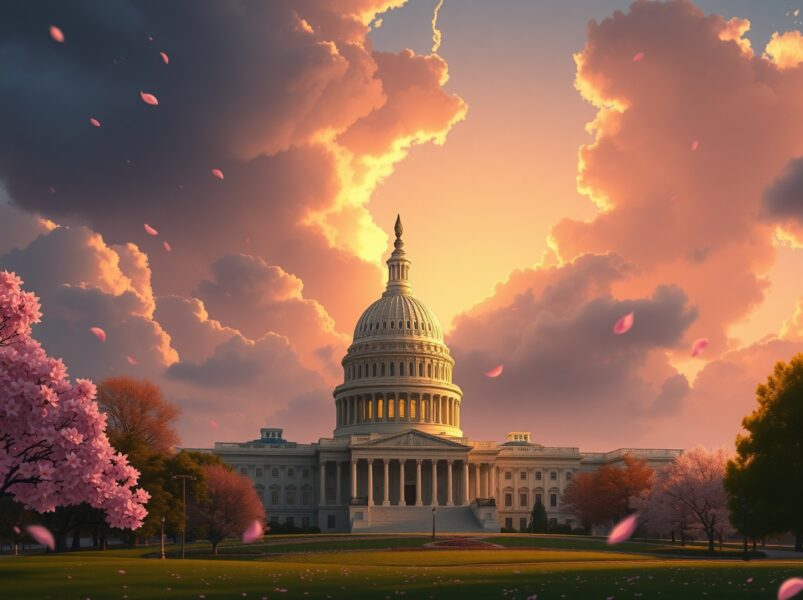
WASHINGTON, D.C. – In a decisive move to avert a prolonged national crisis, the U.S. House of Representatives passed a critical procedural vote on Tuesday, effectively setting the stage to end the federal government shutdown and advance the Fiscal Year 2026 budget process. This pivotal action, first reported by Walter Bloomberg, signals a potential resolution to the political stalemate that has gripped the capital, with a final vote on the majority of annual spending bills scheduled for later today.
House Procedural Vote Unlocks Path to Resolution
The successful procedural vote, known as a rule vote, functions as the essential key to unlocking the legislative process. Consequently, it allows the House to formally consider and debate the twelve individual appropriations bills that fund the federal government. This vote represents a significant breakthrough following weeks of tense negotiations and partisan deadlock. The rule itself outlines the terms for debate, including time limits and permitted amendments, for the upcoming final votes. Therefore, its passage indicates that leadership from both parties has secured enough support to move forward, preventing a filibuster-like delay in the House’s streamlined procedures.
House Speaker Mike Johnson (R-LA) and Minority Leader Hakeem Jeffries (D-NY) reportedly engaged in intense behind-the-scenes discussions over the weekend to secure the necessary consensus. The rule passed with a bipartisan majority, suggesting a fragile coalition has formed to prioritize government operations. “This vote is not the end, but it is the necessary beginning,” stated a senior House aide familiar with the negotiations. “It demonstrates a collective will to govern and meet our basic constitutional responsibility.”
The Mechanics of Ending a Shutdown
Understanding this step requires context on congressional budget mechanics. First, Congress must pass appropriations bills before the start of the fiscal year on October 1st. When it fails, agencies operate under temporary funding measures called Continuing Resolutions (CRs). If those expire without new funding, a shutdown begins. Ending it requires passing full-year bills or another CR. The procedural vote clears the path for the former, a more stable solution. Historically, similar votes have served as reliable indicators of final passage, as members are typically reluctant to support a rule for legislation they plan to ultimately oppose.
FY2026 Budget Moves Toward Finalization
The immediate focus now shifts to the substance of the FY2026 budget. The House plans to hold final votes on eleven of the twelve annual appropriations bills in a marathon session later today. These bills fund everything from defense and homeland security to agriculture and transportation. The single remaining bill, often the most contentious, typically covers Labor, Health and Human Services, and Education. Leadership may be holding that bill for separate, more nuanced negotiation, a common tactic to pass the bulk of funding and reduce overall pressure.
Key provisions in the advancing bills reportedly include:
- Defense Spending: A proposed increase aligning with the latest national defense strategy.
- Border Security: Funding enhancements for personnel and technology, a major Republican priority.
- Infrastructure: Continued investment tied to the bipartisan infrastructure law passed in 2021.
- Scientific Research: Stable funding for agencies like the National Institutes of Health (NIH) and the National Science Foundation (NSF).
This bifurcated approach—passing eleven bills now—aims to restore functionality to most government agencies immediately. Subsequently, it isolates the most politically sensitive debates, potentially leading to a shorter, more targeted funding lapse for affected departments.
Historical Context and Economic Impact
This shutdown, now in its third week, marks the longest federal funding gap since the 35-day shutdown of 2018-2019. That event cost the U.S. economy an estimated $11 billion, according to the Congressional Budget Office (CBO), with billions permanently lost. While each shutdown differs in scope due to varying levels of pre-enacted funding, the cascading effects are consistently severe. Federal employees face furloughs or unpaid work, government services from national parks to passport processing slow or halt, and contractor payments freeze, disrupting private-sector supply chains.
Dr. Maya Chen, an economist at the Brookings Institution, explains the ripple effects. “A shutdown is not a fiscal saving,” she notes. “It simply delays and disrupts economic activity. Essential services degrade, public trust erodes, and the uncertainty dampens business investment. The procedural vote is the first signal to markets and the public that a return to normalcy is imminent.” Indeed, financial markets showed modest relief upon news of the vote’s passage, with futures for key indices ticking upward.
| Year | Duration (Days) | Primary Point of Contention |
|---|---|---|
| 2013 | 16 | Affordable Care Act implementation |
| 2018-2019 | 35 | Border wall funding |
| 2023 | 0 (Averted) | Debt ceiling and spending caps |
| 2025 (Current) | 21* | FY2026 top-line spending levels and policy riders |
*As of the procedural vote passage.
The Human Cost and Path to Reopening
Beyond economics, the human impact is profound. Over 800,000 federal employees have been affected nationwide, with roughly half furloughed and half working without pay. Agencies like the Federal Aviation Administration (FAA) and the Food and Drug Administration (FDA) have operated with skeleton crews, raising concerns about safety oversight and regulatory functions. The vote initiates a rapid timeline for resolution. Following final House passage, the legislation moves to the Senate, where leadership in both parties has expressed a commitment to swift action. President Biden has indicated he will sign the bills immediately upon their arrival at the White House, triggering the reactivation of shuttered services and guaranteeing back pay for federal workers.
Conclusion
The passage of the procedural vote in the House represents the most concrete step yet toward ending the disruptive 2025 government shutdown and finalizing the FY2026 budget. While final votes remain, this action breaks a debilitating logjam and demonstrates a resumption of core congressional function. The move promises to restore stability for federal employees, reinstate vital public services, and remove a significant cloud of uncertainty from the national economy. The coming hours will determine if this procedural success translates into a complete legislative resolution, finally closing this chapter of political brinkmanship.
FAQs
Q1: What exactly is a procedural vote in the House?
A procedural vote, or rule vote, sets the terms for debating and amending legislation on the floor. Its passage is necessary before a final vote on a bill can occur and is often a test of whether the bill has enough support to pass.
Q2: Does this vote mean the shutdown is over?
Not immediately. This vote allows the final votes on the spending bills to happen. The shutdown will end once those bills are passed by both the House and Senate and signed into law by the President.
Q3: Why are they voting on only 11 of the 12 appropriations bills?
This is a common strategy to pass less controversial funding quickly, isolating the most contentious issues. It allows most of the government to reopen while negotiations continue on the final, typically more complex, bill.
Q4: How soon will federal employees get back pay?
Historically, federal employees have received back pay for furlough days as soon as funding is restored, usually in their next scheduled paycheck after the shutdown ends. The law guarantees back pay for both furloughed and excepted employees.
Q5: What happens if the Senate changes the bills the House passes?
If the Senate amends the bills, they must go back to the House for concurrence, or both chambers must convene a conference committee to reconcile differences. This could delay final passage, but leadership in both chambers typically coordinates to avoid major changes at this stage.
This post Government Shutdown Crisis Averted as US House Passes Critical Procedural Vote, Paving Way for FY2026 Budget first appeared on BitcoinWorld.


You May Also Like
Elite Crypto Trades Updates His Kaspa (KAS) Price Prediction

Leap Wallet to Shut Down by May 28 as Team Winds Down Apps and Validator