

Best Miles Card in Singapore 2026: Top 9 Credit Cards Compared
Earn more miles on every dollar — if you pick the right card
Not all miles cards are built the same. The difference between a 1.2 mpd card and a 2.4 mpd card on a S$5,000 trip is thousands of miles: enough for a short-haul redemption. But earn rates are only part of the equation. Annual fees, miles expiry, transfer partners, and FX fees all affect whether a miles card actually delivers.
This guide covers the 9 best miles cards in Singapore for 2026: what each card is genuinely good for, who should skip it, and how to build a setup that gets you to your next flight faster.
 Stay Up To Date:
– New Zealand South Island Itinerary: 10 Days by Campervan (Freedom Camping Edition)
– SGD To MYR Rate Today: Best Exchange Rates, Forecast & Where to Change Money
– Trust Card Vs YouTrip: Which Is The Better Card For Overseas Spending?
 TL;DR: Best Miles Cards at a Glance
| Card | Best For | Local | Overseas | Annual Fee | Miles Expiry |
|---|---|---|---|---|---|
| Citi PremierMiles | Overall versatility | 1.2 mpd | 2.2 mpd | S$196.20 | Never |
| UOB PRVI Miles | Highest overseas earn rate | 1.4 mpd | 2.4 mpd | S$261.60 | 3 years (KrisFlyer) |
| HSBC TravelOne | Most transfer partners | 1.2 mpd | 2.4 mpd | S$196.20 | Varies by partner |
| DBS Altitude | Beginners, permanent points | 1.3 mpd | 2.2 mpd | S$196.20 | Never |
| OCBC 90°N | No expiry, flat S$25 transfer fee | 1.3 mpd | 2.1 mpd | S$192.60 | Never |
| HSBC Revolution | Best no-fee miles card | 4 mpd* | 4 mpd* | Free | 37 months |
| KrisFlyer UOB | SIA loyalists | 1.2 mpd | 1.2 mpd | S$196.20 | 3 years |
| AMEX KrisFlyer | SIA direct + Grab | 1.1 mpd | 1.1 mpd | S$179.85 | 3 years |
| SC Journey | Online spend earners | 1.2 mpd | 2 mpd | S$196.20 | 3 years |
| YouTrip** | Zero FX fees overseas | — | 0% FX fee | Free | N/A |
*HSBC Revolution 4 mpd applies to eligible online and contactless spend only. Base rate is 0.4 mpd on all other spend.
**YouTrip doesn’t earn miles, instead it eliminates the 3.25%-3.50% FX fee that all miles cards charge on overseas spend. Use it alongside your miles card for overseas transactions.
 Table of Contents:
- How Miles Cards Work
- Entry-Level vs Premium Miles Cards
- Best Miles Card by Spend Category
- How to Choose the Best Miles Card
- The 9 Best Miles Cards in Singapore
- Transfer Partners Compared
- YouTrip vs Miles Cards: Real Savings Calculator
- Tips to Maximise Your Miles
- Common Mistakes to Avoid
- Verdict
- FAQs
How Miles Cards Work

A miles credit card earns air miles (or points that convert to miles) on every dollar you spend. Those miles can then be redeemed for flights, upgrades, or hotel stays through an airline’s frequent flyer programme.
The key numbers to understand:
- Miles per dollar (mpd): How many miles you earn per S$1 spent. Higher is better.
- Local vs overseas rate: Most cards earn more miles on overseas spend.
- Transfer partners: The airlines and hotels you can move your points to. More partners = more flexibility.
- Miles expiry: How long before your miles disappear? Never-expiring miles (Citi, DBS, OCBC 90°N) are a significant advantage for casual earners.
- FX fee: Every Singapore credit card charges up to 3.50% on overseas transactions. This erodes the value of overseas miles earn. Factor it in.
How many miles do you need for a one-way flight?
| Route | Economy Saver Award | Business Saver Award |
|---|---|---|
| Singapore–KL | ~8,000 miles | ~22,000 miles |
| Singapore–Bangkok | ~13,000 miles | ~25,000 miles |
| Singapore–Tokyo | ~25,500 miles | ~54,500 miles |
| Singapore–London | ~44,000 miles | ~108,500 miles |
 Related Guide:
Entry-Level vs Premium Miles Cards
Not every miles card requires the same commitment. Before comparing earn rates, figure out which tier suits your spending.
Entry-Level (Annual Fee: Free–S$196)
Good for: First-time miles earners, moderate spenders, or anyone who wants to test the water without a high annual fee commitment.
- HSBC Revolution — permanently free, 4 mpd on online and contactless spend
- AMEX KrisFlyer — S$179.85/year, direct KrisFlyer earn with no transfer step
- DBS Altitude — S$196.20/year, permanent points, solid beginner card
- Citi PremierMiles — S$196.20/year, miles never expire, 11 transfer partners
- OCBC 90°N — S$192.60/year, miles never expire, flat S$25 transfer fee
- SC Journey — S$196.20/year, 3 mpd on online spend categories
Premium (Annual Fee: S$261+)
Good for: Frequent travellers who spend S$30,000+ a year overseas and want lounge access plus the highest earn rates.
- UOB PRVI Miles — S$261.60/year, 2.4 mpd overseas, 4 lounge visits
- HSBC TravelOne — S$196.20/year (waived at S$25,000 spend), 2.4 mpd overseas, 4 lounge visits, 18+ transfer partners
Related Guide:
Best Miles Card by Spend Category
| Spend Category | Best Card | Why |
|---|---|---|
| Everyday online & contactless | HSBC Revolution | 4 mpd permanently, no annual fee |
| Overseas spend (general) | UOB PRVI Miles or HSBC TravelOne | 2.4 mpd — highest standard overseas rate |
| Agoda hotel bookings | OCBC 90°N | 7 mpd on Agoda |
| Singapore Airlines flights | AMEX KrisFlyer or KrisFlyer UOB | Direct KrisFlyer earn at 2 mpd on SIA/Scoot |
| Regional SEA travel (MY, TH, VN, ID) | UOB PRVI Miles | 3 mpd in SEA countries |
| Online transport, groceries & food delivery | SC Journey | 3 mpd on these categories (capped S$1,000/month) |
| Building miles without annual fee | HSBC Revolution | Permanent 4 mpd, free forever |
| Flexible redemption (most partners) | HSBC TravelOne | 18+ airline and hotel partners |
| Never-expiring miles | Citi PremierMiles, DBS Altitude, or OCBC 90°N | Points never expire (KrisFlyer transfers at 1:1 for OCBC 90°N) |
Related Guide:
How to Choose the Best Miles Card
Miles vs Cashback: The Core Decision
A miles card makes sense if you travel at least twice a year and are patient enough to accumulate. The real value unlocks when you redeem for business or first class: economy redemptions yield roughly 1.5 cents per mile, but premium cabin redemptions can hit 4–6 cents per mile.
If you want guaranteed, immediate returns with no expiry and no redemption complexity, cashback is simpler.
Key Factors to Compare
- Earn rate: Local rates matter for day-to-day spending; overseas rates matter for trips. Category-specific rates (dining, transport, online) matter if you want to maximise specific habits.
- Miles expiry: If you’re a slow accumulator, never-expiring miles (Citi, DBS, OCBC 90°N) protect you from losing points before you can redeem them.
- Annual fee vs benefits: Work out whether the card pays for itself. A S$196.20 annual fee is justified if you get 10,000 renewal miles (worth ~S$150 at 1.5 cents/mile) plus lounge visits. That’s only true if you actually use those benefits.
- Transfer partners: The more partners a card offers, the more flexibility you have. HSBC TravelOne leads with 18+ partners, including KrisFlyer, Avios, Emirates Skywards, and Marriott Bonvoy.
- FX fees: All Singapore credit cards charge up to 3.50% on overseas transactions. On a S$5,000 trip, that’s S$162.50 in fees. Miles earned overseas partially offset this, but not always fully. Factor it in.
- Minimum income: Most travel cards require S$30,000/year. HSBC Revolution requires S$65,000. YouTrip has no income requirement at all.
Related Guide:
The 9 Best Miles Cards in Singapore
1. Citi PremierMiles — Best Overall Miles Card
Best for: Versatile miles earning with no expiry and the widest transfer network.
Image Credits: MoneySmart
The Citi PremierMiles is the default recommendation for most Singaporeans new to miles, and with good reason. It earns 1.2 mpd locally and 2.2 mpd overseas, with Citi Miles that never expire. That matters if you’re building slowly towards a redemption. The card also offers 11 transfer partners and 2 complimentary Priority Pass lounge visits per year.
From 1 April 2026, Citi ended complimentary travel insurance for new purchases. Worth noting if travel insurance was part of your reason to hold this card.
| Feature | Details |
|---|---|
| Local earn rate | 1.2 mpd |
| Overseas earn rate | 2.2 mpd |
| Bonus earn | Up to 10 mpd on selected online travel bookings (till 31 Dec 2026) |
| Miles expiry | Never |
| Transfer partners | 11 airlines & hotels (KrisFlyer, Asia Miles, Qantas, Virgin Atlantic, and more) |
| Lounge access | 2 Priority Pass visits/year |
| Annual fee | S$196.20 (1st year free; 10,000 renewal miles) |
| FX fee | 3.25% |
| Min. income | S$30,000 (SG/PR); S$42,000 (foreigners) |
Pros:
- Miles never expire (no pressure to rush a redemption)
- Widest transfer partner network among standard travel cards (11)
- 2 lounge visits per year included
- 10,000 renewal miles partially offset the annual fee (~S$150 value)
Cons:
- 3.25% FX fee on all overseas transactions
- Overseas earn rate (2.2 mpd) is matched by several competitors
- Travel insurance removed from April 2026
Should you get this? Yes, if you want a reliable all-rounder with flexible redemption options and no expiry pressure. It’s not the highest earner, but it’s the easiest to use well.
Related Guide:
2. UOB PRVI Miles — Best for Frequent Travellers
Best for: High spenders who travel regularly and want the highest overseas earn rate.
Image Credits: UOB Singapore
The UOB PRVI Miles earns 1.4 mpd locally and 2.4 mpd overseas, the highest standard overseas rate among Singapore’s major travel cards. Regional travellers get an even better deal: 3 mpd in Malaysia, Indonesia, Thailand, and Vietnam. Book via Agoda or Expedia through UOB’s travel portals and that jumps to 8 mpd. Four lounge visits per year come included.
The trade-off is the highest annual fee on this list (S$261.60), waived only at S$50,000/year spend, and miles expire after 3 years once transferred to KrisFlyer.
| Feature | Details |
|---|---|
| Local earn rate | 1.4 mpd |
| Overseas earn rate | 2.4 mpd |
| Regional earn rate | 3 mpd (MY, ID, TH, VN) |
| Portal earn rate | 8 mpd on Agoda/Expedia via UOB Travel |
| Miles expiry | 3 years (KrisFlyer from transfer date) |
| Transfer partners | KrisFlyer, Asia Miles, Enrich, Royal Orchid Plus, and more |
| Lounge access | 4 Priority Pass visits/year |
| Annual fee | S$261.60 (1st year free; waived at S$50,000/year spend) |
| FX fee | 3.25% |
| Min. income | S$30,000 (SG/PR); S$40,000 (foreigners) |
Pros:
- Highest overseas earn rate (2.4 mpd) among standard cards
- 3 mpd on SEA regional spend (strong for KL, Bangkok, and Bali regulars)
- 4 lounge visits per year, the most generous on this list
- 8 mpd on Agoda/Expedia via UOB portal
Cons:
- Highest annual fee (S$261.60); waived only at S$50,000/year spend
- Miles expire after 3 years in KrisFlyer
- 3.25% FX fee still applies
Should you get this? Yes, if you spend heavily overseas (S$50,000+ a year to waive the fee, or S$30,000+ to justify it) and want maximum miles per dollar. Not worth the fee for light or occasional travellers.
Related Guide:
3. HSBC TravelOne — Best for Transfer Partner Flexibility
Best for: Travellers who want the widest redemption options and shareable lounge access.
Image Credits: HSBC Singapore
The HSBC TravelOne earns 1.2 mpd locally and 2.4 mpd overseas, matching UOB PRVI Miles on the overseas rate. Where it stands out is transfer partners: 18+ airlines and hotels, including KrisFlyer, Asia Miles, Avios, Emirates Skywards, Qatar Privilege Club, IHG Rewards, and Marriott Bonvoy. That’s the widest partner network of any Singapore card. Transfers are instant, and 4 lounge visits per year are guest-shareable.
The annual fee (S$196.20) is waived if you spend S$25,000 or more per year. Renewal brings 12,000 bonus miles from 1 January 2026 onwards.
| Feature | Details |
|---|---|
| Local earn rate | 1.2 mpd |
| Overseas earn rate | 2.4 mpd |
| Miles expiry | Varies by transfer partner |
| Transfer partners | 18+ airlines & hotels (widest in Singapore) |
| Lounge access | 4 visits/year — guest-shareable |
| Annual fee | S$196.20 (waived at S$25,000/year spend; 12,000 renewal miles) |
| FX fee | 3.25% |
| Min. income | S$30,000 (with S$50,000+ HSBC TRB); S$65,000 (new applicants and foreigners) |
Pros:
- 18+ transfer partners, more redemption options than any other Singapore card
- 4 guest-shareable lounge visits per year
- Instant point transfers with no waiting period
- Annual fee waived at S$25,000 annual spend
- Travel insurance up to S$150,000 when full airfare charged to card
Cons:
- 3.25% FX fee on overseas spend
- Higher income requirement for new applicants (S$65,000)
- Local earn rate (1.2 mpd) is on the lower end
Should you get this? Yes, if you want the flexibility to redeem across multiple airlines and hotels, or if you travel with a companion and value sharing lounge visits. The income requirement catches some applicants out, so check before applying.
Related Guide:
4. DBS Altitude — Best for Beginners
Best for: First-time miles card holders who want permanent points with no expiry pressure.
Image Credits: AK Credit
The DBS Altitude earns 1.3 mpd locally and 2.2 mpd overseas, with DBS Points that never expire. It’s the most beginner-friendly card on this list: straightforward earn, no complex tiers, and a solid integration with the DBS ecosystem. Two complimentary Priority Pass lounge visits come included.
One change to note: from 1 August 2026, the automatic annual fee waiver for S$25,000+ spend is discontinued. From that date, the card costs S$196.20/year unless you pay and take the 10,000 renewal miles.
| Feature | Details |
|---|---|
| Local earn rate | 1.3 mpd |
| Overseas earn rate | 2.2 mpd |
| Miles expiry | Never (DBS Points permanent) |
| Transfer partners | 10+ including KrisFlyer, Asia Miles, Emirates Skywards, Virgin Atlantic |
| Lounge access | 2 Priority Pass visits/year |
| Annual fee | S$196.20 (1st year free; spend-waiver ends Aug 2026; 10,000 renewal miles) |
| FX fee | 3.25% |
| Min. income | S$30,000 (SG/PR ≤55); S$15,000 (SG/PR 56+); S$45,000 (foreigners) |
Pros:
- DBS Points never expire (ideal for slow accumulators)
- Lower income requirement for Singaporeans/PRs aged 56+ (S$15,000)
- 2 lounge visits per year
- 10,000 renewal miles partially offset the annual fee
Cons:
- Earn rates (1.3/2.2 mpd) are not class-leading
- Spend-based annual fee waiver ending August 2026
- 3.25% FX fee still applies
Should you get this? Yes for beginners, or for older Singaporeans who benefit from the lower income threshold. If you’re comfortable with miles cards already and want higher earn rates, look at Citi PremierMiles or UOB PRVI Miles.
Related Guide:
5. OCBC 90°N — Best for No-Expiry Miles and Flat Transfer Fee
Best for: Agoda users and slow accumulators who never want expiry pressure.
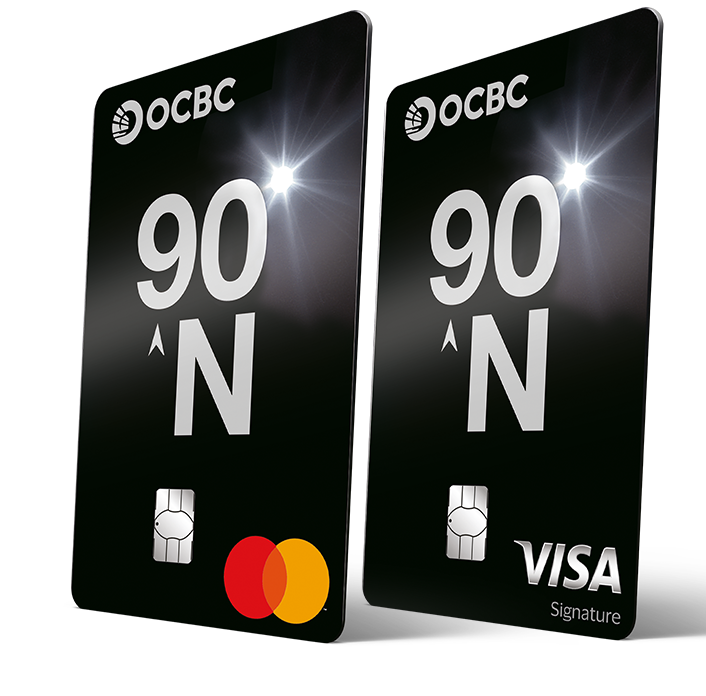
Image Credits: Mainly Miles
The OCBC 90°N earns 1.3 mpd locally and 2.1 mpd overseas, with 90°N Miles that never expire. Transfers to airline partners cost a flat S$25 per conversion, same as most competitors. The card earns 7 mpd on Agoda bookings, making it a strong pick for hotel-heavy travellers on that platform. Primary transfer partner is KrisFlyer (1:1 ratio); Asia Miles transfers carry a 25% haircut (750 Asia Miles per 1,000 90°N Miles).
Annual fee waiver requires S$10,000 in spend per year. Renewal brings 10,000 bonus miles.
| Feature | Details |
|---|---|
| Local earn rate | 1.3 mpd |
| Overseas earn rate | 2.1 mpd |
| Agoda earn rate | 7 mpd |
| Miles expiry | Never |
| Transfer fees | S$25 flat (KrisFlyer 1:1; Asia Miles at 25% haircut) |
| Lounge access | None |
| Annual fee | S$192.60 (1st year free; waived at S$10,000/year spend; 10,000 renewal miles) |
| FX fee | 3.25% |
| Min. income | S$30,000 (SG/PR ≤54); S$15,000 (SG/PR 55+); S$45,000 (foreigners) |
Pros:
- Miles never expire (zero expiry pressure)
- Flat S$25 transfer fee to KrisFlyer at 1:1, no haircut on the primary partner
- 7 mpd on Agoda bookings, the best hotel earn rate on this list
- Annual fee waived at a relatively low S$10,000 spend threshold
Cons:
- Lowest overseas earn rate on this list (2.1 mpd)
- No lounge access
- 3.25% FX fee on all overseas transactions
Should you get this? Yes if you book hotels frequently on Agoda and want miles that never expire. The S$25 transfer fee is standard; the 1:1 KrisFlyer conversion rate is the real advantage. Not the best card if lounge access is important to you.
Related Guide:
6. HSBC Revolution — Best No-Annual-Fee Miles Card
Best for: High-income earners or existing HSBC customers who want strong miles earning with zero annual fee.
Image Credits: HSBC Singapore
The HSBC Revolution permanently earns 4 mpd on all eligible online and contactless spend (dining, groceries, shopping, ride-hailing, and food delivery) from 1 April 2026, with the annual fee permanently waived. HSBC Everyday Global Account holders with a S$50,000 balance get an enhanced rate of 8 mpd on the same categories — the highest standard earn rate of any Singapore miles card. For everyone else, the standard 4 mpd still matches or beats cards costing S$196–S$261 per year.
There’s a monthly bonus points cap (9,000 bonus points / S$1,000 eligible spend at standard tier; 18,000 bonus points / S$1,000 at enhanced tier), and points expire after 37 months. It doesn’t earn miles on overseas in-person spend — only online transactions and contactless payments qualify. The catch: since October 2025, HSBC requires S$65,000 minimum income to apply, unless you hold S$50,000+ across HSBC products.
| Feature | Details |
|---|---|
| Standard earn rate | 4 mpd on online & contactless spend |
| Enhanced earn rate | 8 mpd (with S$50,000+ HSBC Everyday Global Account balance) |
| Base earn rate | 0.4 mpd on all other spend |
| Monthly earn cap | 9,000 bonus points / S$1,000 eligible spend (standard); 18,000 (enhanced) |
| Miles expiry | 37 months from earning |
| Lounge access | None |
| Annual fee | Free (permanently waived from April 2026) |
| FX fee | 3.25% |
| Min. income | S$65,000 (or S$30,000 with S$50k deposit) |
Pros:
- 4 mpd on everyday spend with no annual fee
- 8 mpd for HSBC EGA holders — the highest earn rate on any Singapore miles card
- Upgraded to Visa Signature with reinstated travel insurance from April 2026
- Earns miles on dining, groceries, transport apps, and online shopping
Cons:
- High income requirement: S$65,000 for most new applicants — not accessible to everyone
- 37-month points expiry (shorter than never-expiring alternatives)
- Monthly earn cap limits heavy spenders
- Base rate drops to 0.4 mpd on non-eligible spend
- 3.25% FX fee on overseas transactions
Should you get this? Only if you qualify. The card is genuinely excellent — but the S$65,000 income requirement (hiked in 2025) means it’s no longer the accessible entry-level card it once was. If you don’t meet that threshold and don’t hold S$50,000+ with HSBC, Citi PremierMiles or DBS Altitude are better starting points at S$30,000 income. If you do qualify, it’s worth having as a companion card for local spend — 4 mpd for free is hard to beat, and 8 mpd if you’re an EGA holder is exceptional.
Related Guide:
7. KrisFlyer UOB — Best for Singapore Airlines Loyalists
Best for: Frequent SIA/Scoot flyers who want direct KrisFlyer earn without a transfer step.
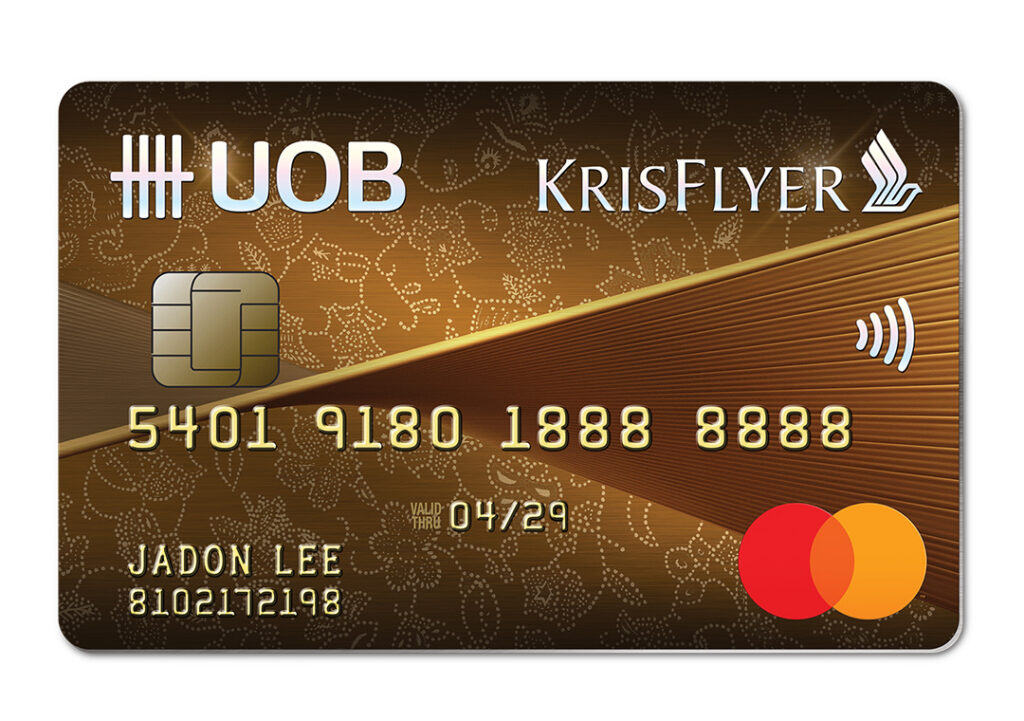
Image Credits: UOB
The KrisFlyer UOB card earns miles directly into your KrisFlyer account, with no points pool and no transfer required. On Singapore Airlines, Scoot, KrisShop, and Pelago purchases, it earns 3 mpd. On dining, food delivery, online shopping, and transport, it earns 2.4 mpd, but only if you spend at least S$1,000/year on SIA or Scoot. If you don’t hit that threshold, those categories drop to 1.2 mpd.
Important update (April 2026): UOB has discontinued the KrisFlyer Miles Auto-Conversion Programme, which previously automatically swept miles into your KrisFlyer account. Check current transfer mechanics directly with UOB before applying.
| Feature | Details |
|---|---|
| SIA/Scoot/KrisShop earn rate | 3 mpd (direct KrisFlyer) |
| Bonus category earn rate | 2.4 mpd (dining, food delivery, online shopping, transport — with S$1,000 SIA spend/year) |
| Base earn rate | 1.2 mpd |
| Miles expiry | 3 years from earning |
| Lounge access | None (base card) |
| Annual fee | S$196.20 (1st year free; 10,000 renewal miles) |
| FX fee | 3.25% |
| Min. income | S$30,000 (SG/PR) |
Pros:
- Miles credited directly to KrisFlyer, no transfer step or transfer fee
- 3 mpd on SIA, Scoot, KrisShop, and Pelago
- 10,000 renewal miles offset the annual fee partially
Cons:
- Bonus earn rate (2.4 mpd) requires S$1,000 SIA/Scoot spend per year to activate
- Miles expire after 3 years
- Auto-Conversion Programme officially shuts down in May 2026. Verify current terms with UOB before applying.
- No lounge access on the base card
- 3.25% FX fee applies
Should you get this? Only if you fly SIA or Scoot regularly (at least a few times a year) and value the convenience of direct KrisFlyer earn. For everyone else, Citi PremierMiles or HSBC TravelOne offer better flexibility with similar or better earn rates.
Related Guide:
8. AMEX KrisFlyer — Best for Direct KrisFlyer Earn on Everyday Spend
Best for: SIA loyalists who want miles flowing directly to KrisFlyer without any transfer step.
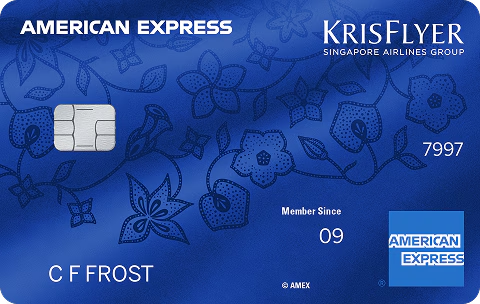
Image Credits: American Express
The AMEX KrisFlyer earns 1.1 mpd on local and overseas spend, 2mpd on Singapore Airlines, Scoot, KrisShop, and Pelago purchases, and 2 mpd on Grab transactions (capped at S$200/month). Miles are credited directly to your KrisFlyer account, with no points conversion and no waiting. Annual fee is S$179.85 (lowest on this list after HSBC Revolution), waived in year one, with 10,000 renewal miles from year two.
The base earn rate (1.1 mpd) is the weakest on this list for everyday spend. This card earns its place by being the cleanest, simplest direct KrisFlyer product at the entry level.
| Feature | Details |
|---|---|
| Local earn rate | 1.1 mpd |
| Overseas earn rate | 1.1 mpd |
| SIA/Scoot/KrisShop/Pelago | 2 mpd (direct KrisFlyer, no cap) |
| Grab earn rate | 2 mpd (capped at S$200/month) |
| Miles expiry | 3 years (KrisFlyer policy) |
| Lounge access | None |
| Annual fee | S$179.85 (1st year free; 10,000 renewal miles) |
| FX fee | 3.25% |
| Min. income | S$30,000 (SG/PR) |
Pros:
- Direct KrisFlyer earn, no transfer step ever
- Lowest paid annual fee on this list (S$179.85)
- 2 mpd on all SIA Group purchases with no cap
Cons:
- Base earn rate (1.1 mpd) is the weakest on this list
- Miles expire after 3 years
- No lounge access
- 3.25% FX fee (AMEX raised this from 2.95% in October 2023, so no longer cheaper than Visa/MC)
- AMEX acceptance is narrower than Visa/Mastercard in some overseas markets
Should you get this? Yes, if you fly SIA regularly and want the simplest possible direct-KrisFlyer product at an entry fee. Pair it with HSBC Revolution for everyday spend to cover both bases cheaply.
Related Guide:
9. Standard Chartered Journey — Best for Online Spend Earners
Best for: Everyday online spenders who want strong category earn without a high annual fee.
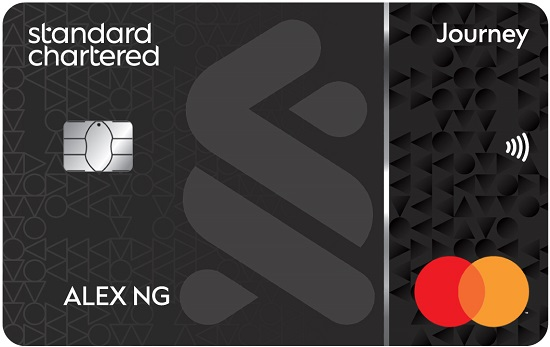
Image Credits: Standard Chartered
The SC Journey earns 3 mpd on online transactions across transport (Grab, ComfortDelGro), groceries (FairPrice, RedMart), and food delivery (Deliveroo, foodpanda, GrabFood), capped at S$1,000/month in those categories. Overseas spend earns 2 mpd. Local non-category spend falls to 1.2 mpd.
There’s a unique first-year option: take 20,000 welcome miles with a fee waiver, or pay the S$196.20 fee and get the welcome bonus on top. From year two, paying the annual fee earns 10,000 renewal miles.
| Feature | Details |
|---|---|
| Local earn rate | 1.2 mpd |
| Online categories earn rate | 3 mpd (transport, groceries, food delivery — capped S$1,000/month) |
| Overseas earn rate | 2 mpd |
| Miles expiry | 3 years |
| Lounge access | None on standard card |
| Annual fee | S$196.20 (optional first-year waiver with 20,000 welcome miles; 10,000 renewal miles from year 2) |
| FX fee | 3.50% |
| Min. income | S$30,000 (SG/PR) |
Pros:
- 3 mpd on transport, groceries, and food delivery (strong for Grab/FairPrice users)
- 2 mpd overseas, better than Citi PremierMiles and DBS Altitude on overseas spend
- Flexible first-year fee structure (waiver or bonus)
- 10,000 renewal miles from year two
Cons:
- 3 mpd capped at S$1,000/month in eligible categories
- Miles expire after 3 years
- No lounge access
- 3.50% FX fee on overseas spend
Should you get this? Yes, if you spend heavily on Grab, food delivery, and supermarkets and want to convert that into miles. A strong secondary card for everyday local spend, paired with a higher overseas earner for trips.
Related Guide:
Transfer Partners Compared
Where your points go determines their value. Here’s a quick reference across the 9 cards:
| Card | Key Transfer Partners | Transfer Fee | Transfer Time |
|---|---|---|---|
| HSBC TravelOne | KrisFlyer, Asia Miles, Avios, Emirates Skywards, Qatar Privilege, IHG, Marriott Bonvoy, and 11+ more | None stated | Instant |
| Citi PremierMiles | KrisFlyer, Asia Miles, Qantas, Virgin Atlantic, Royal Orchid Plus, and 6+ more | S$27.25 | 1–3 days |
| UOB PRVI Miles | KrisFlyer, Asia Miles, Enrich, Royal Orchid Plus, and more | S$25 | 1–5 days |
| DBS Altitude | KrisFlyer, Asia Miles, Emirates Skywards, Virgin Atlantic, and more | S$27 | 1–3 days |
| OCBC 90°N | KrisFlyer (1:1), Asia Miles (25% haircut), and 7+ more | S$25 | 1–5 days |
| HSBC Revolution | KrisFlyer, Asia Miles, and others via HSBC rewards | Varies | 1–3 days |
| KrisFlyer UOB | KrisFlyer (direct — no transfer) | None | Instant |
| AMEX KrisFlyer | KrisFlyer (direct — no transfer) | None | Instant |
| SC Journey | KrisFlyer, Asia Miles, and others via 360° Rewards | S$25 | 1–5 days |
Which frequent flyer programme is worth building towards?
| Programme | Best For | Miles Expiry | Strength |
|---|---|---|---|
| KrisFlyer (Singapore Airlines) | SE Asia and long-haul premium redemptions | 3 years | Strong SE Asia network, Star Alliance |
| Asia Miles (Cathay Pacific) | Hong Kong hub, Oneworld partners | 3 years | Good for Europe and US via QR/BA |
| Avios (British Airways) | Short-haul redemptions and Qatar Airways | 3 years | Distance-based pricing favours short routes |
| KrisFlyer (via HSBC TravelOne) | Broadest access — transfer to whichever suits the trip | — | Flexibility without committing |
Related Guide:
YouTrip vs Miles Cards: Real Savings Calculator
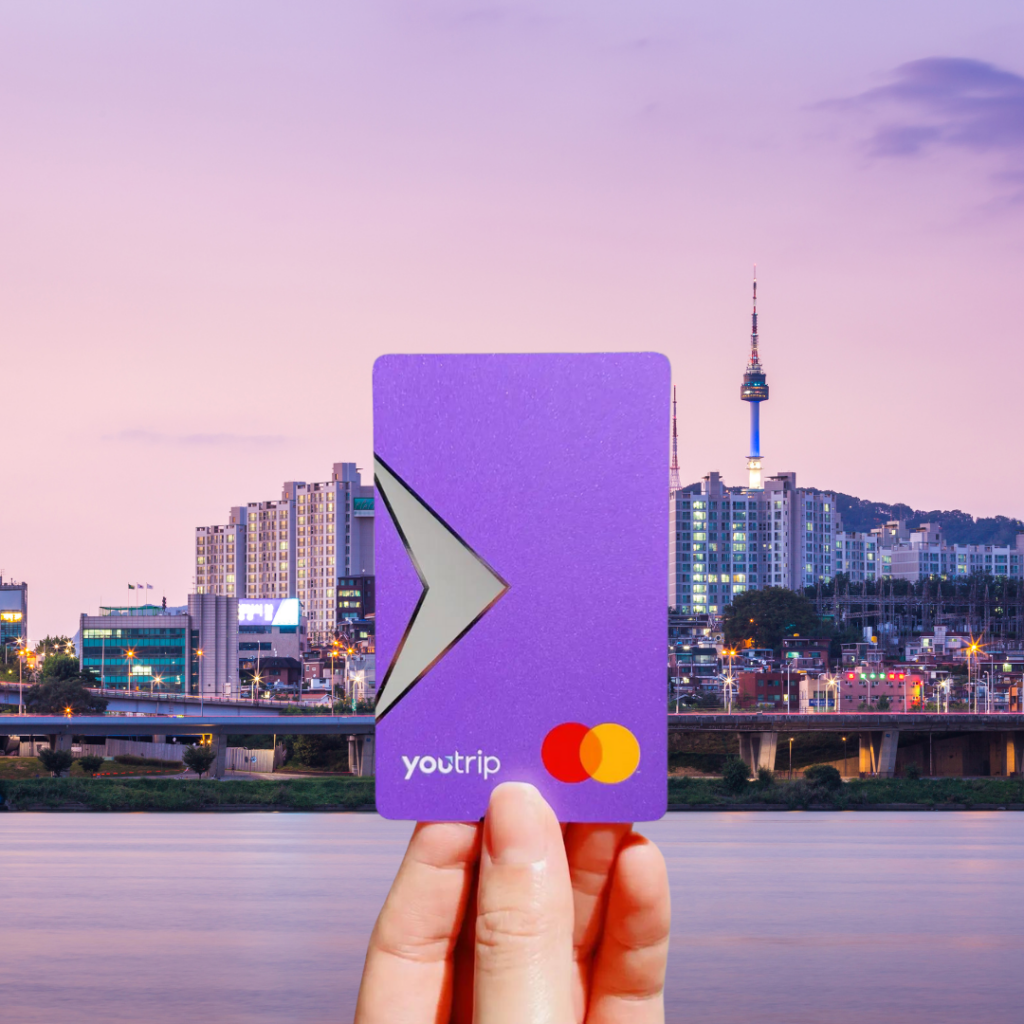
Miles cards earn rewards on overseas spend, but they also charge up to 3.50% FX fee on every overseas transaction. Here’s what a S$5,000 overseas trip actually costs across different cards.
| Card | FX Fee | Miles Earned | Est. Miles Value* | Net Outcome |
|---|---|---|---|---|
| YouTrip | S$0 | — | — | S$0 cost |
| HSBC Revolution | S$162.50 | 20,000 miles | ~S$300 | ~S$137.50 gain |
| UOB PRVI Miles | S$162.50 | 12,000 miles | ~S$180 | ~S$17.50 gain |
| Citi PremierMiles | S$162.50 | 11,000 miles | ~S$165 | ~S$2.50 gain |
| DBS Altitude | S$162.50 | 11,000 miles | ~S$165 | ~S$2.50 gain |
| Standard bank card (no miles) | S$162.50 | 0 | S$0 | S$162.50 cost |
*Miles valued at 1.5 cents per mile (conservative estimate, economy redemptions). Business class redemptions can yield 4–6 cents per mile. At that rate, the maths shifts dramatically in favour of the miles card.
 The smarter approach for most travellers: use your miles card for SGD-denominated bookings (flights, hotels paid in Singapore) to earn miles without FX fees, then switch to YouTrip for all actual overseas spending (restaurants, shops, transport, ATM withdrawals) where the 0% FX fee saves you more than the miles would earn.
Related Guide:
Tips to Maximise Your Miles
- Stack sign-up bonuses: Most cards offer 10,000–30,000 bonus miles for meeting a minimum spend in the first few months. Applied to a holiday you were already planning, that’s a free short-haul ticket.
- Use the right card in the right place: Domestic spend? HSBC Revolution (4 mpd, free). SIA flights? AMEX KrisFlyer or KrisFlyer UOB (2 mpd direct). Agoda? OCBC 90°N (7 mpd). Overseas restaurants? Your overseas-rate card, but factor in the 3.50% FX fee.
- Watch your miles expiry: Citi, DBS, and OCBC 90°N miles never expire. KrisFlyer UOB, AMEX KrisFlyer, SC Journey, and UOB PRVI Miles points expire after 3 years. HSBC Revolution points expire after 37 months. Set a calendar reminder.
- Aim for premium cabin redemptions: The value gap between economy and business class redemptions is enormous. 67,500 KrisFlyer miles for a Singapore–London economy seat vs 127,500 miles for business. The business class ticket costs S$4,000+ in cash. At 1.5 cents/mile, economy gives you ~S$1,000 of value. At 4 cents/mile for business, the same 67,500 miles represents ~S$2,700 of value.
- Combine cards: No single card is best for every spend type. The most efficient setups pair a no-fee card (HSBC Revolution) for local everyday spend with a higher-tier card (UOB PRVI, HSBC TravelOne) for overseas spend.
Related Guide:
Common Mistakes to Avoid
- Accepting DCC (Dynamic Currency Conversion): When a terminal overseas asks if you want to pay in SGD, always say no. Choosing SGD lets the merchant set the rate, which is always worse than your card’s rate. Pay in the local currency every time.
- Ignoring the FX fee on overseas spend: Every miles card charges up to 3.50% on overseas transactions. On a S$10,000 trip, that’s S$325 in fees. Miles earned partially offset this, but not always fully, especially at 1.2–1.3 mpd rates. Use YouTrip for overseas spend to avoid this entirely.
- Not hitting spend requirements for bonus rates: KrisFlyer UOB requires S$1,000 in SIA/Scoot spend to unlock its 2.4 mpd category rate. SC Journey caps its 3 mpd at S$1,000/month. Know the requirements before assuming you’re earning the headline rate.
- Letting miles expire: Set a recurring calendar reminder 6 months before your miles are due to expire. A small transaction (a hotel stay, a shopping purchase) can reset the clock on some programmes.
- Ignoring the annual fee maths: A S$261.60 annual fee (UOB PRVI Miles) is only worth paying if you generate more than S$261.60 in miles value. At 2.4 mpd overseas and 1.5 cents/mile, you’d need roughly S$7,250 in overseas spend to break even on the fee. The waiver kicks in at S$50,000 spend, so most holders will simply be paying the fee.
Related Guide:
Verdict
- Best overall miles card: Citi PremierMiles. Miles never expire, 11 transfer partners, and 2 lounge visits. The reliable all-rounder.
- Best for frequent travellers: UOB PRVI Miles. Highest overseas earn rate (2.4 mpd), 4 lounge visits, and 3 mpd across SEA.
- Best for transfer flexibility: HSBC TravelOne. 18+ partners, instant transfers, guest-shareable lounge access.
- Best for beginners: DBS Altitude. Permanent points, no expiry pressure, lower income threshold for older Singaporeans.
- Best for no-fee miles: HSBC Revolution. Permanent 4 mpd on online and contactless spend, free forever.
- Best for SIA loyalists: AMEX KrisFlyer (entry) or KrisFlyer UOB (if you fly SIA 2–3x a year). Direct KrisFlyer earn with no transfer step.
- Best for online spend: SC Journey. 3 mpd on Grab, food delivery, and groceries.
- Best for never-expiring miles with Agoda bookings: OCBC 90°N. Miles never expire, 7 mpd on Agoda, and KrisFlyer transfers at 1:1 with a flat S$25 fee.
Related Guide:
FAQs:
It depends on your spending and income. For versatility, Citi PremierMiles. For the highest overseas earn rate, UOB PRVI Miles. For no annual fee, HSBC Revolution (but only if you earn S$65,000+ or hold S$50,000+ with HSBC). For direct KrisFlyer earn, AMEX KrisFlyer. Most experienced travellers hold 2–3 cards and use each one where it earns best.
Short-haul (KL, Bangkok): 7,500–17,500 miles economy. Long-haul (London, New York): 67,500–75,000 miles economy. Business class costs roughly double but delivers 3–4x the cash value per mile. That’s where miles redemptions make the most financial sense.
Yes. Every Singapore credit card charges up to 3.50% on overseas purchases. On a S$5,000 trip, that’s S$162.50 in fees. Miles earned partially offset this, but not always fully. Pairing your miles card with YouTrip for overseas spending eliminates this cost.
It depends on the card. Citi PremierMiles, DBS Altitude, and OCBC 90°N miles never expire. HSBC Revolution points expire after 37 months. KrisFlyer UOB, AMEX KrisFlyer, SC Journey, UOB PRVI Miles, and HSBC TravelOne points expire after 3 years or vary by transfer partner.
Yes, most cards accept foreigners with a minimum income of S$40,000–S$65,000 per year. HSBC TravelOne requires S$65,000 for new foreign applicants. HSBC Revolution also requires S$65,000 for foreigners (or S$30,000 if you hold S$50,000+ with HSBC). YouTrip has no income requirement at all.
HSBC TravelOne leads with 18+ airline and hotel partners, including KrisFlyer, Asia Miles, Avios, Emirates Skywards, and Marriott Bonvoy. Transfers are instant, and the card earns 2.4 mpd overseas.
They serve different purposes. A miles card earns rewards on your spending, but charges up to 3.50% FX fees overseas. YouTrip charges zero FX fees and uses wholesale rates, but doesn’t earn miles.
The smartest setup is both: use your miles card for SGD-denominated bookings (flights, hotels in Singapore), and YouTrip for all overseas spending where you actually pay in foreign currency.
Log into your frequent flyer programme (KrisFlyer, Asia Miles, Avios, etc.) and search for award availability on their website or app. Book the award flight, pay the miles plus any taxes and fees, and you’re done. For the best value, aim for business class redemptions on long-haul routes.
None of them do. Singapore credit cards add a FX fee of up to 3.50% on top of the Visa/Mastercard exchange rate. For the best overseas exchange rate, use YouTrip, which applies wholesale rates with zero markup.
Yes,if you can get it. The card earns 4 mpd on everyday online and contactless spend with no annual fee, and 8 mpd if you hold a S$50,000+ HSBC Everyday Global Account balance. The problem is the income requirement: since October 2025, new applicants need S$65,000/year (or S$30,000 with S$50,000+ in HSBC products).
If you don’t qualify, Citi PremierMiles or DBS Altitude are the more accessible alternatives at S$30,000. If you do qualify, pair it with a premium card for overseas spend, and you’ve got one of the best low-cost setups in Singapore.
The Best Travel Wallet Might Not Be A Credit Card
Pick the card that fits how you actually spend. One good miles card, used consistently, beats a complicated multi-card strategy that’s too fiddly to stick to.
And when you’re actually overseas, let YouTrip handle the spending. Zero FX fees, wholesale rates, and S$400 free ATM withdrawals monthly. Your miles go further because you’re not losing 3.50% on every transaction abroad.
Not a YouTrooper yet? Get a free YouTrip card + S$5 YouTrip credits with code <YTBLOG5>.
Then, head over to our YouTrip Perks page for exclusive offers and promotions — we promise you won’t regret it. Join our Telegram (@YouTripSG) and Community Group (@YouTripSquad) for travel tips, event invites, and more!
Happy travels!
Related Articles:
Best Singapore Credit Card For Overseas Spending
SGD To MYR Rate Today: Best Exchange Rates, Forecast & Where to Change Money
Money Changer Near Me: 14 Best Money Changers In Singapore
Best DBS Miles Credit Cards In Singapore


The post Best Miles Card in Singapore 2026: Top 9 Credit Cards Compared appeared first on YouTrip Singapore.


You May Also Like

Ethereum Price Today: ETH At $2,138

$4 Trillion Tokenized Assets by 2028 Could Ignite DeFi Boom, Standard Chartered Says




