Why a $74,000 Bitcoin Price Will NOT Force Strategy to Sell BTC
A fresh wave of fear has been spreading across crypto community on X. The claim sounds dramatic: if Bitcoin drops to $74,000, Strategy could be forced to sell its Bitcoin or even face bankruptcy. It’s a clean, scary narrative. It’s also wrong.
This breakdown comes from an article shared by Bull Theory on X, and it’s worth walking through calmly, using numbers instead of emotion.
Strategy Is No Longer a Typical Software Company
The first mistake people make is analyzing Strategy like a trading firm or hedge fund. That framework does not apply anymore.
Strategy now operates as a Bitcoin balance-sheet company. Bitcoin is not a side bet. It is the core asset.
Here’s what that balance sheet looks like today:
- Bitcoin holdings: 672,497 BTC
- BTC value at $87K: ~$58.7B
- BTC value at $74K: ~$49.76B
- Total debt: ~$8.24B
Even after a drop to $74,000, the value of their Bitcoin stack remains multiple times higher than total liabilities. Insolvency does not enter the conversation under this scenario.
A price move from $87K to $74K impacts sentiment. It does not break the balance sheet.
No Margin, No Collateral, No Liquidation Trigger
Most forced-selling fears come from people applying trader logic to a corporate structure.
Strategy is not trading Bitcoin on leverage.
Their Bitcoin is:
- Not pledged as collateral
- Not tied to margin loans
- Not subject to liquidation thresholds
Their debt consists primarily of unsecured convertible notes. That detail is very important. Lenders have no right to demand Bitcoin if the price falls. There is no clause that links debt service to BTC price levels.
This is why the idea of a forced sale at $74K simply does not work mechanically.
Liquidity: Can Strategy Pay Its Bills?
Another argument claims Strategy might need to sell Bitcoin just to remain liquid. The company has already addressed this directly.
Strategy has set aside $2.188B in USD reserves, enough to cover roughly 32 months of obligations.
Key facts:
- Annual interest + dividend costs: ~$750M–$800M
- No major debt maturities until 2028
- The software business still generates revenue
That means even if Bitcoin goes nowhere or drifts lower, Strategy does not need to sell a single Bitcoin in the near term to keep operating.
This is not a company scrambling for cash.
Read also: Gold, Stocks, and Bitcoin Are Falling -Here’s What Might Be Breaking Behind the Scenes
Even Bitcoin Analysts Reject the Panic
This is not just Strategy supporters pushing back.
In December, Bitwise CIO Matt Hougan publicly dismissed the forced-selling narrative, saying it does not survive contact with the numbers. That statement aligns perfectly with what the balance sheet shows.
The fear exists because the story sounds intuitive. Once the math is laid out, it falls apart.
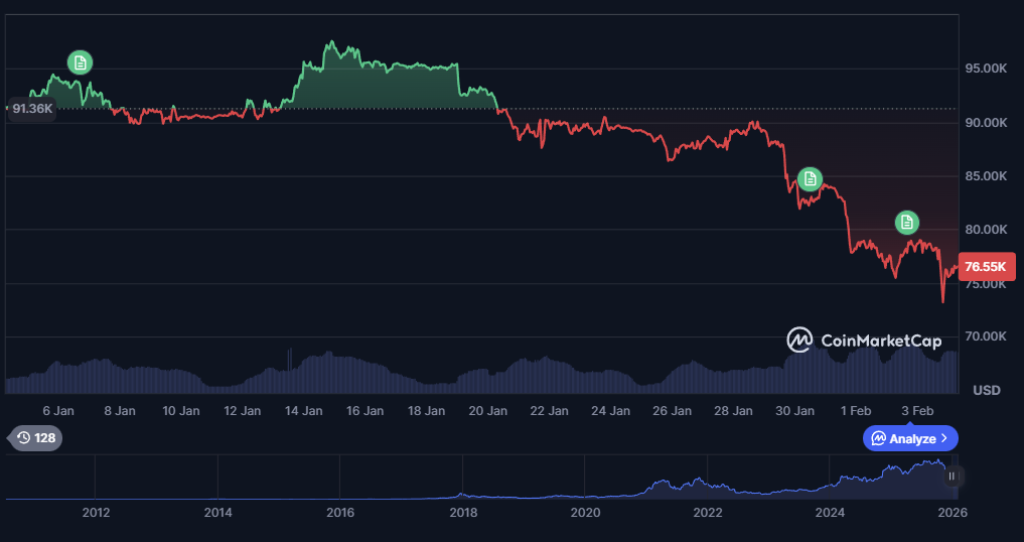 Source: CoinMarketCap/1-month BTC Chart
Why Did the Stock Drop Then?
If nothing is structurally wrong, why did Strategy’s stock sell off so hard?
Bull Theory outlines a sequence of external pressures that hit at the same time:
- MSCI proposal: New rules could remove companies holding over 50% of assets in Bitcoin from certain indexes. This sparked fears of forced index selling, even though no final decision has been made.
- JPMorgan margin changes: Margin requirements for trading MSTR were raised from 50% to 95%, forcing some investors to reduce exposure.
- Rising short interest: Several funds increased short positions, including those openly running “long BTC, short MSTR” trades.
- Bank-issued Bitcoin products: Morgan Stanley and JPMorgan launched structured products tied to BlackRock’s IBIT, redirecting flows away from Strategy.
- Bearish research timing: Negative notes surfaced during already weak conditions, reinforcing the fear loop.
None of these events involve Strategy becoming insolvent. They are about market structure, positioning, and flow dynamics.
The Valuation Gap No One Can Ignore
Here’s the part that makes this moment stand out.
Right now, Strategy owns more Bitcoin than its entire market capitalization. Even after subtracting debt, the net value of its BTC exceeds the company’s valuation.
That is a rare setup.
Markets can stay irrational for longer than expected, but valuation gaps this large rarely remain open forever without a resolution.
What Actually Happens at $74K BTC?
Strip away the noise and the conclusion is straightforward:
- No forced liquidation
- No BTC-linked debt triggers
- 32 months of USD runway already secured
- No meaningful debt due until 2028
A move from $87K to $74K hurts sentiment. It does not change Strategy’s solvency, liquidity, or ability to hold Bitcoin long term.
Read also: BlackRock’s Altcoin Accumulation List EXPOSED – Best Cryptos to Buy Now in 2026
The Real Risks to Watch
Bull Theory does not argue Strategy is risk-free.
Two real issues remain:
Dilution risk. Strategy has relied on issuing new shares to expand its Bitcoin position. If the market weakens for an extended period, dilution accelerates and pressures existing shareholders.
NAV risk. If Strategy’s net asset value stays below 1 for too long, raising capital through equity becomes harder. Some analysts note that prolonged NAV compression could eventually force balance-sheet decisions, including partial Bitcoin sales.
Those risks exist. They are structural and long-term. They are not triggered by a $74,000 Bitcoin price.
Subscribe to our YouTube channel for daily crypto updates, market insights, and expert analysis.
The post Why a $74,000 Bitcoin Price Will NOT Force Strategy to Sell BTC appeared first on CaptainAltcoin.


You May Also Like

Tokenized deals incoming? Franklin Templeton experiments with blockchain-based M&A

Today’s Biggest Crypto Movers: Dogecoin Leads the Pack