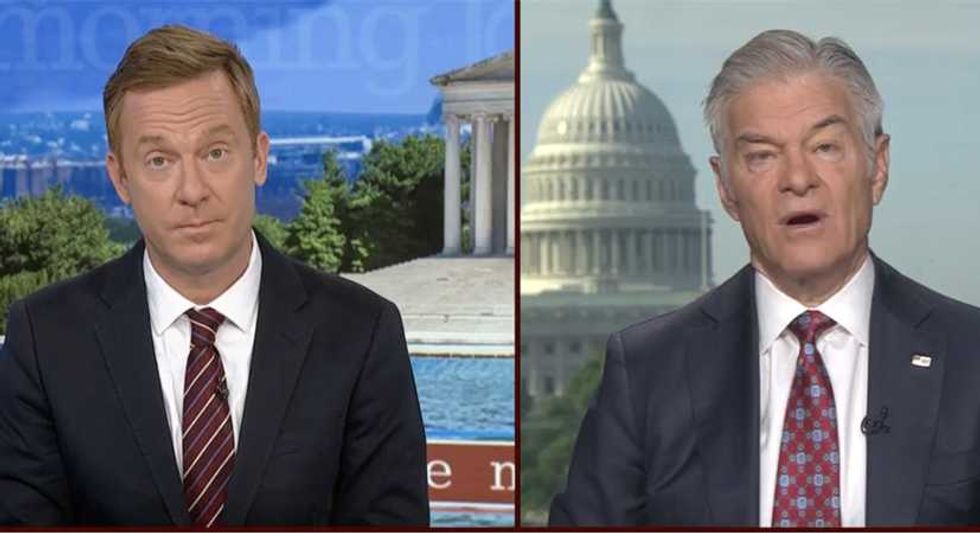
During a high-stakes Senate Banking Committee hearing on February 5, 2026, Treasury Secretary Scott Bessent delivered a blistering critique of a “nihilist groupDuring a high-stakes Senate Banking Committee hearing on February 5, 2026, Treasury Secretary Scott Bessent delivered a blistering critique of a “nihilist group

U.S. Government Tells Crypto Rebels: Accept the Rules or Move to El Salvador

2026/02/06 13:23
3 min read

During a high-stakes Senate Banking Committee hearing on February 5, 2026, Treasury Secretary Scott Bessent delivered a blistering critique of a “nihilist group” within the crypto industry.

Bessent accused these market participants of actively sabotaging the Digital Asset Market Clarity Act (CLARITY Act), the administration’s flagship market structure bill, to avoid federal oversight.

In one of the most polarizing moments of the hearing, Bessent issued a direct ultimatum: those who refuse to accept U.S. regulatory standards should “move to El Salvador,” a reference to the nation’s Bitcoin-friendly, but less stringent, regulatory environment. “It is impossible to proceed without it,” Bessent stated, emphasizing that federal rules are the only path forward for the U.S. digital asset industry.

The Stablecoin Yield Battleground

The primary catalyst for the current legislative stalemate is a controversial provision involving stablecoin rewards. The banking lobby has exerted significant pressure on lawmakers to prohibit crypto exchanges from paying interest on stablecoin balances, fearing a “deposit flight” from traditional community banks to digital wallets.

  • The “Nihilist” Divide: Bessent’s “nihilist” label targeted firms that he believes would rather see the bill fail than accept a ban on yield.
  • Banking Lobby Influence: Traditional financial institutions argue that yield-bearing stablecoins function as “uninsured deposits,” creating an unfair competitive advantage and systemic risk.
  • Congressional Frustration: Senator Mark Warner (D-VA) echoed the Secretary’s exhaustion, describing the months-long negotiation process as “crypto hell” and noting that national security protections in decentralized finance (DeFi) remain a major hurdle.

Industry Withdrawal: The Coinbase “Rug Pull”

The gridlock intensified in January 2026 when Coinbase CEO Brian Armstrong officially pulled the exchange’s support for the bill. Armstrong’s reversal came after a Senate rewrite introduced several “poison pill” provisions that the industry found untenable.

Key Industry GrievanceDescription of Provision
Stablecoin Yield BanEffectively prohibits interest or rewards on USD-pegged stablecoins.
Tokenized Equity BanA de facto block on trading tokenized stocks on crypto infrastructure.
SEC Power ExpansionGrants the SEC significantly more control over markets than the industry-preferred CFTC.
DeFi ProhibitionsBrings decentralized protocols under strict Bank Secrecy Act and AML rules.

Armstrong’s stance, “we’d rather have no bill than a bad bill”, effectively stalled the Senate markup, as the legislation requires bipartisan support to reach the 60-vote threshold.

Bitcoin Inflows to Binance Rise as Selling Pressure and Panic Build

Market Reaction: “Black Thursday” Deepens

Bessent’s testimony, combined with his firm ruling out of any federal bailouts for digital asset firms, sent Bitcoin into a tailspin. On the day of the hearing, Bitcoin plummeted over 12%, hitting a session low of $62,353 before recovering slightly to the $65,000 range.

The market is currently pricing in a “worst-case” regulatory scenario: one where the U.S. remains without a clear federal framework, leaving companies trapped in a cycle of “regulation by enforcement” while institutional capital remains sidelined by the lack of legal clarity.

Strategic Takeaway: The Offshore Threat

The Secretary’s El Salvador comment underscores a growing rift between the “innovation-first” wing of the crypto industry and the “compliance-first” mandate of the Treasury. For the CLARITY Act to survive 2026, the administration must resolve the stablecoin yield conflict. If the banking lobby succeeds in banning rewards, analysts warn that the “Digital Dollar” innovation could migrate permanently offshore, fulfilling Bessent’s ultimatum in a way that may ultimately harm U.S. financial competitiveness.

The post U.S. Government Tells Crypto Rebels: Accept the Rules or Move to El Salvador appeared first on ETHNews.


Market Opportunity
Union Logo
Union Price(U)
$0.001576
$0.001576$0.001576
+0.83%
USD
Union (U) Live Price Chart
Disclaimer: The articles reposted on this site are sourced from public platforms and are provided for informational purposes only. They do not necessarily reflect the views of MEXC. All rights remain with the original authors. If you believe any content infringes on third-party rights, please contact [email protected] for removal. MEXC makes no guarantees regarding the accuracy, completeness, or timeliness of the content and is not responsible for any actions taken based on the information provided. The content does not constitute financial, legal, or other professional advice, nor should it be considered a recommendation or endorsement by MEXC.

You May Also Like

Marathon Digital BTC Transfers Highlight Miner Stress

Marathon Digital BTC Transfers Highlight Miner Stress

The post Marathon Digital BTC Transfers Highlight Miner Stress appeared on BitcoinEthereumNews.com. In a tense week for crypto markets, marathon digital has drawn
Share
BitcoinEthereumNews2026/02/06 15:16
This U.S. politician’s suspicious stock trade just returned over 200% in weeks

This U.S. politician’s suspicious stock trade just returned over 200% in weeks

The post This U.S. politician’s suspicious stock trade just returned over 200% in weeks appeared on BitcoinEthereumNews.com. United States Representative Cloe Fields has seen his stake in Opendoor Technologies (NASDAQ: OPEN) stock return over 200% in just a matter of weeks. According to congressional trade filings, the lawmaker purchased a stake in the online real estate company on July 21, 2025, investing between $1,001 and $15,000. At the time, the stock was trading around $2 and had been largely stagnant for months. Receive Signals on US Congress Members’ Stock Trades Stocks Stay up-to-date on the trading activity of US Congress members. The signal triggers based on updates from the House disclosure reports, notifying you of their latest stock transactions. Enable signal The trade has since paid off, with Opendoor surging to $10, a gain of nearly 220% in under two months. By comparison, the broader S&P 500 index rose less than 5% during the same period. OPEN one-week stock price chart. Source: Finbold Assuming he invested a minimum of $1,001, the purchase would now be worth about $3,200, while a $15,000 stake would have grown to nearly $48,000, generating profits of roughly $2,200 and $33,000, respectively. OPEN’s stock rally Notably, Opendoor’s rally has been fueled by major corporate shifts and market speculation. For instance, in August, the company named former Shopify COO Kaz Nejatian as CEO, while co-founders Keith Rabois and Eric Wu rejoined the board, moves seen as a return to the company’s early innovative spirit.  Outgoing CEO Carrie Wheeler’s resignation and sale of millions in stock reinforced the sense of a new chapter. Beyond leadership changes, Opendoor’s surge has taken on meme-stock characteristics. In this case, retail investors piled in as shares climbed, while short sellers scrambled to cover, pushing prices higher.  However, the stock is still not without challenges, where its iBuying model is untested at scale, margins are thin, and debt tied to…
Share
BitcoinEthereumNews2025/09/18 04:02
Apollo secures $50 million in backing to launch new tokenized credit fund

Apollo secures $50 million in backing to launch new tokenized credit fund

PANews reported on September 18 that according to CoinDesk, the blockchain-based RWA institution Centrifuge and Plume jointly launched the "Anemoy Tokenized Apollo Diversified Credit Fund (ACRDX)", which received a $50 million anchor investment from Grove, a credit infrastructure protocol within the Sky ecosystem. The fund enables blockchain investors to participate in Apollo's diversified global credit strategy, covering direct corporate loans, asset-backed loans, and mismatched credit. ACRDX will be issued through Plume's Nest Credit Vault with the token code nACRDX, enabling institutional investors to participate in the strategy on-chain. Chronicle will serve as the oracle provider, and Wormhole will be responsible for cross-chain connections. After approval, Anemoy will serve as the fund's manager.
Share
PANews2025/09/18 10:26