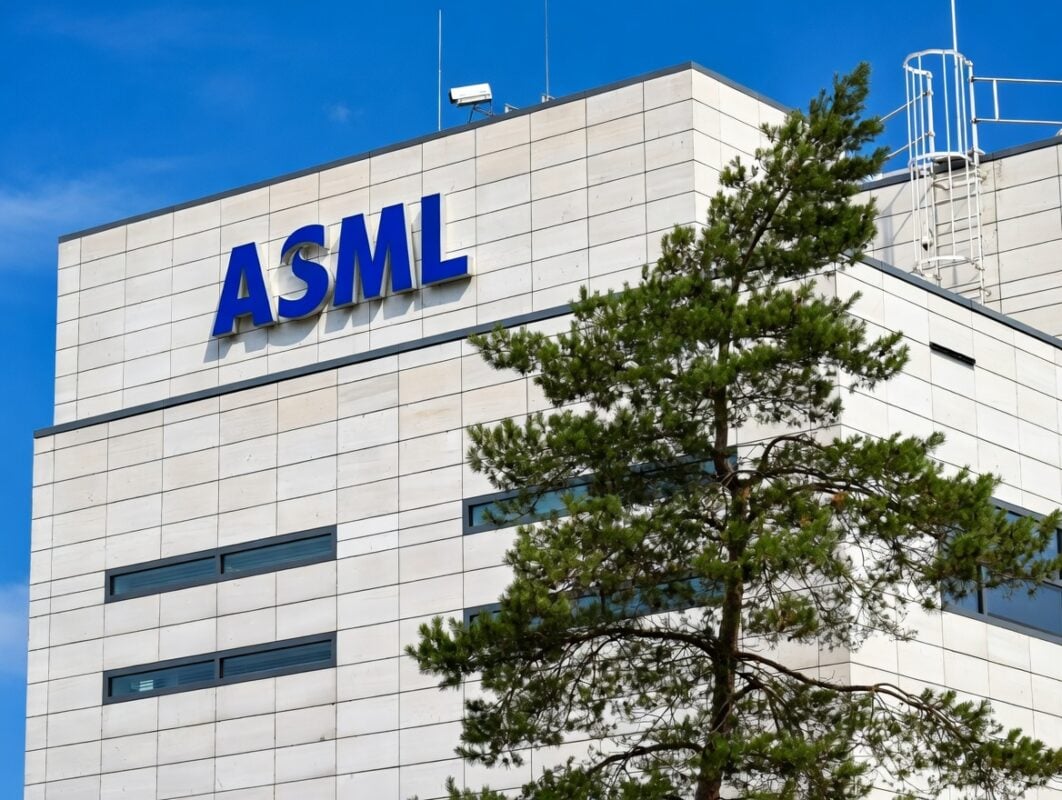
Indian Prime Minister Narendra Modi met with Malaysian leader Anwar Ibrahim in Putrajaya on Sunday to discuss deeper cooperation on computer chips and trade, markingIndian Prime Minister Narendra Modi met with Malaysian leader Anwar Ibrahim in Putrajaya on Sunday to discuss deeper cooperation on computer chips and trade, marking

India and Malaysia agree to combine chip design and manufacturing facilities in trade agreement

2026/02/08 22:10
4 min read

Indian Prime Minister Narendra Modi met with Malaysian leader Anwar Ibrahim in Putrajaya on Sunday to discuss deeper cooperation on computer chips and trade, marking his first trip to the country since the two nations elevated their ties last August.

The visit comes less than two weeks after India signed a major trade agreement with the European Union on January 27. While that deal focuses on opening markets for Indian goods and services across Europe, the Malaysia talks center on building the manufacturing capacity India needs to meet that demand.

Semiconductor cooperation drives new partnership

Both countries are trying to take advantage of global companies looking for alternatives to Chinese factories. The Sunday meetings produced agreements on semiconductor production, currency exchanges, and defense matters.

Computer chips dominated the agenda. Malaysia currently does 13% of the world’s chip testing and packaging operations and wants to move into more sophisticated production. India recently put $10 billion into programs designed to attract semiconductor factories.

“Our partnership in the digital and semiconductor sectors is not just about bilateral gains; it is about building a resilient global supply chain,” Modi said at the Seri Perdana complex, speaking alongside Anwar Ibrahim.

The plan connects India’s chip design capabilities and new factories being constructed in Gujarat with Malaysia’s existing facilities in Penang. Government officials believe this arrangement between the two South Asian nations could compete with established industry centers in the West.

The two governments also agreed to speed up efforts to allow businesses to pay each other in rupees and ringgit rather than US dollars, which often shift in value unpredictably.

Last year, India and Malaysia traded $18.6 billion in goods. Anwar said that number should climb higher under the new arrangements.

“We are moving beyond the era of simple buyer-seller relationships,” Anwar told reporters. “We are looking into co-investment and co-development right now. We intend to surpass previous trade norms by focusing on high-value sectors like green energy and the digital economy.

Security and defense take priority

After covering economic and technology issues, the leaders turned to defense and regional security matters. Officials from both sides said they recognize that stable security arrangements are necessary to protect economic gains.

Malaysia will chair the ASEAN group of Southeast Asian countries in 2026. That makes the country important to India’s “Act East” policy, which aims to strengthen ties across the region.

The leaders also discussed making sure benefits from this partnership reach ordinary citizens and workers in both countries, not just government offices and corporate boardrooms.

Anwar stressed that the “Comprehensive Strategic Partnership” label the countries adopted last August needs to translate into real results on the ground.

“The commitment of both governments is to execute these plans in a speedy manner,” Anwar said, emphasizing action over words.

The relationship between India and Malaysia has historically focused on basic trade across the Bay of Bengal. Sunday’s agreements signal a shift towards cooperation on advanced technology and shared democratic values.

The timing of Modi’s visit reflects India’s broader strategy for 2026. The India-EU agreement covers countries representing roughly 25% of global economic output and provides Indian textile makers and service companies with access to massive European markets. The Malaysia partnership secures the high-tech manufacturing base needed to supply those markets.

As the summit wrapped up, the message from both leaders was clear. India and Malaysia are building something different from their traditional relationship, a partnership based on technology sharing and strategic goals aimed at giving both countries larger roles in a world where economic and political power is spreading among more nations.

India is assuring the technological “supply engine” for its “demand engine” in Europe by adhering to the EU market-access agreement with a semiconductor arrangement with Malaysia. Through this integration, India may transition from a service-based economy to a center for high-value manufacturing, reducing the risk to its growth from supply chains in the North and fluctuations in the value of the dollar.

Get seen where it counts. Advertise in Cryptopolitan Research and reach crypto’s sharpest investors and builders.


Market Opportunity
Polytrade Logo
Polytrade Price(TRADE)
$0.03517
$0.03517$0.03517
-0.22%
USD
Polytrade (TRADE) Live Price Chart
Disclaimer: The articles reposted on this site are sourced from public platforms and are provided for informational purposes only. They do not necessarily reflect the views of MEXC. All rights remain with the original authors. If you believe any content infringes on third-party rights, please contact [email protected] for removal. MEXC makes no guarantees regarding the accuracy, completeness, or timeliness of the content and is not responsible for any actions taken based on the information provided. The content does not constitute financial, legal, or other professional advice, nor should it be considered a recommendation or endorsement by MEXC.

You May Also Like

Ethereum unveils roadmap focusing on scaling, interoperability, and security at Japan Dev Conference

Ethereum unveils roadmap focusing on scaling, interoperability, and security at Japan Dev Conference

The post Ethereum unveils roadmap focusing on scaling, interoperability, and security at Japan Dev Conference appeared on BitcoinEthereumNews.com. Key Takeaways Ethereum’s new roadmap was presented by Vitalik Buterin at the Japan Dev Conference. Short-term priorities include Layer 1 scaling and raising gas limits to enhance transaction throughput. Vitalik Buterin presented Ethereum’s development roadmap at the Japan Dev Conference today, outlining the blockchain platform’s priorities across multiple timeframes. The short-term goals focus on scaling solutions and increasing Layer 1 gas limits to improve transaction capacity. Mid-term objectives target enhanced cross-Layer 2 interoperability and faster network responsiveness to create a more seamless user experience across different scaling solutions. The long-term vision emphasizes building a secure, simple, quantum-resistant, and formally verified minimalist Ethereum network. This approach aims to future-proof the platform against emerging technological threats while maintaining its core functionality. The roadmap presentation comes as Ethereum continues to compete with other blockchain platforms for market share in the smart contract and decentralized application space. Source: https://cryptobriefing.com/ethereum-roadmap-scaling-interoperability-security-japan/
Share
BitcoinEthereumNews2025/09/18 00:25
CEO Sandeep Nailwal Shared Highlights About RWA on Polygon

CEO Sandeep Nailwal Shared Highlights About RWA on Polygon

The post CEO Sandeep Nailwal Shared Highlights About RWA on Polygon appeared on BitcoinEthereumNews.com. Polygon CEO Sandeep Nailwal highlighted Polygon’s lead in global bonds, Spiko US T-Bill, and Spiko Euro T-Bill. Polygon published an X post to share that its roadmap to GigaGas was still scaling. Sentiments around POL price were last seen to be bearish. Polygon CEO Sandeep Nailwal shared key pointers from the Dune and RWA.xyz report. These pertain to highlights about RWA on Polygon. Simultaneously, Polygon underlined its roadmap towards GigaGas. Sentiments around POL price were last seen fumbling under bearish emotions. Polygon CEO Sandeep Nailwal on Polygon RWA CEO Sandeep Nailwal highlighted three key points from the Dune and RWA.xyz report. The Chief Executive of Polygon maintained that Polygon PoS was hosting RWA TVL worth $1.13 billion across 269 assets plus 2,900 holders. Nailwal confirmed from the report that RWA was happening on Polygon. The Dune and https://t.co/W6WSFlHoQF report on RWA is out and it shows that RWA is happening on Polygon. Here are a few highlights: – Leading in Global Bonds: Polygon holds 62% share of tokenized global bonds (driven by Spiko’s euro MMF and Cashlink euro issues) – Spiko U.S.… — Sandeep | CEO, Polygon Foundation (※,※) (@sandeepnailwal) September 17, 2025 The X post published by Polygon CEO Sandeep Nailwal underlined that the ecosystem was leading in global bonds by holding a 62% share of tokenized global bonds. He further highlighted that Polygon was leading with Spiko US T-Bill at approximately 29% share of TVL along with Ethereum, adding that the ecosystem had more than 50% share in the number of holders. Finally, Sandeep highlighted from the report that there was a strong adoption for Spiko Euro T-Bill with 38% share of TVL. He added that 68% of returns were on Polygon across all the chains. Polygon Roadmap to GigaGas In a different update from Polygon, the community…
Share
BitcoinEthereumNews2025/09/18 01:10
Kalshi debuts ecosystem hub with Solana and Base

Kalshi debuts ecosystem hub with Solana and Base

The post Kalshi debuts ecosystem hub with Solana and Base appeared on BitcoinEthereumNews.com. Kalshi, the US-regulated prediction market exchange, rolled out a new program on Wednesday called KalshiEco Hub. The initiative, developed in partnership with Solana and Coinbase-backed Base, is designed to attract builders, traders, and content creators to a growing ecosystem around prediction markets. By combining its regulatory footing with crypto-native infrastructure, Kalshi said it is aiming to become a bridge between traditional finance and onchain innovation. The hub offers grants, technical assistance, and marketing support to selected projects. Kalshi also announced that it will support native deposits of Solana’s SOL token and USDC stablecoin, making it easier for users already active in crypto to participate directly. Early collaborators include Kalshinomics, a dashboard for market analytics, and Verso, which is building professional-grade tools for market discovery and execution. Other partners, such as Caddy, are exploring ways to expand retail-facing trading experiences. Kalshi’s move to embrace blockchain partnerships comes at a time when prediction markets are drawing fresh attention for their ability to capture sentiment around elections, economic policy, and cultural events. Competitor Polymarket recently acquired QCEX — a derivatives exchange with a CFTC license — to pave its way back into US operations under regulatory compliance. At the same time, platforms like PredictIt continue to push for a clearer regulatory footing. The legal terrain remains complex, with some states issuing cease-and-desist orders over whether these event contracts count as gambling, not finance. This is a developing story. This article was generated with the assistance of AI and reviewed by editor Jeffrey Albus before publication. Get the news in your inbox. Explore Blockworks newsletters: Source: https://blockworks.co/news/kalshi-ecosystem-hub-solana-base
Share
BitcoinEthereumNews2025/09/18 04:40