

Crypto Scam Developer Indicted in South Korea: Shocking 800 Million Won Fraud Exposed
BitcoinWorld
Crypto Scam Developer Indicted in South Korea: Shocking 800 Million Won Fraud Exposed
SEOUL, South Korea – March 2025 – In a significant legal development, South Korean prosecutors have formally indicted a developer for orchestrating a sophisticated crypto scam site, marking a crucial enforcement action in the nation’s ongoing battle against virtual asset fraud. The Seoul Northern District Prosecutors’ Office charged the individual with defrauding victims of approximately 800 million won ($615,000) through a fraudulent virtual asset staking platform, highlighting persistent vulnerabilities in the rapidly evolving digital finance sector. This case represents a critical test of South Korea’s updated regulatory framework designed to protect investors from deceptive cryptocurrency schemes.
Crypto Scam Developer Faces Multiple Criminal Charges
Prosecutors filed charges under two specific statutes: the Act on the Aggravated Punishment of Specific Economic Crimes and the Information and Communications Network Act. The dual charges indicate authorities are pursuing both the financial fraud aspects and the technological misuse involved in the scheme. According to the indictment, the developer created and operated a website that falsely promised high returns through virtual asset staking – a process where users lock cryptocurrencies to support blockchain operations in exchange for rewards. However, investigators determined the platform operated as a complete fabrication, with no actual staking mechanisms or legitimate blockchain integrations.
The alleged crimes occurred around March 2025, coinciding with increased regulatory scrutiny following several high-profile cryptocurrency collapses globally. South Korean financial authorities have particularly intensified monitoring of staking services after the Terra-Luna collapse in 2022 exposed systemic risks in the sector. This indictment follows a months-long investigation that involved digital forensics, financial tracing, and victim testimony collection. Prosecutors utilized blockchain analysis tools to track the movement of stolen funds across multiple wallets and exchanges, demonstrating increasingly sophisticated investigative capabilities in cryptocurrency cases.
South Korea’s Evolving Virtual Asset Enforcement Landscape
South Korea has implemented progressively stricter regulations since establishing comprehensive virtual asset legislation in 2023. The Financial Services Commission (FSC) now requires all cryptocurrency exchanges and service providers to register with financial authorities and maintain stringent anti-money laundering protocols. Additionally, the Specific Financial Information Act mandates real-name verification for all cryptocurrency transactions, creating audit trails that assist in fraud investigations like this recent indictment.
The table below illustrates key regulatory developments in South Korea’s virtual asset space:
| Year | Regulatory Development | Impact on Fraud Prevention |
|---|---|---|
| 2021 | Virtual Asset Service Provider (VASP) registration requirement | Established basic oversight framework |
| 2023 | Enactment of Digital Asset Basic Act | Created comprehensive legal classification and protections |
| 2024 | Enhanced staking service regulations | Required transparency in reward mechanisms and risk disclosures |
| 2025 | Cross-agency cryptocurrency task force formation | Improved coordination between prosecutors, police, and financial regulators |
This regulatory evolution reflects South Korea’s position as both a major cryptocurrency market and an increasingly strict enforcement jurisdiction. The country hosts several of the world’s largest cryptocurrency exchanges by volume, including Upbit and Bithumb, making effective fraud prevention essential for market stability. Furthermore, South Korean authorities have developed specialized training programs for prosecutors and investigators focusing on blockchain technology and cryptocurrency forensics, enhancing their ability to pursue complex cases like this staking fraud indictment.
Expert Analysis of Virtual Asset Staking Risks
Financial technology experts note that staking services present particular vulnerabilities because they require users to surrender control of their assets to third-party platforms. Legitimate staking involves technical processes that average investors may not fully understand, creating opportunities for bad actors to exploit knowledge gaps. According to blockchain security analysts, fraudulent staking platforms typically exhibit several red flags:
- Guaranteed returns that significantly exceed market rates
- Vague technical explanations of staking mechanisms
- Pressure tactics emphasizing limited-time opportunities
- Lack of transparent wallet addresses for verification
- Absence of third-party audits or security certifications
The indicted developer’s platform reportedly promised consistently high returns regardless of market conditions, a classic indicator of fraudulent operations. Meanwhile, legitimate staking returns fluctuate based on network participation levels and cryptocurrency values. Security experts emphasize that investors should verify staking services through multiple channels, including checking whether platforms are registered with financial authorities, reviewing their technical documentation, and confirming they use transparent, verifiable smart contracts.
Impact on South Korean Crypto Investors and Market Confidence
This indictment arrives during a period of renewed investor interest in cryptocurrency markets following the 2022-2023 downturn. The 800 million won fraud, while substantial, represents just one instance in a broader pattern of virtual asset crimes that South Korean authorities have targeted with increasing success. According to Financial Supervisory Service data, reported cryptocurrency fraud cases decreased by approximately 30% between 2023 and 2024, suggesting improved regulatory effectiveness. However, the sophistication of remaining schemes has increased, requiring corresponding advancements in investigative techniques.
The case has several immediate implications for South Korea’s virtual asset ecosystem. First, it demonstrates prosecutors’ willingness to pursue technical developers alongside more visible platform operators, expanding accountability throughout the fraud chain. Second, it signals to potential fraudsters that South Korea’s improved forensic capabilities can trace sophisticated cryptocurrency movements across multiple wallets and exchanges. Third, it provides a concrete example for investor education campaigns about staking risks and verification procedures. Financial authorities have already incorporated details from this case into updated investor advisories about virtual asset staking services.
Market analysts observe that such enforcement actions generally strengthen legitimate sectors by removing fraudulent competitors and increasing overall trust. However, they also note that excessive regulatory pressure could potentially drive innovation to more permissive jurisdictions. South Korean regulators appear to be navigating this balance by focusing enforcement on clear fraud cases while providing compliance pathways for legitimate businesses. The virtual asset industry association has welcomed the indictment as a necessary step toward market maturation, though it continues advocating for regulatory clarity to reduce compliance uncertainties for legitimate operators.
Conclusion
The indictment of a crypto scam developer in South Korea represents a significant milestone in the nation’s ongoing efforts to combat virtual asset fraud. This case involving 800 million won in staking fraud demonstrates both the persistent risks in cryptocurrency markets and the improving capabilities of regulatory authorities to address them. As South Korea continues refining its virtual asset regulations and enforcement mechanisms, such actions will likely become more frequent and sophisticated. Ultimately, this development reinforces the importance of due diligence for cryptocurrency investors while signaling that authorities are developing effective responses to evolving digital financial crimes. The crypto scam case in Seoul serves as both a warning to potential fraudsters and a reassurance to legitimate market participants that South Korea remains committed to creating a secure virtual asset environment.
FAQs
Q1: What specific laws did prosecutors use in this crypto scam indictment?
Prosecutors charged the developer under the Act on the Aggravated Punishment of Specific Economic Crimes for the fraud component and the Information and Communications Network Act for the technological aspects of operating the fraudulent website.
Q2: How does virtual asset staking work in legitimate contexts?
Legitimate staking involves locking cryptocurrency tokens to support blockchain network operations like transaction validation. In return, participants typically receive additional tokens as rewards, with returns varying based on network participation and token value.
Q3: What makes staking platforms particularly vulnerable to fraud?
Staking requires users to transfer asset control to platforms, creating custody risks. Technical complexity can obscure fraudulent operations, and promised returns often attract investors seeking passive income without fully understanding underlying mechanisms.
Q4: How has South Korea’s approach to cryptocurrency regulation evolved recently?
South Korea implemented comprehensive virtual asset legislation in 2023, established strict exchange registration requirements, mandated real-name verification for transactions, and formed specialized enforcement task forces to address cryptocurrency crimes.
Q5: What should investors look for to identify legitimate staking platforms?
Investors should verify platform registration with financial authorities, review transparent technical documentation, check for third-party security audits, confirm reasonable (not guaranteed) return estimates, and ensure clear explanations of staking mechanisms and risks.
This post Crypto Scam Developer Indicted in South Korea: Shocking 800 Million Won Fraud Exposed first appeared on BitcoinWorld.


You May Also Like
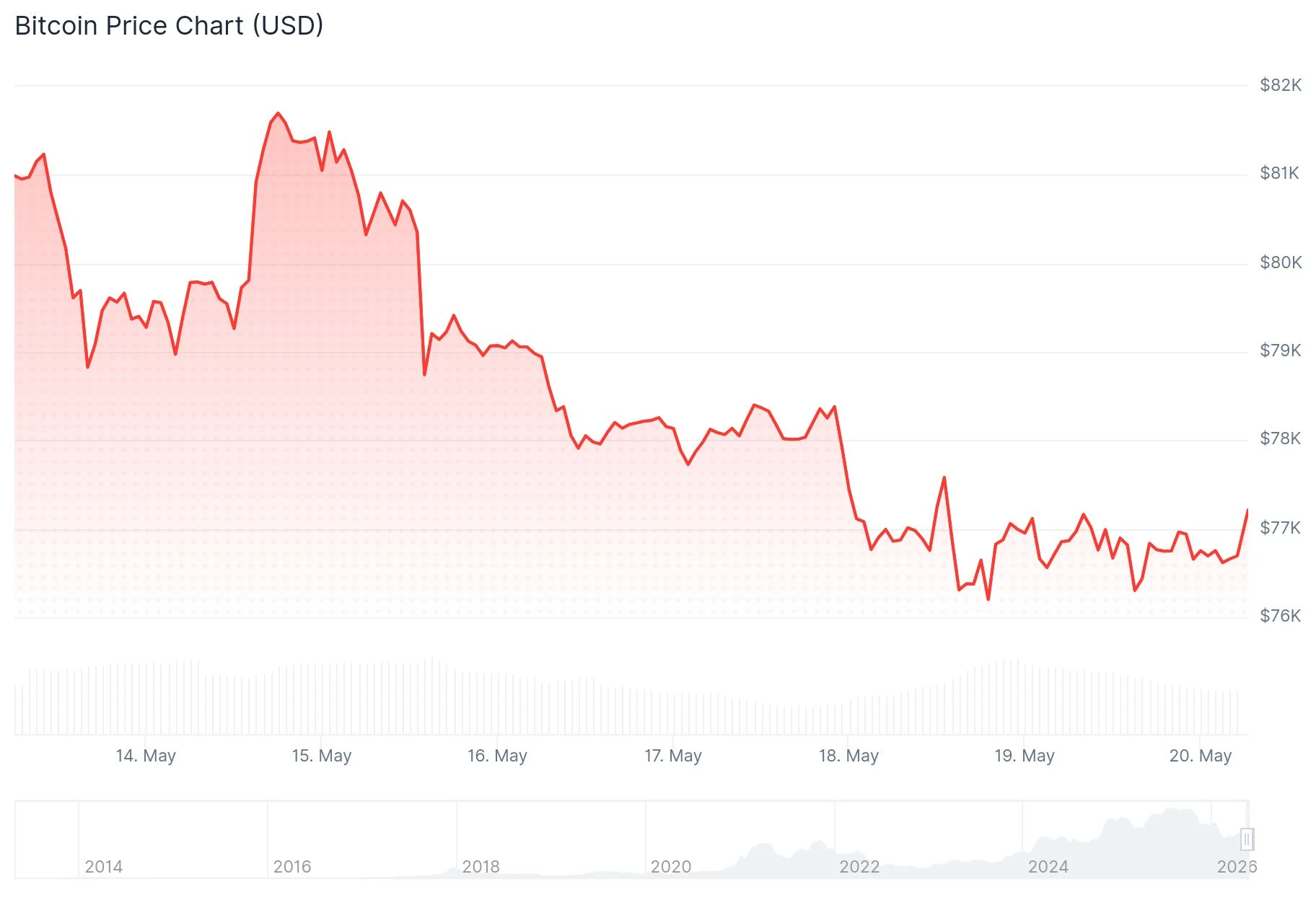
Bitcoin (BTC) Hovers Above $77K Amid Iran Diplomacy and Rising Treasury Yields

Beyond Cleaning: What Else You Must Check Before Moving Out




