

Toyota Proposes Blockchain Layer to Orchestrate Trust Across Mobility Ecosystems
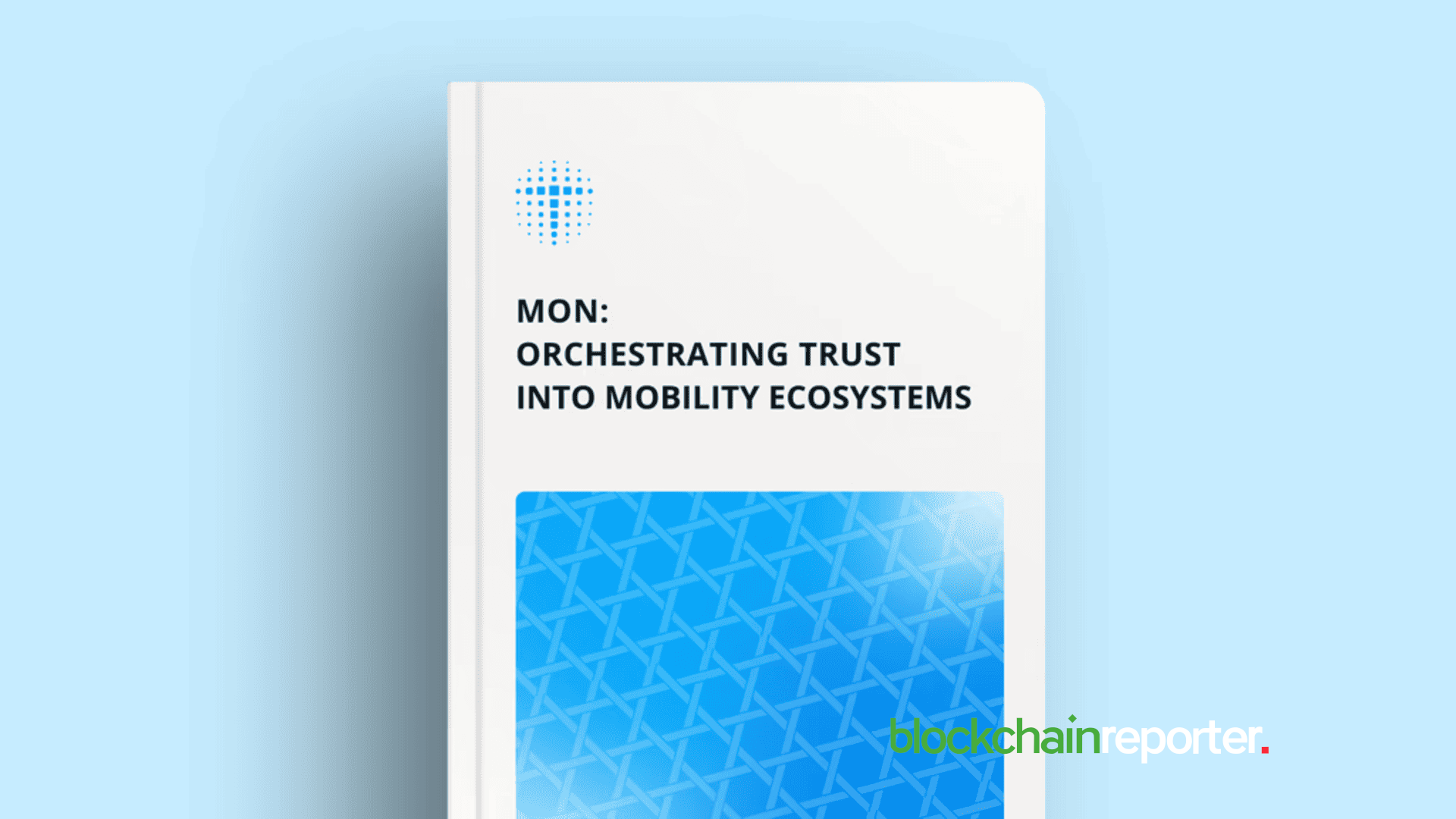
Toyota’s Blockchain Lab on Wednesday published a major technical paper, MON: Orchestrating Trust into Mobility Ecosystems, laying out a concrete blueprint for a blockchain-based Mobility Orchestration Network (MON) that the authors say could let vehicles, regulators, insurers, financiers and service providers share verifiable claims about cars and mobility services across borders and industries.
The paper, credited to Toyota Blockchain Lab with technical advisory from AvaLabs and TIS, was released on Aug. 20, 2025. The central problem Toyota frames is simple but far-reaching: a modern mobility asset, a car, a robotaxi, an e-bike fleet, is not owned or operated by a single party but exists inside a web of legal, technical and commercial relationships.
Those relationships are largely siloed today (registries, OEMs, insurers, fleet operators, banks), and that fragmentation prevents mobility’s value from being reliably measured, moved or financed. The MON proposal is intended as a neutral protocol layer to bundle and expose those many proofs of trust so that capital, services and operations can interoperate without dismantling local laws and institutions.
Three Bridges to Fix Three Gaps
Toyota organizes the solution around three structural gaps, organizational, industrial and national, and proposes three corresponding bridges:
• Bridge 1 — Bundling Trust: MON aggregates multiple kinds of verifiable proof (what the paper calls institutional, technical and economic proofs) so that a vehicle’s legal status, OEM manufacturing attestations and operational performance can be combined into a single, machine-verifiable “Trust” about the asset.
• Bridge 2 — Igniting the value cycle: With Trust established, capital networks (lenders, securities platforms) and utility networks (ride platforms, charging operators) can interoperate. MON is described as a neutral coordinator, not the sole marketplace, that enables finance, services and operations to reinforce each other.
• Bridge 3 — Connecting ecosystems: Rather than forcing a single global law or registry, MON would be a protocol that local instances (governed regionally) can adopt and still interoperate, allowing mobility value to cross borders while respecting local rules.
MOA and the Fungibility Ladder
Technically, MON centers on two practical ideas. First, the Mobility Oriented Account (MOA): a digital container that records the bundle of Trust Chains for a specific mobility asset. Toyota splits that concept into two mirrored accounts, a Trust-facing T-MOA (for legal and financial proofs) and a Utility-facing U-MOA (for real-time operational state), with only essential summaries bridged between them to limit sensitive data exposure.
Second, the paper tackles how to turn inherently non-fungible, relationship-rich vehicles into financial instruments that markets can handle. Toyota calls this the Fungibility Ladder: ownership represented as NFTs at the lowest rung, portfolios and semi-fungible bundles next, and finally fully fungible security tokens backed by portfolio valuations at the top, a path that would let investors access mobility value while preserving provenance and auditability.
Why AvaLabs / Avalanche Matters Here
The report acknowledges technical advisory from AvaLabs, the developer organization behind Avalanche, signaling Toyota’s preference for partners familiar with high-throughput, subnet-enabled blockchains and enterprise deployments. AvaLabs’ tooling (AvaCloud, subnet architecture) is widely used by firms building custom chains and permissioned/permissionless integrations.
It makes it a natural collaborator on an initiative that requires regional instances and cross-network interoperability. If implemented, MON could make it materially easier to underwrite loans using vehicle histories, to securitize fleets, and to bring previously illiquid mobility assets into capital markets, all while providing regulators with auditable attestations.
The Toyota paper is careful to stress that MON does not replace local authorities; it aims to translate locally governed proofs into standardized, verifiable claims that can travel across networks. That balance, enabling liquidity without erasing local legalities, is the core innovation the authors emphasize.
Challenges and Next Steps
Toyota’s paper is normative and architectural rather than a straight product launch: it maps out protocols, account models and tokenization pathways but also acknowledges tough questions ahead, data governance, identity and privacy (PII minimization between T-MOA and U-MOA), cross-jurisdictional legal harmonization, and the institutional work required to get registries, insurers and OEMs to adopt shared standards.
Rolling MON from specification to pilots will require real-world trials and regulatory engagement. With MON: Orchestrating Trust into Mobility Ecosystems, Toyota Blockchain Lab has published a detailed, pragmatic blueprint that frames mobility as a networked asset and proposes a standards-first, regionally respectful blockchain layer to make vehicle trust tradable and interoperable.
The paper’s combination of an MOA identity model, a fungibility pathway to finance, and advisory input from organizations like AvaLabs means the idea is technically plausible, but its social and legal adoption will determine whether MON becomes infrastructure or remains an influential research document.


You May Also Like
Retired general suggests Trump go to Walter Reed National Military Medical Center

Marik Hazan: Social media is reshaping journalism, AI will disrupt employment more than expected, and the cofounder model is unsustainable for AI startups




