Most cross-border payments have traditionally been routed through the US dollar, even when neither side of a transaction actually wants to hold it. For businesses operating across Africa, Latin America, and Southeast Asia, that structure often translates into unpredictable FX pricing, liquidity constraints, and settlement delays that make moving money harder than it needs to be.
MANSA is taking a different approach. Built as a stablecoin-based liquidity and payments infrastructure for emerging markets, the platform focuses on enabling fast, compliant settlement while delivering funds in local currency rather than forcing every corridor through USD.
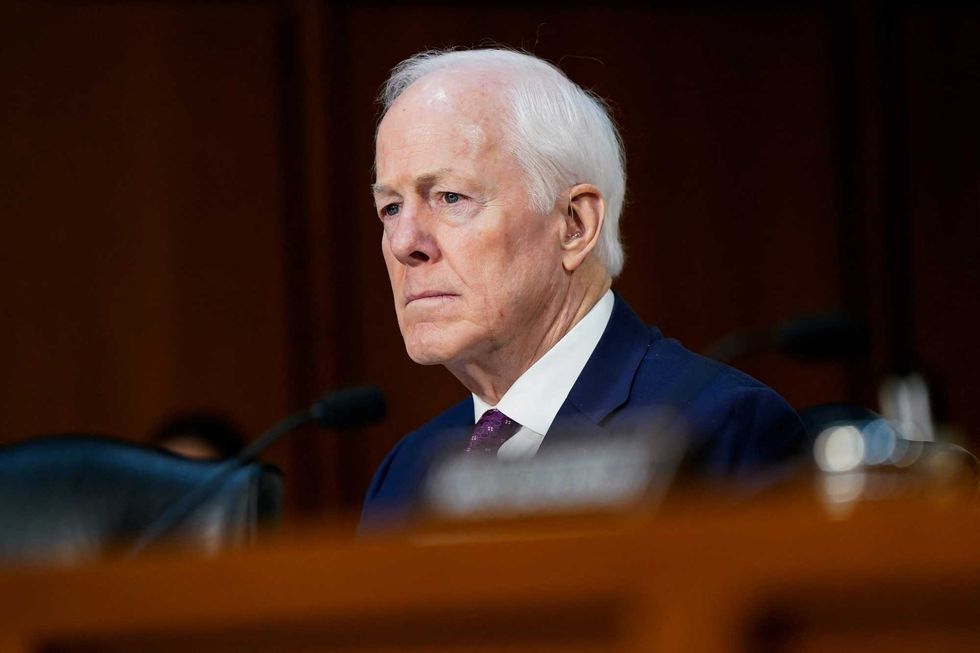
In this interview, co-founder and CEO Mouloukou Sanoh discusses why non-USD corridors matter, how liquidity and FX shape real-world payment outcomes, and what a more localized model of cross-border finance could mean for the next phase of global payments.
Many global payment systems still route value through the US dollar by default. Why is that a problem for businesses operating in emerging markets?
When a business’s real need is a confirmed local-currency payout, forcing the route through USD often adds extra steps. Those don’t create value for the receiver but introduce operational friction and cost. In practice, you get more intermediaries, more cutoffs, and more places where fees and FX spreads can be applied. And more dependence on access to dollar liquidity, which is not always available or evenly distributed across markets.
In many emerging economies, limited access to US dollar directly constrains trade. Importers struggle to source inventory, and exporters face delays in receiving proceeds. Businesses, in turn, are forced to manage volatile local currencies that can move sharply between the moment a payment is sent and when it finally arrives.
If you’re paying in a less-liquid currency, the route can even force multiple conversions, so the receiver’s final amount becomes harder to predict at the moment you press “send.”
And then there’s prefunding. Many corridors still rely on money sitting ahead of time in local accounts, often via correspondent arrangements. Where local liquidity is thin, this becomes especially costly and ties up working capital for long periods just to ensure payments can clear at all. This burden is often invisible on the product UI but very real on the CFO’s balance sheet.
A lot of businesses don’t want to hold US dollars; they want predictable payouts in local currency. How does MANSA help move value across borders while still delivering funds locally?
In practice, many businesses do want exposure to US dollar, because the dollar remains the world’s reserve currency and offers a hedge against volatile local exchange rates. What they want, however, is the ability to move smoothly between USD and local currencies, with predictable pricing, timing, and execution certainty.
We start from what the recipient needs to receive, in what currency, and under what timing requirements. Then we work backward to structure the liquidity and settlement so the payout partner can deliver locally without forcing the sender to preposition capital across every corridor.
In operational terms, MANSA supports payment providers by making “just-in-time” liquidity possible and by shortening the settlement loop. By combining deep digital-dollar liquidity with our balance sheet and established local rails, we can facilitate faster payouts at competitive FX rates, even in thinner markets. That means less trapped capital, fewer manual treasury interventions, and fewer cases where payments fail simply because a local pool runs dry at the wrong moment.
It’s also why we’re careful about jargon. If a partner has to retrain their operations team to use the system, adoption slows. The goal is that they keep their existing compliance and payout flows but gain more flexible treasury management and faster certainty around final local delivery.
When you build a new corridor where the end user receives local currency, what are the key pieces that have to be in place for it to work reliably?
Reliability starts with trusted local rails that already embed compliance and reporting requirements. You need payout partners that can actually disburse funds in local currency when customers need them, and on- and off-ramp infrastructure that allows funds to move seamlessly between global and domestic systems.
Just as important is having enough local liquidity available at all times. Without sufficient depth, even technically sound corridors can become fragile, forcing providers back into prefunding or delayed settlement. Time-zone gaps and nonoverlapping RTGS operating hours remain a quiet source of friction in many markets.
You also need tight reconciliation. In a new corridor, the first real failures are rarely technological. As a rule, they involve mismatched references, beneficiary name issues, returned payments, or bank statements that don’t match internal ledgers. The corridor becomes dependable when every exception has a deterministic resolution path: where funds sit, who can release them, and how evidence is produced.
And finally, risk controls must reflect local realities. FX volatility, market liquidity, regulatory limits, and fraud patterns differ widely. If corridor design doesn’t internalize those factors, providers compensate with buffers and manual checks, which ultimately reintroduce the same delays and costs they were trying to remove.
MANSA works primarily with payment providers in emerging markets. What are the most common challenges they face when trying to move money into or out of local currencies?
We primarily work with global payment companies that focus on emerging-market corridors, which together represent hundreds of billions of dollars in annual volume. Their most persistent challenges tend to cluster around cost and liquidity.
High fees remain a structural issue. These come not only from direct charges but from layered FX spreads, intermediary deductions, and the operational overhead of repairing payments and managing exceptions. The result is a total cost that is often materially higher than headline pricing suggests.
Liquidity is the second constraint. In many corridors, local currency depth is thin and uneven, forcing providers to prefund or delay settlement. That creates idle balances in some markets and shortages in others. And this dynamic scales poorly as volumes grow and demand becomes more real-time.
Since launching, MANSA has processed roughly $143 million in payments and supported about $281 million in on-chain volume. What have these flows revealed about where local-currency bottlenecks are most acute?
Since launch, MANSA has processed over $183 million in payments and supported more than $366 million in settlement volume. At that scale, you see that the bottleneck is rarely cross-border transfer itself; it is converting settlement into a clean, final local credit with minimal exception work.
The most acute friction appears in markets with limited financial infrastructure or restricted access to dollar liquidity. There, operating hours, local cutoffs, weekend effects, and funding constraints translate directly into delays and unpredictability.
The flows also highlight how much effort goes into making outcomes certain. When partners lack liquidity flexibility, they compensate with prefunding and buffers. The approach works at a small scale, but it quickly becomes a tax on growth as capital gets locked into pools that don’t reflect real-time demand.
Some critics argue that stablecoins still reinforce dollar dominance. How do you respond when your goal is to enable local currency outcomes rather than push every corridor through USD?
Our goal isn’t to promote any specific currency, it’s to enable seamless movement of money into and out of emerging markets at the best available price and speed. This means building infrastructure that can move funds fluidly between global liquidity pools and domestic rails.
Most businesses we work with are not asking to “hold dollars” or “avoid dollars.” They want certainty: on pricing, timing, and execution. If using a digital representation of USD helps compress settlement cycles and unlock liquidity where it otherwise doesn’t exist, it becomes a practical tool.
If a corridor can consistently credit local currency faster, with fewer exceptions and less trapped capital, then the system is serving its purpose, regardless of what denomination is used transiently in the middle.
In many emerging markets, local currency movement comes with strict regulatory and reporting requirements. How do you design these corridors so they remain compliant without reintroducing the same friction you’re trying to remove?
We treat compliance as a core part of corridor design. MANSA works with licensed, regulated partners whose local rails already embed reporting, screening, and monitoring requirements. That allows us to align operational efficiency with regulatory expectations.
Clear responsibility across the chain is critical. When customer due diligence, transaction screening, recordkeeping, and regulatory reporting are well defined, operations teams don’t need to rely on manual reviews or excessive buffers. That clarity reduces friction while maintaining regulatory integrity.
Traceability, consistent identifiers, and audit-ready reconciliation are equally essential. Speed only matters if you can still explain, document, and defend every payout when regulators, banks, or auditors ask questions.
Looking ahead, do you see the future of cross-border payments moving toward a network of regional, local-currency corridors rather than a few global USD-based rails?
I expect a more interoperable system that combines global messaging networks like SWIFT with domestic instant-payment rails. Instead of replacing existing infrastructure, the industry is moving toward better connectivity between them.
That hybrid approach shortens settlement chains, improves operating-hour overlap, and reduces unnecessary currency conversions. The result is not the disappearance of global rails, but their tighter integration with regional payment systems.
For treasury teams, that means greater optionality. They can optimize for certainty, cost, or speed, depending on the business case, and do so with fewer hidden trade-offs. And that translates into fewer surprises, less idle capital, and fewer Friday payments that don’t become usable funds until Monday.
Read more interviews here.
Source: https://finbold.com/mansa-mouloukou-sanoh-interview/