The post Tim Scott hopes for bipartisan digital asset bill passage appeared on BitcoinEthereumNews.com. Homepage > News > Business > Tim Scott hopes for bipartisan digital asset bill passage United States Senator Tim Scott (R-SC), who chairs the Senate Banking Committee and spearheads efforts to pass a digital asset market structure bill, said that certain Democratic Party lawmakers are “standing in the way” of the legislation’s progress. Speaking at the Wyoming Blockchain Symposium on Tuesday, Scott reportedly said that he believes he can get between 12 to 18 Democrats to vote for his digital asset market structure bill, but that leading Democrats, such as vocal digital currency-critic Senator Elizabeth Warren (D-MA), are hampering progress. “The forces against it, let me just say it clearly, like Elizabeth Warren, standing in the way of Democrats wanting to participate,” Scott said, as reported by The Block on August 19. He added that the virulent opposition of such figures as Warren is “a real force to overcome.” Scott—along with fellow Senate Banking Committee Republicans Cynthia Lummis (R-WY), Bill Hagerty (R-TN), and Bernie Moreno (R-OH)—released a discussion draft of their digital asset market structure bill, also known as the ‘Responsible Financial Innovation Act of 2025,’ on July 22. The 35-page draft primarily addresses the uncertainty over how to classify various digital assets and which regulator, the Securities and Exchange Commission (SEC) or Commodity Futures Trading Commission (CFTC), has jurisdiction over those assets. Its provisions include defining an “ancillary asset” to clarify which digital assets are not securities, requiring the SEC to exempt certain offers or sales of ancillary assets from SEC registration, and pressing the regulator to “more clearly define what constitutes an investment contract.” The draft also directs the SEC to tailor existing requirements to digital asset activity, “so that regulations are no longer outdated, unnecessary, or unduly burdensome in light of the unique technological characteristics of digital… The post Tim Scott hopes for bipartisan digital asset bill passage appeared on BitcoinEthereumNews.com. Homepage > News > Business > Tim Scott hopes for bipartisan digital asset bill passage United States Senator Tim Scott (R-SC), who chairs the Senate Banking Committee and spearheads efforts to pass a digital asset market structure bill, said that certain Democratic Party lawmakers are “standing in the way” of the legislation’s progress. Speaking at the Wyoming Blockchain Symposium on Tuesday, Scott reportedly said that he believes he can get between 12 to 18 Democrats to vote for his digital asset market structure bill, but that leading Democrats, such as vocal digital currency-critic Senator Elizabeth Warren (D-MA), are hampering progress. “The forces against it, let me just say it clearly, like Elizabeth Warren, standing in the way of Democrats wanting to participate,” Scott said, as reported by The Block on August 19. He added that the virulent opposition of such figures as Warren is “a real force to overcome.” Scott—along with fellow Senate Banking Committee Republicans Cynthia Lummis (R-WY), Bill Hagerty (R-TN), and Bernie Moreno (R-OH)—released a discussion draft of their digital asset market structure bill, also known as the ‘Responsible Financial Innovation Act of 2025,’ on July 22. The 35-page draft primarily addresses the uncertainty over how to classify various digital assets and which regulator, the Securities and Exchange Commission (SEC) or Commodity Futures Trading Commission (CFTC), has jurisdiction over those assets. Its provisions include defining an “ancillary asset” to clarify which digital assets are not securities, requiring the SEC to exempt certain offers or sales of ancillary assets from SEC registration, and pressing the regulator to “more clearly define what constitutes an investment contract.” The draft also directs the SEC to tailor existing requirements to digital asset activity, “so that regulations are no longer outdated, unnecessary, or unduly burdensome in light of the unique technological characteristics of digital…

Tim Scott hopes for bipartisan digital asset bill passage

United States Senator Tim Scott (R-SC), who chairs the Senate Banking Committee and spearheads efforts to pass a digital asset market structure bill, said that certain Democratic Party lawmakers are “standing in the way” of the legislation’s progress.

Speaking at the Wyoming Blockchain Symposium on Tuesday, Scott reportedly said that he believes he can get between 12 to 18 Democrats to vote for his digital asset market structure bill, but that leading Democrats, such as vocal digital currency-critic Senator Elizabeth Warren (D-MA), are hampering progress.

“The forces against it, let me just say it clearly, like Elizabeth Warren, standing in the way of Democrats wanting to participate,” Scott said, as reported by The Block on August 19.

He added that the virulent opposition of such figures as Warren is “a real force to overcome.”

Scott—along with fellow Senate Banking Committee Republicans Cynthia Lummis (R-WY), Bill Hagerty (R-TN), and Bernie Moreno (R-OH)—released a discussion draft of their digital asset market structure bill, also known as the ‘Responsible Financial Innovation Act of 2025,’ on July 22.

The 35-page draft primarily addresses the uncertainty over how to classify various digital assets and which regulator, the Securities and Exchange Commission (SEC) or Commodity Futures Trading Commission (CFTC), has jurisdiction over those assets.

Its provisions include defining an “ancillary asset” to clarify which digital assets are not securities, requiring the SEC to exempt certain offers or sales of ancillary assets from SEC registration, and pressing the regulator to “more clearly define what constitutes an investment contract.”

The draft also directs the SEC to tailor existing requirements to digital asset activity, “so that regulations are no longer outdated, unnecessary, or unduly burdensome in light of the unique technological characteristics of digital assets.”

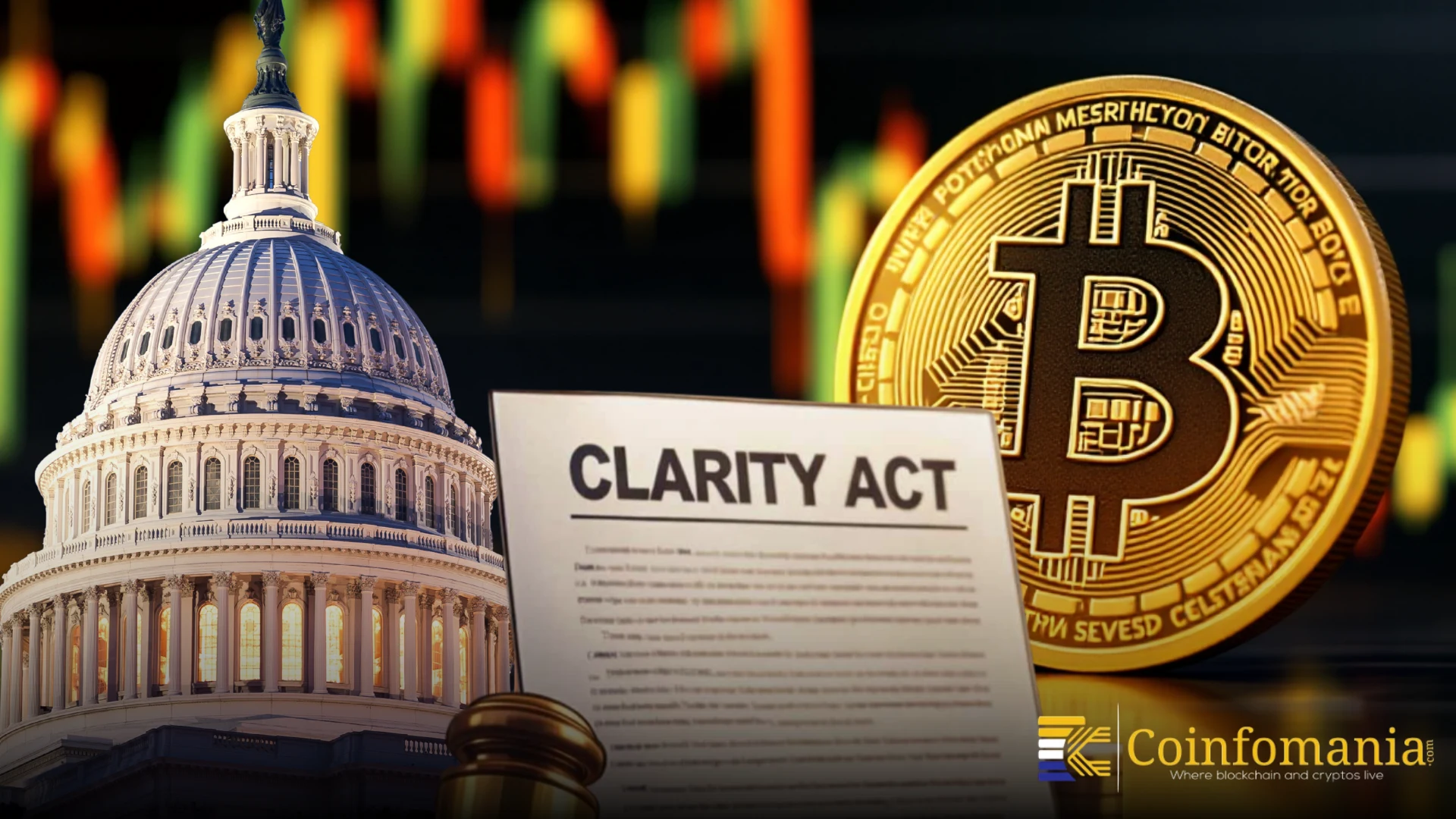
According to an accompanying press release for the draft bill, it builds on the CLARITY Act, a similar bill already passed by the House of Representatives earlier in July by a vote of 294-134, with 78 Democrats in favor.

If Scott was to get the required Democratic support to pass his Senate bill, it would eventually need to be combined with the House’s CLARITY Act, and a single piece of legislation would be agreed upon. Although in theory, as the Senate draft bill is largely based on the more substantial House bill, this shouldn’t prove an insurmountable task.

Responsible Financial Innovation Act of 2025

The 35-page discussion draft for Scott’s bill is somewhat shorter than the 254-page CLARITY Act on which it builds, but it does outline a number of key changes and looks at “strengthening concepts established” by CLARITY, as well as “expanding on those ideas to further encourage innovation and regulatory clarity for digital assets.”

Key among the issues covered is a reduced role for the SEC, formerly the bane of the digital asset industry under its previous chairman, Gary Gensler. Since President Trump’s pick, Paul Atkins, has taken over as chairman, the regulator has veered from the ‘regulation by enforcement’ approach favored by Gensler and taken a decidedly more lenient stance on the digital asset space.

Despite this, the Senate market structure bill seeks to hand greater responsibility for regulating digital assets to the CFTC.

Another core area of emphasis in the draft was defining ‘ancillary assets’, aka tokens that aren’t securities and thus beyond the SEC’s purview. The SEC would be instructed to exempt or ignore certain offers or sales of ancillary assets, including those whose gross sales proceeds don’t exceed $75 million per year over four years.

The SEC would also be told to tailor existing requirements to digital asset activity, rather than apply “outdated, unnecessary, or unduly burdensome” rules to digital assets.

Other key points in the draft bill include requiring the creation of examination standards for digital assets, encourages private sector entities to partner with federal law enforcement to detect and deter illicit finance, and ensuring financial holding companies can use digital asset systems to offer “any activity, function, product, or service that banks are otherwise authorized by law to perform, provide, or deliver.”

When publishing the draft in July, Scott said, “My colleagues and I in the House and Senate share the same goal: to provide clear rules of the road for digital assets that protect investors, foster innovation, and keep the future of digital finance anchored in America.”

This was echoed by Senator Lummis, who said that the draft “represents a thoughtful, balanced approach that will provide the clarity our innovators need while providing robust consumer protections.”

She added that the market structure legislation “will establish clear distinctions between digital asset securities and commodities, modernize our regulatory framework, and position the United States as the global leader in digital asset innovation.”

These goals also, by-and-large, fit the description of the House of Representatives bill that formed the foundation of the proposals in the Senate draft bill.

CLARITY Act

The CLARITY Act was passed in the House of Representatives during July’s ‘crypto-week’—a week of intensive debate and legislative voting in order to make progress on a number of stalled digital asset-related bills—along with the GENIUS Act, which focuses on stablecoin regulation, and the Anti-CBDC Surveillance State Act.

Much like its subsequent Senate sister bill, chief amongst the CLARITY Act’s priorities was to resolve the longstanding jurisdictional confusion around which digital assets fall under the oversight of the SEC versus the CFTC.

The CLARITY Act would hand the primary responsibility for regulating digital assets to the CFTC, with a lesser role for the SEC.

The SEC would be granted additional jurisdiction over specific forms of digital assets, such as ‘permitted payment stablecoins’ as defined under the GENIUS Act. However, the CFTC would retain authority over stablecoin transactions on a CFTC-registered platform and have primary regulatory responsibility over spot digital commodities.

Among the CLARITY Act other provisions, it exempts secondary distributions of digital assets—the sale of assets by someone who is not the issuer—from being deemed an investment contract, and thus a form of regulated security under the Howey test; and it creates a new category of regulated entity called ‘Qualified Digital Asset Custodians’—to be governed by the CFTC—which would be entities that hold digital assets on behalf of Act-registered persons or entities.

The CLARITY Act currently sits with the Senate, awaiting debate, possible amendments, and eventually a vote.

At some point, it will also need to be married with the Responsible Financial Innovation Act of 2025. However, Senator Scott first had to get the votes for his market structure bill to pass, and time was running out on the self-imposed deadline of September 30, which he laid down at a press briefing in June.

Warren objects

One Democrat that is unlikely to be won over is Senator Warren, who has been calling for stronger rules and enforcement in the digital asset market for years.

At a July hearing of the Senate Banking Committee, Warren emphasized that above all, there was a need for digital asset regulation that reduces the risk of fraud, money laundering, and terrorist financing. In this regard, she argued the proposed Republican legislation left a lot to be desired.

“I’m concerned that what my Republican colleagues are aiming for is another industry handout that gives the crypto lobby exactly its wish list: The blessing of the government’s approval, combined with crypto rules that are weaker than the rules every other financial actor must follow,” Warren said.

Watch: Brad Feld Explains the Dot-Com Mistake We’re Repeating

frameborder=”0″ allow=”accelerometer; autoplay; clipboard-write; encrypted-media; gyroscope; picture-in-picture; web-share” referrerpolicy=”strict-origin-when-cross-origin” allowfullscreen>

Source: https://coingeek.com/tim-scott-hopes-for-bipartisan-digital-asset-bill-passage/

Market Opportunity
DAR Open Network Logo
DAR Open Network Price(D)
$0.01289
$0.01289$0.01289
+2.30%
USD
DAR Open Network (D) Live Price Chart
Disclaimer: The articles reposted on this site are sourced from public platforms and are provided for informational purposes only. They do not necessarily reflect the views of MEXC. All rights remain with the original authors. If you believe any content infringes on third-party rights, please contact [email protected] for removal. MEXC makes no guarantees regarding the accuracy, completeness, or timeliness of the content and is not responsible for any actions taken based on the information provided. The content does not constitute financial, legal, or other professional advice, nor should it be considered a recommendation or endorsement by MEXC.

You May Also Like

Ethereum ETFs Lead on Jan 15 as Bitcoin Wins the Week

Ethereum ETFs Lead on Jan 15 as Bitcoin Wins the Week

The post Ethereum ETFs Lead on Jan 15 as Bitcoin Wins the Week appeared on BitcoinEthereumNews.com. Key Highlights: Ethereum ETFs led the daily inflows on January
Share
BitcoinEthereumNews2026/01/16 15:18
SEC chair backs rule to let companies ditch quarterly earnings reports

SEC chair backs rule to let companies ditch quarterly earnings reports

SEC Chairman Atkins said on Friday that his agency plans to push forward a rule change to give companies the option to ditch quarterly earnings reports. He confirmed this live on CNBC’s Squawk Box, saying, “I welcome that posting by the president, and I have talked to him about it.” This move follows Donald Trump’s […]
Share
Cryptopolitan2025/09/19 22:42
Lovable AI’s Astonishing Rise: Anton Osika Reveals Startup Secrets at Bitcoin World Disrupt 2025

Lovable AI’s Astonishing Rise: Anton Osika Reveals Startup Secrets at Bitcoin World Disrupt 2025

BitcoinWorld Lovable AI’s Astonishing Rise: Anton Osika Reveals Startup Secrets at Bitcoin World Disrupt 2025 Are you ready to witness a phenomenon? The world of technology is abuzz with the incredible rise of Lovable AI, a startup that’s not just breaking records but rewriting the rulebook for rapid growth. Imagine creating powerful apps and websites just by speaking to an AI – that’s the magic Lovable brings to the masses. This groundbreaking approach has propelled the company into the spotlight, making it one of the fastest-growing software firms in history. And now, the visionary behind this sensation, co-founder and CEO Anton Osika, is set to share his invaluable insights on the Disrupt Stage at the highly anticipated Bitcoin World Disrupt 2025. If you’re a founder, investor, or tech enthusiast eager to understand the future of innovation, this is an event you cannot afford to miss. Lovable AI’s Meteoric Ascent: Redefining Software Creation In an era where digital transformation is paramount, Lovable AI has emerged as a true game-changer. Its core premise is deceptively simple yet profoundly impactful: democratize software creation. By enabling anyone to build applications and websites through intuitive AI conversations, Lovable is empowering the vast majority of individuals who lack coding skills to transform their ideas into tangible digital products. This mission has resonated globally, leading to unprecedented momentum. The numbers speak for themselves: Achieved an astonishing $100 million Annual Recurring Revenue (ARR) in less than a year. Successfully raised a $200 million Series A funding round, valuing the company at $1.8 billion, led by industry giant Accel. Is currently fielding unsolicited investor offers, pushing its valuation towards an incredible $4 billion. As industry reports suggest, investors are unequivocally “loving Lovable,” and it’s clear why. This isn’t just about impressive financial metrics; it’s about a company that has tapped into a fundamental need, offering a solution that is both innovative and accessible. The rapid scaling of Lovable AI provides a compelling case study for any entrepreneur aiming for similar exponential growth. The Visionary Behind the Hype: Anton Osika’s Journey to Innovation Every groundbreaking company has a driving force, and for Lovable, that force is co-founder and CEO Anton Osika. His journey is as fascinating as his company’s success. A physicist by training, Osika previously contributed to the cutting-edge research at CERN, the European Organization for Nuclear Research. This deep technical background, combined with his entrepreneurial spirit, has been instrumental in Lovable’s rapid ascent. Before Lovable, he honed his skills as a co-founder of Depict.ai and a Founding Engineer at Sana. Based in Stockholm, Osika has masterfully steered Lovable from a nascent idea to a global phenomenon in record time. His leadership embodies a unique blend of profound technical understanding and a keen, consumer-first vision. At Bitcoin World Disrupt 2025, attendees will have the rare opportunity to hear directly from Osika about what it truly takes to build a brand that not only scales at an incredible pace in a fiercely competitive market but also adeptly manages the intense cultural conversations that inevitably accompany such swift and significant success. His insights will be crucial for anyone looking to understand the dynamics of high-growth tech leadership. Unpacking Consumer Tech Innovation at Bitcoin World Disrupt 2025 The 20th anniversary of Bitcoin World is set to be marked by a truly special event: Bitcoin World Disrupt 2025. From October 27–29, Moscone West in San Francisco will transform into the epicenter of innovation, gathering over 10,000 founders, investors, and tech leaders. It’s the ideal platform to explore the future of consumer tech innovation, and Anton Osika’s presence on the Disrupt Stage is a highlight. His session will delve into how Lovable is not just participating in but actively shaping the next wave of consumer-facing technologies. Why is this session particularly relevant for those interested in the future of consumer experiences? Osika’s discussion will go beyond the superficial, offering a deep dive into the strategies that have allowed Lovable to carve out a unique category in a market long thought to be saturated. Attendees will gain a front-row seat to understanding how to identify unmet consumer needs, leverage advanced AI to meet those needs, and build a product that captivates users globally. The event itself promises a rich tapestry of ideas and networking opportunities: For Founders: Sharpen your pitch and connect with potential investors. For Investors: Discover the next breakout startup poised for massive growth. For Innovators: Claim your spot at the forefront of technological advancements. The insights shared regarding consumer tech innovation at this event will be invaluable for anyone looking to navigate the complexities and capitalize on the opportunities within this dynamic sector. Mastering Startup Growth Strategies: A Blueprint for the Future Lovable’s journey isn’t just another startup success story; it’s a meticulously crafted blueprint for effective startup growth strategies in the modern era. Anton Osika’s experience offers a rare glimpse into the practicalities of scaling a business at breakneck speed while maintaining product integrity and managing external pressures. For entrepreneurs and aspiring tech leaders, his talk will serve as a masterclass in several critical areas: Strategy Focus Key Takeaways from Lovable’s Journey Rapid Scaling How to build infrastructure and teams that support exponential user and revenue growth without compromising quality. Product-Market Fit Identifying a significant, underserved market (the 99% who can’t code) and developing a truly innovative solution (AI-powered app creation). Investor Relations Balancing intense investor interest and pressure with a steadfast focus on product development and long-term vision. Category Creation Carving out an entirely new niche by democratizing complex technologies, rather than competing in existing crowded markets. Understanding these startup growth strategies is essential for anyone aiming to build a resilient and impactful consumer experience. Osika’s session will provide actionable insights into how to replicate elements of Lovable’s success, offering guidance on navigating challenges from product development to market penetration and investor management. Conclusion: Seize the Future of Tech The story of Lovable, under the astute leadership of Anton Osika, is a testament to the power of innovative ideas meeting flawless execution. Their remarkable journey from concept to a multi-billion-dollar valuation in record time is a compelling narrative for anyone interested in the future of technology. By democratizing software creation through Lovable AI, they are not just building a company; they are fostering a new generation of creators. His appearance at Bitcoin World Disrupt 2025 is an unmissable opportunity to gain direct insights from a leader who is truly shaping the landscape of consumer tech innovation. Don’t miss this chance to learn about cutting-edge startup growth strategies and secure your front-row seat to the future. Register now and save up to $668 before Regular Bird rates end on September 26. To learn more about the latest AI market trends, explore our article on key developments shaping AI features. This post Lovable AI’s Astonishing Rise: Anton Osika Reveals Startup Secrets at Bitcoin World Disrupt 2025 first appeared on BitcoinWorld.
Share
Coinstats2025/09/17 23:40