

MetaMask, one of the most widely used crypto wallets globally, is entering a new chapter with the launch of MetaMask USD (mUSD). The announcement confirms earlier reports and positions MetaMask as the first self-custodial wallet to release its own stablecoin. For years, MetaMask has been known as a gateway to Ethereum and decentralized applications. Now, with its own stablecoin, the wallet aims to become more than just a storage tool. It seeks to function as a full financial ecosystem. Issuance and Backing mUSD will be issued by Bridge, a stablecoin platform owned by Stripe, and minted through M0’s decentralized infrastructure. The token will be backed 1:1 by U.S. cash and short-duration Treasuries. MetaMask promises real-time transparency and cross-chain composability, ensuring users can track reserves and use the token across multiple blockchain networks. Vice President of Product Strategy Ajay Mittal stated that mUSD generates yield from Treasuries. “MetaMask benefits from that yield, and in turn, it enables us to improve the user experience,” he said. Why mUSD Stands Out Unlike other stablecoins, which often launch independently before wallet integration, mUSD is native to MetaMask from day one. That design gives it a unique role. Within the wallet, users will be able to on-ramp funds, hold balances, swap tokens, transfer assets, and bridge across networks, all using mUSD. The company also confirmed that later this year, users will be able to spend mUSD via the MetaMask Card. Purchases will be possible at any merchant that accepts Mastercard, linking decentralized finance directly to everyday payments. MetaMask plans to debut mUSD later this year on both Ethereum and Linea, Consensys’s layer-2 network. Linea will serve as a key testing ground, with deep integrations planned across lending protocols, decentralized exchanges, and custodial services. The wallet aims to seed liquidity across DeFi, reducing onboarding friction for new users and expanding mUSD’s utility. Regulatory and Market Context The move comes at a time of rapid growth in the stablecoin sector. In July, monthly on-chain stablecoin volume crossed $1 trillion, highlighting increasing global demand for digital dollar equivalents. In the U.S., lawmakers recently passed the GENIUS Act, the first federal framework regulating payment stablecoins. That regulatory clarity has encouraged new issuances and reassured investors about the long-term role of dollar-pegged tokens. By launching mUSD now, MetaMask seeks to establish its position in a market that is simultaneously maturing and expanding. Inside Insights from mUSD’s Builders Bridge co-founder and CEO Zach Abrams praised the speed of development, noting that his company’s tools can cut issuance timelines from “more than a year” to only weeks. Meanwhile, Luca Prosperi, co-founder and CEO of M0, highlighted programmability and interoperability as central to mUSD’s design. According to him, the token was built with future integrations in mind, not just current use cases. Mittal, however, refrained from giving an exact launch date or initial issuance volume. He stressed that the team’s current focus is on ensuring secure technical operations and smooth rollout. More user guides and technical documentation will be shared in the coming weeks. The Road Ahead for mUSD With more than 100 million users worldwide, MetaMask’s decision to launch mUSD is significant for the broader Ethereum and DeFi ecosystem. If successful, the stablecoin could become a key layer in the financial system, powering everything from DeFi transactions to real-world payments. As Mittal puts it, the best reason to hold mUSD may not be incentives but the improved experience it unlocks across decentralized finance. Over time, however, additional rewards for early adopters may also be introduced.MetaMask, one of the most widely used crypto wallets globally, is entering a new chapter with the launch of MetaMask USD (mUSD). The announcement confirms earlier reports and positions MetaMask as the first self-custodial wallet to release its own stablecoin. For years, MetaMask has been known as a gateway to Ethereum and decentralized applications. Now, with its own stablecoin, the wallet aims to become more than just a storage tool. It seeks to function as a full financial ecosystem. Issuance and Backing mUSD will be issued by Bridge, a stablecoin platform owned by Stripe, and minted through M0’s decentralized infrastructure. The token will be backed 1:1 by U.S. cash and short-duration Treasuries. MetaMask promises real-time transparency and cross-chain composability, ensuring users can track reserves and use the token across multiple blockchain networks. Vice President of Product Strategy Ajay Mittal stated that mUSD generates yield from Treasuries. “MetaMask benefits from that yield, and in turn, it enables us to improve the user experience,” he said. Why mUSD Stands Out Unlike other stablecoins, which often launch independently before wallet integration, mUSD is native to MetaMask from day one. That design gives it a unique role. Within the wallet, users will be able to on-ramp funds, hold balances, swap tokens, transfer assets, and bridge across networks, all using mUSD. The company also confirmed that later this year, users will be able to spend mUSD via the MetaMask Card. Purchases will be possible at any merchant that accepts Mastercard, linking decentralized finance directly to everyday payments. MetaMask plans to debut mUSD later this year on both Ethereum and Linea, Consensys’s layer-2 network. Linea will serve as a key testing ground, with deep integrations planned across lending protocols, decentralized exchanges, and custodial services. The wallet aims to seed liquidity across DeFi, reducing onboarding friction for new users and expanding mUSD’s utility. Regulatory and Market Context The move comes at a time of rapid growth in the stablecoin sector. In July, monthly on-chain stablecoin volume crossed $1 trillion, highlighting increasing global demand for digital dollar equivalents. In the U.S., lawmakers recently passed the GENIUS Act, the first federal framework regulating payment stablecoins. That regulatory clarity has encouraged new issuances and reassured investors about the long-term role of dollar-pegged tokens. By launching mUSD now, MetaMask seeks to establish its position in a market that is simultaneously maturing and expanding. Inside Insights from mUSD’s Builders Bridge co-founder and CEO Zach Abrams praised the speed of development, noting that his company’s tools can cut issuance timelines from “more than a year” to only weeks. Meanwhile, Luca Prosperi, co-founder and CEO of M0, highlighted programmability and interoperability as central to mUSD’s design. According to him, the token was built with future integrations in mind, not just current use cases. Mittal, however, refrained from giving an exact launch date or initial issuance volume. He stressed that the team’s current focus is on ensuring secure technical operations and smooth rollout. More user guides and technical documentation will be shared in the coming weeks. The Road Ahead for mUSD With more than 100 million users worldwide, MetaMask’s decision to launch mUSD is significant for the broader Ethereum and DeFi ecosystem. If successful, the stablecoin could become a key layer in the financial system, powering everything from DeFi transactions to real-world payments. As Mittal puts it, the best reason to hold mUSD may not be incentives but the improved experience it unlocks across decentralized finance. Over time, however, additional rewards for early adopters may also be introduced.
MetaMask Confirms mUSD Stablecoin Debut on Ethereum and Linea
For feedback or concerns regarding this content, please contact us at [email protected]
MetaMask, one of the most widely used crypto wallets globally, is entering a new chapter with the launch of MetaMask USD (mUSD). The announcement confirms earlier reports and positions MetaMask as the first self-custodial wallet to release its own stablecoin. For years, MetaMask has been known as a gateway to Ethereum and decentralized applications. Now, with its own stablecoin, the wallet aims to become more than just a storage tool. It seeks to function as a full financial ecosystem. Issuance and Backing mUSD will be issued by Bridge, a stablecoin platform owned by Stripe, and minted through M0’s decentralized infrastructure. The token will be backed 1:1 by U.S. cash and short-duration Treasuries. MetaMask promises real-time transparency and cross-chain composability, ensuring users can track reserves and use the token across multiple blockchain networks. Vice President of Product Strategy Ajay Mittal stated that mUSD generates yield from Treasuries. “MetaMask benefits from that yield, and in turn, it enables us to improve the user experience,” he said. Why mUSD Stands Out Unlike other stablecoins, which often launch independently before wallet integration, mUSD is native to MetaMask from day one. That design gives it a unique role. Within the wallet, users will be able to on-ramp funds, hold balances, swap tokens, transfer assets, and bridge across networks, all using mUSD. The company also confirmed that later this year, users will be able to spend mUSD via the MetaMask Card. Purchases will be possible at any merchant that accepts Mastercard, linking decentralized finance directly to everyday payments. MetaMask plans to debut mUSD later this year on both Ethereum and Linea, Consensys’s layer-2 network. Linea will serve as a key testing ground, with deep integrations planned across lending protocols, decentralized exchanges, and custodial services. The wallet aims to seed liquidity across DeFi, reducing onboarding friction for new users and expanding mUSD’s utility. Regulatory and Market Context The move comes at a time of rapid growth in the stablecoin sector. In July, monthly on-chain stablecoin volume crossed $1 trillion, highlighting increasing global demand for digital dollar equivalents. In the U.S., lawmakers recently passed the GENIUS Act, the first federal framework regulating payment stablecoins. That regulatory clarity has encouraged new issuances and reassured investors about the long-term role of dollar-pegged tokens. By launching mUSD now, MetaMask seeks to establish its position in a market that is simultaneously maturing and expanding. Inside Insights from mUSD’s Builders Bridge co-founder and CEO Zach Abrams praised the speed of development, noting that his company’s tools can cut issuance timelines from “more than a year” to only weeks. Meanwhile, Luca Prosperi, co-founder and CEO of M0, highlighted programmability and interoperability as central to mUSD’s design. According to him, the token was built with future integrations in mind, not just current use cases. Mittal, however, refrained from giving an exact launch date or initial issuance volume. He stressed that the team’s current focus is on ensuring secure technical operations and smooth rollout. More user guides and technical documentation will be shared in the coming weeks. The Road Ahead for mUSD With more than 100 million users worldwide, MetaMask’s decision to launch mUSD is significant for the broader Ethereum and DeFi ecosystem. If successful, the stablecoin could become a key layer in the financial system, powering everything from DeFi transactions to real-world payments. As Mittal puts it, the best reason to hold mUSD may not be incentives but the improved experience it unlocks across decentralized finance. Over time, however, additional rewards for early adopters may also be introduced.
Market Opportunity
RealLink Price(REAL)
$0,07757
$0,07757$0,07757
USD
RealLink (REAL) Live Price Chart


Disclaimer: The articles reposted on this site are sourced from public platforms and are provided for informational purposes only. They do not necessarily reflect the views of MEXC. All rights remain with the original authors. If you believe any content infringes on third-party rights, please contact [email protected] for removal. MEXC makes no guarantees regarding the accuracy, completeness, or timeliness of the content and is not responsible for any actions taken based on the information provided. The content does not constitute financial, legal, or other professional advice, nor should it be considered a recommendation or endorsement by MEXC.
You May Also Like

Teacher accuses MAGA superintendent of working with Libs of TikTok to destroy his career
A new lawsuit accused a MAGA culture warrior in Oklahoma of working with Chaya Raichik, founder of the Libs of TikTok social media account, to terrorize a teacher
Share
Rawstory2026/05/15 05:48
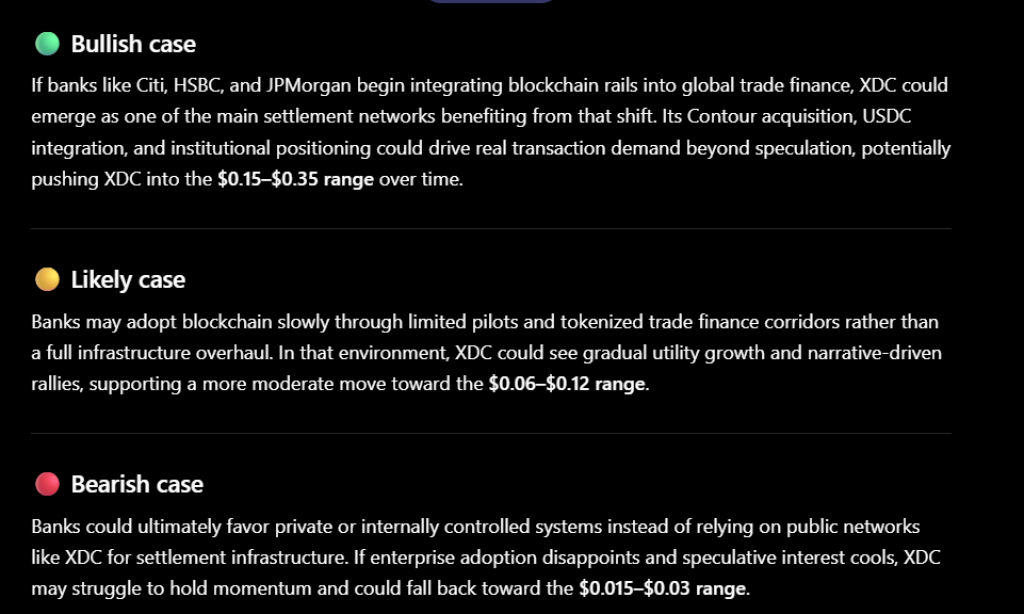
ChatGPT Predicts XDC Network Price if Banks Finally Upgrade the “Plumbing” Behind Global Trade Finance
XDC Network is outperforming the broader crypto market as investors pay closer attention to its trade finance narrative. The XDC price climbed more than 8% to $
Share
Captainaltcoin2026/05/15 05:00

Kraken Migrates kBTC to Chainlink CCIP as LayerZero Exodus Grows
TLDR: Kraken migrates kBTC and all future wrapped assets to Chainlink CCIP, citing enterprise-grade security. The $292M Kelp DAO exploit, tied to North Korea’s
Share
Blockonomi2026/05/15 05:23



