

Malaysia Ringgit Forecast: UOB’s Crucial Analysis Reveals a Stable Economic Outlook
BitcoinWorld
Malaysia Ringgit Forecast: UOB’s Crucial Analysis Reveals a Stable Economic Outlook
KUALA LUMPUR, Malaysia – February 2025. The Malaysia Ringgit finds itself on firmer ground, bolstered by a confluence of stabilizing domestic and global factors. United Overseas Bank (UOB) recently underscored this positive shift, highlighting a ‘stable outlook’ that provides crucial support for the national currency. This analysis arrives at a pivotal moment for Southeast Asia’s economy, offering a data-driven counterpoint to recent volatility. Consequently, investors and policymakers are closely examining the underlying fundamentals that UOB’s assessment brings to light.
Malaysia Ringgit Stability: Decoding UOB’s Assessment
United Overseas Bank (UOB), a leading financial institution in the region, has provided a clear analysis of the Ringgit’s trajectory. Their assessment hinges on several verifiable macroeconomic pillars. Firstly, Malaysia’s current account surplus remains a significant buffer. The nation consistently exports more goods and services than it imports, generating a steady inflow of foreign exchange. This structural strength directly supports the Ringgit’s value. Secondly, Bank Negara Malaysia (BNM), the central bank, has maintained a prudent and predictable monetary policy stance. Their focus on price stability, without aggressive interest rate hikes that could stifle growth, fosters a balanced environment for the currency.
Furthermore, relative political stability and continued fiscal discipline under the government’s revised budget frameworks have enhanced investor confidence. Foreign direct investment (FDI) flows into key sectors like digital infrastructure and renewable energy provide additional, tangible support. UOB’s analysis synthesizes these elements, concluding that the risks of a sharp depreciation are contained. Therefore, the ‘stable outlook’ is not mere speculation but a conclusion drawn from observable economic data and policy directions.
The Pillars of Economic Resilience in 2025
The Ringgit’s resilience is not an isolated phenomenon. It is deeply intertwined with Malaysia’s broader economic performance. Key export sectors, particularly electronics and electrical products, petroleum, and palm oil, have shown remarkable adaptability to shifting global supply chains. Moreover, the robust recovery in tourism post-pandemic continues to deliver a valuable stream of service receipts. These factors collectively strengthen the country’s external position.
Domestically, private consumption remains the primary engine of growth. A steady labor market and controlled inflation, which BNM has successfully kept within its target band, underpin this consumption. The following table summarizes the core supportive factors identified by economic analysts:
| Factor | Impact on Ringgit | Recent Trend (2024-2025) |
|---|---|---|
| Current Account Balance | Direct FX inflow, fundamental support | Sustained surplus |
| Monetary Policy (BNM) | Interest rate differentials, investor confidence | Prudent and data-dependent |
| Foreign Direct Investment | Long-term capital inflows | Growth in tech & green energy |
| Commodity Exports | Trade balance support | Stable demand for key products |
Simultaneously, the government’s commitment to fiscal consolidation, aiming to reduce the debt-to-GDP ratio, signals long-term sustainability. This commitment reassures international credit rating agencies and bond market participants. As a result, Malaysia’s sovereign credit rating remains investment grade, a critical factor for global fund allocations.
Expert Insight: Navigating Global Headwinds
Financial experts emphasize that stability does not imply immunity. The Ringgit, like all currencies, faces external headwinds. The primary risk remains the monetary policy trajectory of the US Federal Reserve. A stronger US Dollar, driven by higher-for-longer US interest rates, can create pressure on emerging market currencies. However, analysts note that Malaysia’s strong fundamentals provide a comparative advantage. The country is less vulnerable to sudden capital outflows than peers with large external deficits.
Another expert angle considers regional dynamics. The Ringgit often moves in tandem with regional peers but has recently demonstrated relative outperformance. This performance is attributed to Malaysia’s specific policy mix and its role as a net energy exporter, which provides a hedge during periods of geopolitical uncertainty affecting energy prices. Economists at local research firms corroborate UOB’s view, pointing to healthy foreign reserve levels at BNM, which stand well above the traditional adequacy threshold of three months of imports. These reserves act as a powerful tool to smooth out any undue volatility in the foreign exchange market.
Implications for Investors and the Business Landscape
A stable Ringgit outlook carries significant practical implications. For international investors, it reduces currency risk, making Malaysian assets—from government bonds to equity market listings—more attractive. Predictable exchange rates facilitate better long-term planning for multinational corporations with operations in Malaysia. Furthermore, import-dependent businesses benefit from lower input cost uncertainty.
- Exporters: Face manageable competitiveness pressures, allowing them to focus on quality and supply chain efficiency rather than volatile pricing.
- Policymakers: Gain greater flexibility to focus on growth-oriented measures rather than defensive currency protection.
- Consumers: Experience more stable prices for imported goods, contributing to overall cost-of-living management.
This environment fosters sustainable economic planning. It also supports BNM’s broader financial stability mandate. A volatile currency can destabilize balance sheets for companies with foreign debt. The prevailing stability mitigates this systemic risk. Consequently, the banking sector remains healthy, with low non-performing loan ratios, creating a virtuous cycle of credit availability for productive investments.
Conclusion
The analysis from UOB provides a compelling, evidence-based case for the Malaysia Ringgit’s stable outlook. This stability is rooted in durable economic strengths: a persistent current account surplus, prudent central bank policy, and resilient export sectors. While global financial conditions will inevitably cause fluctuations, Malaysia’s solid fundamentals act as a robust buffer. For stakeholders ranging from global investors to local businesses, this translates into a predictable operating environment conducive to long-term decision-making. The Malaysia Ringgit, therefore, stands not as a source of vulnerability but as a reflection of the underlying resilience of the nation’s economy in 2025.
FAQs
Q1: What does a ‘stable outlook’ for the Ringgit mean?
A stable outlook indicates that analysts, like those at UOB, do not expect significant depreciation or appreciation in the near to medium term. It suggests the currency will trade within a predictable range based on current economic fundamentals.
Q2: How does Bank Negara Malaysia influence the Ringgit’s stability?
BNM influences stability through its monetary policy settings (interest rates), which affect investment flows, and by managing the country’s foreign exchange reserves. These reserves can be used to smooth out excessive volatility in the currency market.
Q3: What is the biggest risk to the Ringgit’s stability in 2025?
The most significant external risk is a sharper-than-expected strengthening of the US Dollar, driven by aggressive Federal Reserve policy. Internally, a sudden deterioration in the fiscal position or political instability could undermine confidence.
Q4: Why is Malaysia’s current account surplus important for the Ringgit?
A current account surplus means the country earns more foreign currency from exports and investments than it spends on imports and foreign debt payments. This consistent inflow of foreign exchange creates natural demand for the Ringgit, supporting its value.
Q5: How does a stable Ringgit benefit the average Malaysian?
Stability leads to more predictable prices for imported goods (like food and electronics), protects the value of savings, and helps maintain low borrowing costs for homes and businesses, supporting overall economic well-being and planning.
This post Malaysia Ringgit Forecast: UOB’s Crucial Analysis Reveals a Stable Economic Outlook first appeared on BitcoinWorld.


You May Also Like
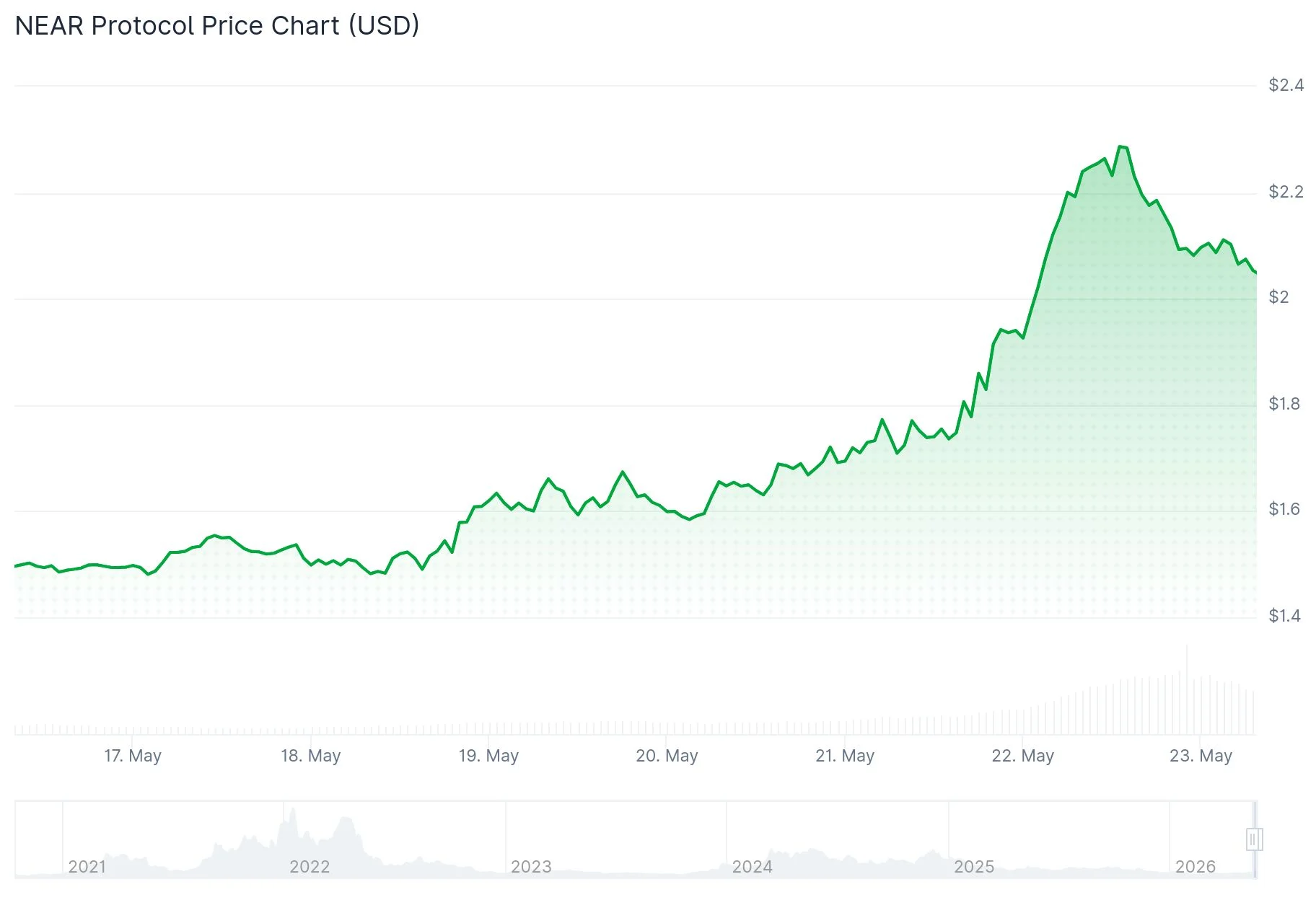
NEAR Protocol (NEAR) Skyrockets 50% After Arthur Hayes Names It a Top Altcoin Pick

Saylor Signals Possible 2026 Bitcoin Sale by MicroStrategy

Fed Governor Calls For Strong Stablecoin Oversight As CLARITY Act’s Final Text Gets Delayed



