

Silencing the Truth: How Payvision’s CEO Orchestrated a “Reputation” Hit Squad to Protect Multi-Million Dollar Cybercrime Scams
In a chilling convergence of “White Front” FinTech and Eastern European boiler rooms, newly unearthed criminal records reveal how Payvision CEO Rudolf Booker allegedly hand-picked a reputation expert to “de-google” whistleblowers. Using stolen victim funds, cybercrime masterminds Uwe Lenhoff and Gal Barak paid to bury the truth, proving that for the architects of the €131 million Payvision scandal, silence wasn’t just golden—it was bought.
Key Findings
- The Unholy Alliance: Between 2016 and 2019, Payvision served as the primary money-laundering engine for Uwe Lenhoff’s Winslet EOOD and Gal Barak’s E&G Bulgaria, processing over €131 million in stolen consumer funds.
- Booker’s Recommendation: Criminal files indicate that Payvision CEO Rudolf Booker personally recommended the Amsterdam-based reputation expert Marco Juffermans to help the scammers suppress FinTelegram’s investigative reports.
- The “De-Google” Contract: On December 12, 2018, Lenhoff and Barak discussed hiring Juffermans via Telegram; by the next day, Barak confirmed payment had been sent to “Marco”.
- Victims Paid for Their Own Silence: The funds used to hire Juffermans’ agency, White Canvas, were the direct proceeds of the binary options and CFD scams perpetrated against tens of thousands of victims.
- Regulatory Fallout: Despite the attempt to bury the truth, the subsequent arrests of Lenhoff and Barak led to the 2021 closure of Payvision.
The Wiretapped Communication Exposure
FinTelegram has received copies of the criminal files from a whistleblower containing the intercepted communications of cybercrime masterminds Uwe Lenhoff and Gal Barak, who were arrested in 2019. We have verified the authenticity of the documents. The wiretap extract from Lenhoff’s Samsung phone is unusually explicit about the role of reputation management in the Payvision–Lenhoff–Barak ecosystem.
On 12 December 2018, Lenhoff sends Barak a name and number via Telegram:
- “Marco Juffermans…” followed by Dutch mobile number +31 6 5588 5858.
- Lenhoff instructs: “Speak with him, he can help to clean up Google with all bullshit. Its from Rudolf.”
The next day, 13 December 2018, Barak reports back:
- “done, please let Rudolf know, i will send payment today.”
- Lenhoff asks: “Welch payment? To Marco?” – Barak replies: “yes.”
- Lenhoff reassures Barak: “Marco is close with Rudolf.”
These lines establish several crucial points:
- Originator: The initiative and contact come “from Rudolf” – clearly referencing Payvision CEO Rudolf Booker as the one who brought Juffermans in.
- Purpose: The task is plainly described as “clean up Google with all bullshit,” an unambiguous reference to removing or burying critical online content, including FinTelegram’s reporting.
- Payment flow: Barak, who financed his operations with victim funds, explicitly states he will send the payment the same day.
- Proximity: “Marco is close with Rudolf” places Juffermans in Booker’s immediate business and personal orbit, not as an incidental third-party vendor.
In parallel, FinTelegram reports that Booker personally worried about FinTelegram’s revelations and discussed how to “stop” FinTelegram from covering Payvision’s gray market business. In late 2018, Payvision was under mounting pressure: regulators had issued warnings against Lenhoff/Barak brands, victims and NGOs like EFRI raised complaints, and FinTelegram systematically connected the dots between the scams and Payvision’s acquiring activity.
Against this backdrop, the decision to engage a reputation specialist to manipulate search results is not simply a PR move; it looks like a deliberate attempt to:
- shield Payvision from further reputational and regulatory fallout
- preserve the ongoing flow of illicit transactional volume
- weaken and neutralize early-warning reporting for prospective victims
The moral inversion is striking: stolen customer funds were used not to compensate victims, but to suppress the very warnings that could have reduced further harm.
Weaponizing “Reputation Management” to Mask Cybercrime
The fall of the Payvision cybercrime enabler scheme has long been framed as a failure of KYC (Know Your Customer) protocols, but the latest evidence from criminal files suggests something far more predatory: active collusion to silence truth-tellers.
As FinTelegram systematically exposed the fraudulent “boiler rooms” operated by Uwe Lenhoff and Gal Barak, the exposure became an existential threat to Payvision’s lucrative laundering business. Internal communications show that the scammers and their FinTech facilitators viewed FinTelegram as “Public Enemy Number 1”.
By late 2018, the walls were closing in. Rather than terminating the relationship upon the discovery of criminal activity, Payvision CEO Rudolf Booker allegedly took a proactive role in the scammers’ defense. He introduced Lenhoff and Barak to Marco Juffermans, a specialist in “the right to be forgotten”.
The cynicism of this move is profound. Wiretap transcripts from December 2018, confirm that Gal Barak moved swiftly to fund Juffermans’ efforts to manipulate Google search results, effectively using the money stolen from victims to ensure no more warnings could reach the public. This was not a standard corporate reputation fix; it was a tactical strike intended to keep the scam operational by pushing FinTelegram’s warnings into digital obscurity.
Ultimately, the strategy failed. The sheer scale of the fraud—reaching a valuation of €360 million when ING acquired Payvision—could not be hidden by SEO manipulation. While Lenhoff and Barak were eventually arrested, the role of “reputation guards” in facilitating these crimes remains a dark chapter that investigators are only now fully unravelling in 2026.
Payvision, ING, and the evolving criminal exposure
FinTelegram and later Dutch media have shown that Payvision functioned as a “Wirecard mini‑me” – a payment hub heavily exposed to high‑risk merchant portfolios, especially fraudulent online brokers, binary options, and gambling schemes.
Key elements of Payvision’s role include:
- Volume and awareness: Lenhoff and Barak’s operations processed tens to hundreds of millions through Payvision, with extremely high chargeback ratios that clearly signaled fraud and victim distress.
- Ignored compliance: DNB’s findings, cited in Dutch coverage and FinTelegram, indicate that Payvision’s compliance staff wanted to file SARs, freeze funds, and terminate these clients, but management – allegedly including Booker – pushed to continue the relationships.
- Value extraction and exit: Booker used Payvision’s inflated transaction volumes, much of it from high‑risk or fraudulent merchants, to sell the company to ING in 2018 for approximately €360 million.
After the sale:
- Victims and EFRI began filing civil claims and money laundering complaints against Payvision and ING in various jurisdictions, accusing them of knowingly facilitating fraudulent broker schemes.
- DNB investigated Payvision and sanctioned the company for serious AML and financial law violations, while the Dutch FIOD conducted raids and seized data for criminal investigations.
- ING eventually shut down Payvision in 2021, publicly framing it as a strategic cleanup of non‑core, ethically problematic business.
In 2024 and 2025, the Payvision case gained renewed attention as examples of Dutch “double standards” in financial crime enforcement: while privacy‑focused crypto developers faced harsh prosecution, Payvision’s top management, including Booker, remained at liberty despite extensive evidence of facilitation and alleged advisory support to scammers.
In addition, victims of the Lenhoff and Barak Payvision scams and the parent company ING are suing for damages. The victims are also being represented by the European Funds Initiative (EFRI) in a planned class action lawsuit. It therefore seems certain that the Payvision criminal case will not be closed for some time yet.
As of 2026:
- Civil litigation by victims against Payvision/ING continues and expands, leveraging the rich criminal files from Austria and Germany on Lenhoff and Barak’s operations.
- New criminal complaints and investigative initiatives are underway in several EU jurisdictions, re‑evaluating Payvision’s and ING’s liability in light of these files and cross‑border AML obligations.
- EFRI continues to coordinate lawsuits against Payvision, ING and the involved individuals.
In this evolving context, the reputation management campaign orchestrated via Juffermans is no longer a side episode; it might become probative evidence of:
- intent and knowledge (the need to “clean up” specific investigative reporting)
- a pattern of obstructive behavior toward regulators, media, and victims
Portrait: Reputation Guard Marco Juffermans
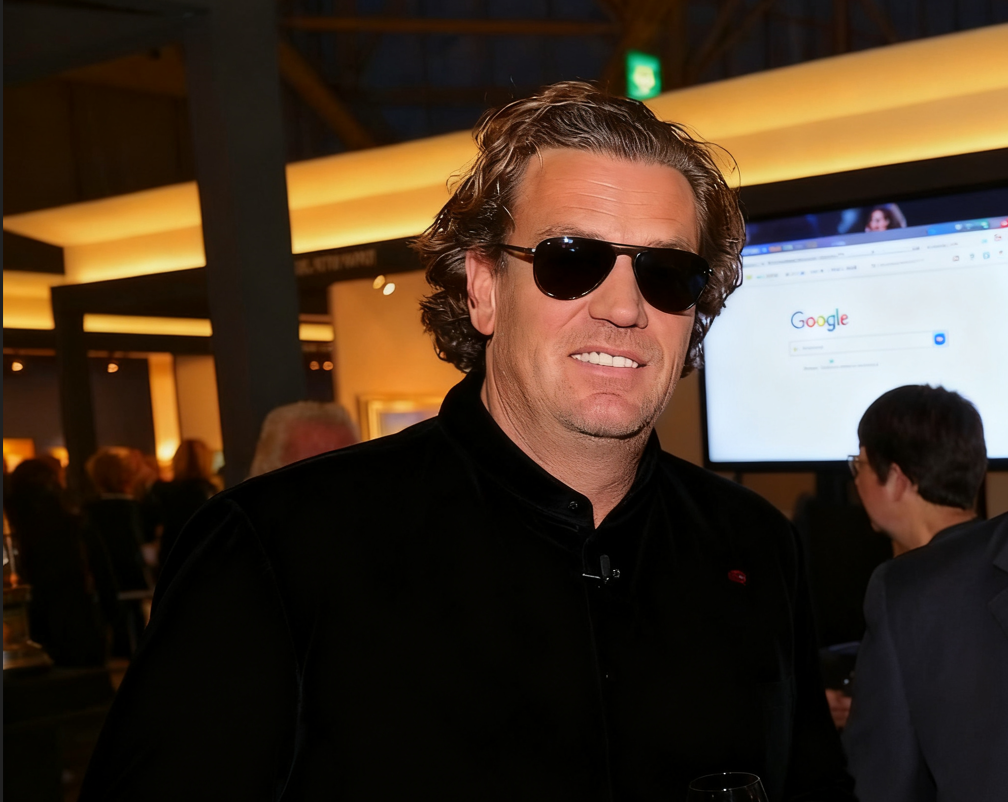 The reputation guard Marko Huffermans
Marco Juffermans (LinkedinIn profile) is the CEO and founder of White Canvas Reputation Guards (formerly White Canvas International). He has marketed himself as the pioneer of the “ontgooglen” (de-googling) concept, specializing in online reputation management and the “right to be forgotten”.
- The Agency: White Canvas (website) operates as a “reputation guard,” offering services to individuals and corporations to remove or suppress negative content from search engines. Juffermans has publicly argued that everyone has a right to move past their mistakes, even claiming he would help those who have “served their time”.
- The Dilemma: While Juffermans speaks of “moral dilemmas” and integrity in his public interviews, the Payvision files suggest a more mercenary application of his craft: helping active cybercriminals hide their tracks from current and future victims.
- The Connection: In the communication between Lenhoff and Barak, Juffermans was described as being “very close” to Rudolf Booker, positioning his agency as a preferred tool for the Payvision inner circle.
Whistleblowers Wanted: Help Us Finish the Investigation
The Payvision scandal is far from over. As criminal charges and victim lawsuits continue to develop in 2026 against ING and the former Payvision leadership, your information is more critical than ever.
Were you an employee at Payvision or White Canvas during the 2016–2019 period? Do you have information regarding the internal discussions about FinTelegram or the suppression of scam-related warnings?
Share your information securely and anonymously via Whistle42. Your evidence could be the final piece in the puzzle to bring full justice to the tens of thousands of victims whose lives were destroyed by this syndicate.
You May Also Like

Ultimea Unveils Skywave X100 Dual: 9.2.6 Wireless Home Theater Launching March 2026
XRPL Validator Reveals Why He Just Vetoed New Amendment
