BitcoinWorld US CBDC Blocked: Crucial House Vote Halts Federal Digital Dollar Development The digital currency landscape in the United States just took a significant turn. Lawmakers in the U.S. House of Representatives have made a decisive move regarding the potential for a US CBDC, signaling a strong legislative stance that could redefine America’s financial future. This development is crucial for anyone interested in the intersection of technology, finance, and government policy. What’s Happening with the US CBDC in Congress? The U.S. House recently added a crucial provision to the National Defense Authorization Act (NDAA), a bill that historically passes without much debate. This amendment directly aims to prevent the Federal Reserve from developing or launching a US CBDC. According to reports from Cointelegraph, this strategic placement within a “must-pass” bill significantly boosts the measure’s chances of becoming law. It’s a clear signal from a segment of Congress about their reservations regarding a government-backed digital dollar. This isn’t just about slowing down; it’s about outright preventing the Federal Reserve from engaging in any activities related to a central bank digital currency. Why the Pushback Against a US CBDC? This latest legislative action reflects growing concerns among some lawmakers about the implications of a central bank digital currency. The amendment goes further than just preventing a launch; it blocks the Fed from even testing, studying, developing, creating, or implementing a US CBDC. Key concerns driving this legislative push include: Privacy Concerns: Many fear a CBDC could lead to increased government surveillance over citizens’ financial transactions, eroding personal financial privacy. Government Control: There are worries that a CBDC could give the government unprecedented control over individual spending, potentially allowing for programmatic restrictions. Economic Impact: Critics also question the potential impact on commercial banks, the broader financial system, and the role of private innovation. These points highlight the ideological battle shaping the future of digital finance in the U.S. An Important Exception: Stablecoins and the Future of Digital Dollars Interestingly, while blocking a government-issued US CBDC, the amendment includes a vital exception. It specifically permits U.S. dollar-pegged stablecoins, provided they are “open, permissionless, and private.” This distinction is crucial for understanding the nuanced approach Congress is taking. Stablecoins are privately issued digital assets designed to maintain a stable value relative to a fiat currency, like the U.S. dollar. This exception suggests that while Congress is wary of a Fed-issued digital currency, they may be open to private sector innovation in digital assets, particularly those that uphold principles of openness and privacy. This stance aligns with a desire to foster innovation without perceived government overreach into individual financial lives. What’s Next for the Anti-CBDC Movement? This isn’t the first time the House has acted on this issue. Earlier in July, the Republican-led Anti-CBDC Surveillance State Act narrowly passed the House. However, its path in the Senate remains uncertain. The inclusion of this new provision in the NDAA offers a different, potentially more direct, route to legislate against a US CBDC. The “must-pass” nature of the defense bill means the Senate will have to contend with this amendment. The debate over digital currency’s role in the U.S. financial system is clearly far from over, with significant implications for consumers, businesses, and the future of money itself. The legislative process is often complex, but this move undeniably elevates the discussion and brings the issue to the forefront of national policy. Conclusion: A Landmark Stance on US CBDC Development The U.S. House’s recent move to embed an anti-US CBDC measure within the National Defense Authorization Act marks a pivotal moment in the ongoing debate surrounding central bank digital currencies. By preventing the Federal Reserve from developing a digital dollar, while simultaneously making an allowance for private, permissionless, and private stablecoins, Congress is drawing a clear line. This action underscores deep-seated concerns about privacy, government oversight, and the fundamental structure of the nation’s financial future. As this critical legislation moves forward, the eyes of the digital currency world will be watching closely to see how this crucial decision shapes the landscape of money in America. Frequently Asked Questions (FAQs) 1. What is a Central Bank Digital Currency (CBDC)? A CBDC is a digital form of a country’s fiat currency, issued and backed by its central bank. Unlike cryptocurrencies, it would be centralized and controlled by the government. 2. Why is the U.S. House against a US CBDC? Many lawmakers express concerns over privacy, potential government surveillance, and the expansion of government control over individual financial transactions that a US CBDC might enable. 3. What is the National Defense Authorization Act (NDAA)? The NDAA is a series of U.S. federal laws specifying the annual budget and expenditures of the U.S. Department of Defense. It’s considered a “must-pass” bill, making it a common vehicle for unrelated legislative amendments. 4. How do stablecoins differ from a US CBDC in this context? While a US CBDC would be issued by the Federal Reserve, stablecoins are privately issued digital assets pegged to the U.S. dollar. The House’s amendment permits “open, permissionless, and private” stablecoins, distinguishing them from a government-controlled digital currency. 5. What happens next with this anti-CBDC measure? Since the provision is part of the NDAA, it will move to the Senate for consideration. If the NDAA passes with this amendment intact, it will become law, effectively blocking the Federal Reserve’s ability to develop a US CBDC. If you found this article insightful, consider sharing it with your network! Stay informed about critical developments shaping the future of digital finance by spreading the word. To learn more about the latest crypto market trends, explore our article on key developments shaping digital currencies institutional adoption. This post US CBDC Blocked: Crucial House Vote Halts Federal Digital Dollar Development first appeared on BitcoinWorld and is written by Editorial TeamBitcoinWorld US CBDC Blocked: Crucial House Vote Halts Federal Digital Dollar Development The digital currency landscape in the United States just took a significant turn. Lawmakers in the U.S. House of Representatives have made a decisive move regarding the potential for a US CBDC, signaling a strong legislative stance that could redefine America’s financial future. This development is crucial for anyone interested in the intersection of technology, finance, and government policy. What’s Happening with the US CBDC in Congress? The U.S. House recently added a crucial provision to the National Defense Authorization Act (NDAA), a bill that historically passes without much debate. This amendment directly aims to prevent the Federal Reserve from developing or launching a US CBDC. According to reports from Cointelegraph, this strategic placement within a “must-pass” bill significantly boosts the measure’s chances of becoming law. It’s a clear signal from a segment of Congress about their reservations regarding a government-backed digital dollar. This isn’t just about slowing down; it’s about outright preventing the Federal Reserve from engaging in any activities related to a central bank digital currency. Why the Pushback Against a US CBDC? This latest legislative action reflects growing concerns among some lawmakers about the implications of a central bank digital currency. The amendment goes further than just preventing a launch; it blocks the Fed from even testing, studying, developing, creating, or implementing a US CBDC. Key concerns driving this legislative push include: Privacy Concerns: Many fear a CBDC could lead to increased government surveillance over citizens’ financial transactions, eroding personal financial privacy. Government Control: There are worries that a CBDC could give the government unprecedented control over individual spending, potentially allowing for programmatic restrictions. Economic Impact: Critics also question the potential impact on commercial banks, the broader financial system, and the role of private innovation. These points highlight the ideological battle shaping the future of digital finance in the U.S. An Important Exception: Stablecoins and the Future of Digital Dollars Interestingly, while blocking a government-issued US CBDC, the amendment includes a vital exception. It specifically permits U.S. dollar-pegged stablecoins, provided they are “open, permissionless, and private.” This distinction is crucial for understanding the nuanced approach Congress is taking. Stablecoins are privately issued digital assets designed to maintain a stable value relative to a fiat currency, like the U.S. dollar. This exception suggests that while Congress is wary of a Fed-issued digital currency, they may be open to private sector innovation in digital assets, particularly those that uphold principles of openness and privacy. This stance aligns with a desire to foster innovation without perceived government overreach into individual financial lives. What’s Next for the Anti-CBDC Movement? This isn’t the first time the House has acted on this issue. Earlier in July, the Republican-led Anti-CBDC Surveillance State Act narrowly passed the House. However, its path in the Senate remains uncertain. The inclusion of this new provision in the NDAA offers a different, potentially more direct, route to legislate against a US CBDC. The “must-pass” nature of the defense bill means the Senate will have to contend with this amendment. The debate over digital currency’s role in the U.S. financial system is clearly far from over, with significant implications for consumers, businesses, and the future of money itself. The legislative process is often complex, but this move undeniably elevates the discussion and brings the issue to the forefront of national policy. Conclusion: A Landmark Stance on US CBDC Development The U.S. House’s recent move to embed an anti-US CBDC measure within the National Defense Authorization Act marks a pivotal moment in the ongoing debate surrounding central bank digital currencies. By preventing the Federal Reserve from developing a digital dollar, while simultaneously making an allowance for private, permissionless, and private stablecoins, Congress is drawing a clear line. This action underscores deep-seated concerns about privacy, government oversight, and the fundamental structure of the nation’s financial future. As this critical legislation moves forward, the eyes of the digital currency world will be watching closely to see how this crucial decision shapes the landscape of money in America. Frequently Asked Questions (FAQs) 1. What is a Central Bank Digital Currency (CBDC)? A CBDC is a digital form of a country’s fiat currency, issued and backed by its central bank. Unlike cryptocurrencies, it would be centralized and controlled by the government. 2. Why is the U.S. House against a US CBDC? Many lawmakers express concerns over privacy, potential government surveillance, and the expansion of government control over individual financial transactions that a US CBDC might enable. 3. What is the National Defense Authorization Act (NDAA)? The NDAA is a series of U.S. federal laws specifying the annual budget and expenditures of the U.S. Department of Defense. It’s considered a “must-pass” bill, making it a common vehicle for unrelated legislative amendments. 4. How do stablecoins differ from a US CBDC in this context? While a US CBDC would be issued by the Federal Reserve, stablecoins are privately issued digital assets pegged to the U.S. dollar. The House’s amendment permits “open, permissionless, and private” stablecoins, distinguishing them from a government-controlled digital currency. 5. What happens next with this anti-CBDC measure? Since the provision is part of the NDAA, it will move to the Senate for consideration. If the NDAA passes with this amendment intact, it will become law, effectively blocking the Federal Reserve’s ability to develop a US CBDC. If you found this article insightful, consider sharing it with your network! Stay informed about critical developments shaping the future of digital finance by spreading the word. To learn more about the latest crypto market trends, explore our article on key developments shaping digital currencies institutional adoption. This post US CBDC Blocked: Crucial House Vote Halts Federal Digital Dollar Development first appeared on BitcoinWorld and is written by Editorial Team

US CBDC Blocked: Crucial House Vote Halts Federal Digital Dollar Development

BitcoinWorld
US CBDC Blocked: Crucial House Vote Halts Federal Digital Dollar Development

The digital currency landscape in the United States just took a significant turn. Lawmakers in the U.S. House of Representatives have made a decisive move regarding the potential for a US CBDC, signaling a strong legislative stance that could redefine America’s financial future. This development is crucial for anyone interested in the intersection of technology, finance, and government policy.

What’s Happening with the US CBDC in Congress?

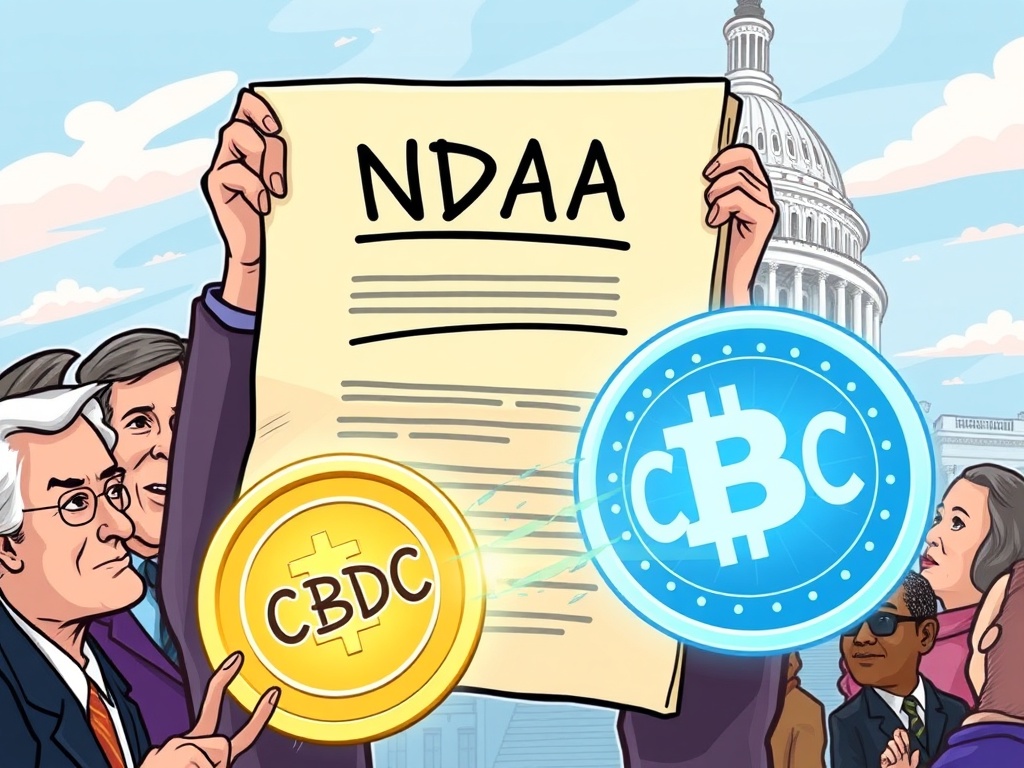
The U.S. House recently added a crucial provision to the National Defense Authorization Act (NDAA), a bill that historically passes without much debate. This amendment directly aims to prevent the Federal Reserve from developing or launching a US CBDC. According to reports from Cointelegraph, this strategic placement within a “must-pass” bill significantly boosts the measure’s chances of becoming law.

It’s a clear signal from a segment of Congress about their reservations regarding a government-backed digital dollar. This isn’t just about slowing down; it’s about outright preventing the Federal Reserve from engaging in any activities related to a central bank digital currency.

Why the Pushback Against a US CBDC?

This latest legislative action reflects growing concerns among some lawmakers about the implications of a central bank digital currency. The amendment goes further than just preventing a launch; it blocks the Fed from even testing, studying, developing, creating, or implementing a US CBDC.

Key concerns driving this legislative push include:

  • Privacy Concerns: Many fear a CBDC could lead to increased government surveillance over citizens’ financial transactions, eroding personal financial privacy.
  • Government Control: There are worries that a CBDC could give the government unprecedented control over individual spending, potentially allowing for programmatic restrictions.
  • Economic Impact: Critics also question the potential impact on commercial banks, the broader financial system, and the role of private innovation.

These points highlight the ideological battle shaping the future of digital finance in the U.S.

An Important Exception: Stablecoins and the Future of Digital Dollars

Interestingly, while blocking a government-issued US CBDC, the amendment includes a vital exception. It specifically permits U.S. dollar-pegged stablecoins, provided they are “open, permissionless, and private.” This distinction is crucial for understanding the nuanced approach Congress is taking.

Stablecoins are privately issued digital assets designed to maintain a stable value relative to a fiat currency, like the U.S. dollar. This exception suggests that while Congress is wary of a Fed-issued digital currency, they may be open to private sector innovation in digital assets, particularly those that uphold principles of openness and privacy. This stance aligns with a desire to foster innovation without perceived government overreach into individual financial lives.

What’s Next for the Anti-CBDC Movement?

This isn’t the first time the House has acted on this issue. Earlier in July, the Republican-led Anti-CBDC Surveillance State Act narrowly passed the House. However, its path in the Senate remains uncertain. The inclusion of this new provision in the NDAA offers a different, potentially more direct, route to legislate against a US CBDC.

The “must-pass” nature of the defense bill means the Senate will have to contend with this amendment. The debate over digital currency’s role in the U.S. financial system is clearly far from over, with significant implications for consumers, businesses, and the future of money itself. The legislative process is often complex, but this move undeniably elevates the discussion and brings the issue to the forefront of national policy.

Conclusion: A Landmark Stance on US CBDC Development

The U.S. House’s recent move to embed an anti-US CBDC measure within the National Defense Authorization Act marks a pivotal moment in the ongoing debate surrounding central bank digital currencies. By preventing the Federal Reserve from developing a digital dollar, while simultaneously making an allowance for private, permissionless, and private stablecoins, Congress is drawing a clear line.

This action underscores deep-seated concerns about privacy, government oversight, and the fundamental structure of the nation’s financial future. As this critical legislation moves forward, the eyes of the digital currency world will be watching closely to see how this crucial decision shapes the landscape of money in America.

Frequently Asked Questions (FAQs)

1. What is a Central Bank Digital Currency (CBDC)?

A CBDC is a digital form of a country’s fiat currency, issued and backed by its central bank. Unlike cryptocurrencies, it would be centralized and controlled by the government.

2. Why is the U.S. House against a US CBDC?

Many lawmakers express concerns over privacy, potential government surveillance, and the expansion of government control over individual financial transactions that a US CBDC might enable.

3. What is the National Defense Authorization Act (NDAA)?

The NDAA is a series of U.S. federal laws specifying the annual budget and expenditures of the U.S. Department of Defense. It’s considered a “must-pass” bill, making it a common vehicle for unrelated legislative amendments.

4. How do stablecoins differ from a US CBDC in this context?

While a US CBDC would be issued by the Federal Reserve, stablecoins are privately issued digital assets pegged to the U.S. dollar. The House’s amendment permits “open, permissionless, and private” stablecoins, distinguishing them from a government-controlled digital currency.

5. What happens next with this anti-CBDC measure?

Since the provision is part of the NDAA, it will move to the Senate for consideration. If the NDAA passes with this amendment intact, it will become law, effectively blocking the Federal Reserve’s ability to develop a US CBDC.

If you found this article insightful, consider sharing it with your network! Stay informed about critical developments shaping the future of digital finance by spreading the word.

To learn more about the latest crypto market trends, explore our article on key developments shaping digital currencies institutional adoption.

This post US CBDC Blocked: Crucial House Vote Halts Federal Digital Dollar Development first appeared on BitcoinWorld and is written by Editorial Team

Market Opportunity
Threshold Logo
Threshold Price(T)
$0.010154
$0.010154$0.010154
+1.74%
USD
Threshold (T) Live Price Chart
Disclaimer: The articles reposted on this site are sourced from public platforms and are provided for informational purposes only. They do not necessarily reflect the views of MEXC. All rights remain with the original authors. If you believe any content infringes on third-party rights, please contact [email protected] for removal. MEXC makes no guarantees regarding the accuracy, completeness, or timeliness of the content and is not responsible for any actions taken based on the information provided. The content does not constitute financial, legal, or other professional advice, nor should it be considered a recommendation or endorsement by MEXC.

You May Also Like

Bitcoin Has Taken Gold’s Role In Today’s World, Eric Trump Says

Bitcoin Has Taken Gold’s Role In Today’s World, Eric Trump Says

Eric Trump on Tuesday described Bitcoin as a “modern-day gold,” calling it a liquid store of value that can act as a hedge to real estate and other assets. Related Reading: XRP’s Biggest Rally Yet? Analyst Projects $20+ In October 2025 According to reports, the remark came during a TV appearance on CNBC’s Squawk Box, tied to the launch of American Bitcoin, the mining and treasury firm he helped start. Company Holdings And Strategy Based on public filings and company summaries, American Bitcoin has accumulated 2,443 BTC on its balance sheet. That stash has been valued in the low hundreds of millions of dollars at recent spot prices. The firm mixes large-scale mining with the goal of holding Bitcoin as a strategic reserve, which it says will help it grow both production and asset holdings over time. Eric Trump’s comments were direct. He told viewers that institutions are treating Bitcoin more like a store of value than a fringe idea, and he warned firms that resist blockchain adoption. The tone was strong at times, and the line about Bitcoin being a modern equivalent of gold was used to frame American Bitcoin’s role as both miner and holder.   Eric Trump has said: bitcoin is modern-day gold — unusual_whales (@unusual_whales) September 16, 2025 How The Company Went Public American Bitcoin moved toward a public listing via an all-stock merger with Gryphon Digital Mining earlier this year, a deal that kept most of the original shareholders in control and positioned the new entity for a Nasdaq debut. Reports show that mining partner Hut 8 holds a large ownership stake, leaving the Trump family and other backers with a minority share. The listing brought fresh attention and capital to the firm as it began trading under the ticker ABTC. Market watchers say the firm’s public debut highlights two trends: mining companies are trying to grow by both producing and holding Bitcoin, and political ties are bringing more headlines to crypto firms. Some analysts point out that holding large amounts of Bitcoin on the balance sheet exposes a company to price swings, while supporters argue it aligns incentives between miners and investors. Related Reading: Ethereum Bulls Target $8,500 With Big Money Backing The Move – Details Reaction And Possible Risks Based on coverage of the launch, investors have reacted with both enthusiasm and caution. Supporters praise the prospect of a US-based miner that aims to be transparent and aggressive about building a reserve. Critics point to governance questions, possible conflicts tied to high-profile backers, and the usual risks of a volatile asset being held on corporate balance sheets. Eric Trump’s remark that Bitcoin has taken gold’s role in today’s world reflects both his belief in its value and American Bitcoin’s strategy of mining and holding. Whether that view sticks will depend on how investors and institutions respond in the months ahead. Featured image from Meta, chart from TradingView
Share
NewsBTC2025/09/18 06:00
NZD/USD holds losses below 0.5750 ahead of China trade data

NZD/USD holds losses below 0.5750 ahead of China trade data

The post NZD/USD holds losses below 0.5750 ahead of China trade data appeared on BitcoinEthereumNews.com. NZD/USD extends its losses for the second successive day
Share
BitcoinEthereumNews2026/01/14 09:54
Regulatory Heat and Investor Buzz: Chainlink and Hyperliquid Gain Momentum as BullZilla Leads the Best 1000x Crypto Presales in 2025

Regulatory Heat and Investor Buzz: Chainlink and Hyperliquid Gain Momentum as BullZilla Leads the Best 1000x Crypto Presales in 2025

Could a regulatory crackdown spark the next wave of growth for early-stage tokens? That’s the question traders are asking after New York’s Department of Financial Services (NYDFS) directed banks to implement advanced blockchain analytics to monitor digital asset activity. As traditional banks deepen their involvement in crypto, this move signals a new era of oversight [...] The post Regulatory Heat and Investor Buzz: Chainlink and Hyperliquid Gain Momentum as BullZilla Leads the Best 1000x Crypto Presales in 2025 appeared first on Blockonomi.
Share
Blockonomi2025/09/19 10:15