Growth is the ultimate objective for any UK SME. As a business scales, its IT moves from being a background utility to the central nervous system of the entire Growth is the ultimate objective for any UK SME. As a business scales, its IT moves from being a background utility to the central nervous system of the entire

Scaling IT with Business Growth

2026/02/12 23:09
3 min read

Growth is the ultimate objective for any UK SME. As a business scales, its IT moves from being a background utility to the central nervous system of the entire operation.

Failing to modernise this infrastructure is a strategic risk that can stifle productivity and damage customer trust at a critical juncture.

Scaling IT with Business Growth

Why IT Must Grow with the Business

Systems designed for a five-person team operating out of a single room are rarely equipped to handle the complexities of a fifty-person workforce spread across multiple locations or working remotely. As a company expands, the volume of data increases, user demands become more sophisticated, and the margin for downtime disappears.

Scalable IT is the foundation of business agility. When a company’s technology is flexible, it can pivot to meet new market demands and handle spikes in web traffic without a total system collapse. Conversely, static IT acts as a ceiling, capping growth potential because the underlying architecture simply cannot support the weight of new ambitions.

Building Scalable IT Infrastructure

Building an infrastructure that supports expansion requires a shift from reactive hardware purchasing to proactive, flexible architectures. This is where cloud computing and automation become indispensable. By moving workloads to the cloud, UK businesses can shift from a capital-expenditure model to an operating-expenditure model, paying only for the capacity they use.

Performance under load is the true litmus test of a scaling system. To avoid bottlenecks, businesses must invest in high-bandwidth connectivity to ensure the office and remote connections can handle increased data flow. They should also use software to automatically deploy new user accounts and permissions. Opting for platforms that integrate via APIs allows the business to swap out or upgrade individual components without rebuilding the entire stack.

Common IT Challenges When Scaling

The transition from a “small” to a “medium” enterprise often reveals the cracks in informal IT setups. Many firms find themselves burdened by technical debt – shortcuts taken in the early days that now require expensive fixes. Legacy systems that don’t talk to one another create data silos that lead to inefficiencies and errors.

Security and compliance also become significantly more complex as a firm’s profile rises. A best-effort approach to GDPR or cybersecurity is no longer sufficient when handling thousands of customer records. To navigate these hurdles, many scaling businesses find that partnering with external providers through managed IT services helps bridge expertise gaps, deliver consistent support, and handle the operational complexity that in-house teams struggle with. This allows the internal leadership to focus on growth rather than troubleshooting printer drivers or server outages.

Strategic IT Planning for Sustainable Expansion

Sustainable growth results from aligning technology with long-term business goals. Proactive IT planning involves building capacity ahead of the actual need. If you wait for your servers to crash before upgrading them, you have already lost money due to downtime and reputation damage.

A robust IT strategy should encompass risk management (identifying what happens if a key system fails) and operational priorities. It requires a roadmap that looks at where the business wants to be in three to five years, ensuring that today’s technology investments are compatible with tomorrow’s innovations, such as AI-driven analytics or enhanced automation.

Comments
Market Opportunity
Intuition Logo
Intuition Price(TRUST)
$0.07816
$0.07816$0.07816
-0.33%
USD
Intuition (TRUST) Live Price Chart
Disclaimer: The articles reposted on this site are sourced from public platforms and are provided for informational purposes only. They do not necessarily reflect the views of MEXC. All rights remain with the original authors. If you believe any content infringes on third-party rights, please contact [email protected] for removal. MEXC makes no guarantees regarding the accuracy, completeness, or timeliness of the content and is not responsible for any actions taken based on the information provided. The content does not constitute financial, legal, or other professional advice, nor should it be considered a recommendation or endorsement by MEXC.

You May Also Like

UAE’s Central Bank Approves the DSSC Stablecoin Launch by IHC, FAB, and Sirius

UAE’s Central Bank Approves the DSSC Stablecoin Launch by IHC, FAB, and Sirius

The post UAE’s Central Bank Approves the DSSC Stablecoin Launch by IHC, FAB, and Sirius appeared on BitcoinEthereumNews.com. CBUAE has approved the dirham-backed
Share
BitcoinEthereumNews2026/02/13 04:30
Unyielding Challenges Stall US Crypto Bill Progress

Unyielding Challenges Stall US Crypto Bill Progress

The post Unyielding Challenges Stall US Crypto Bill Progress appeared on BitcoinEthereumNews.com. The enduring quest to establish a regulatory framework for cryptocurrencies
Share
BitcoinEthereumNews2026/02/13 04:04
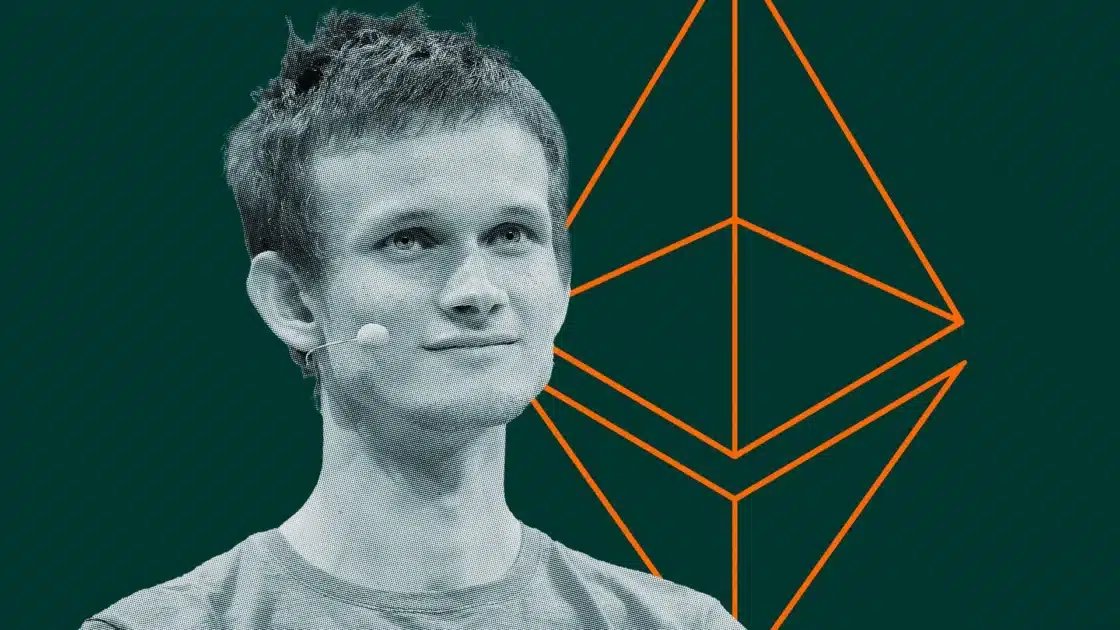
Vitalik Buterin Reveals Ethereum’s Bold Plan to Stay Quantum-Secure and Simple!

Vitalik Buterin Reveals Ethereum’s Bold Plan to Stay Quantum-Secure and Simple!

Buterin unveils Ethereum’s strategy to tackle quantum security challenges ahead. Ethereum focuses on simplifying architecture while boosting security for users. Ethereum’s market stability grows as Buterin’s roadmap gains investor confidence. Ethereum founder Vitalik Buterin has unveiled his long-term vision for the blockchain, focusing on making Ethereum quantum-secure while maintaining its simplicity for users. Buterin presented his roadmap at the Japanese Developer Conference, and splits the future of Ethereum into three phases: short-term, mid-term, and long-term. Buterin’s most ambitious goal for Ethereum is to safeguard the blockchain against the threats posed by quantum computing.  The danger of such future developments is that the future may call into question the cryptographic security of most blockchain systems, and Ethereum will be able to remain ahead thanks to more sophisticated mathematical techniques to ensure the safety and integrity of its protocols. Buterin is committed to ensuring that Ethereum evolves in a way that not only meets today’s security challenges but also prepares for the unknowns of tomorrow. Also Read: Ethereum Giant The Ether Machine Takes Major Step Toward Going Public! However, in spite of such high ambitions, Buterin insisted that Ethereum also needed to simplify its architecture. An important aspect of this vision is to remove unnecessary complexity and make Ethereum more accessible and maintainable without losing its strong security capabilities. Security and simplicity form the core of Buterin’s strategy, as they guarantee that the users of Ethereum experience both security and smooth processes. Focus on Speed and Efficiency in the Short-Term In the short term, Buterin aims to enhance Ethereum’s transaction efficiency, a crucial step toward improving scalability and reducing transaction costs. These advantages are attributed to the fact that, within the mid-term, Ethereum is planning to enhance the speed of transactions in layer-2 networks. According to Butterin, this is part of Ethereum’s expansion, particularly because there is still more need to use blockchain technology to date. The other important aspect of Ethereum’s development is the layer-2 solutions. Buterin supports an approach in which the layer-2 networks are dependent on layer-1 to perform some essential tasks like data security, proof, and censorship resistance. This will enable the layer-2 systems of Ethereum to be concerned with verifying and sequencing transactions, which will improve the overall speed and efficiency of the network. Ethereum’s Market Stability Reflects Confidence in Long-Term Strategy Ethereum’s market performance has remained solid, with the cryptocurrency holding steady above $4,000. Currently priced at $4,492.15, Ethereum has experienced a slight 0.93% increase over the last 24 hours, while its trading volume surged by 8.72%, reaching $34.14 billion. These figures point to growing investor confidence in Ethereum’s long-term vision. The crypto community remains optimistic about Ethereum’s future, with many predicting the price could rise to $5,500 by mid-October. Buterin’s clear, forward-thinking strategy continues to build trust in Ethereum as one of the most secure and scalable blockchain platforms in the market. Also Read: Whales Dump 200 Million XRP in Just 2 Weeks – Is XRP’s Price on the Verge of Collapse? The post Vitalik Buterin Reveals Ethereum’s Bold Plan to Stay Quantum-Secure and Simple! appeared first on 36Crypto.
Share
Coinstats2025/09/18 01:22