

Is This Crypto Winter Different? Experts Reevaluate Bitcoin

Bitcoin’s latest price action underscores a paradox at the heart of institutional crypto interest: capital is increasingly present, yet money managers remain wary of labeling BTC as a risk-off hedge. After topping near $120,000 in October, the asset has retraced more than 25% in the past month, prompting observers to parse whether the pullback signals a maturation of the market or a cooling in risk appetite among investors. The debate touches on four-year cycle dynamics, regulatory clarity, and how Wall Street–level players are recalibrating their exposure as policy conversations unfold.
Key takeaways
- Bitcoin has shed more than 25% in the month, testing critical levels as institutional risk appetite shifts and cycle dynamics influence pricing.
- The CLARITY Act, a centerpiece of US crypto regulation, remains stalled in the Senate, with banks and exchanges contending over stablecoin provisions that could reshape exchange economics.
- Grayscale argues that near-term BTC moves resemble growth equities with high enterprise value rather than traditional gold, signaling a non-traditional risk profile for the asset.
- High-level talks on crypto market structure legislation continue, including a White House engagement between crypto executives and bankers, signaling bipartisan momentum toward clarity.
- Kaiko Research flags a potential $60,000 level as a halfway point in the bear market, stressing that on-chain metrics will determine whether the four-year cycle framework holds.
- Regulatory clarity and the GENIUS Act are viewed as structural catalysts that could unlock new use cases for stablecoins and tokenized assets, potentially guiding long-term value for networks.
Tickers mentioned: $BTC, $COIN
Sentiment: Neutral
Price impact: Negative. Bitcoin fell more than 25% this month as institutions reevaluated risk positions and macro conditions remained uncertain.
Market context: The price pullback comes as the broader crypto environment weighs liquidity, risk appetite, and a regulatory landscape in flux, with policymakers debating how to modernize oversight of digital assets and market infrastructure.
Market context
The recent price action sits at the intersection between growing institutional involvement and ongoing regulatory ambiguity. While well-capitalized firms have shown continued interest in crypto products, their willingness to treat BTC as a risk-on asset remains contested. The conversation around regulatory clarity—particularly for market structure and stablecoins—has increasingly become the central driver of flows and product strategy, influencing whether institutions deepen exposure or recalibrate to avoid regulatory risk.
Why it matters
From a market efficiency perspective, the episode tests whether institutions can comfortably price BTC within a regulated framework that reduces tail risk while preserving participation. Grayscale has argued that BTC’s short-term moves align more with growth-oriented software equities than with precious metals, which could broaden the interpretation of what drives crypto prices beyond the traditional store-of-value narrative. The insistence on regulatory clarity suggests a path toward broader use cases—such as tokenized assets and stablecoins—that could, over time, add depth to liquidity and utility in the sector.
On the policy front, the CLARITY Act represents a sweeping redesign of crypto oversight, including DeFi, exchanges, and capital markets rules. The bill’s stalled status in the Senate has frustrated industry participants who argue that delay erodes confidence and slows strategic planning. Coinbase (EXCHANGE: COIN) and other major players have been key voices in the debate, reflecting how regulatory outcomes will shape product structuring, risk management, and partnerships going forward. The GENIUS Act, which passed in July 2025, is cited as part of a broader push toward a clearer regulatory framework, suggesting that lawmakers recognize the structural benefits of clearer rules for innovation and investor protection.
Analysts continue to weigh whether Bitcoin’s bear market can extend toward new price anchors or whether a structural shift in sentiment—driven by policy progress and institutional onboarding—will eventually rekindle momentum. Some observers point to a potential bottom in the high tens of thousands before a longer-term recovery, while others emphasize that the outcome will hinge on regulatory breakthroughs and the resilience of on-chain networks amid macro headwinds.
Beyond the price action, the market is watching how geopolitical and regulatory signals converge. White House discussions between crypto executives and bankers—part of ongoing talks to resolve roadblocks to market structure reform—could influence the speed and direction of institutional flows. In the meantime, industry researchers note that on-chain metrics and cross-asset correlations will continue to shape the narrative around whether the four-year cycle remains intact or yields a different pattern for BTC and related assets.
In short, the bear market debate is less about a single catalyst and more about a convergence of cycles, policy, and evolving institutional incentives. As participants await clearer rules, the market will likely experience continued volatility, punctuated by moments when policy events or macro shifts trigger sharp repricings. The coming months could be decisive for whether BTC cement its role as a core allocation for institutions or whether it remains a higher-risk, higher-reward bet that requires more robust regulatory scaffolding before a broader class of investors can comfortably participate.
What to watch next
- Regulatory progress on the CLARITY Act and GENIUS Act, including any scheduled committee votes or floor actions.
- Outcomes of the White House meetings with crypto and banking representatives, and any policy signals that emerge from those discussions.
- Key price levels for BTC, with attention to whether the $60,000 region acts as a support or acts as a magnet for further downside.
- New on-chain metrics and cross-asset analyses that could confirm or challenge the four-year cycle framework.
- Regulatory clarity that could unlock additional use cases for stablecoins and tokenized assets, influencing the structure and liquidity of crypto markets.
Sources & verification
- Grayscale, Market Commentary: Bitcoin trading more like growth than gold.
- Federal Reserve Governor Chris Waller’s remarks at a monetary policy conference on crypto hype and risk positions.
- Mike Novogratz’s CNBC interview on institutional risk tolerance in crypto markets.
- Kaiko Research notes on critical support levels and cycle analysis.
- White House discussions involving crypto executives and bankers on market structure reform.
Bitcoin’s price slump tests institutional adoption and regulatory clarity
Bitcoin (CRYPTO: BTC) has moved under a cloud of regulatory uncertainty and shifting institutional appetite. After rallying to above $120,000 in October, the flagship crypto has retraced more than 25% in the past month, prompting observers to parse whether the pullback signals a maturation of the market or a cooling in risk appetite among investors. The pullback sits at the center of a broader debate about whether BTC is a risk-on asset or if a regulatory environment that supports product innovation and investor protection can coexist with a robust institutional footprint.
Price dynamics through this period suggest a mix of cyclical drivers and risk management by large players who entered crypto markets during a period of high enthusiasm. Some market participants attribute the sell-off to the four-year cycle framework commonly cited in crypto analysis, while others see a more general tightening of risk appetite among institutions that had pursued crypto exposure as part of a broader portfolio diversification strategy. The trajectory has been punctuated by sharp moves, with BTC slipping from its October highs and trading in lower ranges that have drawn comparisons to growth equities rather than to the classic safe-haven narrative associated with gold.
Within policy circles, the debate over appropriate regulation remains intense. The CLARITY Act would overhaul US crypto regulation, touching on areas from DeFi oversight to market infrastructure. The bill has stalled in the Senate as Coinbase (EXCHANGE: COIN) and the banking lobby clash over stablecoin provisions that could affect exchange economics and systemic risk. The absence of timely clarity has been cited by policymakers and industry participants as a key factor delaying broader institutional participation and product development. In parallel, the GENIUS Act, which had cleared its path in 2025, is viewed as part of a broader push toward a framework that could enable more predictable and scalable crypto markets.
Prominent voices in the industry have offered mixed perspectives. Fed governor Waller framed the current crypto environment as reflecting a fading wave of euphoria rather than a lasting structural shift toward digital gold. His comments at a recent monetary policy conference underscored the idea that institutions are still recalibrating risk positions as the macro backdrop evolves. In a separate interview, Galaxy Digital’s Mike Novogratz highlighted how institutions approach crypto with a different risk tolerance than retail investors, a distinction that can influence price action and liquidity dynamics. “Retail people don’t get into crypto because they want to make 11% annualized … They get in because they want to make 30 to one, eight to one, 10 to one,” he observed, pointing to the motivational differences that help explain long-term price trajectories beyond traditional hedges.
Meanwhile, market structure researchers at Grayscale have emphasized a broader context for BTC’s recent moves. They noted that short-term price action has shown correlations with software equities and tech-driven growth narratives rather than with gold or other conventional safe-haven assets. This view aligns with a broader market trend where digital assets are increasingly treated as high-growth tech exposures with unique risk characteristics rather than as proxies for traditional stores of value.
Looking ahead, the market will hinge on regulatory clarity and the pace at which policymakers can deliver predictable rules. The current discussions—including high-level talks that culminated in a White House meeting involving crypto and banking leaders—signal bipartisan momentum for market-structure reforms. If lawmakers can translate sentiment into concrete legislation, the door could open for a broader institutional onboarding, greater product innovation, and more defined risk management practices that could, over time, shape BTC’s role in diversified portfolios.
This article was originally published as Is This Crypto Winter Different? Experts Reevaluate Bitcoin on Crypto Breaking News – your trusted source for crypto news, Bitcoin news, and blockchain updates.


You May Also Like
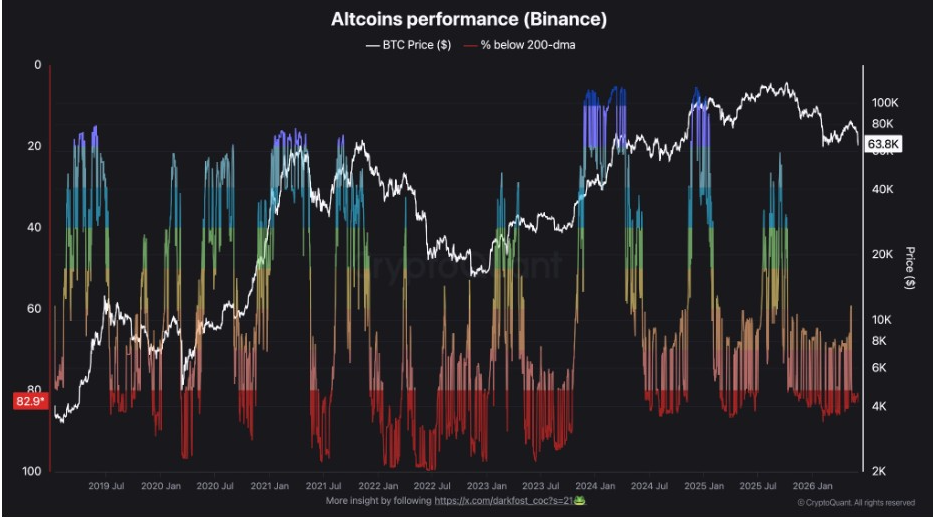
Altcoin Market Loses $520B as 83% Trade Below 200-Day Average

How Bitcoin Turned $10K Into $119 Million While Facebook Lagged Behind

US eyes Iranian assets for Gulf allies’ reconstruction, source says



