Linea positions itself as "an Ethereum Layer 2 network built to enhance Ethereum." Its mission is deceptively simple, yet incredibly powerful. With Ethereum's price rebounding significantly over the past two months and nearing new highs, Linea has quickly become one of the most anticipated projects in the crypto space, especially with its upcoming Token Generation Event (TGE). At its core, Linea is more than just another Layer 2 network—it's a zkEVM project designed to push Ethereum further while fully integrating with the Ethereum ecosystem. Founded by ConsenSys, the company behind key Ethereum infrastructure like MetaMask and Infura, Linea has deep institutional backing and years of experience powering core tools used by over 30 million users worldwide. Led by Ethereum co-founder Joseph Lubin, ConsenSys has raised $725 million from investors including Microsoft, SoftBank, and Coinbase Ventures, providing solid support for Linea's long-term growth. Linea's Technology and Ethereum's Challenges Ethereum's core challenge has always been scalability. Competing chains like Solana excel at speed and throughput, forcing Ethereum to rely on Rollups for expansion. Rollups bundle large numbers of Layer-2 transactions and submit them to Ethereum for settlement. Rollups use two methods: optimistic fraud proofs (requiring up to seven days for final confirmation) and validity proofs (also known as ZK proofs), which are faster and more secure. Linea uses the Type 2 zkEVM, which means it's fully equivalent to the EVM, but not to Ethereum. In practice, this allows developers to directly deploy Ethereum dApps on Linea without rewriting their code, while benefiting from faster proof generation and lower costs. Linea aims to gradually transition to the Type 1 zkEVM by 2026, achieving full compatibility with Ethereum. Reduce costs and improve user experience Linea has demonstrated its ability to improve user experience, most notably by significantly reducing gas fees. In its Alpha V2 upgrade, it introduced a mechanism for aggregating multiple batches into a single proof, reducing fixed costs and bringing average gas fees down by 66%. This makes Linea one of the lowest-cost L2 blockchains, giving it an advantage in attracting and retaining users. Core features driving adoption Linea's design is built around three pillars: Ethereum alignment - using ETH to pay for gas fees to keep consistent with Ethereum's native design; Native revenue — introducing token economic incentives at the network level; Multi-Rollup network architecture - building an ecosystem by linking different Rollups. At the same time, Linea uses a double-burn mechanism: ETH fees used in transactions will burn both ETH and LINEA tokens. This mechanism makes Linea's success closely tied to the health of Ethereum. Native income mechanism and ecological flywheel Another key differentiator for Linea is its native yield mechanism. Through integration with Lido, ETH bridged to Linea can be automatically staked, with the generated yield flowing back into the ecosystem to support liquidity and incentivize growth. This design creates a liquidity flywheel effect that is expected to support Linea's long-term development, avoiding the boom-and-bust cycles seen in other projects driven by short-term incentives. Linea not only positions itself as a Layer 2 network but also provides a comprehensive suite of tools through the Linea Stack to help other projects build their own Rollups. This strategy, similar to Optimism's Superchain approach, aims to create broader network effects, ensure interoperability, and enhance the cohesion of the entire ecosystem. Ecological Potential and Token Economics Linea's ecosystem is rapidly gaining momentum. It has already established partnerships with over 400 partners across DeFi, NFT, infrastructure, and AI, including major protocols such as Aave, PancakeSwap, SushiSwap, and Stargate. During the 2024 Surge event, its TVL reached $1.2 billion. Despite a decline after the end of the incentive program, funds are flowing back as the TGE approaches. Ethereum, a decentralized exchange that launched just a few weeks ago, has surpassed $120 million in TVL, demonstrating a rebound in ecosystem capital. Unlike many projects, Linea deliberately avoids distributing tokens to venture capital firms. Instead, 85% of tokens are allocated to the ecosystem, with only 15% reserved for ConsenSys, subject to a five-year lockup period. Regarding governance, Linea deliberately excludes token governance. Instead, token emission, grants, and incentives are managed by the Linea Consortium, a group of trusted Ethereum organizations. This design mitigates regulatory risk while ensuring strong alignment between Linea and Ethereum's long-term vision. Outlook for the Future According to its roadmap, Linea will launch a series of key upgrades in the third and fourth quarters of 2025, including a new burn mechanism, an increased gas limit, and the full implementation of its native revenue mechanism. By 2026, Linea plans to implement Type 1 zkEVM and increase network throughput to 5,000 transactions per second (TPS), while also advancing its more ambitious real-time proof-of-stake (RPS) for Ethereum. Summarize Linea is a bold experiment: its lack of VC backing, native ETH returns, and Ethereum-first design make it more than just a scaling solution. While questions remain about its token model and long-term value capture, as the TGE approaches, one thing is certain: Linea's goal isn't just to scale Ethereum, but to strengthen it.Linea positions itself as "an Ethereum Layer 2 network built to enhance Ethereum." Its mission is deceptively simple, yet incredibly powerful. With Ethereum's price rebounding significantly over the past two months and nearing new highs, Linea has quickly become one of the most anticipated projects in the crypto space, especially with its upcoming Token Generation Event (TGE). At its core, Linea is more than just another Layer 2 network—it's a zkEVM project designed to push Ethereum further while fully integrating with the Ethereum ecosystem. Founded by ConsenSys, the company behind key Ethereum infrastructure like MetaMask and Infura, Linea has deep institutional backing and years of experience powering core tools used by over 30 million users worldwide. Led by Ethereum co-founder Joseph Lubin, ConsenSys has raised $725 million from investors including Microsoft, SoftBank, and Coinbase Ventures, providing solid support for Linea's long-term growth. Linea's Technology and Ethereum's Challenges Ethereum's core challenge has always been scalability. Competing chains like Solana excel at speed and throughput, forcing Ethereum to rely on Rollups for expansion. Rollups bundle large numbers of Layer-2 transactions and submit them to Ethereum for settlement. Rollups use two methods: optimistic fraud proofs (requiring up to seven days for final confirmation) and validity proofs (also known as ZK proofs), which are faster and more secure. Linea uses the Type 2 zkEVM, which means it's fully equivalent to the EVM, but not to Ethereum. In practice, this allows developers to directly deploy Ethereum dApps on Linea without rewriting their code, while benefiting from faster proof generation and lower costs. Linea aims to gradually transition to the Type 1 zkEVM by 2026, achieving full compatibility with Ethereum. Reduce costs and improve user experience Linea has demonstrated its ability to improve user experience, most notably by significantly reducing gas fees. In its Alpha V2 upgrade, it introduced a mechanism for aggregating multiple batches into a single proof, reducing fixed costs and bringing average gas fees down by 66%. This makes Linea one of the lowest-cost L2 blockchains, giving it an advantage in attracting and retaining users. Core features driving adoption Linea's design is built around three pillars: Ethereum alignment - using ETH to pay for gas fees to keep consistent with Ethereum's native design; Native revenue — introducing token economic incentives at the network level; Multi-Rollup network architecture - building an ecosystem by linking different Rollups. At the same time, Linea uses a double-burn mechanism: ETH fees used in transactions will burn both ETH and LINEA tokens. This mechanism makes Linea's success closely tied to the health of Ethereum. Native income mechanism and ecological flywheel Another key differentiator for Linea is its native yield mechanism. Through integration with Lido, ETH bridged to Linea can be automatically staked, with the generated yield flowing back into the ecosystem to support liquidity and incentivize growth. This design creates a liquidity flywheel effect that is expected to support Linea's long-term development, avoiding the boom-and-bust cycles seen in other projects driven by short-term incentives. Linea not only positions itself as a Layer 2 network but also provides a comprehensive suite of tools through the Linea Stack to help other projects build their own Rollups. This strategy, similar to Optimism's Superchain approach, aims to create broader network effects, ensure interoperability, and enhance the cohesion of the entire ecosystem. Ecological Potential and Token Economics Linea's ecosystem is rapidly gaining momentum. It has already established partnerships with over 400 partners across DeFi, NFT, infrastructure, and AI, including major protocols such as Aave, PancakeSwap, SushiSwap, and Stargate. During the 2024 Surge event, its TVL reached $1.2 billion. Despite a decline after the end of the incentive program, funds are flowing back as the TGE approaches. Ethereum, a decentralized exchange that launched just a few weeks ago, has surpassed $120 million in TVL, demonstrating a rebound in ecosystem capital. Unlike many projects, Linea deliberately avoids distributing tokens to venture capital firms. Instead, 85% of tokens are allocated to the ecosystem, with only 15% reserved for ConsenSys, subject to a five-year lockup period. Regarding governance, Linea deliberately excludes token governance. Instead, token emission, grants, and incentives are managed by the Linea Consortium, a group of trusted Ethereum organizations. This design mitigates regulatory risk while ensuring strong alignment between Linea and Ethereum's long-term vision. Outlook for the Future According to its roadmap, Linea will launch a series of key upgrades in the third and fourth quarters of 2025, including a new burn mechanism, an increased gas limit, and the full implementation of its native revenue mechanism. By 2026, Linea plans to implement Type 1 zkEVM and increase network throughput to 5,000 transactions per second (TPS), while also advancing its more ambitious real-time proof-of-stake (RPS) for Ethereum. Summarize Linea is a bold experiment: its lack of VC backing, native ETH returns, and Ethereum-first design make it more than just a scaling solution. While questions remain about its token model and long-term value capture, as the TGE approaches, one thing is certain: Linea's goal isn't just to scale Ethereum, but to strengthen it.

Linea TGE Countdown: A Panoramic Analysis of Technology, Ecosystem, and Token Economics

2025/08/22 17:00

Linea positions itself as "an Ethereum Layer 2 network built to enhance Ethereum." Its mission is deceptively simple, yet incredibly powerful. With Ethereum's price rebounding significantly over the past two months and nearing new highs, Linea has quickly become one of the most anticipated projects in the crypto space, especially with its upcoming Token Generation Event (TGE).
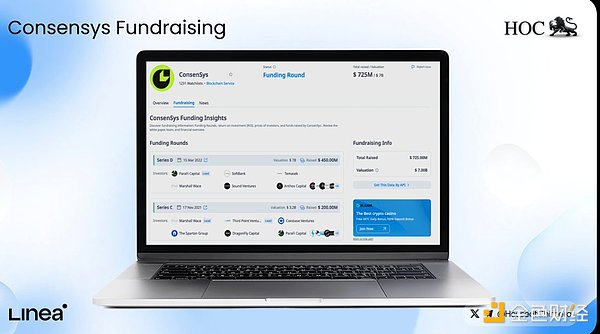
At its core, Linea is more than just another Layer 2 network—it's a zkEVM project designed to push Ethereum further while fully integrating with the Ethereum ecosystem. Founded by ConsenSys, the company behind key Ethereum infrastructure like MetaMask and Infura, Linea has deep institutional backing and years of experience powering core tools used by over 30 million users worldwide. Led by Ethereum co-founder Joseph Lubin, ConsenSys has raised $725 million from investors including Microsoft, SoftBank, and Coinbase Ventures, providing solid support for Linea's long-term growth.

Linea's Technology and Ethereum's Challenges

Ethereum's core challenge has always been scalability. Competing chains like Solana excel at speed and throughput, forcing Ethereum to rely on Rollups for expansion. Rollups bundle large numbers of Layer-2 transactions and submit them to Ethereum for settlement. Rollups use two methods: optimistic fraud proofs (requiring up to seven days for final confirmation) and validity proofs (also known as ZK proofs), which are faster and more secure.

Linea uses the Type 2 zkEVM, which means it's fully equivalent to the EVM, but not to Ethereum. In practice, this allows developers to directly deploy Ethereum dApps on Linea without rewriting their code, while benefiting from faster proof generation and lower costs. Linea aims to gradually transition to the Type 1 zkEVM by 2026, achieving full compatibility with Ethereum.
Reduce costs and improve user experience

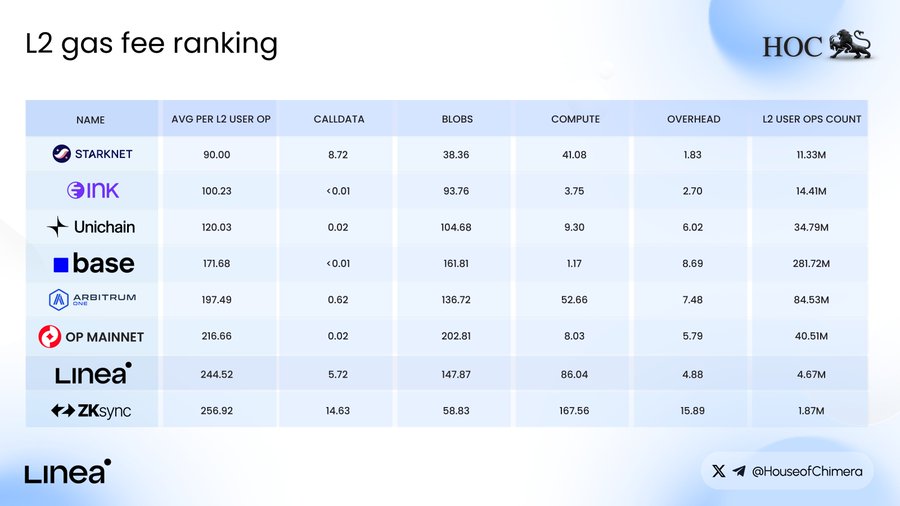
Linea has demonstrated its ability to improve user experience, most notably by significantly reducing gas fees. In its Alpha V2 upgrade, it introduced a mechanism for aggregating multiple batches into a single proof, reducing fixed costs and bringing average gas fees down by 66%. This makes Linea one of the lowest-cost L2 blockchains, giving it an advantage in attracting and retaining users.

Core features driving adoption

Linea's design is built around three pillars:

  1. Ethereum alignment - using ETH to pay for gas fees to keep consistent with Ethereum's native design;
  2. Native revenue — introducing token economic incentives at the network level;
  3. Multi-Rollup network architecture - building an ecosystem by linking different Rollups.

At the same time, Linea uses a double-burn mechanism: ETH fees used in transactions will burn both ETH and LINEA tokens. This mechanism makes Linea's success closely tied to the health of Ethereum.
Native income mechanism and ecological flywheel

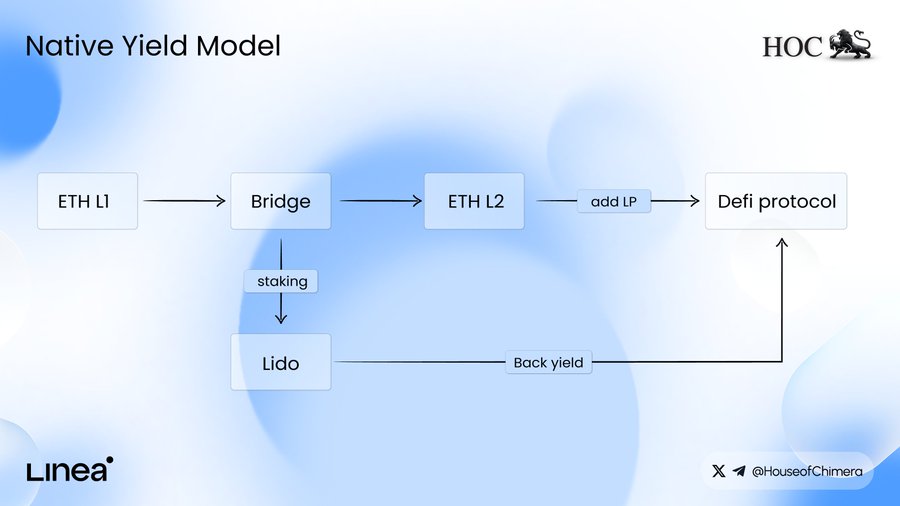
Another key differentiator for Linea is its native yield mechanism. Through integration with Lido, ETH bridged to Linea can be automatically staked, with the generated yield flowing back into the ecosystem to support liquidity and incentivize growth. This design creates a liquidity flywheel effect that is expected to support Linea's long-term development, avoiding the boom-and-bust cycles seen in other projects driven by short-term incentives.

Linea not only positions itself as a Layer 2 network but also provides a comprehensive suite of tools through the Linea Stack to help other projects build their own Rollups. This strategy, similar to Optimism's Superchain approach, aims to create broader network effects, ensure interoperability, and enhance the cohesion of the entire ecosystem.

Ecological Potential and Token Economics

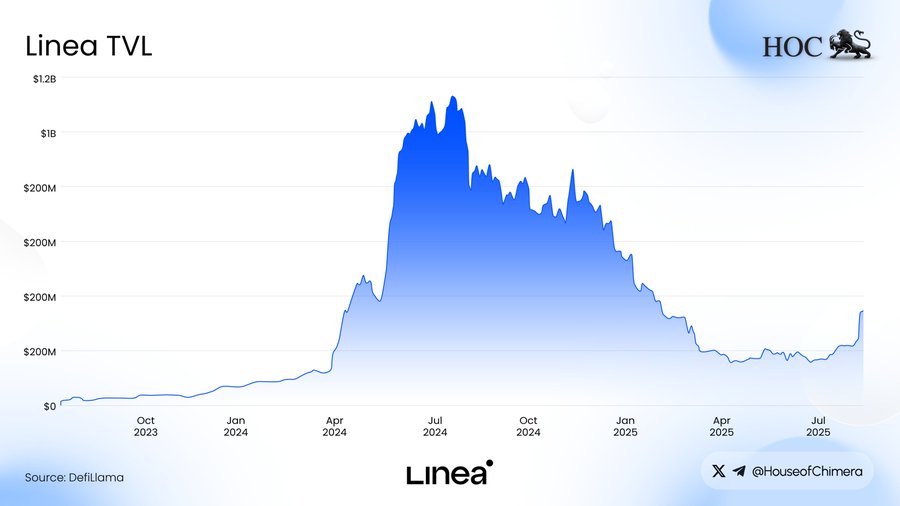
Linea's ecosystem is rapidly gaining momentum. It has already established partnerships with over 400 partners across DeFi, NFT, infrastructure, and AI, including major protocols such as Aave, PancakeSwap, SushiSwap, and Stargate. During the 2024 Surge event, its TVL reached $1.2 billion. Despite a decline after the end of the incentive program, funds are flowing back as the TGE approaches. Ethereum, a decentralized exchange that launched just a few weeks ago, has surpassed $120 million in TVL, demonstrating a rebound in ecosystem capital.

Unlike many projects, Linea deliberately avoids distributing tokens to venture capital firms. Instead, 85% of tokens are allocated to the ecosystem, with only 15% reserved for ConsenSys, subject to a five-year lockup period. Regarding governance, Linea deliberately excludes token governance. Instead, token emission, grants, and incentives are managed by the Linea Consortium, a group of trusted Ethereum organizations. This design mitigates regulatory risk while ensuring strong alignment between Linea and Ethereum's long-term vision.
Outlook for the Future

According to its roadmap, Linea will launch a series of key upgrades in the third and fourth quarters of 2025, including a new burn mechanism, an increased gas limit, and the full implementation of its native revenue mechanism. By 2026, Linea plans to implement Type 1 zkEVM and increase network throughput to 5,000 transactions per second (TPS), while also advancing its more ambitious real-time proof-of-stake (RPS) for Ethereum.

Summarize

Linea is a bold experiment: its lack of VC backing, native ETH returns, and Ethereum-first design make it more than just a scaling solution. While questions remain about its token model and long-term value capture, as the TGE approaches, one thing is certain: Linea's goal isn't just to scale Ethereum, but to strengthen it.


Market Opportunity
Threshold Logo
Threshold Price(T)
$0.008646
$0.008646$0.008646
-1.87%
USD
Threshold (T) Live Price Chart
Disclaimer: The articles reposted on this site are sourced from public platforms and are provided for informational purposes only. They do not necessarily reflect the views of MEXC. All rights remain with the original authors. If you believe any content infringes on third-party rights, please contact [email protected] for removal. MEXC makes no guarantees regarding the accuracy, completeness, or timeliness of the content and is not responsible for any actions taken based on the information provided. The content does not constitute financial, legal, or other professional advice, nor should it be considered a recommendation or endorsement by MEXC.

You May Also Like

From random auctions to forward contracts, how does ETHGas transform block space into a priced resource?

From random auctions to forward contracts, how does ETHGas transform block space into a priced resource?

Key points: ETHGas redefines Ethereum block space as a priced resource, moving beyond transaction fees that fluctuate with demand. Through block space futures and
Share
PANews2025/12/26 14:00
Headwind Helps Best Wallet Token

Headwind Helps Best Wallet Token

The post Headwind Helps Best Wallet Token appeared on BitcoinEthereumNews.com. Google has announced the launch of a new open-source protocol called Agent Payments Protocol (AP2) in partnership with Coinbase, the Ethereum Foundation, and 60 other organizations. This allows AI agents to make payments on behalf of users using various methods such as real-time bank transfers, credit and debit cards, and, most importantly, stablecoins. Let’s explore in detail what this could mean for the broader cryptocurrency markets, and also highlight a presale crypto (Best Wallet Token) that could explode as a result of this development. Google’s Push for Stablecoins Agent Payments Protocol (AP2) uses digital contracts known as ‘Intent Mandates’ and ‘Verifiable Credentials’ to ensure that AI agents undertake only those payments authorized by the user. Mandates, by the way, are cryptographically signed, tamper-proof digital contracts that act as verifiable proof of a user’s instruction. For example, let’s say you instruct an AI agent to never spend more than $200 in a single transaction. This instruction is written into an Intent Mandate, which serves as a digital contract. Now, whenever the AI agent tries to make a payment, it must present this mandate as proof of authorization, which will then be verified via the AP2 protocol. Alongside this, Google has also launched the A2A x402 extension to accelerate support for the Web3 ecosystem. This production-ready solution enables agent-based crypto payments and will help reshape the growth of cryptocurrency integration within the AP2 protocol. Google’s inclusion of stablecoins in AP2 is a massive vote of confidence in dollar-pegged cryptocurrencies and a huge step toward making them a mainstream payment option. This widens stablecoin usage beyond trading and speculation, positioning them at the center of the consumption economy. The recent enactment of the GENIUS Act in the U.S. gives stablecoins more structure and legal support. Imagine paying for things like data crawls, per-task…
Share
BitcoinEthereumNews2025/09/18 01:27
zkPass Listing: Upbit’s Strategic Move to Boost Privacy-Focused Crypto Adoption

zkPass Listing: Upbit’s Strategic Move to Boost Privacy-Focused Crypto Adoption

BitcoinWorld zkPass Listing: Upbit’s Strategic Move to Boost Privacy-Focused Crypto Adoption In a significant move for the privacy-focused cryptocurrency sector
Share
bitcoinworld2025/12/26 14:45