Federal Reserve’s Unwavering Stance: Why ‘No Cuts’ View Strengthens Amidst Critical Economic Data
BitcoinWorld
Federal Reserve’s Unwavering Stance: Why ‘No Cuts’ View Strengthens Amidst Critical Economic Data
WASHINGTON, D.C., March 2025 – The Federal Reserve’s commitment to maintaining current interest rates has solidified significantly in recent weeks, according to fresh analysis from Nordea Markets. Economic data releases throughout the first quarter have consistently reinforced the central bank’s position against implementing rate cuts this year. Consequently, market expectations have shifted dramatically, with traders now pricing in a prolonged period of monetary policy stability.
Federal Reserve’s Strengthened Position on Interest Rates
The Federal Reserve’s monetary policy committee has communicated a clear message through recent statements and economic projections. Multiple data points have converged to support maintaining the current federal funds rate target range of 5.25%-5.50%. Nordea’s research team identifies three primary factors strengthening this position. First, inflation metrics have shown persistent stickiness in service categories. Second, labor market indicators continue demonstrating remarkable resilience. Third, consumer spending data reveals ongoing economic momentum that exceeds earlier forecasts.
Recent consumer price index reports have particularly influenced the Fed’s assessment. Core inflation measures, which exclude volatile food and energy components, have remained above the central bank’s 2% target for 34 consecutive months. Additionally, the personal consumption expenditures price index – the Fed’s preferred inflation gauge – showed unexpected upward pressure in January and February. These trends collectively suggest that inflationary pressures may require more time to fully subside than previously anticipated.
Economic Data Driving Monetary Policy Decisions
Several key economic indicators have contributed to the Fed’s reinforced stance against rate reductions. The employment situation remains robust, with unemployment holding below 4% for 26 straight months. Wage growth, while moderating slightly, continues to outpace pre-pandemic averages. Furthermore, retail sales data indicates sustained consumer confidence and spending capacity despite higher borrowing costs.
Manufacturing and services sector surveys provide additional context for the policy outlook. The Institute for Supply Management’s manufacturing index returned to expansion territory in February after five months of contraction. Meanwhile, the services sector has maintained consistent growth throughout the economic cycle. These indicators suggest the economy possesses underlying strength that could reignite inflationary pressures if monetary policy eases prematurely.
Nordea’s Analytical Framework and Market Implications
Nordea’s economists employ a comprehensive analytical framework when assessing Federal Reserve policy trajectories. Their methodology incorporates traditional economic indicators alongside forward-looking market signals and policy communication analysis. The firm’s research suggests that market participants have been too optimistic about the timing of potential rate cuts throughout 2024 and early 2025.
The implications of this strengthened ‘no cuts’ view extend across financial markets. Bond yields have adjusted upward along the entire yield curve, with the 10-year Treasury note reaching its highest level since November 2023. Equity markets have shown increased volatility as investors recalibrate earnings expectations for interest-rate-sensitive sectors. Additionally, the U.S. dollar has appreciated against major currencies, reflecting both monetary policy divergence and relative economic strength.
Historical Context and Policy Evolution
The current monetary policy stance represents a significant evolution from the Federal Reserve’s position just eighteen months ago. In late 2023, most policymakers anticipated multiple rate cuts during 2024. However, economic resilience and persistent inflation components forced a gradual reassessment throughout last year. The Fed’s current position reflects lessons learned from previous inflationary episodes, particularly the 1970s experience when premature easing contributed to renewed price pressures.
Federal Reserve Chair Jerome Powell has emphasized data dependence in recent public appearances. He specifically highlighted the need for greater confidence that inflation is moving sustainably toward the 2% target before considering policy adjustments. This measured approach contrasts with more reactive central bank strategies employed during previous economic cycles. The current framework prioritizes achieving price stability over stimulating near-term economic activity.
Global Central Banking Coordination and Divergence
The Federal Reserve’s policy stance occurs within a complex global monetary environment. Several major central banks have already begun easing cycles, creating notable policy divergence. The European Central Bank implemented its first rate cut in December 2024, while the Bank of England commenced its easing cycle in February 2025. This divergence reflects differing economic conditions across regions, with the United States demonstrating stronger growth momentum and more persistent inflation than its peers.
International coordination among central banks has become increasingly important in this environment. Policy divergence creates cross-border capital flows and exchange rate volatility that can complicate domestic economic management. Federal Reserve officials have acknowledged these global interconnections while emphasizing that domestic economic conditions must guide their primary policy decisions. The current stance suggests confidence that U.S. economic fundamentals can withstand potential volatility from policy divergence.
Sector-Specific Impacts and Business Adaptation
Extended higher interest rates create distinct challenges and opportunities across economic sectors. Real estate markets continue adjusting to elevated mortgage rates, with housing activity stabilizing at reduced transaction volumes. Commercial real estate faces particular pressure as refinancing costs increase for properties purchased during lower-rate periods. Conversely, financial institutions benefit from wider net interest margins, though they must carefully manage credit quality as borrowing costs remain elevated.
Corporate investment decisions reflect adaptation to the new interest rate environment. Businesses prioritize projects with shorter payback periods and higher returns on investment. Capital allocation strategies increasingly emphasize efficiency improvements over expansionary investments. This shift in corporate behavior may influence productivity growth and long-term economic potential, though the full effects will require several quarters to materialize completely.
Conclusion
The Federal Reserve’s strengthened ‘no cuts’ view represents a data-driven response to persistent economic realities. Nordea’s analysis highlights how recent indicators have reinforced the case for maintaining current interest rates throughout 2025. This monetary policy stance prioritizes achieving sustainable price stability over stimulating near-term economic activity. Market participants must continue monitoring inflation trends, labor market developments, and growth indicators to anticipate potential policy shifts. The Federal Reserve’s commitment to data dependence ensures that future decisions will reflect evolving economic conditions rather than predetermined timelines.
FAQs
Q1: What specific economic data has strengthened the Fed’s ‘no cuts’ position?
Recent inflation reports showing persistent service sector price pressures, robust employment data with unemployment below 4%, and stronger-than-expected consumer spending figures have all contributed to the Fed’s reinforced stance against rate reductions.
Q2: How does Nordea’s analysis differ from other financial institutions?
Nordea employs a comprehensive framework that combines traditional economic indicators with policy communication analysis and market signals. Their research has consistently emphasized the persistence of inflationary pressures and economic resilience that other analysts initially underestimated.
Q3: What are the implications for mortgage rates and housing markets?
Extended higher interest rates mean mortgage rates will likely remain elevated, continuing to pressure housing affordability. Transaction volumes may stabilize at reduced levels, with price adjustments varying significantly by regional market conditions.
Q4: How does U.S. monetary policy divergence affect global markets?
Policy divergence creates capital flow volatility and exchange rate movements that can complicate economic management in other countries. The stronger U.S. dollar makes imports cheaper for American consumers but creates challenges for emerging markets with dollar-denominated debt.
Q5: What conditions could prompt the Fed to reconsider its current stance?
A sustained decline in inflation toward the 2% target, significant labor market softening, or unexpected economic weakness could eventually shift the Fed’s position. However, current data suggests these conditions are unlikely to materialize in the immediate future.
This post Federal Reserve’s Unwavering Stance: Why ‘No Cuts’ View Strengthens Amidst Critical Economic Data first appeared on BitcoinWorld.


You May Also Like
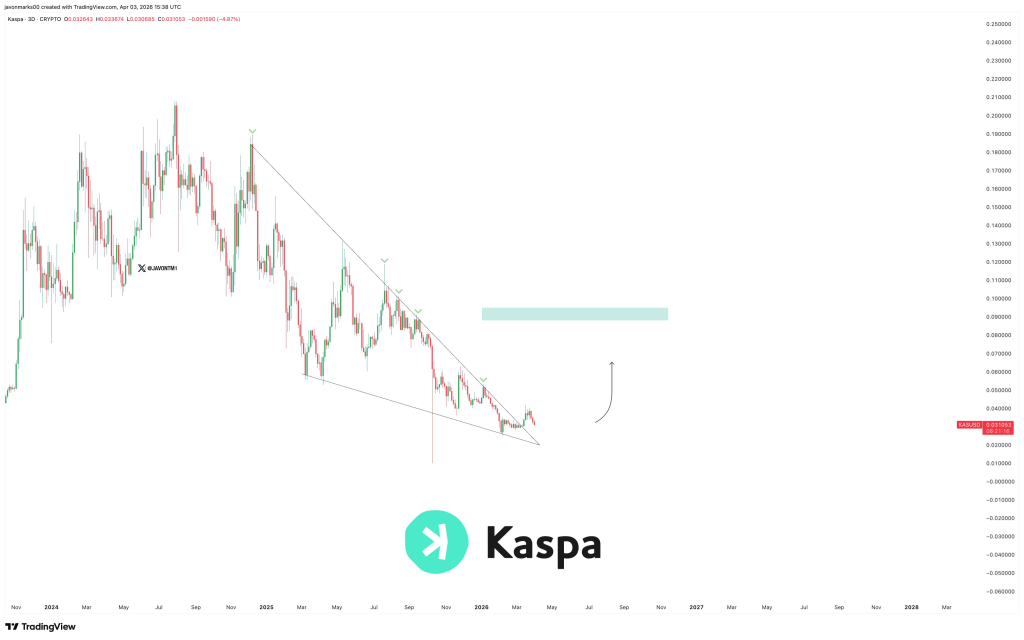
Elite Crypto Trades Updates His Kaspa (KAS) Price Prediction

Leap Wallet to Shut Down by May 28 as Team Winds Down Apps and Validator