BitcoinWorld Nvidia AI Chips Face Critical Halt: Unpacking Beijing’s Shocking Security Concerns in the China Market In the rapidly evolving landscape of artificial intelligence and digital assets, the ripple effects of geopolitical decisions can be profound. A recent development involving Nvidia AI chips has sent tremors through the tech world, particularly for those closely watching the intersection of advanced computing and global economics. This situation underscores the delicate balance between innovation, national security, and international trade, impacting everything from data centers to the underlying infrastructure supporting blockchain technologies. What’s Behind the Sudden Halt of Nvidia AI Chips Production? The tech community was recently abuzz with news that Nvidia, a titan in the semiconductor industry, has reportedly instructed its component suppliers to cease production of its H20 AI chip. This decision marks a significant turn, especially given that just a month prior, companies like Nvidia had received approval to sell their specialized AI chips in the Chinese market. The H20 chip was specifically designed to comply with U.S. export restrictions while still offering substantial AI processing capabilities for Chinese enterprises. The abrupt halt suggests a new and formidable challenge has emerged, complicating Nvidia’s strategic efforts to maintain its foothold in one of the world’s most critical AI battlegrounds. Navigating the Complexities of the China AI Market Beijing’s stance appears to be the primary catalyst for this production halt. Reports indicate that the Chinese government has issued a stern warning to domestic companies, advising against the use of Nvidia’s H20 chips. The core concern revolves around potential security vulnerabilities and the fear of ‘backdoors’ that could grant the U.S. government access to sensitive data. This move is not merely about a single chip; it’s a clear signal of China’s accelerating push for technological self-reliance and its deep-seated distrust of foreign-made components in critical infrastructure. For companies operating within the China AI market, this presents a challenging dilemma: balancing access to cutting-edge foreign technology with increasing pressure to adopt domestic alternatives. The implications for market access and competitive strategy are immense, forcing a re-evaluation of long-term investment and supply chain decisions. The Broader Implications for the Global Semiconductor Industry The reported halt of Nvidia’s H20 production extends far beyond the immediate financial impact on the company. It highlights the growing geopolitical fragmentation within the global semiconductor industry. For years, the industry thrived on interconnected supply chains and international collaboration. However, the escalating tech rivalry between the U.S. and China is forcing a decoupling, leading to parallel ecosystems and increased nationalistic policies. This trend could result in: Increased Costs: Developing redundant supply chains and domestic alternatives often comes at a higher price. Slower Innovation: Restrictions on technology transfer and access to global talent pools could impede the pace of technological advancement. Market Volatility: Sudden policy shifts and trade disputes create uncertainty, impacting investor confidence and long-term planning. Strategic Realignments: Semiconductor companies may need to re-evaluate their global strategies, potentially leading to regionalized production and market focus. This shift fundamentally alters the competitive landscape, pushing nations to prioritize security and self-sufficiency over pure economic efficiency. Security Scrutiny: Why Beijing is Wary of the H20 AI Chip Beijing’s specific concerns regarding the H20 AI chip stem from a broader narrative of data sovereignty and national security. In an era where AI systems process vast amounts of sensitive information, from government data to personal user details, the integrity and trustworthiness of the underlying hardware are paramount. The fear of ‘backdoors’—covert access points embedded in hardware or software—is a significant driver of this apprehension. While Nvidia explicitly denies such claims, stating, “NVIDIA does not have ‘backdoors’ in our chips that would give anyone a remote way to access or control them. The market can use the H20 with confidence,” the geopolitical climate fosters an environment of suspicion. China’s government is increasingly advocating for the use of indigenous chips, viewing them as inherently more secure and controllable. This preference for domestic solutions reflects a strategic imperative to protect national interests and reduce reliance on foreign technology that could potentially be weaponized or compromised. Beyond the Headlines: The Future of Tech Geopolitics and AI This incident serves as a stark reminder of how deeply intertwined technology and international relations have become. The future of tech geopolitics will likely be defined by continued competition over critical technologies like AI and semiconductors. Nations will increasingly prioritize domestic capabilities, invest heavily in R&D, and implement protective measures to safeguard their technological advantages. For businesses, navigating this complex environment requires: Diversified Supply Chains: Reducing over-reliance on single regions or suppliers. Localized Strategies: Adapting products and business models to comply with diverse national regulations and preferences. Enhanced Cybersecurity: Proactively addressing security concerns and building trust with local stakeholders. Policy Monitoring: Staying abreast of evolving trade policies, export controls, and national security directives. The Nvidia H20 situation is not an isolated event but rather a symptom of a larger trend—a global technological race where economic advantage, national security, and ideological differences converge. Understanding these dynamics is crucial for anyone involved in the tech sector, from cryptocurrency innovators leveraging AI to global investors monitoring market shifts. The reported halt in Nvidia’s H20 AI chip production, driven by Beijing’s security concerns and a push for domestic alternatives, marks a pivotal moment in the global tech landscape. This development underscores the intense geopolitical pressures shaping the semiconductor industry and the broader AI market. While Nvidia maintains the integrity of its chips, the incident highlights China’s unwavering commitment to technological sovereignty and its strategic pivot towards indigenous solutions. For businesses and investors, this era demands adaptability, strategic foresight, and a keen awareness of the evolving interplay between technology, trade, and national security. The path forward for AI innovation will undoubtedly be shaped by these complex and often conflicting forces. To learn more about the latest AI market trends and how geopolitical shifts are impacting the semiconductor industry, explore our article on key developments shaping AI features and institutional adoption. This post Nvidia AI Chips Face Critical Halt: Unpacking Beijing’s Shocking Security Concerns in the China Market first appeared on BitcoinWorld and is written by Editorial TeamBitcoinWorld Nvidia AI Chips Face Critical Halt: Unpacking Beijing’s Shocking Security Concerns in the China Market In the rapidly evolving landscape of artificial intelligence and digital assets, the ripple effects of geopolitical decisions can be profound. A recent development involving Nvidia AI chips has sent tremors through the tech world, particularly for those closely watching the intersection of advanced computing and global economics. This situation underscores the delicate balance between innovation, national security, and international trade, impacting everything from data centers to the underlying infrastructure supporting blockchain technologies. What’s Behind the Sudden Halt of Nvidia AI Chips Production? The tech community was recently abuzz with news that Nvidia, a titan in the semiconductor industry, has reportedly instructed its component suppliers to cease production of its H20 AI chip. This decision marks a significant turn, especially given that just a month prior, companies like Nvidia had received approval to sell their specialized AI chips in the Chinese market. The H20 chip was specifically designed to comply with U.S. export restrictions while still offering substantial AI processing capabilities for Chinese enterprises. The abrupt halt suggests a new and formidable challenge has emerged, complicating Nvidia’s strategic efforts to maintain its foothold in one of the world’s most critical AI battlegrounds. Navigating the Complexities of the China AI Market Beijing’s stance appears to be the primary catalyst for this production halt. Reports indicate that the Chinese government has issued a stern warning to domestic companies, advising against the use of Nvidia’s H20 chips. The core concern revolves around potential security vulnerabilities and the fear of ‘backdoors’ that could grant the U.S. government access to sensitive data. This move is not merely about a single chip; it’s a clear signal of China’s accelerating push for technological self-reliance and its deep-seated distrust of foreign-made components in critical infrastructure. For companies operating within the China AI market, this presents a challenging dilemma: balancing access to cutting-edge foreign technology with increasing pressure to adopt domestic alternatives. The implications for market access and competitive strategy are immense, forcing a re-evaluation of long-term investment and supply chain decisions. The Broader Implications for the Global Semiconductor Industry The reported halt of Nvidia’s H20 production extends far beyond the immediate financial impact on the company. It highlights the growing geopolitical fragmentation within the global semiconductor industry. For years, the industry thrived on interconnected supply chains and international collaboration. However, the escalating tech rivalry between the U.S. and China is forcing a decoupling, leading to parallel ecosystems and increased nationalistic policies. This trend could result in: Increased Costs: Developing redundant supply chains and domestic alternatives often comes at a higher price. Slower Innovation: Restrictions on technology transfer and access to global talent pools could impede the pace of technological advancement. Market Volatility: Sudden policy shifts and trade disputes create uncertainty, impacting investor confidence and long-term planning. Strategic Realignments: Semiconductor companies may need to re-evaluate their global strategies, potentially leading to regionalized production and market focus. This shift fundamentally alters the competitive landscape, pushing nations to prioritize security and self-sufficiency over pure economic efficiency. Security Scrutiny: Why Beijing is Wary of the H20 AI Chip Beijing’s specific concerns regarding the H20 AI chip stem from a broader narrative of data sovereignty and national security. In an era where AI systems process vast amounts of sensitive information, from government data to personal user details, the integrity and trustworthiness of the underlying hardware are paramount. The fear of ‘backdoors’—covert access points embedded in hardware or software—is a significant driver of this apprehension. While Nvidia explicitly denies such claims, stating, “NVIDIA does not have ‘backdoors’ in our chips that would give anyone a remote way to access or control them. The market can use the H20 with confidence,” the geopolitical climate fosters an environment of suspicion. China’s government is increasingly advocating for the use of indigenous chips, viewing them as inherently more secure and controllable. This preference for domestic solutions reflects a strategic imperative to protect national interests and reduce reliance on foreign technology that could potentially be weaponized or compromised. Beyond the Headlines: The Future of Tech Geopolitics and AI This incident serves as a stark reminder of how deeply intertwined technology and international relations have become. The future of tech geopolitics will likely be defined by continued competition over critical technologies like AI and semiconductors. Nations will increasingly prioritize domestic capabilities, invest heavily in R&D, and implement protective measures to safeguard their technological advantages. For businesses, navigating this complex environment requires: Diversified Supply Chains: Reducing over-reliance on single regions or suppliers. Localized Strategies: Adapting products and business models to comply with diverse national regulations and preferences. Enhanced Cybersecurity: Proactively addressing security concerns and building trust with local stakeholders. Policy Monitoring: Staying abreast of evolving trade policies, export controls, and national security directives. The Nvidia H20 situation is not an isolated event but rather a symptom of a larger trend—a global technological race where economic advantage, national security, and ideological differences converge. Understanding these dynamics is crucial for anyone involved in the tech sector, from cryptocurrency innovators leveraging AI to global investors monitoring market shifts. The reported halt in Nvidia’s H20 AI chip production, driven by Beijing’s security concerns and a push for domestic alternatives, marks a pivotal moment in the global tech landscape. This development underscores the intense geopolitical pressures shaping the semiconductor industry and the broader AI market. While Nvidia maintains the integrity of its chips, the incident highlights China’s unwavering commitment to technological sovereignty and its strategic pivot towards indigenous solutions. For businesses and investors, this era demands adaptability, strategic foresight, and a keen awareness of the evolving interplay between technology, trade, and national security. The path forward for AI innovation will undoubtedly be shaped by these complex and often conflicting forces. To learn more about the latest AI market trends and how geopolitical shifts are impacting the semiconductor industry, explore our article on key developments shaping AI features and institutional adoption. This post Nvidia AI Chips Face Critical Halt: Unpacking Beijing’s Shocking Security Concerns in the China Market first appeared on BitcoinWorld and is written by Editorial Team

Nvidia AI Chips Face Critical Halt: Unpacking Beijing’s Shocking Security Concerns in the China Market

BitcoinWorld
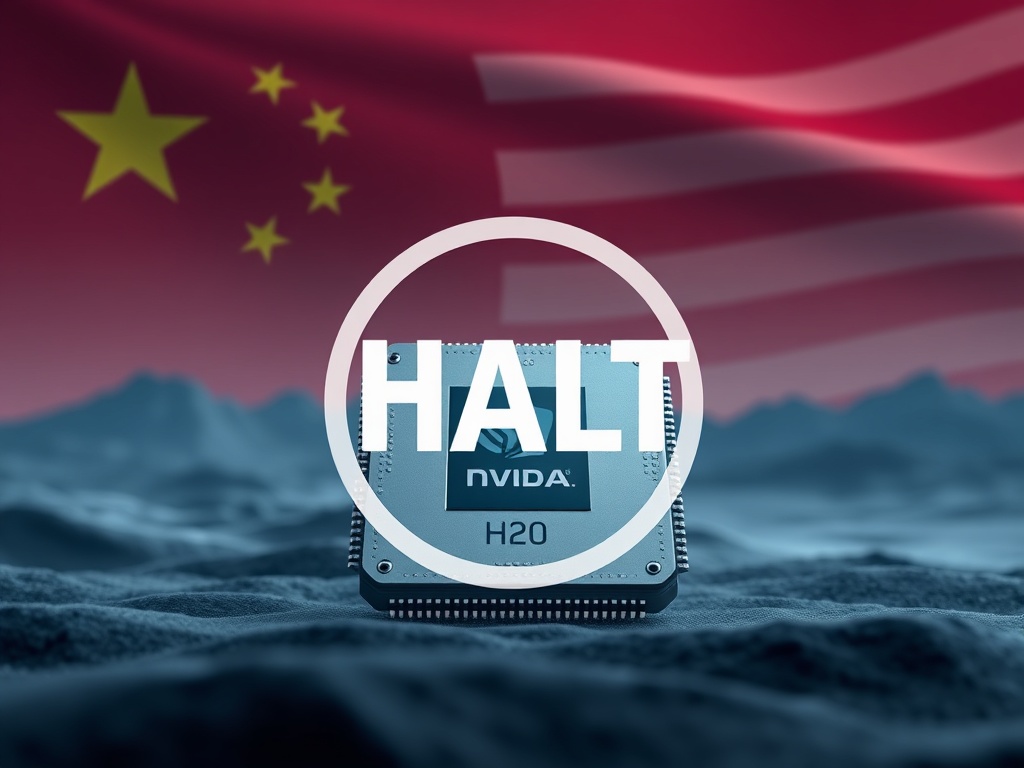
Nvidia AI Chips Face Critical Halt: Unpacking Beijing’s Shocking Security Concerns in the China Market

In the rapidly evolving landscape of artificial intelligence and digital assets, the ripple effects of geopolitical decisions can be profound. A recent development involving Nvidia AI chips has sent tremors through the tech world, particularly for those closely watching the intersection of advanced computing and global economics. This situation underscores the delicate balance between innovation, national security, and international trade, impacting everything from data centers to the underlying infrastructure supporting blockchain technologies.

What’s Behind the Sudden Halt of Nvidia AI Chips Production?

The tech community was recently abuzz with news that Nvidia, a titan in the semiconductor industry, has reportedly instructed its component suppliers to cease production of its H20 AI chip. This decision marks a significant turn, especially given that just a month prior, companies like Nvidia had received approval to sell their specialized AI chips in the Chinese market. The H20 chip was specifically designed to comply with U.S. export restrictions while still offering substantial AI processing capabilities for Chinese enterprises. The abrupt halt suggests a new and formidable challenge has emerged, complicating Nvidia’s strategic efforts to maintain its foothold in one of the world’s most critical AI battlegrounds.

Beijing’s stance appears to be the primary catalyst for this production halt. Reports indicate that the Chinese government has issued a stern warning to domestic companies, advising against the use of Nvidia’s H20 chips. The core concern revolves around potential security vulnerabilities and the fear of ‘backdoors’ that could grant the U.S. government access to sensitive data. This move is not merely about a single chip; it’s a clear signal of China’s accelerating push for technological self-reliance and its deep-seated distrust of foreign-made components in critical infrastructure. For companies operating within the China AI market, this presents a challenging dilemma: balancing access to cutting-edge foreign technology with increasing pressure to adopt domestic alternatives. The implications for market access and competitive strategy are immense, forcing a re-evaluation of long-term investment and supply chain decisions.

The Broader Implications for the Global Semiconductor Industry

The reported halt of Nvidia’s H20 production extends far beyond the immediate financial impact on the company. It highlights the growing geopolitical fragmentation within the global semiconductor industry. For years, the industry thrived on interconnected supply chains and international collaboration. However, the escalating tech rivalry between the U.S. and China is forcing a decoupling, leading to parallel ecosystems and increased nationalistic policies. This trend could result in:

  • Increased Costs: Developing redundant supply chains and domestic alternatives often comes at a higher price.
  • Slower Innovation: Restrictions on technology transfer and access to global talent pools could impede the pace of technological advancement.
  • Market Volatility: Sudden policy shifts and trade disputes create uncertainty, impacting investor confidence and long-term planning.
  • Strategic Realignments: Semiconductor companies may need to re-evaluate their global strategies, potentially leading to regionalized production and market focus.

This shift fundamentally alters the competitive landscape, pushing nations to prioritize security and self-sufficiency over pure economic efficiency.

Security Scrutiny: Why Beijing is Wary of the H20 AI Chip

Beijing’s specific concerns regarding the H20 AI chip stem from a broader narrative of data sovereignty and national security. In an era where AI systems process vast amounts of sensitive information, from government data to personal user details, the integrity and trustworthiness of the underlying hardware are paramount. The fear of ‘backdoors’—covert access points embedded in hardware or software—is a significant driver of this apprehension. While Nvidia explicitly denies such claims, stating, “NVIDIA does not have ‘backdoors’ in our chips that would give anyone a remote way to access or control them. The market can use the H20 with confidence,” the geopolitical climate fosters an environment of suspicion. China’s government is increasingly advocating for the use of indigenous chips, viewing them as inherently more secure and controllable. This preference for domestic solutions reflects a strategic imperative to protect national interests and reduce reliance on foreign technology that could potentially be weaponized or compromised.

Beyond the Headlines: The Future of Tech Geopolitics and AI

This incident serves as a stark reminder of how deeply intertwined technology and international relations have become. The future of tech geopolitics will likely be defined by continued competition over critical technologies like AI and semiconductors. Nations will increasingly prioritize domestic capabilities, invest heavily in R&D, and implement protective measures to safeguard their technological advantages. For businesses, navigating this complex environment requires:

  • Diversified Supply Chains: Reducing over-reliance on single regions or suppliers.
  • Localized Strategies: Adapting products and business models to comply with diverse national regulations and preferences.
  • Enhanced Cybersecurity: Proactively addressing security concerns and building trust with local stakeholders.
  • Policy Monitoring: Staying abreast of evolving trade policies, export controls, and national security directives.

The Nvidia H20 situation is not an isolated event but rather a symptom of a larger trend—a global technological race where economic advantage, national security, and ideological differences converge. Understanding these dynamics is crucial for anyone involved in the tech sector, from cryptocurrency innovators leveraging AI to global investors monitoring market shifts.

The reported halt in Nvidia’s H20 AI chip production, driven by Beijing’s security concerns and a push for domestic alternatives, marks a pivotal moment in the global tech landscape. This development underscores the intense geopolitical pressures shaping the semiconductor industry and the broader AI market. While Nvidia maintains the integrity of its chips, the incident highlights China’s unwavering commitment to technological sovereignty and its strategic pivot towards indigenous solutions. For businesses and investors, this era demands adaptability, strategic foresight, and a keen awareness of the evolving interplay between technology, trade, and national security. The path forward for AI innovation will undoubtedly be shaped by these complex and often conflicting forces.

To learn more about the latest AI market trends and how geopolitical shifts are impacting the semiconductor industry, explore our article on key developments shaping AI features and institutional adoption.

This post Nvidia AI Chips Face Critical Halt: Unpacking Beijing’s Shocking Security Concerns in the China Market first appeared on BitcoinWorld and is written by Editorial Team


Market Opportunity
DAR Open Network Logo
DAR Open Network Price(D)
$0.01343
$0.01343$0.01343
+1.66%
USD
DAR Open Network (D) Live Price Chart
Disclaimer: The articles reposted on this site are sourced from public platforms and are provided for informational purposes only. They do not necessarily reflect the views of MEXC. All rights remain with the original authors. If you believe any content infringes on third-party rights, please contact [email protected] for removal. MEXC makes no guarantees regarding the accuracy, completeness, or timeliness of the content and is not responsible for any actions taken based on the information provided. The content does not constitute financial, legal, or other professional advice, nor should it be considered a recommendation or endorsement by MEXC.

You May Also Like

Is Doge Losing Steam As Traders Choose Pepeto For The Best Crypto Investment?

Is Doge Losing Steam As Traders Choose Pepeto For The Best Crypto Investment?

The post Is Doge Losing Steam As Traders Choose Pepeto For The Best Crypto Investment? appeared on BitcoinEthereumNews.com. Crypto News 17 September 2025 | 17:39 Is dogecoin really fading? As traders hunt the best crypto to buy now and weigh 2025 picks, Dogecoin (DOGE) still owns the meme coin spotlight, yet upside looks capped, today’s Dogecoin price prediction says as much. Attention is shifting to projects that blend culture with real on-chain tools. Buyers searching “best crypto to buy now” want shipped products, audits, and transparent tokenomics. That frames the true matchup: dogecoin vs. Pepeto. Enter Pepeto (PEPETO), an Ethereum-based memecoin with working rails: PepetoSwap, a zero-fee DEX, plus Pepeto Bridge for smooth cross-chain moves. By fusing story with tools people can use now, and speaking directly to crypto presale 2025 demand, Pepeto puts utility, clarity, and distribution in front. In a market where legacy meme coin leaders risk drifting on sentiment, Pepeto’s execution gives it a real seat in the “best crypto to buy now” debate. First, a quick look at why dogecoin may be losing altitude. Dogecoin Price Prediction: Is Doge Really Fading? Remember when dogecoin made crypto feel simple? In 2013, DOGE turned a meme into money and a loose forum into a movement. A decade on, the nonstop momentum has cooled; the backdrop is different, and the market is far more selective. With DOGE circling ~$0.268, the tape reads bearish-to-neutral for the next few weeks: hold the $0.26 shelf on daily closes and expect choppy range-trading toward $0.29–$0.30 where rallies keep stalling; lose $0.26 decisively and momentum often bleeds into $0.245 with risk of a deeper probe toward $0.22–$0.21; reclaim $0.30 on a clean daily close and the downside bias is likely neutralized, opening room for a squeeze into the low-$0.30s. Source: CoinMarketcap / TradingView Beyond the dogecoin price prediction, DOGE still centers on payments and lacks native smart contracts; ZK-proof verification is proposed,…
Share
BitcoinEthereumNews2025/09/18 00:14
Fed Decides On Interest Rates Today—Here’s What To Watch For

Fed Decides On Interest Rates Today—Here’s What To Watch For

The post Fed Decides On Interest Rates Today—Here’s What To Watch For appeared on BitcoinEthereumNews.com. Topline The Federal Reserve on Wednesday will conclude a two-day policymaking meeting and release a decision on whether to lower interest rates—following months of pressure and criticism from President Donald Trump—and potentially signal whether additional cuts are on the way. President Donald Trump has urged the central bank to “CUT INTEREST RATES, NOW, AND BIGGER” than they might plan to. Getty Images Key Facts The central bank is poised to cut interest rates by at least a quarter-point, down from the 4.25% to 4.5% range where they have been held since December to between 4% and 4.25%, as Wall Street has placed 100% odds of a rate cut, according to CME’s FedWatch, with higher odds (94%) on a quarter-point cut than a half-point (6%) reduction. Fed governors Christopher Waller and Michelle Bowman, both Trump appointees, voted in July for a quarter-point reduction to rates, and they may dissent again in favor of a large cut alongside Stephen Miran, Trump’s Council of Economic Advisers’ chair, who was sworn in at the meeting’s start on Tuesday. It’s unclear whether other policymakers, including Kansas City Fed President Jeffrey Schmid and St. Louis Fed President Alberto Musalem, will favor larger cuts or opt for no reduction. Fed Chair Jerome Powell said in his Jackson Hole, Wyoming, address last month the central bank would likely consider a looser monetary policy, noting the “shifting balance of risks” on the U.S. economy “may warrant adjusting our policy stance.” David Mericle, an economist for Goldman Sachs, wrote in a note the “key question” for the Fed’s meeting is whether policymakers signal “this is likely the first in a series of consecutive cuts” as the central bank is anticipated to “acknowledge the softening in the labor market,” though they may not “nod to an October cut.” Mericle said he…
Share
BitcoinEthereumNews2025/09/18 00:23
Tesla to offer self-driving software only on monthly basis from February 14, Musk says

Tesla to offer self-driving software only on monthly basis from February 14, Musk says

Currently, Tesla allows its electric vehicle owners to purchase Full-Self-Driving (Supervised) for a one-time payment of $8,000 or a subscription of $99 per month
Share
Rappler2026/01/14 16:32



