Bitcoin Suffers 2.3 Billion in Realized Losses in Brutal Capitulation Event Rivaling 2021 Crash and FTX Collapse
Bitcoin Records $2.3 Billion in Realized Losses in Major Capitulation Event Rivaling 2021 and FTX Crash
Bitcoin has recorded approximately $2.3 billion in realized losses during one of the largest capitulation events in recent history, according to analysis from CryptoQuant contributor IT Tech. The data, first highlighted by the X account of CoinMarketCap and independently reviewed by the HOKANEWS editorial team through on chain metrics, suggests the current downturn rivals the scale of losses seen during the 2021 market crash and the 2022 collapse of FTX.
The sharp spike in realized losses reflects investors selling Bitcoin at prices below their acquisition cost, often a hallmark of market capitulation when fear and forced liquidations accelerate downside pressure.
 |
| Source: XPost |
Understanding Realized Losses
Realized losses occur when holders sell Bitcoin for less than the price at which they purchased it. Unlike unrealized losses, which fluctuate with market prices, realized losses are locked in at the moment of sale.
On chain analytics platforms such as CryptoQuant track these events by comparing transaction prices with historical acquisition data recorded on the blockchain.
A $2.3 billion realized loss figure signals substantial selling activity among holders who opted to exit positions despite unfavorable pricing.
Such spikes often coincide with heightened volatility, margin liquidations, and deteriorating market sentiment.
Comparing to Previous Capitulation Events
The magnitude of the current losses places the event alongside some of the most turbulent chapters in Bitcoin’s history.
In 2021, Bitcoin experienced a sharp correction after reaching record highs, erasing hundreds of billions of dollars in market capitalization.
The 2022 collapse of FTX triggered another wave of panic, leading to forced liquidations, exchange withdrawals, and widespread contagion across the crypto ecosystem.
The present $2.3 billion in realized losses, while smaller in absolute scale than some past peaks, stands out relative to recent trading volumes and liquidity conditions.
Analysts view such events as stress tests for market resilience.
What Capitulation Signals
Capitulation refers to a market phase in which investors abandon positions en masse, often driven by fear of further losses.
Historically, capitulation has marked transitional points in crypto cycles.
While painful for investors exiting positions, capitulation events can also clear excessive leverage from the system, resetting market structure.
After prior capitulation phases, Bitcoin has sometimes stabilized and eventually recovered as selling pressure subsides.
However, no pattern guarantees future performance, and market outcomes remain influenced by broader economic conditions.
Drivers Behind the Recent Decline
Several factors may have contributed to the recent spike in realized losses:
Macroeconomic uncertainty
Rising interest rate expectations
Risk off sentiment in equity markets
Derivative market liquidations
Large holder redistribution
Bitcoin’s increasing correlation with broader financial markets means that global economic indicators often influence price movements.
Liquidity tightening, in particular, can reduce speculative appetite and amplify downside moves.
Market Structure and Liquidity
Bitcoin’s market depth plays a critical role in absorbing large scale selling.
Although daily trading volumes frequently reach billions of dollars, concentrated selling over short periods can strain order books.
Derivative markets add another layer of complexity, as leveraged positions may be automatically liquidated during sharp price declines.
These liquidations can create cascading effects, accelerating realized losses.
CryptoQuant’s data suggests that the recent event included a combination of spot selling and derivative driven activity.
Long Term Holders Versus Short Term Traders
On chain metrics often distinguish between long term holders and short term traders.
Historically, short term holders tend to realize losses during downturns, while long term holders demonstrate greater resilience.
The current capitulation appears concentrated among newer entrants who purchased Bitcoin at higher price levels.
Long term holders, according to historical patterns, may be less likely to sell during volatility, though behavior can vary depending on macroeconomic stress.
The balance between these groups influences overall market stability.
Investor Sentiment and Psychological Impact
Large realized losses can shape market psychology.
Retail investors may interpret capitulation as a signal of further downside risk, while contrarian traders may view it as a potential bottom formation.
Institutional participants often assess realized loss metrics alongside funding rates, open interest levels, and exchange inflows.
Sentiment indicators frequently show extreme fear during capitulation events.
Historically, extreme fear has sometimes preceded market stabilization, though timing remains unpredictable.
Broader Crypto Ecosystem Implications
Bitcoin’s performance often sets the tone for the broader cryptocurrency market.
Sharp declines can impact altcoins, decentralized finance protocols, and related equities.
Stablecoin flows, exchange reserves, and mining profitability metrics may also shift in response to volatility.
Mining operations, in particular, face pressure when price declines reduce revenue margins.
The current event underscores the interconnected nature of digital asset markets.
Regulatory and Institutional Backdrop
The crypto market’s maturity has increased since earlier crashes, with greater institutional participation and regulatory oversight.
Spot Bitcoin exchange traded funds, custody solutions, and clearer accounting standards have introduced new investor segments.
However, institutional participation does not eliminate volatility.
Macroeconomic conditions and liquidity cycles continue to shape digital asset trajectories.
Regulatory developments may also influence investor confidence during turbulent periods.
Looking Ahead
Analysts will monitor several key indicators in the aftermath of the $2.3 billion realized loss event:
Exchange inflow trends
Derivative funding rates
Long term holder supply metrics
Macroeconomic data releases
Federal Reserve policy signals
Whether the capitulation marks a local bottom or precedes further downside remains uncertain.
Historically, significant realized loss spikes have coincided with cyclical turning points, but each cycle unfolds under unique circumstances.
Conclusion
Bitcoin’s $2.3 billion in realized losses represents one of the most substantial capitulation events in recent years, rivaling turbulence seen during the 2021 crash and the 2022 FTX collapse.
Highlighted by CoinMarketCap and independently reviewed by HOKANEWS, the data illustrates the scale of recent selling pressure within the digital asset market.
As investors assess the implications, the event serves as a reminder of Bitcoin’s inherent volatility and the importance of risk management in navigating crypto markets.
HOKANEWS will continue monitoring on chain data and macroeconomic developments shaping the digital asset landscape.
hokanews.com – Not Just Crypto News. It’s Crypto Culture.
Writer @Ethan
Ethan Collins is a passionate crypto journalist and blockchain enthusiast, always on the hunt for the latest trends shaking up the digital finance world. With a knack for turning complex blockchain developments into engaging, easy-to-understand stories, he keeps readers ahead of the curve in the fast-paced crypto universe. Whether it’s Bitcoin, Ethereum, or emerging altcoins, Ethan dives deep into the markets to uncover insights, rumors, and opportunities that matter to crypto fans everywhere.
Disclaimer:
The articles on HOKANEWS are here to keep you updated on the latest buzz in crypto, tech, and beyond—but they’re not financial advice. We’re sharing info, trends, and insights, not telling you to buy, sell, or invest. Always do your own homework before making any money moves.
HOKANEWS isn’t responsible for any losses, gains, or chaos that might happen if you act on what you read here. Investment decisions should come from your own research—and, ideally, guidance from a qualified financial advisor. Remember: crypto and tech move fast, info changes in a blink, and while we aim for accuracy, we can’t promise it’s 100% complete or up-to-date.
You May Also Like

Pi Network Sets Feb 15 Deadline for Mainnet Node Upgrade
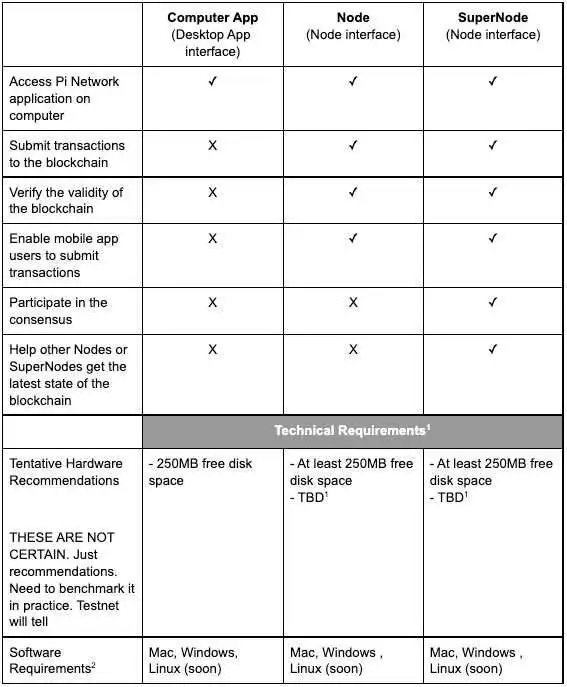
Pi Network Sets February 15 Deadline for Mandatory Mainnet Node Upgrade