

Computer Science Enrollment Plummets: The Alarming Shift to AI Degrees in Higher Education
BitcoinWorld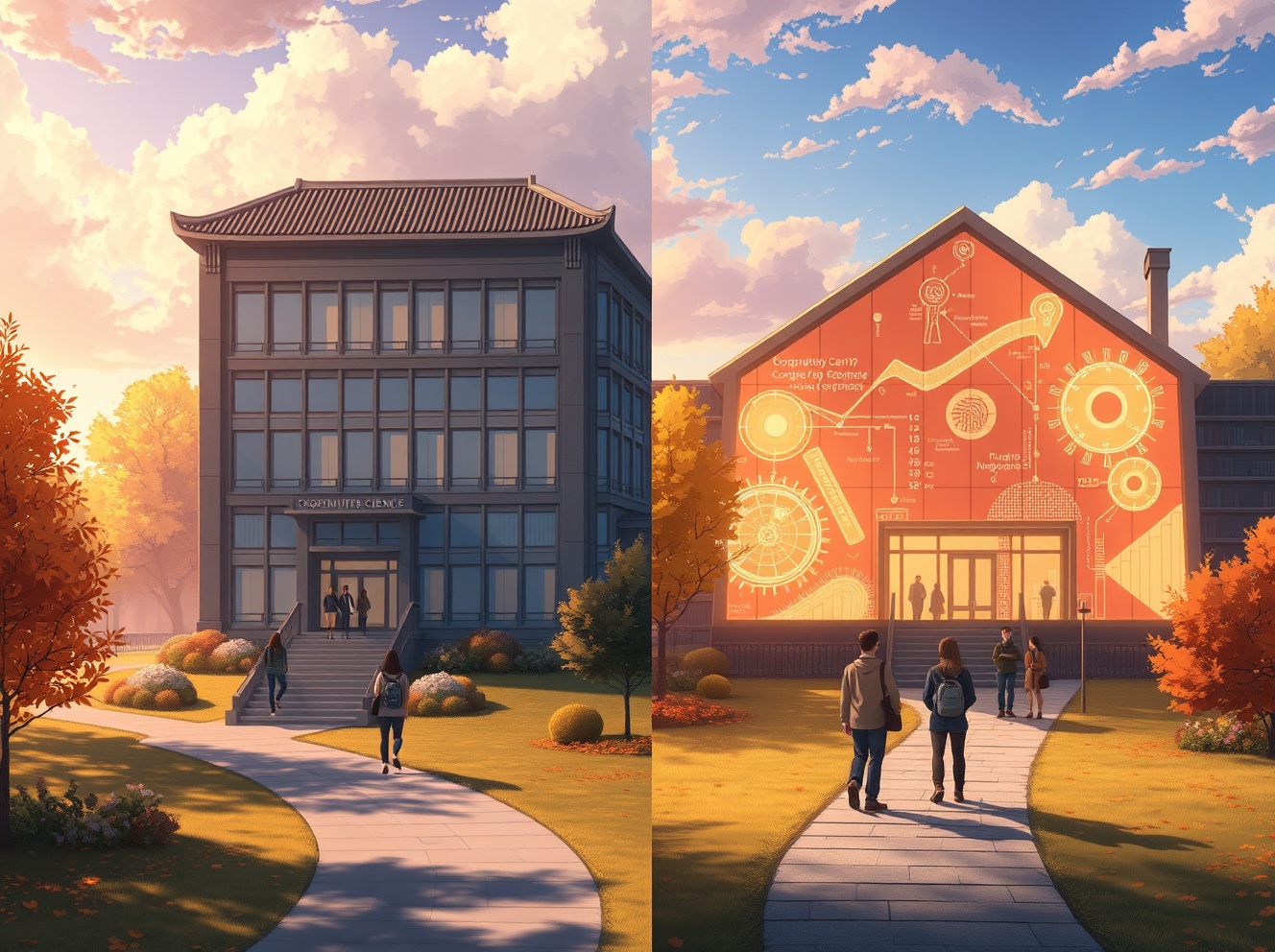
Computer Science Enrollment Plummets: The Alarming Shift to AI Degrees in Higher Education
BERKELEY, California — October 2025: For the first time since the dot-com crash, computer science enrollment at University of California campuses has experienced a significant decline, dropping 6% system-wide this year after a 3% decrease in 2024. This surprising trend emerges despite a 2% increase in overall national college enrollment, according to January data from the National Student Clearinghouse Research Center. Students appear to be abandoning traditional computer science degrees in favor of more specialized artificial intelligence programs, creating what educators describe as a fundamental transformation in higher education priorities.
Computer Science Enrollment Decline Signals Major Shift
The San Francisco Chronicle recently reported these enrollment figures, revealing a pattern that extends beyond California. According to a survey by the Computing Research Association in October, 62% of computing programs nationwide experienced undergraduate enrollment declines this fall. This represents a dramatic reversal from the previous decade’s explosive growth in computer science programs. Meanwhile, AI-focused programs are experiencing unprecedented demand, with institutions across the country scrambling to meet student interest.
Several factors contribute to this enrollment shift. First, employment concerns play a significant role. Recent graduates face a challenging job market, with fewer computer science graduates securing immediate employment. Second, technological evolution has accelerated, making specialized AI knowledge increasingly valuable. Third, international competition, particularly from China, has highlighted the strategic importance of AI education. Finally, student perceptions about future-proof careers have shifted dramatically toward AI specialization.
AI Degree Programs Experience Explosive Growth
While traditional computer science programs decline, AI-specific programs are expanding rapidly. The University of California system provides a telling example. UC San Diego, which introduced a dedicated AI major this fall, represents the only UC campus where computer science enrollment increased. This exception proves the rule: students want AI-focused education. Nationally, dozens of universities have launched AI-specific programs in the last two years, with enrollment numbers exceeding all expectations.
Institutional Responses to Changing Demand
Major universities are implementing comprehensive strategies to address this shift. MIT reports that its “AI and decision-making” major has become the second-largest on campus. The University of South Florida enrolled more than 3,000 students in its new AI and cybersecurity college during the fall semester. Similarly, the University at Buffalo launched an “AI and Society” department offering seven specialized undergraduate programs, receiving over 200 applicants before officially opening. These institutions recognize that AI education represents more than just another major—it’s becoming essential infrastructure for modern education.
The transition hasn’t been universally smooth. Faculty resistance presents a significant challenge at some institutions. UNC Chapel Hill Chancellor Lee Roberts described a spectrum of faculty attitudes in October, with some “leaning forward” with AI integration while others have “their heads in the sand.” Roberts, who arrived from outside academia, has pushed aggressively for AI integration despite faculty resistance. UNC recently announced plans to merge two schools to create an AI-focused entity, a decision that generated substantial faculty pushback. Roberts also appointed a vice provost specifically for AI initiatives.
International Comparison: China’s Aggressive AI Education Strategy
China’s approach to AI education provides a stark contrast to the United States. According to MIT Technology Review’s July report, Chinese universities treat AI not as a threat but as essential infrastructure. Nearly 60% of Chinese students and faculty use AI tools multiple times daily. Leading institutions like Zhejiang University have made AI coursework mandatory, while top universities like Tsinghua have created entirely new interdisciplinary AI colleges. In China, AI fluency has become table stakes rather than optional knowledge.
This international comparison highlights the strategic importance of AI education. Chinese universities have embraced AI literacy as a national priority, integrating it across disciplines rather than treating it as a specialized field. This comprehensive approach contrasts with the more fragmented adoption in many American institutions. The difference in educational philosophy may have significant implications for global technological leadership in coming decades.
Parental Influence and Career Concerns
Parents play a crucial role in this educational transition. David Reynaldo, who runs the admissions consultancy College Zoom, told the Chronicle that parents who once pushed children toward computer science now steer them toward majors perceived as more resistant to AI automation. Mechanical and electrical engineering have gained popularity among these concerned parents. This parental guidance reflects broader societal anxieties about AI’s impact on traditional technology careers.
However, enrollment numbers suggest students are making independent decisions based on career prospects and educational relevance. The rapid growth of AI programs indicates that students recognize the shifting technological landscape. They understand that AI knowledge provides competitive advantages in multiple industries, from healthcare to finance to manufacturing. This student-led movement toward AI education represents a pragmatic response to evolving job market demands.
Faculty Resistance and Institutional Challenges
Faculty attitudes present significant barriers to AI integration at many institutions. Chancellor Roberts of UNC Chapel Hill highlighted this challenge, noting that some faculty members effectively tell students not to use AI, despite its inevitable role in professional environments. “No one’s going to say to students after they graduate, ‘Do the best job you can, but if you use AI, you’ll be in trouble,'” Roberts explained. “Yet we have faculty members effectively saying that right now.”
This resistance stems from multiple sources. Some faculty members worry about academic integrity, while others question AI’s educational value. Additionally, many professors lack training in AI technologies, creating knowledge gaps that hinder effective integration. Institutions must address these challenges through faculty development programs, curriculum redesign, and strategic hiring to build AI expertise within their academic communities.
The Future of Technology Education
It remains unclear whether this enrollment shift represents a permanent transformation or temporary adjustment. However, several indicators suggest lasting change. First, technological advancement continues to accelerate, making AI increasingly central to multiple industries. Second, employer demand for AI skills grows steadily across sectors. Third, international competition ensures that AI education will remain strategically important. Finally, student preferences have shifted decisively toward practical, career-relevant education.
American universities face a critical challenge: adapting quickly enough to meet changing student demands and employer needs. The debate over whether to ban ChatGPT in classrooms has become largely irrelevant. The pressing question now involves how effectively institutions can integrate AI across their curricula and create specialized programs that prepare students for an AI-driven world.
Conclusion
The computer science enrollment decline represents more than a statistical anomaly—it signals a fundamental shift in higher education priorities. Students are voting with their feet, choosing AI-focused programs over traditional computer science degrees. This transition reflects broader technological, economic, and educational trends that will shape the future workforce. Universities must respond strategically, balancing faculty concerns with student demands and employer needs. The institutions that adapt most effectively will likely emerge as leaders in the next phase of technological education, preparing students for careers in an increasingly AI-integrated world. The computer science enrollment decline thus serves as both warning and opportunity for higher education institutions nationwide.
FAQs
Q1: How significant is the computer science enrollment decline?
The decline represents a 6% drop across University of California campuses this year, following a 3% decrease in 2024. Nationally, 62% of computing programs reported undergraduate enrollment declines this fall, according to the Computing Research Association.
Q2: Why are students shifting from computer science to AI programs?
Students perceive AI degrees as more relevant to current job market demands, offering specialized knowledge that employers increasingly value. Employment concerns, technological evolution, and career prospects all contribute to this shift.
Q3: How are universities responding to this enrollment shift?
Universities are launching new AI-specific programs, creating interdisciplinary AI departments, and integrating AI across existing curricula. Some institutions face faculty resistance, while others are moving aggressively to meet student demand.
Q4: How does China’s approach to AI education differ from the United States?
Chinese universities treat AI as essential infrastructure rather than a specialized field, with nearly 60% of students and faculty using AI tools daily. Leading institutions have made AI coursework mandatory and created dedicated AI colleges.
Q5: Will traditional computer science degrees become obsolete?
Computer science fundamentals remain valuable, but programs must evolve to include substantial AI components. The most successful programs will likely integrate AI knowledge with traditional computer science foundations, creating hybrid approaches that meet both educational and employer needs.
This post Computer Science Enrollment Plummets: The Alarming Shift to AI Degrees in Higher Education first appeared on BitcoinWorld.


You May Also Like

Chainlink Whale Activity Rises While Price Bleeds for 7 Straight Months

Revolutionary: CME SOL XRP Futures Options Set to Transform Crypto Trading

Franklin Templeton CEO Dismisses 50bps Rate Cut Ahead FOMC



