

Bitcoin Tests 100 SMA After Compression as Market Enters Decision Zone
Bitcoin has moved through the 100-day simple moving average (SMA), a level widely viewed as a structural regime marker rather than a routine trend indicator.
The shift follows a prolonged period of compression, placing price at a technical inflection point where acceptance or rejection will define the next phase.
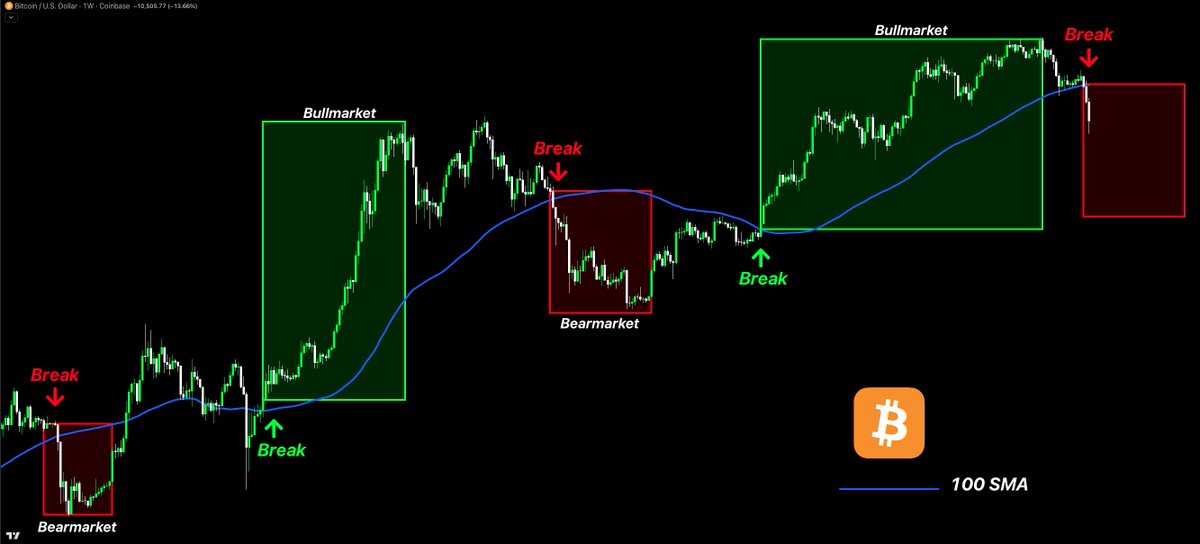
The 100 SMA has historically acted as a dividing line between expansion and deterioration phases, making the current interaction structurally significant.
Why the 100 SMA Matters
According to analysis shared by Crypto Tice, the 100 SMA has functioned as Bitcoin’s regime line across prior cycles.
 Source: https://x.com/CryptoTice_/status/2023019467983175872
When price trades above the 100 SMA:
- Bull market structure tends to persist
- Pullbacks are typically bought
- Momentum compounds
When price trades below it:
- Rallies often fail
- Structure weakens
- Bearish pressure dominates
Every major cycle transition has interacted meaningfully with this moving average, not as a short-term signal, but as a broader structural boundary.
Current Setup: Compression Before Expansion
The recent break above the 100 SMA occurred after an extended period of tightening range behavior. Such compression phases often precede volatility expansion, though direction depends on confirmation.
Bitcoin is now in what can be defined as a decision zone:
- Reclaim and sustained acceptance above the 100 SMA would strengthen upside structure
- Failure to hold above the level would suggest structural damage and potential for failed breakout dynamics
Transitions at long-term moving averages rarely resolve quietly. They tend to evolve into broader trend continuation or renewed downside pressure.
Structural Takeaway
The 100 SMA does not react to sentiment or headlines; it reflects underlying trend structure. Bitcoin’s interaction with this level marks a regime test rather than a minor technical event.
If price establishes sustained acceptance above the 100 SMA, expansion could follow. If rejection develops and the level is lost, the structure would shift toward defensive positioning.
The market is now at a structural pivot where confirmation, not speculation, determines the next phase.
The post Bitcoin Tests 100 SMA After Compression as Market Enters Decision Zone appeared first on ETHNews.


You May Also Like

Will XRP price break from its descending wedge at $1.31 as bearish momentum approaches exhaustion?

Bitcoin Exchange Binance Sees an Increase in Stablecoin Reserves! What Does It Mean? Here Are the Details




