

AI-Enhanced OTP Verification: Building Smarter and More Secure Web Authentication
One-time passwords remain a foundational layer in modern web security, supporting account verification, login challenges, and password resets. However, effective protection now requires more than simply generating and validating codes. AI-driven security systems strengthen OTP flows by detecting bots, preventing credential stuffing, and analyzing behavioral anomalies in real time. Through intelligent risk assessment and adaptive authentication, modern web applications can reduce fraud while maintaining a seamless user experience. By combining machine learning, secure UX design, and real-time monitoring, AI-powered OTP verification transforms basic code validation into a resilient and scalable security framework.
1) Start with a threat model (or you will optimize the wrong thing)
Before you choose “SMS vs email vs authenticator,” define your threat model. For most web apps, OTP is used for one of three scenarios: (1) account creation and phone verification, (2) account recovery, and (3) step-up verification for sensitive actions. Each scenario has different risks and tolerance for friction.
- Bot abuse: automated signups, SMS flooding, brute-forcing OTP inputs, and “OTP pumping” to drain credits.
- Credential attacks: credential stuffing triggers OTP challenges at scale (causing user friction and SMS costs).
- SIM swap / number takeover: attackers hijack a phone number to intercept SMS OTP.
- Social engineering: attackers trick users into revealing OTP codes.
- Deliverability issues: carrier filtering, regional latency, and inconsistent sender routes.
A strong OTP flow is not only about code generation; it must reduce the blast radius of each threat with layered controls.
2) Design the OTP lifecycle: generate, deliver, verify, and expire
A clean OTP lifecycle is the foundation. A common approach is a 6-digit numeric code with a short validity window (for example, 2–5 minutes). The flow should support: code issuance, resend rules, verification attempts, and hard lockouts for abuse.
Recommended OTP rules
- Validity window: 2–5 minutes (short enough to limit theft, long enough for delivery delays).
- Attempt limit: 5–10 attempts per code (lower for high-risk actions like password reset).
- Resend limit: 2–3 resends per session, with increasing cooldown (e.g., 30s → 60s → 120s).
- Session binding: bind the OTP to a verification session ID, not just the phone number.
- One-time use: invalidate on success; never accept the same OTP twice.
On the server side, store OTPs as hashed values (similar to password hashing, but you can use a fast hash since OTPs are short-lived), and keep state in a datastore suitable for high write throughput (Redis is common). Make OTP verification idempotent so that retries don’t create inconsistent state when clients repeat requests.
3) Build an anti-abuse layer: rate limits, reputation, and device signals
Most OTP systems fail because the “send OTP” endpoint is abused. Treat OTP issuance like a sensitive resource. Your anti-abuse layer should operate on multiple dimensions:
- IP-based limits: cap sends per IP per hour, with separate thresholds for IPv4/IPv6 subnets.
- Account-based limits: cap sends per account identifier (email/username) to stop targeted harassment.
- Phone-number limits: cap sends per phone number to reduce brute-force and repeated retries.
- Device/browser signals: use device fingerprinting or lightweight signals (UA, timezone, platform, cookies) to detect automation.
- Velocity rules: alert or block sudden spikes, “spray” patterns, or sequential number attempts.
A practical pattern is to assign a risk score per verification attempt. For low risk, send the OTP immediately. For medium risk, require additional friction (CAPTCHA, email confirmation, or slower cooldown). For high risk, temporarily block or require an alternative verification method.
Don’t forget: verification attempts need rate limits too
Attackers can brute-force OTP codes if you only rate limit the send endpoint. Apply throttles to the verify endpoint as well: limit attempts per session, per IP, and per phone number. Use exponential backoff and short lockouts to slow automation.
4) Use secure UX patterns to reduce user mistakes and phishing success
Security isn’t only server-side. Many compromises happen because users are tricked into sharing OTPs. Your UI and messaging should help users understand what the code is for and when it is suspicious.
- Contextual message: include app name and purpose (“Your code to verify your login”).
- No sensitive details: don’t include full account identifiers or private data in SMS content.
- Short, clear language: avoid long templates that look like spam.
- Anti-phishing copy: “Never share this code with anyone, including support.”
On the web side, use auto-focus, numeric keypad hints, and clear resend timers. Keep the flow fast for legitimate users, but enforce cool-downs behind the scenes for suspicious traffic.
5) Deliverability engineering: routes, retries, and regional performance
Even a perfect verification backend fails if SMS delivery is inconsistent. Delivery can vary by country, carrier, route quality, and message patterns. Design for real-world conditions:
- Provider redundancy: consider fallback routes or multiple providers for key geographies.
- Delivery-time monitoring: track P50/P90 delivery latency by country and carrier.
- Smart retries: avoid retry storms; retry once with a backoff when you have strong reason.
- Template hygiene: keep message content stable to avoid carrier filtering and spam flags.
If you serve a global audience, test your OTP flow with realistic traffic patterns and international numbers. Some regions experience higher filtering or delayed delivery, which may require longer validity windows or alternative methods (email code, TOTP, passkeys) for specific use cases.
6) Observability: logs, metrics, and alerts that catch abuse early
OTP systems are high-signal systems. You should be able to answer, within minutes: “Are codes being delivered?” and “Are we under attack?” Instrument these metrics:
- Send success rate: accepted by provider vs failed, grouped by country/carrier.
- Verification success rate: verified / attempted, grouped by source (IP, ASN, device).
- Cost and volume: sends per minute/hour, spikes, and abnormal resend patterns.
- Abuse blocks: counts by rule (IP throttles, phone throttles, CAPTCHA triggers).
- Latency: API latency and delivery-time estimates (where available).
Pair dashboards with alerting. For example: if verification success rate drops while send volume rises, you may be facing automated abuse or delivery degradation. If one ASN suddenly generates most sends, consider temporary blocking or stricter thresholds.
7) Secure storage and privacy: minimize data, protect what you keep
Phone numbers are personal data in many jurisdictions. Keep only what you need for the purpose of verification and abuse prevention. Recommended practices include:
- Minimize retention: store verification logs for the shortest practical time.
- Encrypt at rest: protect phone numbers and verification state in your databases.
- Access controls: restrict who can view verification logs; audit access.
- Hash or tokenize: where feasible, store normalized numbers in a tokenized form for analytics.
When you design your verification system, treat it as a security subsystem with compliance implications, not just a “signup feature.”
8) Reference implementation approach (high level)
A production-ready OTP verification service often contains these components:
- Verification API: endpoints for create-session, send-code, verify-code, resend, and cancel.
- State store: Redis (session state, rate limits), plus a database for long-term audit logs.
- Risk engine: scoring + rules (velocity checks, IP/ASN reputation, device signals).
- Provider layer: abstraction around SMS providers, routing logic, and error handling.
- Observability: structured logs, metrics, and alert pipelines.
If you’re evaluating platforms that provide global phone verification capabilities, you can review services such as SMS-Act as part of your research, and compare reliability, geographic coverage, and integration patterns to your application’s needs.
9) Final checklist: a secure OTP verification flow
- OTP codes are short-lived, one-time use, and stored securely (hashed).
- Send and verify endpoints are both rate-limited across IP/account/phone/session.
- Risk scoring increases friction for suspicious requests and blocks repeated abuse.
- Delivery is monitored by region with clear alert thresholds and fallback plans.
- User messaging includes anti-phishing warnings and clear verification context.
- Logs and metrics allow rapid detection of attacks, deliverability drops, and cost anomalies.
- Data retention is minimized and protected with encryption and access controls.
OTP verification is not a one-time implementation task—it’s an evolving system. As attackers adapt and carriers change filtering behaviors, you’ll want a feedback loop: monitor, tune thresholds, and iterate on UX. With a well-designed flow, OTP can remain a practical and effective layer in a modern account protection strategy.


You May Also Like
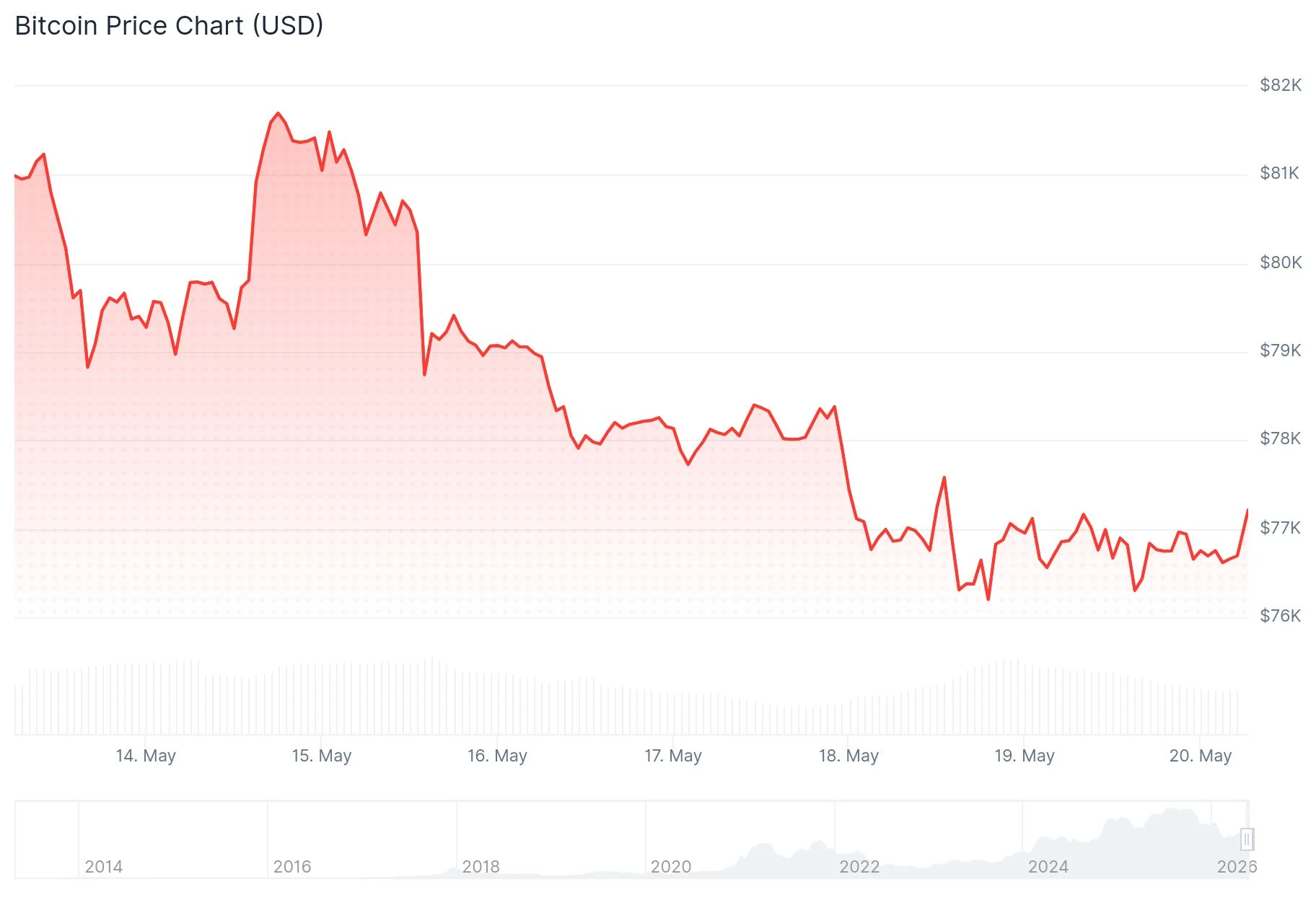
Bitcoin (BTC) Hovers Above $77K Amid Iran Diplomacy and Rising Treasury Yields

Beyond Cleaning: What Else You Must Check Before Moving Out




