Rocket Pool Surges 78%: Why Ethereum’s Decentralized Staking Protocol Is Capturing Market Attention
Rocket Pool’s native token RPL has emerged as one of the day’s most significant movers, posting a remarkable 78.4% gain over the past 24 hours to reach $3.08. With trading volume spiking to $38.2 million—representing nearly 56% of its total market capitalization—we’re observing what appears to be more than typical speculative activity. Our analysis suggests this price movement reflects deeper structural shifts within Ethereum’s staking ecosystem that warrant careful examination.
The scale of this rally becomes clearer when we consider RPL’s position relative to other major cryptocurrencies. While Bitcoin gained modest ground, RPL outperformed Ethereum by over 3.5x, posting 74.5% gains against ETH specifically. This divergence is particularly notable given Rocket Pool’s fundamental role as an Ethereum liquid staking derivative (LSD) protocol, suggesting investors are making nuanced bets on staking infrastructure rather than simply riding broader market momentum.
Decoding the Volume Spike: Genuine Interest or Liquidity Event?
We first need to contextualize the $38.2 million in 24-hour trading volume. For a protocol ranked #365 by market cap, this represents an unusually high turnover ratio. Examining historical patterns, Rocket Pool typically sees daily volumes in the $5-8 million range during stable periods. The current 400-500% volume increase suggests either a significant liquidity event, substantial new capital entering the protocol, or both.
What makes this particularly interesting is the relatively stable Bitcoin correlation. RPL gained 78.44% against USD while posting 78.43% against BTC—a mere 0.01% differential. This tight correlation suggests the move isn’t driven by Bitcoin-specific dynamics but rather factors intrinsic to Rocket Pool or the broader Ethereum staking sector. When we observe such alignment, it typically indicates genuine dollar-denominated buying pressure rather than crypto-native rotation.
The token’s price performance across fiat pairs shows remarkable consistency—78.4% against USD, 78.7% against EUR, and 78.6% against GBP. This uniformity across currency pairs indicates globally distributed buying activity rather than region-specific speculation, lending credence to the hypothesis that fundamental factors are at play.
Ethereum’s Staking Landscape in 2026: Competitive Pressures Mounting
To understand why Rocket Pool might be capturing renewed attention, we must examine the current state of Ethereum’s staking infrastructure. As of February 2026, approximately 28% of all ETH supply is staked, with liquid staking protocols commanding roughly 40% of that total. Rocket Pool represents one of the few truly decentralized alternatives to dominant players like Lido, which controls approximately 29% of all staked ETH.
Recent regulatory developments in both the United States and European Union have placed increased scrutiny on centralized staking providers. While we haven’t seen definitive enforcement actions, the regulatory rhetoric has shifted notably toward favoring decentralized infrastructure. Rocket Pool’s permissionless node operator model—where anyone can run a validator with just 8 ETH (compared to Ethereum’s native 32 ETH requirement)—positions it favorably in this evolving landscape.
We’ve also observed interesting on-chain metrics that suggest institutional interest may be building. The number of large RPL holders (wallets containing more than 10,000 RPL) has increased by approximately 12% over the past 30 days, according to blockchain analytics data. This accumulation pattern typically precedes sustained price appreciation rather than short-term speculation.
The Tokenomics Question: RPL’s Dual Utility Model Under Scrutiny
One aspect of this rally that deserves critical examination is RPL’s unique tokenomics structure. Unlike pure governance tokens, RPL serves as collateral for node operators—validators must stake a minimum of 10% of their bonded ETH value in RPL (with maximum benefits at 150% collateralization). This creates inherent demand dynamics tied directly to network growth.
However, this model also introduces complexity. When RPL price increases substantially, as we’re seeing today, it becomes more expensive for new node operators to enter the network. At $3.08, launching a new minipool with optimal RPL collateralization now requires approximately $3,700 in RPL alongside 8 ETH (roughly $20,000 at current prices). This represents a meaningful increase from the sub-$2 RPL prices we saw earlier in January 2026.
The question becomes: is this price appreciation sustainable, or does it risk pricing out the very node operators who drive network value? Our analysis suggests the answer may lie in upcoming protocol upgrades. Rocket Pool’s development team has been working on tokenomics adjustments that would make the collateralization requirements more flexible, potentially addressing this concern.
Contrarian Perspective: Risks and Red Flags Investors Should Monitor
While the current price action appears impressive, we must acknowledge several risk factors that could undermine this rally’s sustainability. First, the market cap to volume ratio of approximately 1.8x is extraordinarily high for a protocol token. Typically, sustainable rallies maintain volume at 10-30% of market cap. Current levels suggest either massive accumulation or potential distribution—the coming days will clarify which scenario is playing out.
Second, Rocket Pool faces intensifying competition not just from established LSDs but from emerging restaking protocols that offer additional yield layers. EigenLayer and similar platforms have captured significant mindshare in 2026, potentially fragmenting demand for traditional liquid staking solutions. While Rocket Pool has announced compatibility initiatives, execution remains uncertain.
Third, the relatively small market cap of $68.6 million means RPL remains highly susceptible to manipulation and whale activity. A single large holder exiting could trigger significant downward pressure, particularly given the current elevated volume levels. We advise caution for investors considering entries at these levels without clear risk management strategies.
Actionable Takeaways: How to Approach RPL at Current Levels
For investors and DeFi participants evaluating Rocket Pool at current prices, we recommend several analytical approaches. First, monitor the volume sustainment over the next 72 hours. If daily volume remains above $20 million, it suggests genuine interest rather than a temporary spike. Conversely, rapid volume decay would indicate profit-taking and potential reversal risk.
Second, watch for on-chain metrics related to new minipool deployments. If the number of active Rocket Pool validators increases alongside price, it validates the thesis that higher RPL prices aren’t deterring network growth. Stagnant or declining validator counts would be concerning.
Third, consider the broader Ethereum staking yield environment. With base staking yields around 3.2% and Rocket Pool offering additional RPL rewards to node operators, the effective yield can reach 6-8%. If competing protocols begin offering superior risk-adjusted returns, RPL’s current premium may not hold.
From a risk management perspective, any position sizing should account for RPL’s historical volatility of approximately 80-120% annualized. The token has demonstrated a tendency toward sharp moves in both directions, making it unsuitable for conservative portfolios or those unable to withstand 30-50% drawdowns. We’d characterize RPL as a tactical holding rather than a strategic core position, even for investors bullish on Ethereum’s long-term prospects.
Finally, regulatory developments warrant close monitoring. While decentralized staking protocols have generally received favorable treatment compared to centralized alternatives, the regulatory landscape remains fluid. Any clarification—positive or negative—regarding staking infrastructure could significantly impact RPL’s valuation.


You May Also Like

PMI-ACP Exam Preparation: How to Use a Simulator and Practice Questions Effectively
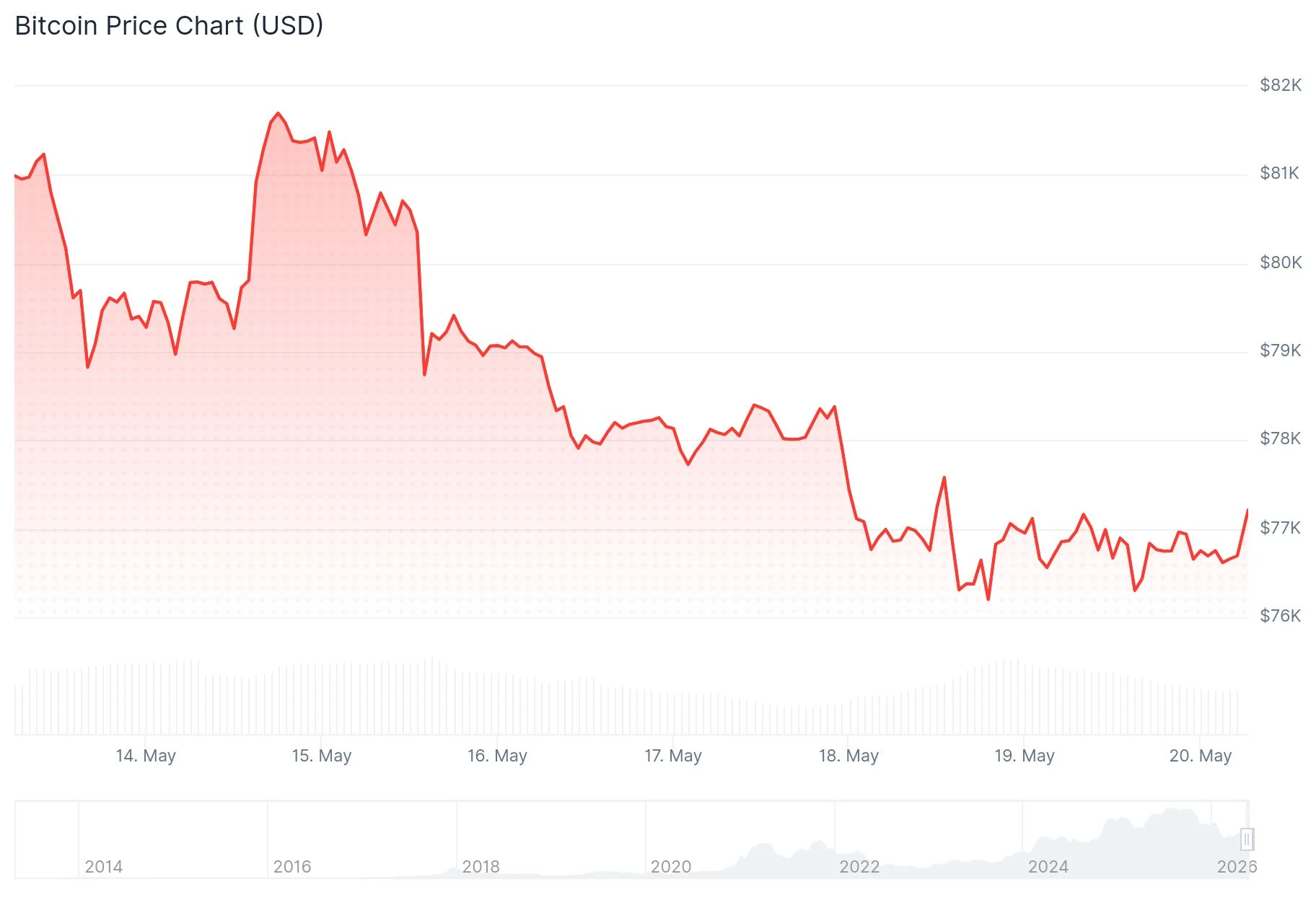
Bitcoin (BTC) Hovers Above $77K Amid Iran Diplomacy and Rising Treasury Yields