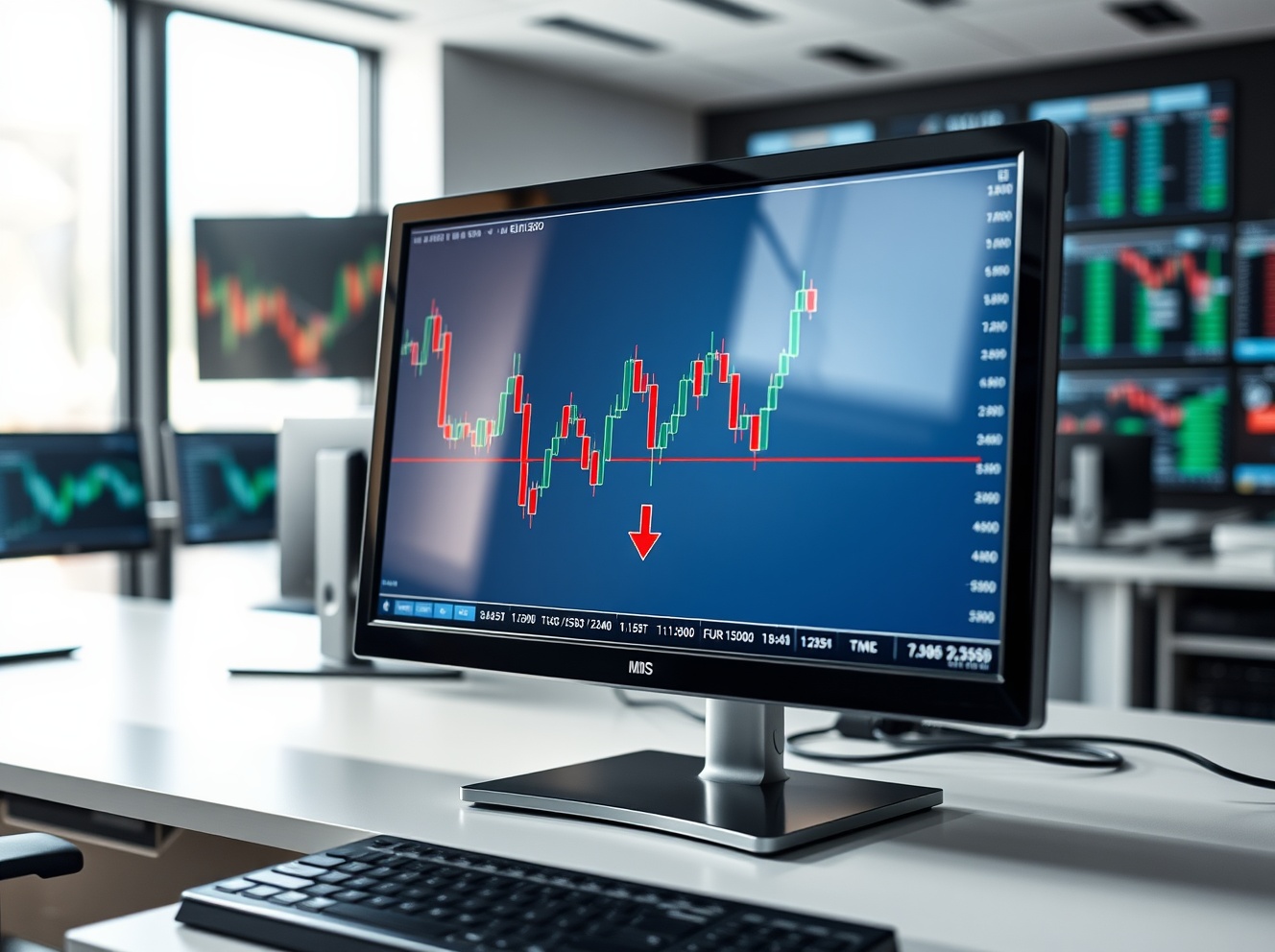
The Latency Lie: Why Your Trades Feel Slow (and the Infrastructure Fixes That Actually Help)
You tap “Buy,” watch the spinner, and feel your stomach drop as the price ticks away. It’s easy to assume the market beat you by a split second—and that your platform is the problem.
Sometimes it is. More often, what feels like “latency” is a mix of delayed quotes, network jitter, risk checks, routing decisions, widening spreads, and the simple fact that liquidity isn’t guaranteed at the exact price you want. If you can separate those pieces, you stop treating every bad fill like a mystery and start fixing the parts you can actually influence.
The three kinds of “slow” traders lump together
Not all lag is created equal. Most complaints fall into one of these buckets:
Display lag: your chart is behind reality. Many apps have smooth updates, batch refreshes, or rely on feeds that aren’t truly real-time. In calm markets, the delay is invisible. In fast tape, it becomes obvious.
Decision lag: You’re reacting to a signal that looks clean on a chart but is already messy underneath. When spreads widen and liquidity thins, the “same setup” behaves very differently. That’s not your phone being slow—it’s the market repricing risk.
Execution lag: the order takes time to reach a venue, get validated, routed, and matched. Even when everything is working, a moving market changes what’s available by the time your order hits the book.
One quick way to diagnose the type: if your chart freezes, but fills still come back quickly, you’re dealing with display or device issues. If the chart looks fine but fills take longer or come back at unexpected prices, you’re in execution and market-structure territory.
Where the delay really comes from (and why it feels worse during volatility)
A retail order doesn’t go straight from your thumb to the exchange. It travels through your device, your network, your broker’s systems, and often multiple market centers before a fill report comes back. That path contains two enemies: distance and variance.
Distance is physical. Even in 2026, packets still have to travel. Google’s guidance on region selection offers a simple rule of thumb—latency rises with geography, and networks rarely follow a perfectly direct route—so round-trip time grows as your request crosses more ground and more hops. Google’s Compute Engine region-selection best practices spell out how geography and path inefficiency translate into real-world delay.
Variance is what you feel. A consistent 70–90ms is usually tolerable. What makes traders furious is jitter: 80ms becomes 400ms for a minute at the open, then “normal” again. That swing is often a combination of congested last-mile networks, broker load, and bursty market conditions.
If you build tools around trading—alerts, scanners, portfolio analytics, lightweight bots—variance can creep in through your own stack as well. Some teams keep the rest of the stack in managed services, but move latency-sensitive pieces onto Atlantic.Net bare metal to cut jitter and avoid noisy-neighbor slowdowns when markets get busy.
None of this guarantees perfect execution. It simply narrows the range of “surprises,” which is the real goal.
The part nobody wants to hear: sometimes “latency” is the market
When the market is calm, liquidity is thick, and spreads are tight. In those conditions, even a basic market order often behaves as expected. When volatility spikes, the math changes:
- Spreads widen, so your “instant” fill can land further away from the last traded price you saw.
- Liquidity pulls, so size matters more—especially for thin names or fast-moving crypto pairs.
- Queue position matters, so two traders placing the same limit order can get different outcomes.
That’s why “my broker is slow” isn’t a complete diagnosis. Execution is a mix of speed and price, and you can actually inspect parts of it if you know where to look.
The U.S. SEC’s Rule 605 framework exists to publish execution-quality statistics so the public can evaluate how different market centers perform on measures tied to execution outcomes. The SEC’s own fact sheet on Rule 605 explains the intent and why these disclosures matter for comparing execution quality. SEC Rule 605 disclosure fact sheet is worth skimming if you want a grounded view of what “quality” means beyond marketing copy.
If you track markets frequently, it also helps to sanity-check whether the “slow” feeling is really your platform or simply a fast-moving underlying. A reference page like Bitcoin Price FintechZoom – Data Trends & Insights can help you compare what you’re seeing on one screen versus broader price movement during high activity, especially when headlines hit, and the tape accelerates.
Fixes that actually help retail traders (and don’t require a lab coat)
You can’t control the exchange microstructure. You can control your setup, your order behavior, and how you interpret delays.
Tighten your data reality check
If you trade off a chart that’s behind, you’ll blame “latency” for entries that were never available in the first place.
- Compare the same ticker on two sources during active moments. If one consistently lags, treat it like a delayed mirror, not a trading signal.
- Watch how your platform behaves at obvious pressure points: the first 10 minutes after the open, major earnings releases, big macro prints. If your UI stutters every time, assume your quotes and indicators are being refreshed in chunks.
The goal isn’t to find a perfect feed. It’s to recognize when your view of the market is late so you stop chasing ghosts.
Use order types like you mean it
A lot of “slow fills” are really “my order type didn’t match the conditions.”
- Market orders buy certainty of execution, not certainty of price. In fast conditions, that certainty can get expensive.
- Limit orders buy price control, not speed. If your limit sits, that’s not lag—it’s your price being rejected by reality.
- Stops can trigger in ugly moments, and depending on the exact stop order type, can behave like a market order once activated.
A practical experiment: on a liquid name, place a small limit order a few cents inside the spread versus a small market order during the same time window. If the market order consistently lands worse than you expect while the limit order behaves, the “latency” you feel is often spread + volatility, not network speed.
Fix your connection before you blame the broker
It’s not glamorous, but it changes outcomes.
- Prefer wired Ethernet when you can. Wi-Fi adds variability, especially in crowded apartments or offices.
- If you’re on Wi-Fi, get closer to the router and reduce competing traffic (streaming, large downloads, constant video calls).
- On mobile, test LTE vs 5G vs Wi-Fi. The “fastest” badge doesn’t always mean the most stable route at that moment.
- Close background apps that chew up memory and CPU. A sluggish device can make a fast platform feel broken.
What you’re chasing is consistency. A slightly slower but stable connection can feel dramatically better than a fast connection that jitters.
Decide whether you’re trading or spectating
Many people run a “news + chart + social” setup and confuse stress for speed. If you’re constantly switching apps, your perception of lag gets worse because you’re never looking at the same reference frame.
If you want a calmer workflow, keep one clean hub for general market scanning and reduce the number of real-time “feeds” you treat as authoritative. FintechZoom’s Stocks section is built for browsing across names and themes without turning every flicker into a trade trigger.
Infrastructure fixes for builders and power users: reduce jitter, don’t chase microseconds
If you’re building anything that depends on real-time responsiveness—signal delivery, alerts, market-data dashboards, trading-adjacent automation—the best improvements come from designing for fewer hops and more predictable performance.
Keep the hot path short
Your “hot path” is the set of steps that must happen quickly for the system to feel responsive. It usually breaks when you stack too many dependencies in sequence.
Common hot-path killers:
- multiple third-party API calls chained one after another
- heavy database queries on every refresh
- cold starts during bursts
- no caching for repeat reads
- services spread across distant regions
A simple rule: every extra hop is another chance for jitter.
Measure what users feel, not what makes you proud
Average latency can look “fine” while users suffer, because averages hide spikes. What matters is the tail: the slowest 5% of requests that show up exactly when markets get busy and emotions are high.
Track:
- median (p50) response time to understand the baseline
- p95/p99 to understand the spikes
- error rates during bursts (because retries can look like “lag”)
Once you can see the spikes, you stop arguing about feelings and start fixing causes.
Put the right workload in the right environment
For most projects, managed cloud services are still the default for a reason: they’re flexible, resilient, and fast to iterate on. But if you have a component that must be consistent—real-time quote aggregation, alert fan-out, latency-sensitive middleware—shared environments can introduce noisy-neighbor variance.
That’s where dedicated infrastructure choices can make sense: not because you’re competing with HFT firms, but because your users can feel the difference between “usually fast” and “predictably fast.”
And if your content audience is still deciding where to allocate attention—stocks, crypto, or both—latency and execution quality tend to matter more as people move from “learning” to “placing orders.” That’s one reason pieces like Cryptocurrencies vs Stocks: Which Is the Better Investment? resonate: they reflect a shift from curiosity to action, where frictions like slippage and slow confirmations suddenly become real.
Know what your broker is required to disclose
If you suspect routing is part of the issue, you don’t need conspiracy theories—you need disclosures.
FINRA explains that Rule 606 reports are designed to help customers understand routing and handling, assess order-handling quality, and evaluate potential conflicts that could affect routing decisions. FINRA’s overview of SEC Rule 606 disclosures is a solid starting point for understanding what the reporting is meant to reveal.
For traders, this doesn’t mean “pick a broker based on one PDF.” It means you can sanity-check the narrative. If a platform promises “fast execution” but your experience is consistently poor during the same windows, it’s reasonable to ask whether the bottleneck is your setup, the market, or the broker’s routing and risk pipeline.
Wrap-up takeaway
Latency is a convenient villain because it’s invisible. But “slow trades” usually aren’t caused by one thing—they’re the sum of delayed displays, unstable networks, routing realities, and market conditions that change faster than your assumptions.
If you want fewer surprises, focus on consistency: tighten your data reality check, use order types that match volatility, clean up your connection, and measure where the delay really lives. Once you do that, you’ll stop blaming “lag” for every bad fill—and you’ll start spotting the moments when the market is simply moving faster than your plan.


You May Also Like

ASML (ASML) Stock; Slips as High-NA Chips Near First Production Milestone

China Nabs Another Huione Group Core Member in Cambodia Extradition