RWA rails are advancing faster than real user reach, Aurum CEO says after Satoshi Roundtable
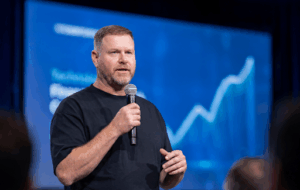
Satoshi Roundtable is a small, invite-only gathering where founders and big-ticket investors trade blunt views in closed-door sessions. The 12th edition ran Jan. 29–Feb. 3, 2026, at a private resort in Dubai.
Among the attendees was Bryan Benson, CEO of the Aurum Foundation and a veteran of the space with nearly three decades of experience in fintech and digital assets. Benson, who previously spearheaded Binance’s expansion in Latin America, discussed shifting industry priorities after the event.
The “Operator’s Summit” and the reach gap
Reflecting on the atmosphere in Dubai, Benson described a room dominated by infrastructure builders and legal experts — a departure from the marketing-heavy crowds typical of larger industry gatherings.
“Walking into the Satoshi Roundtable, it was clear this was an operator’s summit, a room built for builders,” Benson said. “You had people from BlackRock and ex-Citadel personnel talking to regulatory specialists from Dubai and Singapore. When that’s the room’s center of gravity, the conversation naturally defaults to hardening the framework, improving settlement, mechanics and compliance.”
The ecosystem is building world-class infrastructure for sophisticated institutional participants, according to Benson, and consumer outcomes still show uneven progress. He argued that the underlying technology is getting stronger for institutions, but everyday access still lags, especially in how products are explained and supported outside of niche crypto circles.
Real-world assets: system over UI
One of the core themes of this year’s Satoshi Roundtable was the maturation of real-world assets (RWAs). Benson argued that, while the technical infrastructure for tokenized assets is becoming more robust, their meaningful reach remains limited. “The prevailing mood was that we’ve built some incredible rails for RWAs, but the reach is still narrow,” Benson said. “It’s one thing to tokenize an asset cleanly on paper; it’s another to connect it to real users and economic activity.”
Benson said much of the industry’s focus has been on UI, UX and distribution. He tied the bigger constraints to enforceability and transfer rules. “A lot of the debates I heard centered on UI, UX and distribution as the fix,” he said. “The infrastructure-level discussion that was missing is how to handle transfer rules, legal enforceability across jurisdictions and identity. When those mechanics are built for institutional gatekeeping, a better app or a flashier interface will struggle to scale participation.”
The AI confusion, utility vs. ownership
The intersection of AI and blockchain also dominated the agenda, though Benson noted a persistent blurring of lines between “AI tokens” and the tokenization of physical compute. “Most were focused on ‘AI tokens,’ things used for software access, compute metering, or coordinating a network,” he said. “That’s a different conversation than tokenizing the ownership layer of AI infrastructure.”
Benson said the market often treats software services as if they were productive assets. He called for clearer distinctions. “Software services and the physical machines and data centers that power them sit in different buckets,” he said. “One is an operational token for metered consumption, the other is a strategic asset class with ownership claims and cash-flow rights.”
Missing pieces, tokenizing the compute layer
Despite the focus on AI, Benson said the event included little discussion about the physical hardware that makes AI possible. He argued that data centers represent a large, under-discussed RWA category. “Data centers are among the most valuable productive infrastructure of the AI era, yet they were almost entirely absent from the conversation,” Benson said.
He added that the dialogue often stopped at the operational layer, such as agent governance and security, and did not move into ownership questions. “More discussion is needed on how to structure governance and accountability for the hardware itself, especially when retail participation is part of the vision,” he said. “There is very little discussion around putting real ownership of these physical compute assets on-chain.”
Building outcomes beyond rails
A lot of time went to conversations with builders and allocators who want to solve for real-market constraints, according to Benson. “Those are the people worth building with, the ones who think in systems and execution.”
Benson believes the next wave will reward teams that can meet institutional requirements without confusing ordinary users. He pointed to Aurum’s own roadmap as a blueprint, including a product focused on data center machine ownership.
“Solving accessibility in this space is about making ownership understandable,” Benson stressed. “People need to know what they own and what their rights are during market stress. At Aurum, the work is infrastructure-level, including data center machine ownership, where revenue participation ties to actual machines.”
“The event confirmed the direction,” Benson concluded, “and it also showed a major execution gap between building rails and delivering outcomes.”


You May Also Like

The changing face of elder care in Malaysia — Sayed Mohammad Reza Yamani Sayed Umar

Covéa Chooses Shift Technology as Strategic Partner for Fraud and Risk Management

Not a loophole: Singapore AI export controls let China tap US AI legally