This paper makes Deep Reinforcement Learning practical for hedging American options by optimizing hyperparameters and using a weekly re-training strategy.This paper makes Deep Reinforcement Learning practical for hedging American options by optimizing hyperparameters and using a weekly re-training strategy.

How Weekly AI Training Is Beating a Nobel Prize-Winning Formula

:::info Authors:

(1) Reilly Pickard, Department of Mechanical and Industrial Engineering, University of Toronto, Toronto, Canada ([email protected]);

(2) F. Wredenhagen, Ernst & Young LLP, Toronto, ON, M5H 0B3, Canada;

(3) Y. Lawryshyn, Department of Chemical Engineering, University of Toronto, Toronto, Canada.

:::

Abstract and 1. Introduction

  1. Deep Reinforcement Learning

  2. Similar Work

    3.1 Option Hedging with Deep Reinforcement Learning

    3.2 Hyperparameter Analysis

  3. Methodology

    4.1 General DRL Agent Setup

    4.2 Hyperparameter Experiments

    4.3 Optimization of Market Calibrated DRL Agents

  4. Results

    5.1 Hyperparameter Analysis

    5.2 Market Calibrated DRL with Weekly Re-Training

  5. Conclusions

Appendix

References

Abstract

This paper contributes to the existing literature on hedging American options with Deep Reinforcement Learning (DRL). The study first investigates hyperparameter impact on hedging performance, considering learning rates, training episodes, neural network architectures, training steps, and transaction cost penalty functions. Results highlight the importance of avoiding certain combinations, such as high learning rates with a high number of training episodes or low learning rates with few training episodes and emphasize the significance of utilizing moderate values for optimal outcomes. Additionally, the paper warns against excessive training steps to prevent instability and demonstrates the superiority of a quadratic transaction cost penalty function over a linear version. This study then expands upon the work of Pickard et al. (2024), who utilize a Chebyshev interpolation option pricing method to train DRL agents with market-calibrated stochastic volatility models. While the results of Pickard et al. (2024) showed that these DRL agents achieve satisfactory performance on empirical asset paths, this study introduces a novel approach where new agents at weekly intervals to newly calibrated stochastic volatility models. Results show DRL agents re-trained using weekly market data surpass the performance of those trained solely on the sale date. Furthermore, the paper demonstrates that both single-train and weekly-train DRL agents outperform the Black-Scholes Delta method at transaction costs of 1% and 3%. This practical relevance suggests that practitioners can leverage readily available market data to train DRL agents for effective hedging of options in their portfolios.

\

1. Introduction

In the sale of a put option, the seller faces the risk that the underlying asset price will drop, resulting in a payout to the buyer. As such, financial institutions seek a hedging strategy to offset the potential losses from a short put option position. A common option hedging strategy is the development of a Delta-neutral portfolio, which requires a position of Delta shares to be taken in the underlying, where Delta is the first partial derivative of the option price with respect to the underlying (Hull 2012). Delta hedging stems from the Black and Scholes (BS) (1973) option pricing model, which shows that a European option is perfectly replicated with a continuously rebalanced Delta hedge when the underlying asset price process follows a geometric Brownian motion (GBM) with constant volatility. However, financial markets operate in discrete fashion, volatility is ever-changing, and the impact of transaction costs need be considered. Further, many options are not European, such as American options in which there is a potential for early exercise.

\ Given the outlined market frictions, hedging an option position may be modelled as a sequential decision-making process under uncertainty. A method that has achieved success in such decision-making procedures is reinforcement learning (RL), a subfield of artificial intelligence (AI). Specifically, the combination of RL and neural networks (NNs), called deep RL (DRL), has been used to achieve super-human level performance in video games (Mnih et al. 2013), board games (Silver et al. 2014), and robot control (Lillicrap et al. 2015). Recent advances in quantitative finance have seen DRL be leveraged to achieve desirable results in hedging financial options, as described in the review provided Pickard and Lawryshyn (2023). Notably, prior work by (Pickard et al. 2024) showed the proficiency of DRL agents over the BS Delta strategy when hedging short American put options. Specifically, (Pickard et al. 2024) shows the following:

\ (1) When transaction costs are considered, DRL agents outperform the BS Delta and binomial tree hedge strategies when trained and tested on simulated paths from a GBM process

\ (2) When DRL agents are trained using paths from stochastic volatility models calibrated to market data, DRL agents outperform the BS Delta strategy on the realized asset path for the respective underlying.

\ While recent successes in the field of DRL option hedging are encouraging, particularly the results of Pickard et al. (2024), there is a lack of literature pertaining to best practices for financial institutions looking to implement this “black box” approach. For example, while many papers boast encouraging results, there is little discussion given to the selection of DRL model hyperparameters, which can have a large impact on DRL agent performance (Kiran and Ozyildirim 2022). In the field of option hedging, little discussion is given to hyperparameter choices. Of the 17 studies analysed in Pickard and Lawryshyn (2023), only Du et. al (2020), Assa et al. (2021), and Fathi & Hientzsch (2023) conduct some form of hyperparameter analysis. Moreover, the analysed studies from Pickard and Lawryshyn (2023) consider European style options, and it has been reported that slight environmental changes may impact the optimal hyperparameter settings (Henderson et al. (2017), Eimer et al. (2022)). As such, given that Pickard et al. (2024) provides a first DRL model dedicated to hedging American style options, this study will look to shed light on the hyperparameter tuning process, thereby optimizing the results in the process.

\ The first goal of this work is to provide general hyperparameter selection guidance for practitioners wishing to implement DRL hedging. Therefore, the results of this article will not only show what hyperparameter sets are optimal for the American option hedging task, but what combinations should be avoided. This study will first examine how learning rates, NN architectures, and the number of re-balance steps available to the agent in training effect DRL agent performance. Moreover, considering the results in Pickard et al. (2024), the first work to consider training agents for American options, this article will provide clarity on the key training choices such as the reward function to help the agent achieve optimal hedging. Finally, building off of the key result of Pickard et al. (2024), in that agents trained with market calibrated stochastic volatility model data outperform a BS Delta strategy on empirical asset paths, this article will examine the impact of re-training the agent at weekly intervals to newly available option data.

\

2 Deep Reinforcement Learning
\
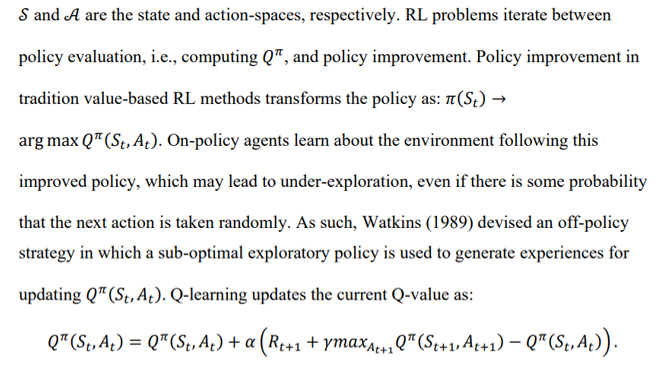
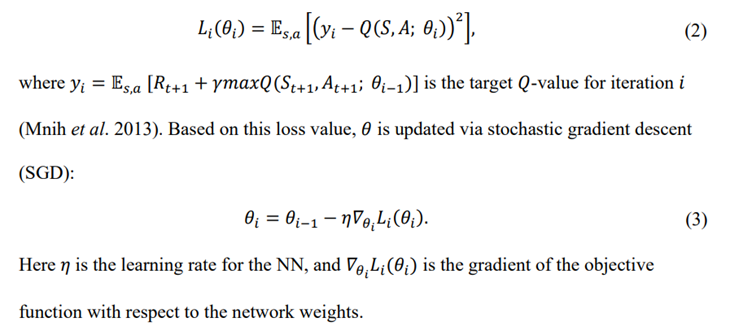
\ The NN is trained by optimized by minimizing the difference between the output and the target value. This objective function for iteration 𝑖 is given by
\
\

:::info This paper is available on arxiv under CC BY-NC-ND 4.0 Deed (Attribution-Noncommercial-Noderivs 4.0 International) license.

:::

\

Market Opportunity
DeepBook Logo
DeepBook Price(DEEP)
$0.053217
$0.053217$0.053217
-4.33%
USD
DeepBook (DEEP) Live Price Chart
Disclaimer: The articles reposted on this site are sourced from public platforms and are provided for informational purposes only. They do not necessarily reflect the views of MEXC. All rights remain with the original authors. If you believe any content infringes on third-party rights, please contact [email protected] for removal. MEXC makes no guarantees regarding the accuracy, completeness, or timeliness of the content and is not responsible for any actions taken based on the information provided. The content does not constitute financial, legal, or other professional advice, nor should it be considered a recommendation or endorsement by MEXC.

You May Also Like

What John Harbaugh And Mike Tomlin’s Departures Mean For NFL Coaching

What John Harbaugh And Mike Tomlin’s Departures Mean For NFL Coaching

The post What John Harbaugh And Mike Tomlin’s Departures Mean For NFL Coaching appeared on BitcoinEthereumNews.com. Baltimore Ravens head coach John Harbaugh (L
Share
BitcoinEthereumNews2026/01/15 10:56
Twitter founder's "weekend experiment": Bitchat encryption software becomes a "communication Noah's Ark"

Twitter founder's "weekend experiment": Bitchat encryption software becomes a "communication Noah's Ark"

Author: Nancy, PANews In the crypto world, both assets and technologies are gradually taking center stage with greater practical significance. In the past few months
Share
PANews2026/01/15 11:00
Urgent: Coinbase CEO Pushes for Crucial Crypto Market Structure Bill

Urgent: Coinbase CEO Pushes for Crucial Crypto Market Structure Bill

BitcoinWorld Urgent: Coinbase CEO Pushes for Crucial Crypto Market Structure Bill The cryptocurrency world is buzzing with significant developments as Coinbase CEO Brian Armstrong recently took to Washington, D.C., advocating passionately for a clearer regulatory path. His mission? To champion the passage of a vital crypto market structure bill, specifically the Digital Asset Market Clarity (CLARITY) Act. This legislative push is not just about policy; it’s about safeguarding investor rights and fostering innovation in the digital asset space. Why a Clear Crypto Market Structure Bill is Essential Brian Armstrong’s visit underscores a growing sentiment within the crypto industry: the urgent need for regulatory clarity. Without clear guidelines, the market operates in a gray area, leaving both innovators and investors vulnerable. The proposed crypto market structure bill aims to bring much-needed definition to this dynamic sector. Armstrong explicitly stated on X that this legislation is crucial to prevent a recurrence of actions that infringe on investor rights, citing past issues with former U.S. Securities and Exchange Commission (SEC) Chair Gary Gensler. This proactive approach seeks to establish a stable and predictable environment for digital assets. Understanding the CLARITY Act: A Blueprint for Digital Assets The Digital Asset Market Clarity (CLARITY) Act is designed to establish a robust regulatory framework for the cryptocurrency industry. It seeks to delineate the responsibilities of key regulatory bodies, primarily the SEC and the Commodity Futures Trading Commission (CFTC). Here are some key provisions: Clear Jurisdiction: The bill aims to specify which digital assets fall under the purview of the SEC as securities and which are considered commodities under the CFTC. Investor Protection: By defining these roles, the act intends to provide clearer rules for market participants, thereby enhancing investor protection. Exemption Conditions: A significant aspect of the bill would exempt certain cryptocurrencies from the stringent registration requirements of the Securities Act of 1933, provided they meet specific criteria. This could reduce regulatory burdens for legitimate projects. This comprehensive approach promises to bring structure to a rapidly evolving market. The Urgency Behind the Crypto Market Structure Bill The call for a dedicated crypto market structure bill is not new, but Armstrong’s direct engagement highlights the increasing pressure for legislative action. The lack of a clear framework has led to regulatory uncertainty, stifling innovation and sometimes leading to enforcement actions that many in the industry view as arbitrary. Passing this legislation would: Foster Innovation: Provide a clear roadmap for developers and entrepreneurs, encouraging new projects and technologies. Boost Investor Confidence: Offer greater certainty and protection for individuals investing in digital assets. Prevent Future Conflicts: Reduce the likelihood of disputes between regulatory bodies and crypto firms, creating a more harmonious ecosystem. The industry believes that a well-defined regulatory landscape is essential for the long-term health and growth of the digital economy. What a Passed Crypto Market Structure Bill Could Mean for You If the CLARITY Act or a similar crypto market structure bill passes, its impact could be profound for everyone involved in the crypto space. For investors, it could mean a more secure and transparent market. For businesses, it offers a predictable environment to build and scale. Conversely, continued regulatory ambiguity could: Stifle Growth: Drive innovation overseas and deter new entrants. Increase Risks: Leave investors exposed to unregulated practices. Create Uncertainty: Lead to ongoing legal battles and market instability. The stakes are incredibly high, making the advocacy efforts of leaders like Brian Armstrong all the more critical. The push for a clear crypto market structure bill is a pivotal moment for the digital asset industry. Coinbase CEO Brian Armstrong’s efforts in Washington, D.C., reflect a widespread desire for regulatory clarity that protects investors, fosters innovation, and ensures the long-term viability of cryptocurrencies. The CLARITY Act offers a potential blueprint for this future, aiming to define jurisdictional boundaries and streamline regulatory requirements. Its passage could unlock significant growth and stability, cementing the U.S. as a leader in the global digital economy. Frequently Asked Questions (FAQs) What is the Digital Asset Market Clarity (CLARITY) Act? The CLARITY Act is a proposed crypto market structure bill aimed at establishing a clear regulatory framework for digital assets in the U.S. It seeks to define the roles of the SEC and CFTC and exempt certain cryptocurrencies from securities registration requirements under specific conditions. Why is Coinbase CEO Brian Armstrong advocating for this bill? Brian Armstrong is advocating for the CLARITY Act to bring regulatory certainty to the crypto industry, protect investor rights from unclear enforcement actions, and foster innovation within the digital asset space. He believes it’s crucial for the industry’s sustainable growth. How would this bill impact crypto investors? For crypto investors, the passage of this crypto market structure bill would mean greater clarity on which assets are regulated by whom, potentially leading to enhanced consumer protections, reduced market uncertainty, and a more stable investment environment. What are the primary roles of the SEC and CFTC concerning this bill? The bill aims to delineate the responsibilities of the SEC (Securities and Exchange Commission) and the CFTC (Commodity Futures Trading Commission) regarding digital assets. It seeks to clarify which assets fall under securities regulation and which are considered commodities, reducing jurisdictional ambiguity. What could happen if a crypto market structure bill like CLARITY Act does not pass? If a clear crypto market structure bill does not pass, the industry may continue to face regulatory uncertainty, potentially leading to stifled innovation, increased legal challenges for crypto companies, and a less secure environment for investors due to inconsistent enforcement and unclear rules. Did you find this article insightful? Share it with your network to help spread awareness about the crucial discussions shaping the future of digital assets! To learn more about the latest crypto market trends, explore our article on key developments shaping crypto regulation and institutional adoption. This post Urgent: Coinbase CEO Pushes for Crucial Crypto Market Structure Bill first appeared on BitcoinWorld.
Share
Coinstats2025/09/18 20:35