

How the 2026 U.S. Midterm Elections Could Reshape Crypto Markets
TLDR:
- Prediction markets show a 60% Republican Senate and 83% Democratic House probability in 2026 elections.
- The GENIUS Act, enacted in 2025, awaits full implementation within 12 to 24 months after the midterms.
- ERC20 stablecoin supply surpassed $150 billion in 2024, approaching highs last seen during the 2021 cycle.
- A divided Congress points to gradual regulatory clarity, favoring steady capital inflows over sudden market shifts.
The 2026 U.S. midterm elections are drawing close attention from crypto markets worldwide. At the center of that attention is the GENIUS Act, a landmark stablecoin law enacted in 2025.
Prediction markets currently show a 60% probability of Republican Senate control and an 83% probability of Democratic House control.
That split points to a divided Congress as the most likely outcome. For crypto markets, this political structure could determine how quickly regulatory clarity translates into capital movement.
Why the Midterm Election Outcome Matters for Stablecoin Regulation
The 2026 midterms carry direct consequences for how the GENIUS Act moves toward full implementation. Enacted in 2025, the law established the first federal framework governing stablecoins in the United States.
Full implementation is expected to arrive within 12 to 24 months following the November 2026 elections. The political composition of Congress after that vote will influence how smoothly that process unfolds.
A divided Congress, the current base case, reduces the probability of sudden or sweeping regulatory reversals. Instead, markets can expect incremental policy progress as implementation details surface over time.
This gradual approach allows institutions and traders to adjust their positioning steadily. It also lowers the risk of abrupt disruption to existing market structures built around stablecoin liquidity.
“Regulation does not follow price—it reshapes the conditions under which price forms.” — XWIN Research Japan
Broader legislative efforts, such as the CLARITY Act, face a harder path under split congressional control. Without a unified legislative majority, comprehensive digital asset market reform may move slowly.
Crypto participants should therefore expect a multi-year regulatory window rather than a single decisive moment. Each phase of implementation will carry its own market repricing effect.
The midterms will not produce an overnight transformation in crypto markets. However, they will set the regulatory tempo for the following two years.
That tempo matters enormously for institutional capital planning cycles. A stable, predictable regulatory environment consistently attracts longer-term capital commitments into digital asset markets.
Stablecoin Supply Data Points to a Liquidity Cycle Already in Motion
On-chain data from CryptoQuant shows that the ERC20-based stablecoin supply has exceeded $150 billion as of 2024. That level approaches the historical highs last recorded during the 2021 market cycle.
Stablecoin supply functions as the most direct available measure of crypto market liquidity. When supply expands at this scale, it signals that capital is being staged ahead of broader risk allocation.
 CryptoQuant data confirms total ERC20 stablecoin supply surpassed $150 billion in 2024, nearing all-time highs.
Historical market patterns show that stablecoin supply growth has consistently preceded major bull cycles. The current supply level suggests that liquidity is already structurally present across the market.
This condition holds even as short-term volatility continues to affect crypto asset prices. Markets have historically used such periods of elevated liquidity to absorb risk before moving higher.
The combination of the GENIUS Act’s regulatory timeline and current supply data creates a specific market setup. Liquidity appears to be accumulating well ahead of the formal regulatory catalyst the midterms may deliver.
If divided government produces gradual clarity as expected, markets could reprice steadily throughout the implementation window.
That measured repricing environment tends to support sustained capital inflows rather than short-lived speculative spikes.
Ultimately, the 2026 midterms may not reshape crypto markets through legislation alone. Their larger role may be confirming the regulatory environment under which the next liquidity cycle accelerates.
The stablecoin supply structure already suggests that a foundation is forming. The election outcome will determine how quickly that foundation translates into the next market phase.
The post How the 2026 U.S. Midterm Elections Could Reshape Crypto Markets appeared first on Blockonomi.


You May Also Like

Here’s why bitcoin’s drop below $68,000 raises the risk of a crash under $60,000
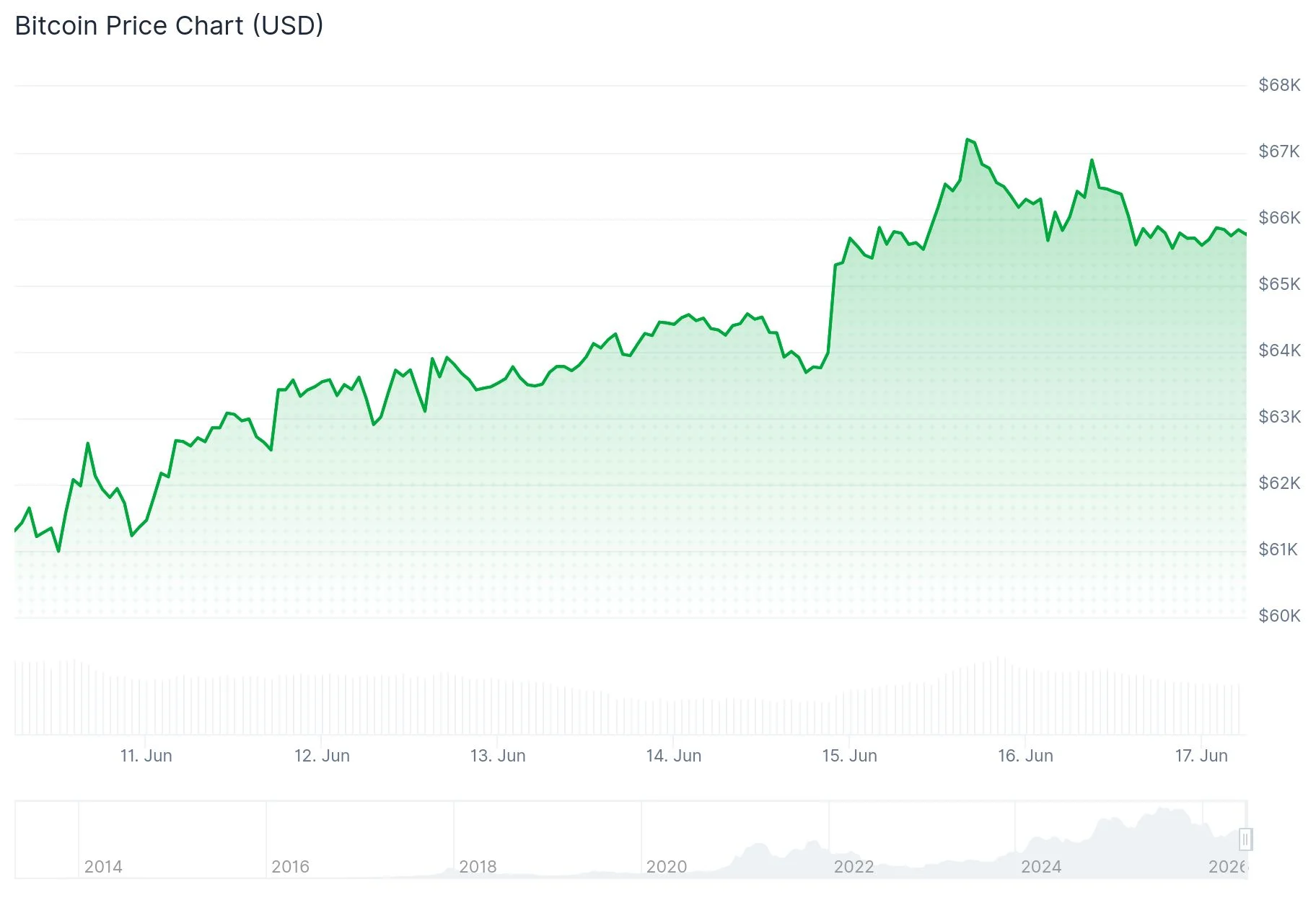
Bitcoin (BTC) Steady at $65K as BlackRock Reveals $9 Trillion Capital Shift Coming

Placeholder Partner Chris Burniske Begins Buying, Calls October a ‘Critical Turning Point’ for Crypto



