BitcoinWorld Meta AI Unleashes Powerful Super PAC to Shape Future of AI Regulation In the rapidly evolving landscape where artificial intelligence intersects with policy, a significant development is set to reshape the future. Meta AI, a titan in the technology world, is making a monumental move by investing tens of millions into a new Super PAC. This strategic initiative aims to profoundly influence AI Regulation in California, a state often at the forefront of technological and legislative trends. For those invested in the digital economy, understanding these political maneuvers is crucial, as the regulatory environment for AI will inevitably impact the development and adoption of blockchain, Web3, and other decentralized technologies. This isn’t just about silicon; it’s about the very infrastructure of our digital future. Why is Meta AI Investing Heavily in Political Influence? Meta’s decision to launch a Super PAC, dubbed Mobilizing Economic Transformation Across California (METAC), signals a clear intent: to advocate for a ‘light-touch’ approach to AI governance. This isn’t an isolated incident; it follows a trend where major tech players, including Andreessen Horowitz and OpenAI’s Greg Brockman, have collectively pledged significant funds for similar pro-AI political action. The core motivation, as articulated by Brian Rice, Meta’s VP of public policy and head of the new PAC, is to prevent California’s regulatory environment from stifling innovation. There’s a genuine concern that overly stringent rules could impede AI progress and jeopardize California’s leadership in the technology sector. The company believes that a balanced regulatory framework, one that encourages rather than constrains development, is essential for the continued growth of AI technologies. This perspective often clashes with calls for more robust oversight, particularly concerning safety, ethics, and data privacy. What are Super PACs and How Do They Impact AI Regulation? Super PACs, officially known as ‘independent-expenditure only committees,’ are political action committees that can raise and spend unlimited amounts of money to support or oppose political candidates. Crucially, they cannot directly coordinate with candidates or political parties. However, they can run advertisements, conduct voter outreach, and engage in various forms of political advocacy, making them incredibly powerful tools for influencing elections and policy debates. In the context of AI, Super PACs like METAC serve as a direct channel for tech giants to shape legislative outcomes. By backing candidates who favor less restrictive AI Regulation, these groups aim to create a political landscape more amenable to their business models and innovation strategies. Their influence can manifest in several ways: Candidate Support: Funding campaigns for candidates who align with their policy views on AI. Public Opinion Shaping: Running ad campaigns to educate (or persuade) the public on the benefits of AI and the potential downsides of over-regulation. Direct Lobbying Reinforcement: Complementing traditional lobbying efforts by demonstrating broad political support for their positions. This approach allows tech companies to exert considerable influence without directly engaging in the more restrictive forms of campaign finance. Understanding the Stakes: Tech Lobbying and Policy Battles Meta’s current move isn’t its first foray into high-stakes Tech Lobbying. The company has a documented history of engaging with lawmakers to protect its interests. Earlier this year, Meta’s lobbying efforts targeted California state Senator Scott Wiener’s SB-53 bill, which proposed requiring AI firms to publish safety and security protocols and report safety incidents. This bill, seen by some as a crucial step towards responsible AI development, was viewed by Meta as potentially hindering innovation. Furthermore, last year, Meta played a role in the defeat of the Kids Online Safety Act, a piece of legislation widely expected to pass. These past actions illustrate a consistent strategy: to actively engage in the legislative process to ensure that emerging regulations do not unduly restrict their operations or slow down their technological advancements. The formation of METAC amplifies this strategy, shifting from direct lobbying to broader electoral influence. The debate around AI regulation is multifaceted, pitting proponents of rapid innovation against those prioritizing safety, ethics, and societal impact. Here’s a simplified view of the opposing perspectives: Pro-Innovation (e.g., Meta, METAC) Pro-Regulation (e.g., Sen. Wiener, advocacy groups) Light-touch regulation prevents stifling growth. Strong oversight ensures safety and ethical AI. California’s tech leadership is at risk from over-regulation. Public trust requires transparency and accountability. Market forces and self-regulation are sufficient. Legislation is needed to address potential harms and biases. What Does This Mean for California AI and Beyond? The impact of Meta’s new Super PAC will primarily be felt in California AI policy, particularly in the upcoming 2026 governor’s race and other statewide elections. By strategically funding candidates who share their vision for AI, Meta aims to cultivate a legislative body that is more sympathetic to the tech industry’s concerns. This influence could set precedents for other states and even federal policy, as California often serves as a bellwether for national trends. The broader implications extend to: Pace of Innovation: A ‘light-touch’ regulatory environment could accelerate the development and deployment of new AI technologies, potentially leading to faster advancements in areas like generative AI, autonomous systems, and even AI-driven blockchain solutions. Ethical Concerns: Critics worry that less regulation might lead to a greater risk of unchecked AI development, potentially exacerbating issues such as algorithmic bias, data misuse, and the spread of misinformation. Competitive Landscape: Companies that can influence policy may gain a competitive advantage, shaping the rules of the game in their favor. Public Trust: The extent to which the public trusts AI will depend heavily on the perceived fairness and safety of its development and deployment, which is directly tied to regulatory frameworks. For the cryptocurrency and blockchain community, the direction of AI regulation is paramount. AI is increasingly integrated into everything from smart contract auditing to predictive market analysis. A restrictive AI environment could indirectly slow down innovation in these interconnected sectors, while a more open one could accelerate it. The Unfolding Battle for AI’s Future Meta’s substantial investment in its pro-AI Super PAC marks a pivotal moment in the ongoing debate over how artificial intelligence should be governed. This move, coupled with similar initiatives from other tech giants, underscores the industry’s determination to shape the regulatory narrative. The battle lines are drawn between those advocating for rapid, unfettered innovation and those calling for cautious, ethical development. The outcomes of these political skirmishes, particularly in influential states like California, will have far-reaching consequences, not just for the tech industry but for society as a whole. As Meta AI pours millions into influencing elections, the future of AI—its capabilities, its limitations, and its integration into our daily lives—hangs in the balance, a testament to the growing power of technology to shape policy and vice versa. To learn more about the latest AI Regulation trends, explore our article on key developments shaping AI policy and institutional adoption. This post Meta AI Unleashes Powerful Super PAC to Shape Future of AI Regulation first appeared on BitcoinWorld and is written by Editorial TeamBitcoinWorld Meta AI Unleashes Powerful Super PAC to Shape Future of AI Regulation In the rapidly evolving landscape where artificial intelligence intersects with policy, a significant development is set to reshape the future. Meta AI, a titan in the technology world, is making a monumental move by investing tens of millions into a new Super PAC. This strategic initiative aims to profoundly influence AI Regulation in California, a state often at the forefront of technological and legislative trends. For those invested in the digital economy, understanding these political maneuvers is crucial, as the regulatory environment for AI will inevitably impact the development and adoption of blockchain, Web3, and other decentralized technologies. This isn’t just about silicon; it’s about the very infrastructure of our digital future. Why is Meta AI Investing Heavily in Political Influence? Meta’s decision to launch a Super PAC, dubbed Mobilizing Economic Transformation Across California (METAC), signals a clear intent: to advocate for a ‘light-touch’ approach to AI governance. This isn’t an isolated incident; it follows a trend where major tech players, including Andreessen Horowitz and OpenAI’s Greg Brockman, have collectively pledged significant funds for similar pro-AI political action. The core motivation, as articulated by Brian Rice, Meta’s VP of public policy and head of the new PAC, is to prevent California’s regulatory environment from stifling innovation. There’s a genuine concern that overly stringent rules could impede AI progress and jeopardize California’s leadership in the technology sector. The company believes that a balanced regulatory framework, one that encourages rather than constrains development, is essential for the continued growth of AI technologies. This perspective often clashes with calls for more robust oversight, particularly concerning safety, ethics, and data privacy. What are Super PACs and How Do They Impact AI Regulation? Super PACs, officially known as ‘independent-expenditure only committees,’ are political action committees that can raise and spend unlimited amounts of money to support or oppose political candidates. Crucially, they cannot directly coordinate with candidates or political parties. However, they can run advertisements, conduct voter outreach, and engage in various forms of political advocacy, making them incredibly powerful tools for influencing elections and policy debates. In the context of AI, Super PACs like METAC serve as a direct channel for tech giants to shape legislative outcomes. By backing candidates who favor less restrictive AI Regulation, these groups aim to create a political landscape more amenable to their business models and innovation strategies. Their influence can manifest in several ways: Candidate Support: Funding campaigns for candidates who align with their policy views on AI. Public Opinion Shaping: Running ad campaigns to educate (or persuade) the public on the benefits of AI and the potential downsides of over-regulation. Direct Lobbying Reinforcement: Complementing traditional lobbying efforts by demonstrating broad political support for their positions. This approach allows tech companies to exert considerable influence without directly engaging in the more restrictive forms of campaign finance. Understanding the Stakes: Tech Lobbying and Policy Battles Meta’s current move isn’t its first foray into high-stakes Tech Lobbying. The company has a documented history of engaging with lawmakers to protect its interests. Earlier this year, Meta’s lobbying efforts targeted California state Senator Scott Wiener’s SB-53 bill, which proposed requiring AI firms to publish safety and security protocols and report safety incidents. This bill, seen by some as a crucial step towards responsible AI development, was viewed by Meta as potentially hindering innovation. Furthermore, last year, Meta played a role in the defeat of the Kids Online Safety Act, a piece of legislation widely expected to pass. These past actions illustrate a consistent strategy: to actively engage in the legislative process to ensure that emerging regulations do not unduly restrict their operations or slow down their technological advancements. The formation of METAC amplifies this strategy, shifting from direct lobbying to broader electoral influence. The debate around AI regulation is multifaceted, pitting proponents of rapid innovation against those prioritizing safety, ethics, and societal impact. Here’s a simplified view of the opposing perspectives: Pro-Innovation (e.g., Meta, METAC) Pro-Regulation (e.g., Sen. Wiener, advocacy groups) Light-touch regulation prevents stifling growth. Strong oversight ensures safety and ethical AI. California’s tech leadership is at risk from over-regulation. Public trust requires transparency and accountability. Market forces and self-regulation are sufficient. Legislation is needed to address potential harms and biases. What Does This Mean for California AI and Beyond? The impact of Meta’s new Super PAC will primarily be felt in California AI policy, particularly in the upcoming 2026 governor’s race and other statewide elections. By strategically funding candidates who share their vision for AI, Meta aims to cultivate a legislative body that is more sympathetic to the tech industry’s concerns. This influence could set precedents for other states and even federal policy, as California often serves as a bellwether for national trends. The broader implications extend to: Pace of Innovation: A ‘light-touch’ regulatory environment could accelerate the development and deployment of new AI technologies, potentially leading to faster advancements in areas like generative AI, autonomous systems, and even AI-driven blockchain solutions. Ethical Concerns: Critics worry that less regulation might lead to a greater risk of unchecked AI development, potentially exacerbating issues such as algorithmic bias, data misuse, and the spread of misinformation. Competitive Landscape: Companies that can influence policy may gain a competitive advantage, shaping the rules of the game in their favor. Public Trust: The extent to which the public trusts AI will depend heavily on the perceived fairness and safety of its development and deployment, which is directly tied to regulatory frameworks. For the cryptocurrency and blockchain community, the direction of AI regulation is paramount. AI is increasingly integrated into everything from smart contract auditing to predictive market analysis. A restrictive AI environment could indirectly slow down innovation in these interconnected sectors, while a more open one could accelerate it. The Unfolding Battle for AI’s Future Meta’s substantial investment in its pro-AI Super PAC marks a pivotal moment in the ongoing debate over how artificial intelligence should be governed. This move, coupled with similar initiatives from other tech giants, underscores the industry’s determination to shape the regulatory narrative. The battle lines are drawn between those advocating for rapid, unfettered innovation and those calling for cautious, ethical development. The outcomes of these political skirmishes, particularly in influential states like California, will have far-reaching consequences, not just for the tech industry but for society as a whole. As Meta AI pours millions into influencing elections, the future of AI—its capabilities, its limitations, and its integration into our daily lives—hangs in the balance, a testament to the growing power of technology to shape policy and vice versa. To learn more about the latest AI Regulation trends, explore our article on key developments shaping AI policy and institutional adoption. This post Meta AI Unleashes Powerful Super PAC to Shape Future of AI Regulation first appeared on BitcoinWorld and is written by Editorial Team

Meta AI Unleashes Powerful Super PAC to Shape Future of AI Regulation

BitcoinWorld
Meta AI Unleashes Powerful Super PAC to Shape Future of AI Regulation

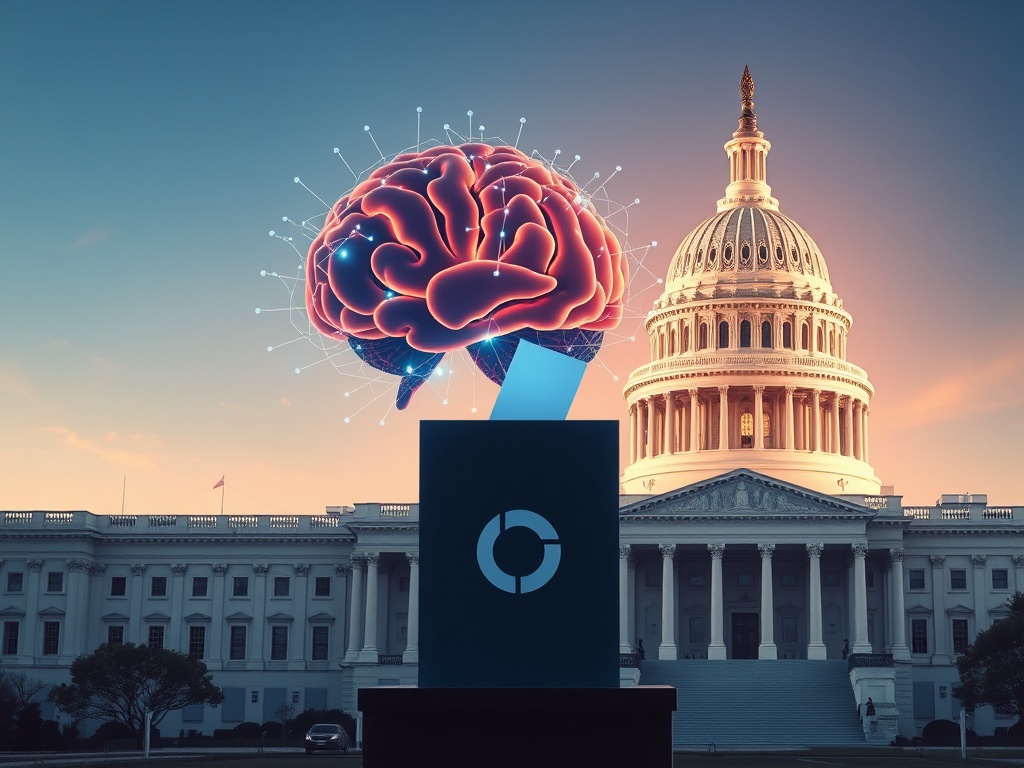
In the rapidly evolving landscape where artificial intelligence intersects with policy, a significant development is set to reshape the future. Meta AI, a titan in the technology world, is making a monumental move by investing tens of millions into a new Super PAC. This strategic initiative aims to profoundly influence AI Regulation in California, a state often at the forefront of technological and legislative trends. For those invested in the digital economy, understanding these political maneuvers is crucial, as the regulatory environment for AI will inevitably impact the development and adoption of blockchain, Web3, and other decentralized technologies. This isn’t just about silicon; it’s about the very infrastructure of our digital future.

Why is Meta AI Investing Heavily in Political Influence?

Meta’s decision to launch a Super PAC, dubbed Mobilizing Economic Transformation Across California (METAC), signals a clear intent: to advocate for a ‘light-touch’ approach to AI governance. This isn’t an isolated incident; it follows a trend where major tech players, including Andreessen Horowitz and OpenAI’s Greg Brockman, have collectively pledged significant funds for similar pro-AI political action. The core motivation, as articulated by Brian Rice, Meta’s VP of public policy and head of the new PAC, is to prevent California’s regulatory environment from stifling innovation. There’s a genuine concern that overly stringent rules could impede AI progress and jeopardize California’s leadership in the technology sector.

The company believes that a balanced regulatory framework, one that encourages rather than constrains development, is essential for the continued growth of AI technologies. This perspective often clashes with calls for more robust oversight, particularly concerning safety, ethics, and data privacy.

What are Super PACs and How Do They Impact AI Regulation?

Super PACs, officially known as ‘independent-expenditure only committees,’ are political action committees that can raise and spend unlimited amounts of money to support or oppose political candidates. Crucially, they cannot directly coordinate with candidates or political parties. However, they can run advertisements, conduct voter outreach, and engage in various forms of political advocacy, making them incredibly powerful tools for influencing elections and policy debates.

In the context of AI, Super PACs like METAC serve as a direct channel for tech giants to shape legislative outcomes. By backing candidates who favor less restrictive AI Regulation, these groups aim to create a political landscape more amenable to their business models and innovation strategies. Their influence can manifest in several ways:

  • Candidate Support: Funding campaigns for candidates who align with their policy views on AI.
  • Public Opinion Shaping: Running ad campaigns to educate (or persuade) the public on the benefits of AI and the potential downsides of over-regulation.
  • Direct Lobbying Reinforcement: Complementing traditional lobbying efforts by demonstrating broad political support for their positions.

This approach allows tech companies to exert considerable influence without directly engaging in the more restrictive forms of campaign finance.

Understanding the Stakes: Tech Lobbying and Policy Battles

Meta’s current move isn’t its first foray into high-stakes Tech Lobbying. The company has a documented history of engaging with lawmakers to protect its interests. Earlier this year, Meta’s lobbying efforts targeted California state Senator Scott Wiener’s SB-53 bill, which proposed requiring AI firms to publish safety and security protocols and report safety incidents. This bill, seen by some as a crucial step towards responsible AI development, was viewed by Meta as potentially hindering innovation.

Furthermore, last year, Meta played a role in the defeat of the Kids Online Safety Act, a piece of legislation widely expected to pass. These past actions illustrate a consistent strategy: to actively engage in the legislative process to ensure that emerging regulations do not unduly restrict their operations or slow down their technological advancements. The formation of METAC amplifies this strategy, shifting from direct lobbying to broader electoral influence.

The debate around AI regulation is multifaceted, pitting proponents of rapid innovation against those prioritizing safety, ethics, and societal impact. Here’s a simplified view of the opposing perspectives:

Pro-Innovation (e.g., Meta, METAC)Pro-Regulation (e.g., Sen. Wiener, advocacy groups)
Light-touch regulation prevents stifling growth.Strong oversight ensures safety and ethical AI.
California’s tech leadership is at risk from over-regulation.Public trust requires transparency and accountability.
Market forces and self-regulation are sufficient.Legislation is needed to address potential harms and biases.

What Does This Mean for California AI and Beyond?

The impact of Meta’s new Super PAC will primarily be felt in California AI policy, particularly in the upcoming 2026 governor’s race and other statewide elections. By strategically funding candidates who share their vision for AI, Meta aims to cultivate a legislative body that is more sympathetic to the tech industry’s concerns. This influence could set precedents for other states and even federal policy, as California often serves as a bellwether for national trends.

The broader implications extend to:

  • Pace of Innovation: A ‘light-touch’ regulatory environment could accelerate the development and deployment of new AI technologies, potentially leading to faster advancements in areas like generative AI, autonomous systems, and even AI-driven blockchain solutions.
  • Ethical Concerns: Critics worry that less regulation might lead to a greater risk of unchecked AI development, potentially exacerbating issues such as algorithmic bias, data misuse, and the spread of misinformation.
  • Competitive Landscape: Companies that can influence policy may gain a competitive advantage, shaping the rules of the game in their favor.
  • Public Trust: The extent to which the public trusts AI will depend heavily on the perceived fairness and safety of its development and deployment, which is directly tied to regulatory frameworks.

For the cryptocurrency and blockchain community, the direction of AI regulation is paramount. AI is increasingly integrated into everything from smart contract auditing to predictive market analysis. A restrictive AI environment could indirectly slow down innovation in these interconnected sectors, while a more open one could accelerate it.

The Unfolding Battle for AI’s Future

Meta’s substantial investment in its pro-AI Super PAC marks a pivotal moment in the ongoing debate over how artificial intelligence should be governed. This move, coupled with similar initiatives from other tech giants, underscores the industry’s determination to shape the regulatory narrative. The battle lines are drawn between those advocating for rapid, unfettered innovation and those calling for cautious, ethical development.

The outcomes of these political skirmishes, particularly in influential states like California, will have far-reaching consequences, not just for the tech industry but for society as a whole. As Meta AI pours millions into influencing elections, the future of AI—its capabilities, its limitations, and its integration into our daily lives—hangs in the balance, a testament to the growing power of technology to shape policy and vice versa.

To learn more about the latest AI Regulation trends, explore our article on key developments shaping AI policy and institutional adoption.

This post Meta AI Unleashes Powerful Super PAC to Shape Future of AI Regulation first appeared on BitcoinWorld and is written by Editorial Team


Market Opportunity
Sentio Protocol Logo
Sentio Protocol Price(SEN)
$0,004261
$0,004261$0,004261
+%0,63
USD
Sentio Protocol (SEN) Live Price Chart
Disclaimer: The articles reposted on this site are sourced from public platforms and are provided for informational purposes only. They do not necessarily reflect the views of MEXC. All rights remain with the original authors. If you believe any content infringes on third-party rights, please contact [email protected] for removal. MEXC makes no guarantees regarding the accuracy, completeness, or timeliness of the content and is not responsible for any actions taken based on the information provided. The content does not constitute financial, legal, or other professional advice, nor should it be considered a recommendation or endorsement by MEXC.

You May Also Like

CME Group to launch options on XRP and SOL futures

CME Group to launch options on XRP and SOL futures

The post CME Group to launch options on XRP and SOL futures appeared on BitcoinEthereumNews.com. CME Group will offer options based on the derivative markets on Solana (SOL) and XRP. The new markets will open on October 13, after regulatory approval.  CME Group will expand its crypto products with options on the futures markets of Solana (SOL) and XRP. The futures market will start on October 13, after regulatory review and approval.  The options will allow the trading of MicroSol, XRP, and MicroXRP futures, with expiry dates available every business day, monthly, and quarterly. The new products will be added to the existing BTC and ETH options markets. ‘The launch of these options contracts builds on the significant growth and increasing liquidity we have seen across our suite of Solana and XRP futures,’ said Giovanni Vicioso, CME Group Global Head of Cryptocurrency Products. The options contracts will have two main sizes, tracking the futures contracts. The new market will be suitable for sophisticated institutional traders, as well as active individual traders. The addition of options markets singles out XRP and SOL as liquid enough to offer the potential to bet on a market direction.  The options on futures arrive a few months after the launch of SOL futures. Both SOL and XRP had peak volumes in August, though XRP activity has slowed down in September. XRP and SOL options to tap both institutions and active traders Crypto options are one of the indicators of market attitudes, with XRP and SOL receiving a new way to gauge sentiment. The contracts will be supported by the Cumberland team.  ‘As one of the biggest liquidity providers in the ecosystem, the Cumberland team is excited to support CME Group’s continued expansion of crypto offerings,’ said Roman Makarov, Head of Cumberland Options Trading at DRW. ‘The launch of options on Solana and XRP futures is the latest example of the…
Share
BitcoinEthereumNews2025/09/18 00:56
Adam Wainwright Takes The Mound Again Honor Darryl Kile

Adam Wainwright Takes The Mound Again Honor Darryl Kile

The post Adam Wainwright Takes The Mound Again Honor Darryl Kile appeared on BitcoinEthereumNews.com. Adam Wainwright of the St. Louis Cardinals in the dugout during the second inning against the Miami Marlins at Busch Stadium on July 18, 2023 in St. Louis, Missouri. (Photo by Brandon Sloter/Image Of Sport/Getty Images) Getty Images St. Louis Cardinals lifer Adam Wainwright is a pretty easygoing guy, and not unlikely to talk with you about baseball traditions and barbecue, or even share a joke. That personality came out last week during our Zoom call when I mentioned for the first time that I’m a Chicago Cubs fan. He responded to the mention of my fandom, “So far, I don’t think this interview is going very well.” Yet, Wainwright will return to Busch Stadium on September 19 on a more serious note, this time to honor another former Cardinal and friend, the late Darryl Kile. Wainwright will take the mound not as a starting pitcher, but to throw out the game’s ceremonial first pitch. Joining him on the mound will be Kile’s daughter, Sierra, as the two help launch a new program called Playing with Heart. “Darryl’s passing was a reminder that heart disease doesn’t discriminate, even against elite athletes in peak physical shape,” Wainwright said. “This program is about helping people recognize the risks, take action, and hopefully save lives.” Wainwright, who played for the St. Louis Cardinals as a starting pitcher from 2005 to 2023, aims to merge the essence of baseball tradition with a crucial message about heart health. Kile, a beloved pitcher for the Cardinals, tragically passed away in 2002 at the age of 33 as a result of early-onset heart disease. His sudden death shook the baseball world and left a lasting impact on teammates, fans, and especially his family. Now, more than two decades later, Sierra Kile is stepping forward with Wainwright to…
Share
BitcoinEthereumNews2025/09/18 02:08
XLM Price Prediction: Stellar Targets $0.26-$0.27 Range by February 2026

XLM Price Prediction: Stellar Targets $0.26-$0.27 Range by February 2026

The post XLM Price Prediction: Stellar Targets $0.26-$0.27 Range by February 2026 appeared on BitcoinEthereumNews.com. Zach Anderson Jan 14, 2026 13:31 XLM
Share
BitcoinEthereumNews2026/01/15 10:06