The post Oil Slumps By Over 2% On U.S. Trade Threats, Demand Concerns appeared on BitcoinEthereumNews.com. A pipeline carries crude oil at Big Hill near Beaumont, Texas, U.S. (Photo: Joe Raedle/Newsmakers) Getty Images Global oil prices retreated sharply from two-week highs on Tuesday, following demand concerns and talk of further U.S. trade tariffs by President Donald Trump. Global proxy benchmark – Brent – saw its front-month futures contract close in London at $66.87 per barrel, down 2.11% or $1.46. Stateside, at 13:39pm EDT on Tuesday, the U.S. West Texas Intermediate front-month contract traded 2.27% or $1.47 lower at $63.33 per barrel. The intraday drop in prices came after crude futures posted gains in the region of 3% following an impasse in talks on ending the Ukraine war between the U.S. and Russia and lower inventory data. Market chatter on the U.S. Federal Reserve easing its monetary policy stance in favor of a September rate cut was also seen as being supportive of demand. However, the price uptick was abruptly halted and subsequently reversed on Tuesday after Trump said Russia would face “very heavy” sanctions if it did not make efforts to end the war and opened a direct negotiating channel with Ukraine. Reports are also emerging that Ukraine may have knocked out a fifth of Russia’s refining capacity via drone attacks, severely curtailing Moscow’s ability to service its war economy. According to Euronews, Ukraine’s recent strikes on ten Russian oil refineries have reportedly disrupted at least 17% of the country’s total refining capacity. That is an equivalent of 1.1 million barrels per day. ForbesWill Oil Demand Hit 123 Million Barrels Per Day By 2050 As OPEC Says?By Gaurav SharmaForbesCan Better Liquidity, Pricing Diversity Help Absorb A Global LNG Glut?By Gaurav Sharma ForbesOil Market Heading For Surplus In 2025 On Latest OPEC+ Output HikeBy Gaurav Sharma Ukraine’s targeted campaign is focused on refineries, oil depots and military-industrial… The post Oil Slumps By Over 2% On U.S. Trade Threats, Demand Concerns appeared on BitcoinEthereumNews.com. A pipeline carries crude oil at Big Hill near Beaumont, Texas, U.S. (Photo: Joe Raedle/Newsmakers) Getty Images Global oil prices retreated sharply from two-week highs on Tuesday, following demand concerns and talk of further U.S. trade tariffs by President Donald Trump. Global proxy benchmark – Brent – saw its front-month futures contract close in London at $66.87 per barrel, down 2.11% or $1.46. Stateside, at 13:39pm EDT on Tuesday, the U.S. West Texas Intermediate front-month contract traded 2.27% or $1.47 lower at $63.33 per barrel. The intraday drop in prices came after crude futures posted gains in the region of 3% following an impasse in talks on ending the Ukraine war between the U.S. and Russia and lower inventory data. Market chatter on the U.S. Federal Reserve easing its monetary policy stance in favor of a September rate cut was also seen as being supportive of demand. However, the price uptick was abruptly halted and subsequently reversed on Tuesday after Trump said Russia would face “very heavy” sanctions if it did not make efforts to end the war and opened a direct negotiating channel with Ukraine. Reports are also emerging that Ukraine may have knocked out a fifth of Russia’s refining capacity via drone attacks, severely curtailing Moscow’s ability to service its war economy. According to Euronews, Ukraine’s recent strikes on ten Russian oil refineries have reportedly disrupted at least 17% of the country’s total refining capacity. That is an equivalent of 1.1 million barrels per day. ForbesWill Oil Demand Hit 123 Million Barrels Per Day By 2050 As OPEC Says?By Gaurav SharmaForbesCan Better Liquidity, Pricing Diversity Help Absorb A Global LNG Glut?By Gaurav Sharma ForbesOil Market Heading For Surplus In 2025 On Latest OPEC+ Output HikeBy Gaurav Sharma Ukraine’s targeted campaign is focused on refineries, oil depots and military-industrial…

Oil Slumps By Over 2% On U.S. Trade Threats, Demand Concerns

For feedback or concerns regarding this content, please contact us at [email protected]

A pipeline carries crude oil at Big Hill near Beaumont, Texas, U.S. (Photo: Joe Raedle/Newsmakers)

Getty Images

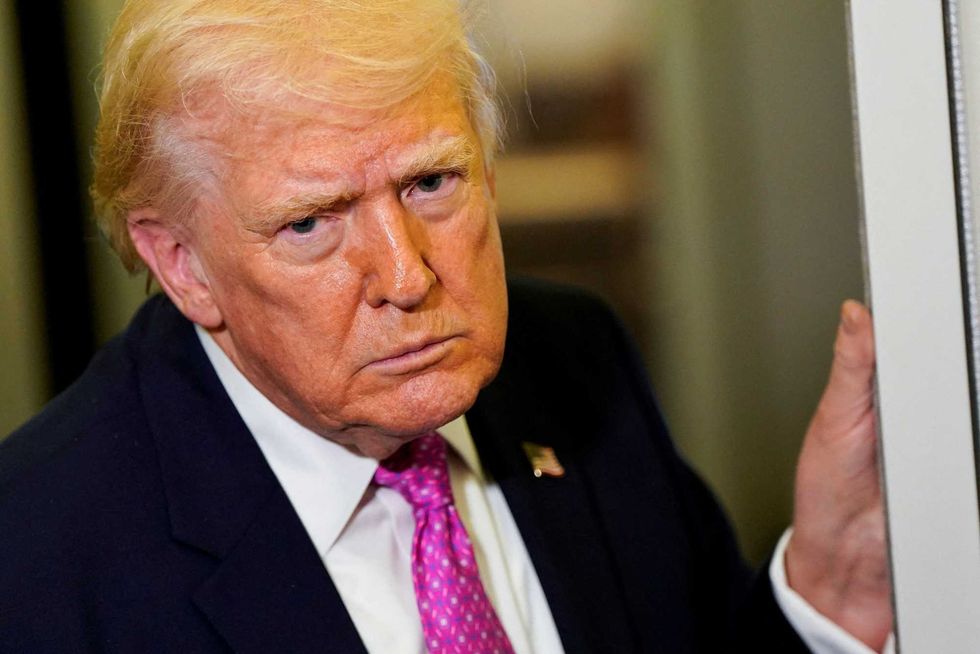
Global oil prices retreated sharply from two-week highs on Tuesday, following demand concerns and talk of further U.S. trade tariffs by President Donald Trump.

Global proxy benchmark – Brent – saw its front-month futures contract close in London at $66.87 per barrel, down 2.11% or $1.46. Stateside, at 13:39pm EDT on Tuesday, the U.S. West Texas Intermediate front-month contract traded 2.27% or $1.47 lower at $63.33 per barrel.

The intraday drop in prices came after crude futures posted gains in the region of 3% following an impasse in talks on ending the Ukraine war between the U.S. and Russia and lower inventory data.

Market chatter on the U.S. Federal Reserve easing its monetary policy stance in favor of a September rate cut was also seen as being supportive of demand.

However, the price uptick was abruptly halted and subsequently reversed on Tuesday after Trump said Russia would face “very heavy” sanctions if it did not make efforts to end the war and opened a direct negotiating channel with Ukraine.

Reports are also emerging that Ukraine may have knocked out a fifth of Russia’s refining capacity via drone attacks, severely curtailing Moscow’s ability to service its war economy.

According to Euronews, Ukraine’s recent strikes on ten Russian oil refineries have reportedly disrupted at least 17% of the country’s total refining capacity. That is an equivalent of 1.1 million barrels per day.

ForbesWill Oil Demand Hit 123 Million Barrels Per Day By 2050 As OPEC Says?ForbesCan Better Liquidity, Pricing Diversity Help Absorb A Global LNG Glut?
ForbesOil Market Heading For Surplus In 2025 On Latest OPEC+ Output Hike

Ukraine’s targeted campaign is focused on refineries, oil depots and military-industrial sites, the pan-European TV network reported. This way Kyiv has disrupted Moscow’s ability to process and export oil, it added.

The Ukrainian campaign has also created shortages, especially of petrol, in some Russian regions as well as Russia-annexed Crimea.

Meanwhile, ongoing U.S. threats to impose steep tariffs on India over its purchases of Russian oil are weighing on oil market sentiment as well.

That is in line with the Trump administration’s initial announcement of a 25% duty on Indian imports under reciprocal trade measures, which was later raised to a rate of 50%. It is set to come into effect from August 27.

While negotiations between Washington and New Delhi are expected to continue, any impact on economic activity in India – the world’s third-largest consumer of crude oil after the U.S. and China – will likely be bearish for the oil market.

New Developments Deepen Old Concerns

A string of new bearish developments have deepened old concerns over demand for crude oil for the remainder of 2025 as well as the first quarter of 2026, with more oil expected on the world’s energy markets.

Not only has the Organization of the Petroleum Exporting Countries signalled its intention to pump more oil, according to the U.S. Energy Information Administration, the nation’s crude production came in at an all-time high of 13.47 million bpd in April, breaking a previous record of 13.45 million bpd set in October 2024.

The ranks of non-OPEC producers are also being boosted by higher output from Brazil, Canada, Guyana and Norway. Collectively, non-OPEC production growth is likely to rise by 1.4 million bpd, according to the International Energy Agency.

Notwithstanding any additional OPEC barrels, such levels of non-OPEC growth alone are more than sufficient to account for global demand growth projections for this year that have been put forward by various forecasters. These range from 0.72 million bpd to 1.3 million bpd, with IEA and OPEC being at the opposite ends of that range.

With additional oil barrels flowing in from all corners, there are fears the oil market may well end up with a surplus of as much as 500,000 to 600,000 bpd, perhaps even more.

Disclaimer: The above commentary is meant to stimulate discussion based on the author’s opinion and analysis offered in a personal capacity. It is not solicitation, recommendation or investment advice to trade oil and natural gas stocks, futures, options or products. Oil and natural gas markets can be highly volatile and opinions in the sector may change instantaneously and without notice.

Source: https://www.forbes.com/sites/gauravsharma/2025/08/26/oil-slumps-by-over-2-on-us-trade-threats-demand-concerns/


Market Opportunity
NEAR Logo
NEAR Price(NEAR)
$1.3326
$1.3326$1.3326
+1.96%
USD
NEAR (NEAR) Live Price Chart
Disclaimer: The articles reposted on this site are sourced from public platforms and are provided for informational purposes only. They do not necessarily reflect the views of MEXC. All rights remain with the original authors. If you believe any content infringes on third-party rights, please contact [email protected] for removal. MEXC makes no guarantees regarding the accuracy, completeness, or timeliness of the content and is not responsible for any actions taken based on the information provided. The content does not constitute financial, legal, or other professional advice, nor should it be considered a recommendation or endorsement by MEXC.

You May Also Like

Fed Decides On Interest Rates Today—Here’s What To Watch For

Fed Decides On Interest Rates Today—Here’s What To Watch For

The post Fed Decides On Interest Rates Today—Here’s What To Watch For appeared on BitcoinEthereumNews.com. Topline The Federal Reserve on Wednesday will conclude a two-day policymaking meeting and release a decision on whether to lower interest rates—following months of pressure and criticism from President Donald Trump—and potentially signal whether additional cuts are on the way. President Donald Trump has urged the central bank to “CUT INTEREST RATES, NOW, AND BIGGER” than they might plan to. Getty Images Key Facts The central bank is poised to cut interest rates by at least a quarter-point, down from the 4.25% to 4.5% range where they have been held since December to between 4% and 4.25%, as Wall Street has placed 100% odds of a rate cut, according to CME’s FedWatch, with higher odds (94%) on a quarter-point cut than a half-point (6%) reduction. Fed governors Christopher Waller and Michelle Bowman, both Trump appointees, voted in July for a quarter-point reduction to rates, and they may dissent again in favor of a large cut alongside Stephen Miran, Trump’s Council of Economic Advisers’ chair, who was sworn in at the meeting’s start on Tuesday. It’s unclear whether other policymakers, including Kansas City Fed President Jeffrey Schmid and St. Louis Fed President Alberto Musalem, will favor larger cuts or opt for no reduction. Fed Chair Jerome Powell said in his Jackson Hole, Wyoming, address last month the central bank would likely consider a looser monetary policy, noting the “shifting balance of risks” on the U.S. economy “may warrant adjusting our policy stance.” David Mericle, an economist for Goldman Sachs, wrote in a note the “key question” for the Fed’s meeting is whether policymakers signal “this is likely the first in a series of consecutive cuts” as the central bank is anticipated to “acknowledge the softening in the labor market,” though they may not “nod to an October cut.” Mericle said he…
Share
BitcoinEthereumNews2025/09/18 00:23
Oil Price Prediction: Supply Shock Puts $100 Crude Back in Play

Oil Price Prediction: Supply Shock Puts $100 Crude Back in Play

Crude oil has snapped out of its recent lull and is now trading at its highest level since June. And this time, it’s not just about scary headlines. It’s about
Share
Captainaltcoin2026/03/03 03:00
One Of Frank Sinatra’s Most Famous Albums Is Back In The Spotlight

One Of Frank Sinatra’s Most Famous Albums Is Back In The Spotlight

The post One Of Frank Sinatra’s Most Famous Albums Is Back In The Spotlight appeared on BitcoinEthereumNews.com. Frank Sinatra’s The World We Knew returns to the Jazz Albums and Traditional Jazz Albums charts, showing continued demand for his timeless music. Frank Sinatra performs on his TV special Frank Sinatra: A Man and his Music Bettmann Archive These days on the Billboard charts, Frank Sinatra’s music can always be found on the jazz-specific rankings. While the art he created when he was still working was pop at the time, and later classified as traditional pop, there is no such list for the latter format in America, and so his throwback projects and cuts appear on jazz lists instead. It’s on those charts where Sinatra rebounds this week, and one of his popular projects returns not to one, but two tallies at the same time, helping him increase the total amount of real estate he owns at the moment. Frank Sinatra’s The World We Knew Returns Sinatra’s The World We Knew is a top performer again, if only on the jazz lists. That set rebounds to No. 15 on the Traditional Jazz Albums chart and comes in at No. 20 on the all-encompassing Jazz Albums ranking after not appearing on either roster just last frame. The World We Knew’s All-Time Highs The World We Knew returns close to its all-time peak on both of those rosters. Sinatra’s classic has peaked at No. 11 on the Traditional Jazz Albums chart, just missing out on becoming another top 10 for the crooner. The set climbed all the way to No. 15 on the Jazz Albums tally and has now spent just under two months on the rosters. Frank Sinatra’s Album With Classic Hits Sinatra released The World We Knew in the summer of 1967. The title track, which on the album is actually known as “The World We Knew (Over and…
Share
BitcoinEthereumNews2025/09/18 00:02