Highlights: White House to host third stablecoin yields meeting at 9 a.m. ET Friday. The main agenda will address tensions between banks and crypto Highlights: White House to host third stablecoin yields meeting at 9 a.m. ET Friday. The main agenda will address tensions between banks and crypto

White House to Hold Third Stablecoin Yield Meeting on February 20
2026/02/19 19:09
4 min read
For feedback or concerns regarding this content, please contact us at [email protected]

Highlights:

  • White House to host third stablecoin yields meeting at 9 a.m. ET Friday.
  • The main agenda will address tensions between banks and crypto firms over yield-bearing stablecoins.
  • These talks directly affect the stalled bipartisan CLARITY Act, which aims to define crypto oversight roles.

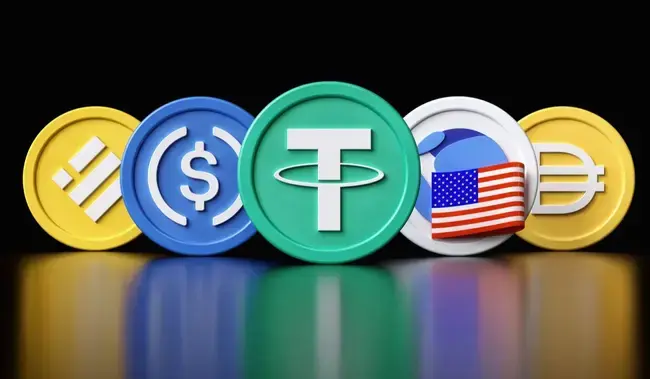
The fight over crypto rules in the United States is heating up. Lawmakers are preparing for another round of talks on the market structure bill, and stablecoin yield remains the key issue. On February 20, at 3:00 PM ET, the White House will host members of Congress for a third meeting. The timing shows how urgent the situation has become after months of stalled progress. 

Stablecoin Yield Debate Blocks CLARITY Act Progress

The CLARITY Act first passed the U.S. House of Representatives on July 17, with a 294 to 134 vote. Yet the bill has stalled in the Senate. Ongoing friction between traditional banks and crypto firms over yield and rewards for stablecoin holders remains unresolved and continues to delay final approval.

Banks warn that allowing interest on stablecoins could pull funds away from bank deposits, reduce lending capacity, and create pressure on the financial system. Crypto firms see it differently. They argue that banning rewards would slow innovation and limit user choice. Ripple and other industry voices say the CLARITY Act is close to becoming law, but the exact timeline remains unclear.

Officials from agencies like the U.S. Department of the Treasury and the Federal Reserve are closely involved in these talks. Both have earlier stressed the need to control risks linked to digital assets, especially large dollar-based tokens used at scale.

The first two meetings failed to produce an agreement on stablecoin yield. In the first session, lawmakers debated whether stablecoins should offer rewards. Banks warned that yield could pull money from deposits and weaken financial stability. Crypto firms defended yield and called it necessary for innovation. In the second meeting, banks presented a formal proposal to ban rewards on payment stablecoins. Crypto representatives rejected the plan. Despite describing the talks as constructive, both sides left without a compromise.

March 1 Deadline Puts Pressure on Stablecoin Talks

The deadline for reaching an agreement by March 1 was set by the White House. This deadline means that there is now significant pressure on both banks and crypto companies to close the gap. The meeting scheduled for February 20 now appears to be quite significant. This meeting could determine whether the overall market structure bill accelerates in the Senate or if there continues to be uncertainty in the US crypto space for much of 2026.

Broader Impact on the Crypto Industry

Senator Cynthia Lummis, a strong supporter of stablecoins, has called on U.S. banks to welcome the growing role of digital dollars. She says stablecoins are not just another crypto product, but a new type of financial tool that could serve both banks and their customers.  As chair of the Subcommittee on Digital Assets, Lummis has stressed that stablecoins should not be viewed as a danger to banks. Instead, she describes them as a digital extension of the U.S. dollar. Speaking recently with Fox Business, she explained that banks could generate new revenue through custody and related digital asset services.

eToro Platform

Best Crypto Exchange

  • Over 90 top cryptos to trade
  • Regulated by top-tier entities
  • User-friendly trading app
  • 30+ million users
9.9
Visit eToro

eToro is a multi-asset investment platform. The value of your investments may go up or down. Your capital is at risk. Don’t invest unless you’re prepared to lose all the money you invest. This is a high-risk investment, and you should not expect to be protected if something goes wrong.

Market Opportunity
Housecoin Logo
Housecoin Price(HOUSE)
$0.0017835
$0.0017835$0.0017835
-7.40%
USD
Housecoin (HOUSE) Live Price Chart
Disclaimer: The articles reposted on this site are sourced from public platforms and are provided for informational purposes only. They do not necessarily reflect the views of MEXC. All rights remain with the original authors. If you believe any content infringes on third-party rights, please contact [email protected] for removal. MEXC makes no guarantees regarding the accuracy, completeness, or timeliness of the content and is not responsible for any actions taken based on the information provided. The content does not constitute financial, legal, or other professional advice, nor should it be considered a recommendation or endorsement by MEXC.

You May Also Like

The Channel Factories We’ve Been Waiting For

The Channel Factories We’ve Been Waiting For

The post The Channel Factories We’ve Been Waiting For appeared on BitcoinEthereumNews.com. Visions of future technology are often prescient about the broad strokes while flubbing the details. The tablets in “2001: A Space Odyssey” do indeed look like iPads, but you never see the astronauts paying for subscriptions or wasting hours on Candy Crush.  Channel factories are one vision that arose early in the history of the Lightning Network to address some challenges that Lightning has faced from the beginning. Despite having grown to become Bitcoin’s most successful layer-2 scaling solution, with instant and low-fee payments, Lightning’s scale is limited by its reliance on payment channels. Although Lightning shifts most transactions off-chain, each payment channel still requires an on-chain transaction to open and (usually) another to close. As adoption grows, pressure on the blockchain grows with it. The need for a more scalable approach to managing channels is clear. Channel factories were supposed to meet this need, but where are they? In 2025, subnetworks are emerging that revive the impetus of channel factories with some new details that vastly increase their potential. They are natively interoperable with Lightning and achieve greater scale by allowing a group of participants to open a shared multisig UTXO and create multiple bilateral channels, which reduces the number of on-chain transactions and improves capital efficiency. Achieving greater scale by reducing complexity, Ark and Spark perform the same function as traditional channel factories with new designs and additional capabilities based on shared UTXOs.  Channel Factories 101 Channel factories have been around since the inception of Lightning. A factory is a multiparty contract where multiple users (not just two, as in a Dryja-Poon channel) cooperatively lock funds in a single multisig UTXO. They can open, close and update channels off-chain without updating the blockchain for each operation. Only when participants leave or the factory dissolves is an on-chain transaction…
Share
BitcoinEthereumNews2025/09/18 00:09
‘Customers are awake’- Eric Trump slams banks over stablecoin yield opposition

‘Customers are awake’- Eric Trump slams banks over stablecoin yield opposition

The post ‘Customers are awake’- Eric Trump slams banks over stablecoin yield opposition appeared on BitcoinEthereumNews.com. Eric Trump, the son of U.S. President
Share
BitcoinEthereumNews2026/03/05 18:19
Pi Network (PI) climbs on Pi Day update, token unlocks risk

Pi Network (PI) climbs on Pi Day update, token unlocks risk

Pi Network (PI) rally as Bitcoin meets $74,000 resistance Pi Network’s PI outperformed the broader crypto market, notching a multi-week high while Bitcoin stalled
Share
CoinLive2026/03/05 18:39