As the tide of “strategic reserves” rises, will Bitcoin reshape the “balance sheets” of sovereign states and corporate institutions?
What does it mean to have a strategic reserve asset of 1 million BTC?
According to statistics from the World Gold Council, as of the third quarter of 2024, the Federal Reserve's total gold reserves reached 8,133.46 tons (about $530 billion), ranking first in the world. The current market value of 1 million BTC is close to $100 billion, accounting for about 19% of the US gold reserves , which is quite considerable.
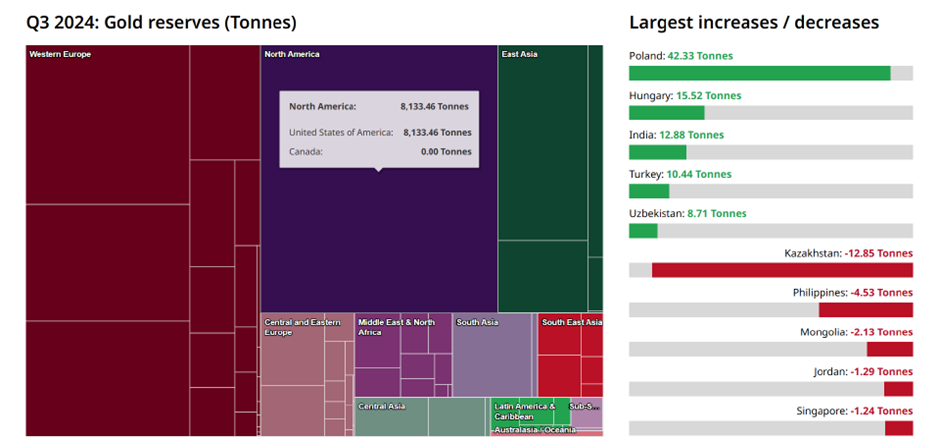
Source: World Gold Council
As Trump and more and more institutions/enterprises and sovereign states begin to consider setting up "Bitcoin strategic reserves", is Bitcoin's "Fort Knox moment" coming soon? Can it become an important part of the global reserve asset system like gold?
The next ten years may be a critical time window for revealing the answer.
What does “strategic reserve assets” mean?
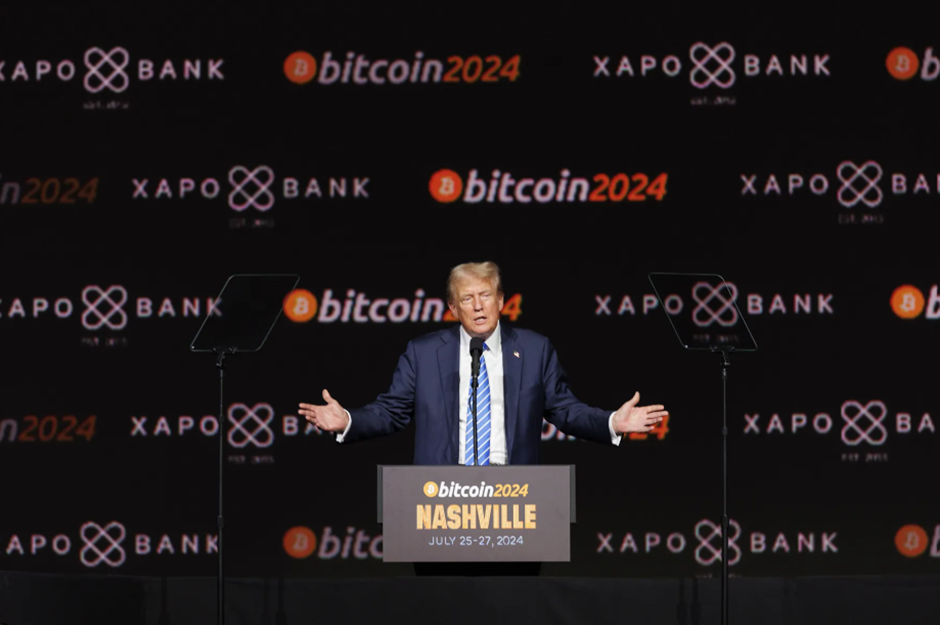
At the Bitcoin2024 conference held in July 2024, Trump made a clear promise in his speech that the government would "never sell" the Bitcoin held and acquired in the future, and insisted on the concept of "strategic Bitcoin reserves."
With the election of Trump and the recent appointments of crypto-friendly figures to key positions including U.S. Treasury Secretary, U.S. SEC Chairman, and White House Crypto Czar, the U.S. vision of incorporating Bitcoin into its strategic reserves is one step closer to reality.
What exactly are “strategic reserve assets”?
Fundamentally, "strategic reserve assets" are key assets held by national or regional governments to cope with economic fluctuations, financial crises or geopolitical risks, and to maintain national financial stability, economic security and international competitiveness . Such assets usually have the characteristics of high value and universal acceptance, security and stability, and liquidity.
At the corporate level, “strategic reserve assets” help achieve financial stability, enhance risk resistance, and support long-term growth strategies. Especially in times of economic turmoil, strategic reserve assets often constitute the primary barrier for companies to resist risks.
Traditional strategic reserve assets mainly include:
- Gold : Widely recognized as a stable store of value due to its scarcity and inflation resistance;
- Foreign exchange reserves : Reserve currencies, mainly the U.S. dollar, constitute an important means of supporting international trade and payments;
- Special Drawing Rights (SDR) : allocated by the International Monetary Fund (IMF) to supplement member countries’ official reserves;
It can be seen that assets that can become "strategic reserves" must have comprehensive advantages such as stable value, global recognition, and convenient circulation . As an emerging digital asset, Bitcoin is gradually meeting these conditions and is beginning to be seen as a potential option besides gold.
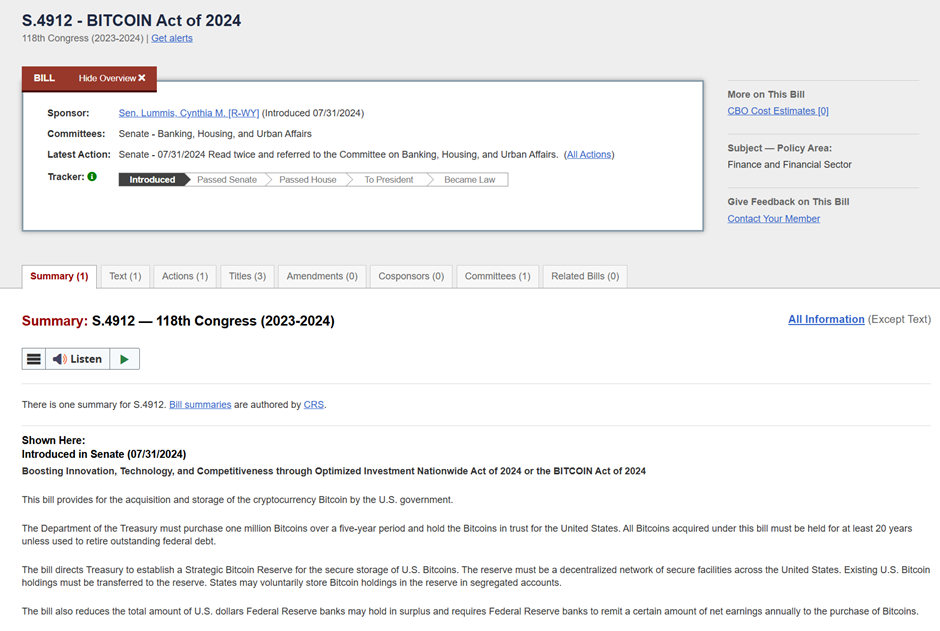
It is worth noting that in addition to Trump’s “promise”, on July 31, 2024, U.S. Senator Cynthia Lummis submitted the “BITCOIN Act of 2024” to Congress, which clearly requires that “ the U.S. Treasury must purchase 1 million BTC within 5 years and must hold it for at least 20 years, unless used to repay outstanding federal debt ”, and plans to require the Federal Reserve to “use a certain amount of net income each year to purchase Bitcoin.”
The plan aims to ensure that the US government holds sufficient Bitcoin in the next 20 years to provide the country with a long-term financial hedging tool. The bill has been submitted to the US Senate Banking, Housing and Urban Affairs Committee and needs to be discussed and voted on. After the two houses pass it, it will be sent to Trump for signature to become law.
Besides gold and foreign exchange, why Bitcoin?
From the perspective of asset allocation, the more gold reserves you have, the better .
The primary consideration is that gold, as a physical asset, lacks interest or income attributes, and its liquidity benefits are not significant . This is the core reason why Buffett has long been cautious about it - "gold cannot generate interest payments, so it lacks the compound interest effect."
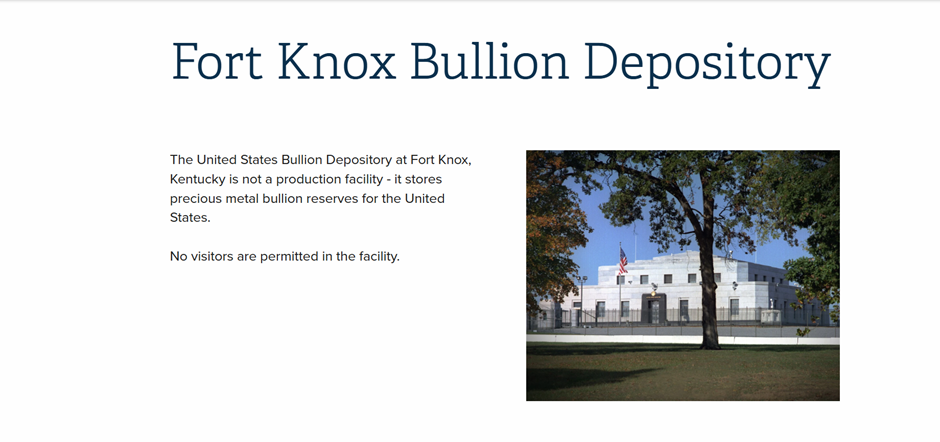
More importantly, gold reserves require high storage and maintenance costs . For most countries, the effective management and security of gold reserves has become a financial burden that cannot be ignored. Take the Federal Reserve's iconic gold warehouse "Fort Knox" as an example. Its security investment is amazing:
Located deep in the strategic hinterland of Kentucky, the gold reserve is built in an underground structure, equipped with thick reinforced concrete protective walls and an all-weather security system, and has a permanent military presence of 10,000 people. This makes gold reserves not only a security requirement, but also a continuous heavy asset fiscal expenditure.
In contrast, the storage cost of Bitcoin is almost negligible. It does not need to occupy physical space or configure expensive protective facilities. Efficient storage management can be achieved by relying on secure wallets, multi-signature technology and decentralized network verification systems.
At the national level, Bitcoin storage expenses are mainly concentrated in technology and network maintenance, which is much lower than the physical protection cost of gold . This means that even if Bitcoin does not generate direct income, its holding cost is significantly better than gold, leaving more room for net asset growth.
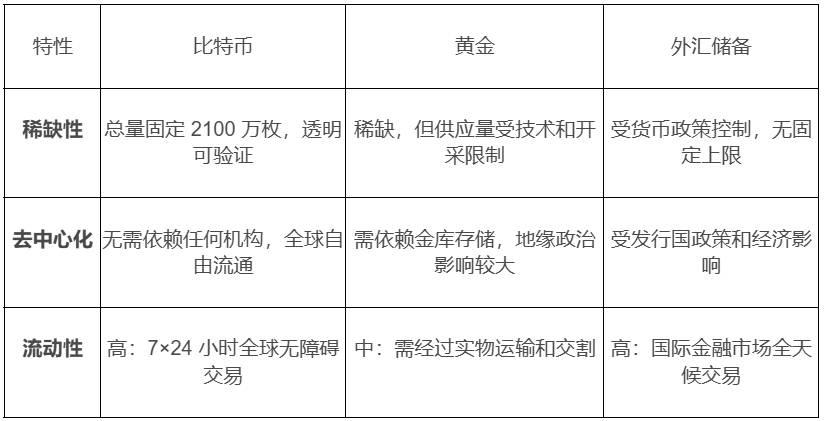
At the same time, physical gold transactions often involve complicated links such as physical delivery, storage, and transportation, and the cycle may last for days or even weeks. The gold market is often limited by the time and geographical constraints of the traditional financial system, while Bitcoin can be traded 24 hours a day through exchanges, covering the global market.
In addition to gold, foreign exchange reserves (such as the euro, yen, etc.) are issued by other countries as legal tender. Their value is not only dependent on the economic conditions of the issuing country, but is also more vulnerable to geopolitical risks. Bitcoin, by virtue of its scarcity, can avoid monetary policy intervention and avoid the risk of depreciation caused by excessive issuance. It also allows any holder (whether an individual, institution or sovereign state) to freely store, transfer and trade it around the world.
This decentralized nature ensures that Bitcoin is not affected by political and economic intervention, and its value storage function can still function stably even in times of global turmoil.

Enterprises/institutions and sovereign states are becoming BTC’s “pixiu”
Bitcoin, with a total market value of $2 trillion, has gradually become a potential reserve tool due to its characteristics such as no need for physical storage, global circulation, high transparency and anti-inflation. More and more companies/institutions and even sovereign countries are beginning to explore the inclusion of Bitcoin in the strategic reserve asset system.
US Government: One of the World's Largest Bitcoin Holders
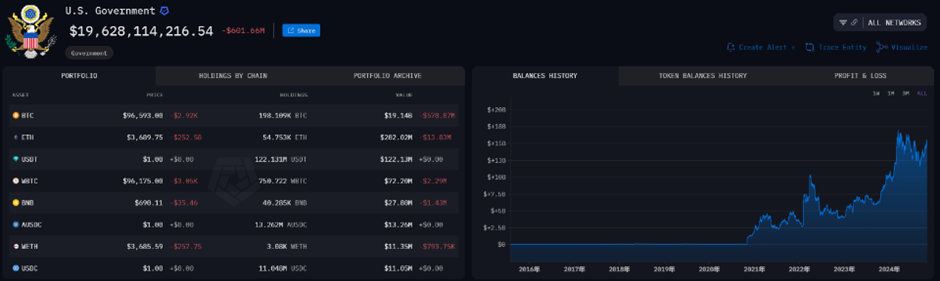
Surprisingly, the US government is one of the world's largest Bitcoin holders. Through law enforcement actions over the years, it has seized a large number of Bitcoins from cyber criminals, money laundering organizations and dark web markets. The current holding is about 200,000 Bitcoins, with a market value of nearly $20 billion.
As the "most cryptocurrency-friendly president" in U.S. history (in terms of public statements), it remains to be seen whether Bitcoin can be included in the Federal Reserve asset system during Trump's next four years in office. However, it is foreseeable that the Bitcoin held by the U.S. government may bid farewell to the frequent selling mode and instead explore its long-term strategic value.
El Salvador: Invest 1 BTC daily
As the first country in the world to establish Bitcoin as legal tender, El Salvador promulgated relevant legislation as early as September 7, 2021. Subsequently, the e-wallet Chivo was launched, pre-depositing $30 worth of Bitcoin for each downloaded user, which not only integrated Bitcoin into the national economic system, but also demonstrated its firm "Bitcoinization" route.
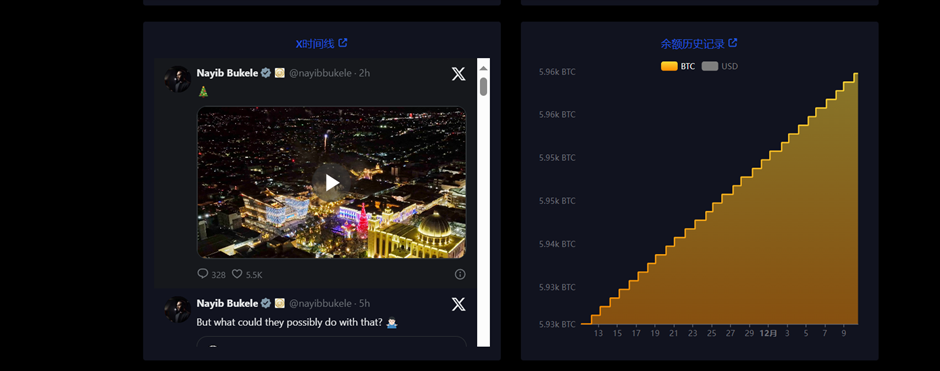
Whenever the crypto market fluctuates violently, El Salvador’s President Nayib Bukele often publishes Bitcoin purchase announcements through social media to inject confidence into the market. Currently, El Salvador maintains a rhythm of buying 1 BTC per day. With the continuous “bottom-fishing” support, as of December 10, BTC holdings reached 5,959.77, with a market value of approximately US$577 million.
Although the size of this holding is not significant globally, as a small economy, its firm Bitcoin strategy is quite exemplary and provides a unique experimental case for other countries.
MicroStrategy All in Bitcoin
Outside of sovereign states, the listed company MicroStrategy is undoubtedly a benchmark in the field of Bitcoin "hoarding" - "buying, buying, buying" of Bitcoin has long been a big-money and open strategy, and the amount held exceeds the reserves of any sovereign state at all public levels.
MicroStrategy's first public purchase of Bitcoin can be traced back to August 11, 2020, when it spent $250 million to purchase 21,454 coins, with the initial purchase cost being approximately $11,652 per coin. Since then, it has continued to increase its holdings, with the most recent purchase being on December 9, when it spent approximately $2.1 billion to purchase 21,550 coins, with an average price of $98,783 per coin.
As of December 8, 2024, MicroStrategy has invested approximately $25.6 billion to acquire 423,650 BTC, with an average price of approximately $60,324 per BTC. Based on the current price of $97,000, the floating profit on holdings is approximately $15.5 billion.
Tesla “Hodl” Bitcoin
On December 20, 2020, Elon Musk first expressed interest in buying Bitcoin after Microstrategy's Michael Saylor suggested other CEOs follow suit. In late January 2021, Musk changed his Twitter profile to #Bitcoin, and Tesla subsequently announced in February 2021 that it had purchased $1.5 billion in Bitcoin.
Tesla reduced its holdings of Bitcoin by 10% in the first quarter of 2021. According to Musk, the move was intended to "test liquidity and verify the feasibility of Bitcoin as a substitute for cash on the balance sheet."
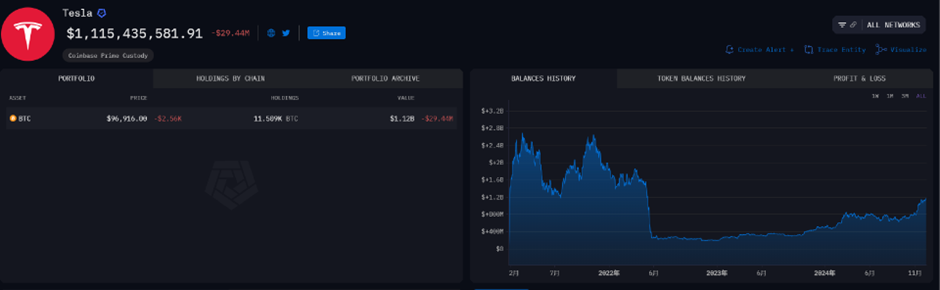
According to Arkham data, as of the time of writing, Tesla holds 11,509 bitcoins with a market value of approximately US$1.1 billion.
Other countries and mainstream companies/institutions: Bitcoin reserves are becoming mainstream
The strategic value of Bitcoin is penetrating from the national level to the corporate and institutional levels. The national reserve layout directly affects the policy environment, and enterprises are the core driving force of adoption. Bitcoin is no longer just a hedging tool, but has become a key strategic component of corporate balance sheets.
Recently, technology giants such as Microsoft and Amazon have received active calls from investors to include Bitcoin in their balance sheets.
MicroStrategy founder Michael Saylor proposed investing in Bitcoin to the Microsoft board of directors, believing that this move would significantly enhance corporate value and create long-term shareholder returns.
At the same time, the National Center for Public Policy Research, a conservative think tank in the United States, recommended that Amazon allocate 1% of its total assets to Bitcoin to enhance shareholder value and hedge against the risk of fiat currency depreciation.
Mainstream institutions and traditional companies will bring the following advantages to Bitcoin by including it in their balance sheets:
- Anti-inflation capability : The scarcity of the 21 million hard cap gives Bitcoin a strong anti-inflation attribute, helping companies stabilize asset value in a global monetary easing environment;
- Diversified investment portfolio : As an emerging asset class, Bitcoin enriches the dimensions of corporate asset allocation, reduces dependence on a single asset, and improves financial robustness;
- Enhance corporate brand and market image : Holding Bitcoin demonstrates the company's embrace of innovative technology and future economic models, enhances market competitiveness, and shapes a forward-looking brand image;
However, in the process of incorporating BTC into the balance sheet, companies need to solve two key problems: how to safely custody large assets, and how to efficiently complete OTC (over-the-counter) needs to avoid market shocks . This has led to the booming development of professional custody and OTC services to meet the strict requirements of companies for digital asset management.
It is worth noting that with the development of the market, the digital asset service ecosystem is also constantly improving. In the field of custody, many platforms have begun to adopt independent wallet design and bankruptcy isolation mechanisms, and introduced insurance protection to deal with various risks. For example, institutions such as OSL, a licensed exchange in Hong Kong, have cooperated with insurance companies such as Canopius to expand the scope of protection to multiple dimensions such as network security and technical failures. At the same time, in terms of OTC transactions, as a licensed and compliant platform, it is providing institutional investors with a more standardized and efficient trading environment through docking with the traditional banking system.
Bitcoin in the next decade: speculative asset or global strategic reserve?
Bitcoin has leapt from a marginal asset to a new star in global strategic reserves. From sovereign states to mainstream institutions/traditional enterprises, more and more forces are redefining its role. Its scarcity, decentralization and high transparency make it known as "digital gold".
Although price volatility is still controversial, Bitcoin adoption is advancing with an unstoppable momentum. If Trump's "strategic reserve asset" concept is implemented, BTC's status will catch up with gold, and its strategic significance may surpass gold:
Although gold is physically scarce, its distribution and trading rely on complex logistics and regulatory systems. Bitcoin relies on blockchain technology and does not require physical storage and transportation, which allows for borderless and rapid circulation. It is more suitable as a reserve asset for countries and institutions and bears more strategic responsibilities. This advantage has also driven professional service providers like OSL to continuously improve their infrastructure construction and create a one-stop solution from custody to trading for institutional clients.
In the next decade, the potential of Bitcoin as a global strategic reserve asset will be fully released, and its application scenarios are expected to be further expanded. From the national level "long-term hoarding" to the corporate/institutional "buy and hold", the influence of Bitcoin continues to expand. Global leaders and leading companies such as MicroStrategy, Microsoft, and Amazon have become the best endorsements of Bitcoin, greatly enhancing the global market's recognition of cryptocurrencies.
“The boat has passed through thousands of mountains.” Regardless of whether Bitcoin can become a strategic reserve asset for the United States or other countries in the next four years, it has already won a key victory in the adoption journey. As more institutions deploy Bitcoin, the construction of professional digital asset financial infrastructure will play a more critical role in the future.


You May Also Like

Pi Network Fixes Technical Issue, Rewards Remain Safe
XRP Price Forecast: Could XRP Reach $15 Within Five Years?