Democratizing Advanced Trading Tools: The Impact of Decentralized Orders and Risk Management in DeFi
The post Democratizing Advanced Trading Tools: The Impact of Decentralized Orders and Risk Management in DeFi appeared first on Coinpedia Fintech News
One of the major hurdles in the way of DeFi has always been its lack of support for the more sophisticated trading mechanisms found in traditional finance, but that is changing with the rise of newer, Layer-3 infrastructure protocols. While the earliest decentralized exchange platforms were extremely innovative, a key limitation was that they could only support basic token swaps, making users vulnerable to crypto’s characteristic volatility, the risk of high slippage and unacceptable liquidation risks. These were major deterrents for institutional adoption.
But in the last couple of years, significant developments have emerged that crush these limitations. By democratizing newer, on-chain trading primitives, DeFi platforms can integrate advanced order types and robust risk management mechanisms. As a consequence, DEXs are marrying TradFi’s efficiency with the transparency and self-custodial principles that set them apart.
Basic swaps aren’t enough
DeFi’s journey from basic swaps to advanced order execution was made possible by ingenious protocol design. The earliest DEX platforms found themselves limited by the deterministic nature of smart contracts, which meant that automated market makers could only execute orders instantly at the current price, prohibiting more complex order types.
This limitation was crippling for sophisticated hedge funds and high-net-worth individuals, which typically rely on algorithmic trading strategies to try and get an edge over the market. These traders rarely execute multi-million dollar trades as a single swap – instead, they use specialized order types to minimize the price impact of their trades and mitigate risk.
Sophisticated traders require three things, including slippage control, which allows them to execute large orders without a significant difference between the expected price and the execution price; volatility mitigation, so they can average out execution prices of large orders over time to minimize risk during volatile periods; and automated risk management, where they set conditional orders automatically to protect their capital and lock-in profits without having to continuously monitor the market.
A standard tool in every professional traders’ armory is the “limit order,” which allows them to buy or sell an asset at a specified price or better. When using this tool, the order will only be executed if the asset price rises or falls within a specific range, helping to protect against unfavourable price execution.
To minimize the market impact of large orders, traders typically utilize “time-weighted average price” orders that execute large volume trades bit-by-bit. For example, if a trader wants to buy 100 BTC, they’ll break the order down into 10 separate trades and execute them over a specified time period, such as a week or even a month, to avoid pushing up the asset’s price.
A third essential tool for sophisticated traders is the “stop-loss/take profit” order. This is a conditional order that will automatically trigger a sell if an asset’s price falls below a certain level, to protect against losses. Alternatively, it can also trigger a buy/sell that allows the trader to take profits if an asset’s price reaches their desired target.
To support these advanced order types, DEX’s require complex, off-chain or hybrid systems that can monitor market conditions and execute orders conditionally, only when the price target is met, or sequentially, across a predetermined timeframe.
Complex trading logic for every DEX
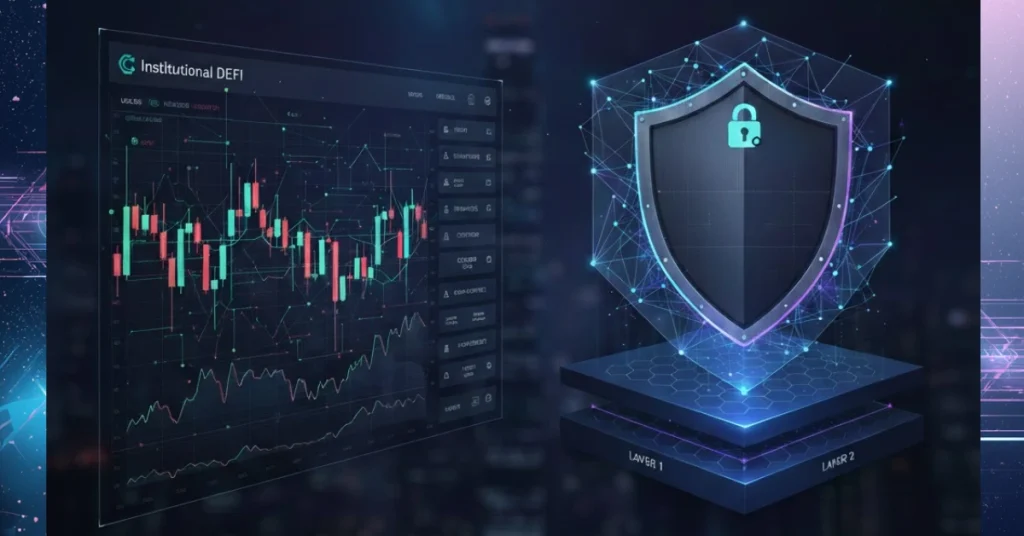
The need for these complex trading architectures has created an opportunity for innovative new protocols that can act as critical infrastructure providers. Cue the arrival of Layer-3 protocols such as Orbs, which enables third-party DEXs to deploy the required trading primitives with minimal fuss. Orbs has developed a suite of decentralized order types, including dLIMIT, dTWAP and dSLTP, which are offered via an external, transparent and auditable service layer.
Rather than try to build the architecture needed to support advanced order types, DEXs such as PancakeSwap, QuickSwap, SpookySwap and SushiSwap have tapped into Orbs’ Perpetual Hub, which is a decentralized execution layer that sits atop of existing Layer-1 and Layer-2 networks to enable complex trading logic. Perpetual Hub uses an “intent-based” model that separates execution from settlement, enabling superior capital efficiency, faster trading and delayed execution.
The advantages of having an L3 take care of all of this are significant. For one thing, Orbs’ protocols are DEX agnostic, which means they can be plugged into any DEX platform and benefit the entire DeFi ecosystem. They also provide decentralized assurance. Unlike centralized exchanges, the trading logic for triggering orders is governed by a decentralized validator network that provides transparency and censorship resistance and minimizes the need to trust third-parties.
The best of both worlds
DeFi suddenly finds itself in pole position. Traders get the benefits of transparency, censorship resistance, no intermediaries and self-custody, plus with the sophistication and efficiency that was once exclusive to traditional finance.
One of DeFi’s longest-standing problems has always been its lack of liquidity in comparison to CEXs and traditional markets. A single large trade would often have a substantial price impact, resulting in unacceptable slippage for hedge funds and their ilk. With dTWAP orders, traders can sidestep this problem by drip-feeding their order onto the market. This allows liquidity pools to slowly absorb large-volume trades, limiting any price impact. Traders will be completed at a better overall price, with a guarantee that they’ll be executed within a specified time frame.
Orbs’ dSLTP order is equally transformative. Before it was available, DEX-based traders would have to monitor the market continuously, which is a nearly impossible task, or else just accept the risk that a sudden price collapse might liquidate their position while they’re asleep. dSLTP ensures traders can protect their capital regardless of how the market moves, creating a more strategic and less emotional trading environment that mirrors the disciplined approach of institutions in TradFi. By reducing the risk of traders getting “rekt”, dSLTP orders also have the benefit of making the market less prone to the systemic shocks caused by cascading liquidations.
For institutions, these kinds of primitives aren’t a luxury – they’re an essential requirement. Without them, professional money managers operating under strict compliance and risk mandates simply cannot take any chances. Now, they can, because DeFi has evolved into a more familiar, robust and reliable trading environment that’s ready for institutional capital.
More than a match for TradFi
DeFi has hit a critical inflection point, leaping over the hurdles of volatility, slippage and liquidation risk that once kept professional traders on the sidelines. Layer-3 networks like Orbs have democratized the powerful primitives that once set TradFi apart, making them available to the entire DEX ecosystem and, by extension, every decentralized trader.
The reality is that TradFi markets now hold very few advantages over their decentralized counterparts. As traditional asset classes are brought on-chain through tokenization, there are more reasons than ever before to believe that the future of global finance is going to be decentralized.


You May Also Like

Solo Bitcoin Miner With 70 TH/s Wins Full Block Against 1-in-100,000 Odds

No Consensus Changes Needed: Starkware CPO Builds Quantum-Safe Bitcoin Transactions From Existing Rules – Featured Bitcoin News