BitcoinWorld HashFlare Co-Founders Sentence: US Prosecutors Launch Shocking Appeal The cryptocurrency world is buzzing with significant legal news: US prosecutors have launched a shocking appeal concerning the lenient HashFlare co-founders sentence. This development signals a strong stance against crypto wire fraud, particularly after a Seattle federal court credited the detention period of Ivan Turogin and Sergei Potapenko as time served, alongside a modest $25,000 fine and community service. This decision came despite prosecutors originally seeking a hefty 10-year sentence for the masterminds behind a massive crypto Ponzi scheme that defrauded hundreds of thousands of victims out of an astounding $570 million, as Cointelegraph reported. Understanding the HashFlare Co-Founders Sentence and the Appeal The HashFlare operation was not just a minor infraction; it was a colossal crypto Ponzi scheme. The co-founders, Ivan Turogin and Sergei Potapenko, allegedly promised investors lucrative returns from cryptocurrency mining operations that simply did not exist. Instead, they used new investor funds to pay off earlier investors, a classic Ponzi setup. The scale of the fraud is truly staggering: Victims: Hundreds of thousands of individuals were impacted. Total Losses: An estimated $570 million was defrauded. Scheme: Fictitious cloud mining services were promoted. Therefore, the initial HashFlare co-founders sentence of “time served” struck many as incredibly lenient, especially given the immense financial and emotional damage inflicted upon so many people. This stark contrast between the crime’s magnitude and the initial penalty is precisely what triggered the prosecutors’ appeal. The Controversial HashFlare Co-Founders Sentence: Time Served vs. Justice The term “time served” essentially means that the period the defendants spent in custody awaiting trial or sentencing is considered sufficient punishment. For Turogin and Potapenko, this meant they would not face additional prison time beyond what they had already endured. This outcome deeply concerned legal observers and victims alike. Prosecutors argued that a 10-year sentence was appropriate, reflecting the severity of the crypto wire fraud and the need for a deterrent. However, the Seattle federal court’s decision suggested a different interpretation of justice in this complex case. This disparity highlights a significant challenge within the legal system: how to adequately penalize sophisticated financial crimes, especially those involving emerging technologies like cryptocurrency. What Does This Appeal Mean for Future Crypto Fraud Cases? The US prosecutors’ appeal of the HashFlare co-founders sentence sends a clear message. It demonstrates a firm commitment to holding individuals accountable for large-scale cryptocurrency fraud. This move could set an important precedent for future cases, indicating that authorities are prepared to push for more substantial penalties, even if initial rulings are perceived as too lenient. Moreover, this appeal underscores the evolving landscape of crypto regulation and enforcement. As digital assets become more mainstream, the legal system is adapting to address the unique challenges posed by crypto-related crimes. Consequently, this case serves as a crucial benchmark for how serious the US government views such offenses. The Impact of the HashFlare Co-Founders Sentence on Victims For the hundreds of thousands of victims of the HashFlare scheme, the initial HashFlare co-founders sentence was undoubtedly disheartening. It might have felt like a profound injustice, diminishing the severity of their financial losses and the betrayal of trust. The appeal, however, offers a renewed sense of hope. While an appeal does not guarantee restitution, it does signify that the legal battle for justice is far from over. It provides a platform for the victims’ voices to be heard more forcefully and reinforces the idea that perpetrators of such massive fraud should face consequences that truly reflect the harm they caused. The pursuit of a more stringent HashFlare co-founders sentence is a step towards validating the suffering of those impacted. In conclusion, the US prosecutors’ appeal regarding the HashFlare co-founders sentence is a pivotal moment in the fight against crypto wire fraud. It underscores the legal system’s ongoing efforts to adapt to the complexities of digital asset crimes and to ensure that justice is served for victims of large-scale Ponzi schemes. This case will undoubtedly influence how future crypto fraud perpetrators are treated, signaling a tougher stance on accountability in the rapidly expanding cryptocurrency ecosystem. Frequently Asked Questions (FAQs) Q1: What was the HashFlare crypto Ponzi scheme? A1: HashFlare was a purported cloud mining operation that promised investors high returns from cryptocurrency mining. In reality, it operated as a Ponzi scheme, using funds from new investors to pay off earlier ones, rather than generating profits from actual mining. Q2: Who are Ivan Turogin and Sergei Potapenko? A2: Ivan Turogin and Sergei Potapenko are the co-founders of HashFlare, who were indicted on crypto wire fraud charges for their involvement in the $570 million Ponzi scheme. Q3: Why did US prosecutors appeal the HashFlare co-founders sentence? A3: Prosecutors appealed because they considered the initial sentence of “time served” to be too lenient. They had sought a 10-year prison sentence, believing the initial ruling did not adequately reflect the severity of the $570 million crypto wire fraud. Q4: What does “time served” mean in this context? A4: “Time served” means that the period the defendants, Turogin and Potapenko, had already spent in detention awaiting trial or sentencing was deemed sufficient punishment by the court, meaning they would not face additional incarceration. Q5: How many victims were affected by the HashFlare scheme? A5: The HashFlare Ponzi scheme defrauded hundreds of thousands of victims globally, resulting in total losses estimated at $570 million. Did this critical update on the HashFlare case shed light on the ongoing battle against crypto fraud? Share this article with your network to keep others informed about the evolving legal landscape in the cryptocurrency space! To learn more about the latest crypto fraud trends and legal developments, explore our article on key developments shaping cryptocurrency crime prevention and institutional adoption. This post HashFlare Co-Founders Sentence: US Prosecutors Launch Shocking Appeal first appeared on BitcoinWorld and is written by Editorial TeamBitcoinWorld HashFlare Co-Founders Sentence: US Prosecutors Launch Shocking Appeal The cryptocurrency world is buzzing with significant legal news: US prosecutors have launched a shocking appeal concerning the lenient HashFlare co-founders sentence. This development signals a strong stance against crypto wire fraud, particularly after a Seattle federal court credited the detention period of Ivan Turogin and Sergei Potapenko as time served, alongside a modest $25,000 fine and community service. This decision came despite prosecutors originally seeking a hefty 10-year sentence for the masterminds behind a massive crypto Ponzi scheme that defrauded hundreds of thousands of victims out of an astounding $570 million, as Cointelegraph reported. Understanding the HashFlare Co-Founders Sentence and the Appeal The HashFlare operation was not just a minor infraction; it was a colossal crypto Ponzi scheme. The co-founders, Ivan Turogin and Sergei Potapenko, allegedly promised investors lucrative returns from cryptocurrency mining operations that simply did not exist. Instead, they used new investor funds to pay off earlier investors, a classic Ponzi setup. The scale of the fraud is truly staggering: Victims: Hundreds of thousands of individuals were impacted. Total Losses: An estimated $570 million was defrauded. Scheme: Fictitious cloud mining services were promoted. Therefore, the initial HashFlare co-founders sentence of “time served” struck many as incredibly lenient, especially given the immense financial and emotional damage inflicted upon so many people. This stark contrast between the crime’s magnitude and the initial penalty is precisely what triggered the prosecutors’ appeal. The Controversial HashFlare Co-Founders Sentence: Time Served vs. Justice The term “time served” essentially means that the period the defendants spent in custody awaiting trial or sentencing is considered sufficient punishment. For Turogin and Potapenko, this meant they would not face additional prison time beyond what they had already endured. This outcome deeply concerned legal observers and victims alike. Prosecutors argued that a 10-year sentence was appropriate, reflecting the severity of the crypto wire fraud and the need for a deterrent. However, the Seattle federal court’s decision suggested a different interpretation of justice in this complex case. This disparity highlights a significant challenge within the legal system: how to adequately penalize sophisticated financial crimes, especially those involving emerging technologies like cryptocurrency. What Does This Appeal Mean for Future Crypto Fraud Cases? The US prosecutors’ appeal of the HashFlare co-founders sentence sends a clear message. It demonstrates a firm commitment to holding individuals accountable for large-scale cryptocurrency fraud. This move could set an important precedent for future cases, indicating that authorities are prepared to push for more substantial penalties, even if initial rulings are perceived as too lenient. Moreover, this appeal underscores the evolving landscape of crypto regulation and enforcement. As digital assets become more mainstream, the legal system is adapting to address the unique challenges posed by crypto-related crimes. Consequently, this case serves as a crucial benchmark for how serious the US government views such offenses. The Impact of the HashFlare Co-Founders Sentence on Victims For the hundreds of thousands of victims of the HashFlare scheme, the initial HashFlare co-founders sentence was undoubtedly disheartening. It might have felt like a profound injustice, diminishing the severity of their financial losses and the betrayal of trust. The appeal, however, offers a renewed sense of hope. While an appeal does not guarantee restitution, it does signify that the legal battle for justice is far from over. It provides a platform for the victims’ voices to be heard more forcefully and reinforces the idea that perpetrators of such massive fraud should face consequences that truly reflect the harm they caused. The pursuit of a more stringent HashFlare co-founders sentence is a step towards validating the suffering of those impacted. In conclusion, the US prosecutors’ appeal regarding the HashFlare co-founders sentence is a pivotal moment in the fight against crypto wire fraud. It underscores the legal system’s ongoing efforts to adapt to the complexities of digital asset crimes and to ensure that justice is served for victims of large-scale Ponzi schemes. This case will undoubtedly influence how future crypto fraud perpetrators are treated, signaling a tougher stance on accountability in the rapidly expanding cryptocurrency ecosystem. Frequently Asked Questions (FAQs) Q1: What was the HashFlare crypto Ponzi scheme? A1: HashFlare was a purported cloud mining operation that promised investors high returns from cryptocurrency mining. In reality, it operated as a Ponzi scheme, using funds from new investors to pay off earlier ones, rather than generating profits from actual mining. Q2: Who are Ivan Turogin and Sergei Potapenko? A2: Ivan Turogin and Sergei Potapenko are the co-founders of HashFlare, who were indicted on crypto wire fraud charges for their involvement in the $570 million Ponzi scheme. Q3: Why did US prosecutors appeal the HashFlare co-founders sentence? A3: Prosecutors appealed because they considered the initial sentence of “time served” to be too lenient. They had sought a 10-year prison sentence, believing the initial ruling did not adequately reflect the severity of the $570 million crypto wire fraud. Q4: What does “time served” mean in this context? A4: “Time served” means that the period the defendants, Turogin and Potapenko, had already spent in detention awaiting trial or sentencing was deemed sufficient punishment by the court, meaning they would not face additional incarceration. Q5: How many victims were affected by the HashFlare scheme? A5: The HashFlare Ponzi scheme defrauded hundreds of thousands of victims globally, resulting in total losses estimated at $570 million. Did this critical update on the HashFlare case shed light on the ongoing battle against crypto fraud? Share this article with your network to keep others informed about the evolving legal landscape in the cryptocurrency space! To learn more about the latest crypto fraud trends and legal developments, explore our article on key developments shaping cryptocurrency crime prevention and institutional adoption. This post HashFlare Co-Founders Sentence: US Prosecutors Launch Shocking Appeal first appeared on BitcoinWorld and is written by Editorial Team

HashFlare Co-Founders Sentence: US Prosecutors Launch Shocking Appeal

BitcoinWorld
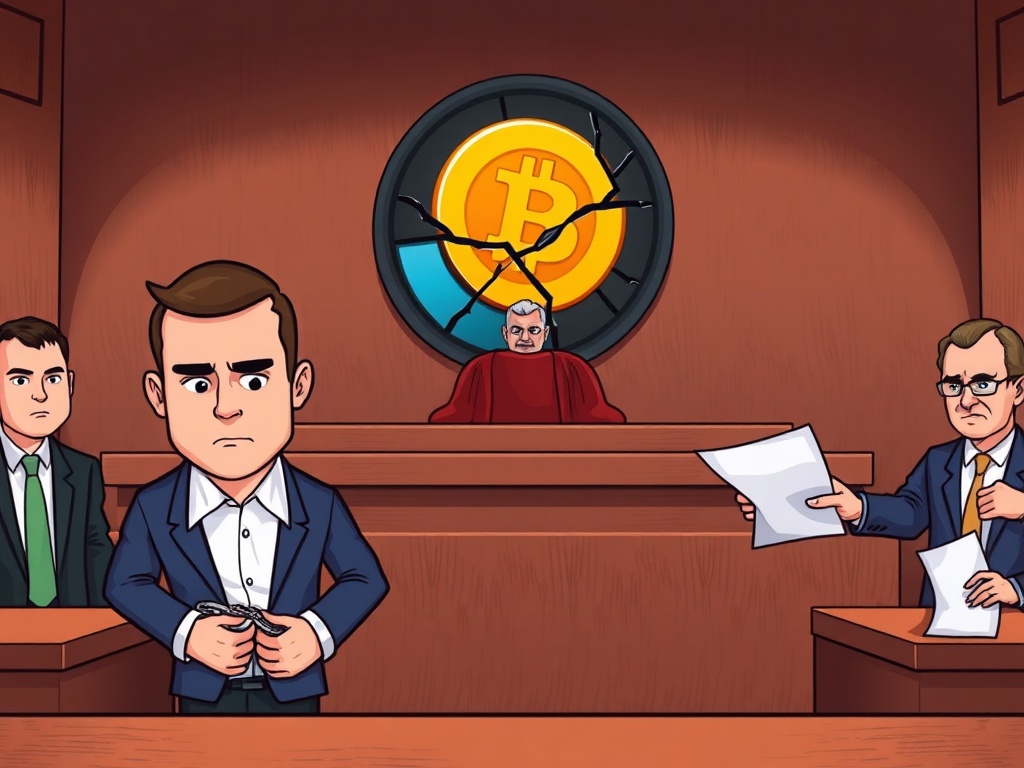
HashFlare Co-Founders Sentence: US Prosecutors Launch Shocking Appeal

The cryptocurrency world is buzzing with significant legal news: US prosecutors have launched a shocking appeal concerning the lenient HashFlare co-founders sentence. This development signals a strong stance against crypto wire fraud, particularly after a Seattle federal court credited the detention period of Ivan Turogin and Sergei Potapenko as time served, alongside a modest $25,000 fine and community service. This decision came despite prosecutors originally seeking a hefty 10-year sentence for the masterminds behind a massive crypto Ponzi scheme that defrauded hundreds of thousands of victims out of an astounding $570 million, as Cointelegraph reported.

Understanding the HashFlare Co-Founders Sentence and the Appeal

The HashFlare operation was not just a minor infraction; it was a colossal crypto Ponzi scheme. The co-founders, Ivan Turogin and Sergei Potapenko, allegedly promised investors lucrative returns from cryptocurrency mining operations that simply did not exist. Instead, they used new investor funds to pay off earlier investors, a classic Ponzi setup.

The scale of the fraud is truly staggering:

  • Victims: Hundreds of thousands of individuals were impacted.
  • Total Losses: An estimated $570 million was defrauded.
  • Scheme: Fictitious cloud mining services were promoted.

Therefore, the initial HashFlare co-founders sentence of “time served” struck many as incredibly lenient, especially given the immense financial and emotional damage inflicted upon so many people. This stark contrast between the crime’s magnitude and the initial penalty is precisely what triggered the prosecutors’ appeal.

The Controversial HashFlare Co-Founders Sentence: Time Served vs. Justice

The term “time served” essentially means that the period the defendants spent in custody awaiting trial or sentencing is considered sufficient punishment. For Turogin and Potapenko, this meant they would not face additional prison time beyond what they had already endured. This outcome deeply concerned legal observers and victims alike.

Prosecutors argued that a 10-year sentence was appropriate, reflecting the severity of the crypto wire fraud and the need for a deterrent. However, the Seattle federal court’s decision suggested a different interpretation of justice in this complex case. This disparity highlights a significant challenge within the legal system: how to adequately penalize sophisticated financial crimes, especially those involving emerging technologies like cryptocurrency.

What Does This Appeal Mean for Future Crypto Fraud Cases?

The US prosecutors’ appeal of the HashFlare co-founders sentence sends a clear message. It demonstrates a firm commitment to holding individuals accountable for large-scale cryptocurrency fraud. This move could set an important precedent for future cases, indicating that authorities are prepared to push for more substantial penalties, even if initial rulings are perceived as too lenient.

Moreover, this appeal underscores the evolving landscape of crypto regulation and enforcement. As digital assets become more mainstream, the legal system is adapting to address the unique challenges posed by crypto-related crimes. Consequently, this case serves as a crucial benchmark for how serious the US government views such offenses.

The Impact of the HashFlare Co-Founders Sentence on Victims

For the hundreds of thousands of victims of the HashFlare scheme, the initial HashFlare co-founders sentence was undoubtedly disheartening. It might have felt like a profound injustice, diminishing the severity of their financial losses and the betrayal of trust. The appeal, however, offers a renewed sense of hope.

While an appeal does not guarantee restitution, it does signify that the legal battle for justice is far from over. It provides a platform for the victims’ voices to be heard more forcefully and reinforces the idea that perpetrators of such massive fraud should face consequences that truly reflect the harm they caused. The pursuit of a more stringent HashFlare co-founders sentence is a step towards validating the suffering of those impacted.

In conclusion, the US prosecutors’ appeal regarding the HashFlare co-founders sentence is a pivotal moment in the fight against crypto wire fraud. It underscores the legal system’s ongoing efforts to adapt to the complexities of digital asset crimes and to ensure that justice is served for victims of large-scale Ponzi schemes. This case will undoubtedly influence how future crypto fraud perpetrators are treated, signaling a tougher stance on accountability in the rapidly expanding cryptocurrency ecosystem.

Frequently Asked Questions (FAQs)

Q1: What was the HashFlare crypto Ponzi scheme?
A1: HashFlare was a purported cloud mining operation that promised investors high returns from cryptocurrency mining. In reality, it operated as a Ponzi scheme, using funds from new investors to pay off earlier ones, rather than generating profits from actual mining.

Q2: Who are Ivan Turogin and Sergei Potapenko?
A2: Ivan Turogin and Sergei Potapenko are the co-founders of HashFlare, who were indicted on crypto wire fraud charges for their involvement in the $570 million Ponzi scheme.

Q3: Why did US prosecutors appeal the HashFlare co-founders sentence?
A3: Prosecutors appealed because they considered the initial sentence of “time served” to be too lenient. They had sought a 10-year prison sentence, believing the initial ruling did not adequately reflect the severity of the $570 million crypto wire fraud.

Q4: What does “time served” mean in this context?
A4: “Time served” means that the period the defendants, Turogin and Potapenko, had already spent in detention awaiting trial or sentencing was deemed sufficient punishment by the court, meaning they would not face additional incarceration.

Q5: How many victims were affected by the HashFlare scheme?
A5: The HashFlare Ponzi scheme defrauded hundreds of thousands of victims globally, resulting in total losses estimated at $570 million.

Did this critical update on the HashFlare case shed light on the ongoing battle against crypto fraud? Share this article with your network to keep others informed about the evolving legal landscape in the cryptocurrency space!

To learn more about the latest crypto fraud trends and legal developments, explore our article on key developments shaping cryptocurrency crime prevention and institutional adoption.

This post HashFlare Co-Founders Sentence: US Prosecutors Launch Shocking Appeal first appeared on BitcoinWorld and is written by Editorial Team


Market Opportunity
Brainedge Logo
Brainedge Price(LEARN)
$0.0092
$0.0092$0.0092
+1.21%
USD
Brainedge (LEARN) Live Price Chart
Disclaimer: The articles reposted on this site are sourced from public platforms and are provided for informational purposes only. They do not necessarily reflect the views of MEXC. All rights remain with the original authors. If you believe any content infringes on third-party rights, please contact [email protected] for removal. MEXC makes no guarantees regarding the accuracy, completeness, or timeliness of the content and is not responsible for any actions taken based on the information provided. The content does not constitute financial, legal, or other professional advice, nor should it be considered a recommendation or endorsement by MEXC.

You May Also Like

Lucid to begin full Saudi manufacturing in 2026

Lucid to begin full Saudi manufacturing in 2026

Lucid Group, the US carmaker backed by the Public Investment Fund (PIF), reportedly plans to start full-scale vehicle manufacturing in Saudi Arabia this year, transitioning
Share
Agbi2026/01/15 15:52
Exploring Market Buzz: Unique Opportunities in Cryptocurrencies

Exploring Market Buzz: Unique Opportunities in Cryptocurrencies

In the ever-evolving world of cryptocurrencies, recent developments have sparked significant interest. A closer look at pricing forecasts for Cardano (ADA) and rumors surrounding a Solana (SOL) ETF, coupled with the emergence of a promising new entrant, Layer Brett, reveals a complex market dynamic. Cardano's Prospects: A Closer Look Cardano, a stalwart in the blockchain space, continues to hold its ground with its research-driven development strategy. The latest price predictions for ADA suggest potential gains, predicting a double or even quadruple increase in its valuation. Despite these optimistic forecasts, the allure of exponential gains drives traders toward more speculative ventures. The Buzz Around Solana ETF The potential introduction of a Solana ETF has the crypto community abuzz, potentially catapulting SOL prices to new heights. As investors await regulatory decisions, the impact of such an ETF on Solana's value could be substantial, potentially reaching up to $300. However, as with Cardano, the substantial market capitalization of Solana may temper its growth potential. Why Layer Brett is Gaining Traction Amidst established names, a new contender, Layer Brett, has started to capture the market's attention with its early presale stages. Offering a low entry price of just $0.0058 and promising over 700% in staking rewards, Layer Brett presents a tempting proposition for those looking to maximize returns. Comparative Analysis: ADA, SOL, and $LBRETT While both ADA and SOL offer stable investment choices with reliable growth, Layer Brett emerges as a high-risk, high-reward option that could potentially offer significantly higher returns due to its nascent market position and aggressive economic model. Initial presale pricing lets investors get in on the ground floor. Staking rewards currently exceed 690%, a persuasive incentive for early adopters. Backed by Ethereum's Layer 2 for enhanced transaction speed and reduced costs. A community-focused $1 million giveaway to further drive engagement and investor interest. Predicted by some analysts to offer up to 50x returns in coming years. Shifting Sands: Investor Movements As the crypto market landscape shifts, many investors, including those traditionally holding ADA and SOL, are beginning to diversify their portfolios by turning to high-potential opportunities like Layer Brett. The combination of strategic presale pricing and significant staking rewards is creating a momentum of its own. Act Fast: Time-Sensitive Opportunities As September progresses, opportunities to capitalize on these low entry points and high yield offerings from Layer Brett are likely to diminish. With increasing attention and funds being directed towards this new asset, the window to act is closing quickly. Invest in Layer Brett now to secure your position before the next price hike and staking rewards reduction. For more information, visit the Layer Brett website, join their Telegram group, or follow them on X by clicking the following links: Website Telegram X Disclaimer: This is a sponsored press release and is for informational purposes only. It does not reflect the views of Bitzo, nor is it intended to be used as legal, tax, investment, or financial advice.
Share
Coinstats2025/09/18 18:39
United Kingdom Trade Balance; non-EU declined to £-11.457B in November from previous £-10.255B

United Kingdom Trade Balance; non-EU declined to £-11.457B in November from previous £-10.255B

The post United Kingdom Trade Balance; non-EU declined to £-11.457B in November from previous £-10.255B appeared on BitcoinEthereumNews.com. Gold loses ground after
Share
BitcoinEthereumNews2026/01/15 16:23