Key Insights
- Bitcoin ETFs logged five straight weeks of outflows.
- Investors withdrew $3.8 billion over the period.
- Institutions reduced risk amid macro uncertainty.
Bitcoin ETFs Extend Outflow Streak As Institutions De-Risk
US spot Bitcoin ETFs recorded a fifth consecutive week of net withdrawals as institutional investors trimmed exposure. SoSoValue data showed $315.9 million left the products last week, extending a broader drawdown tied to macro uncertainty. The retreat occurred across major issuers as geopolitical tensions and tariff risks weighed on sentiment.
Spot Bitcoin ETFs see outflows for five consecutive weeks. Source: SoSoValueThe five-week stretch brought cumulative redemptions to $3.8 billion, marking the longest sustained withdrawal phase since launch. Bitcoin ETFs remain a key institutional access point to the asset, which makes their flows a proxy for portfolio positioning. That positioning shifted as traders reassessed risk across equities, bonds, and digital assets.
Weekly Flow Data Shows Uneven Sessions
SoSoValue figures indicated that the largest weekly withdrawal during the streak occurred in the period ending Jan. 30, when funds shed $1.49 billion. Last week’s total reflected mixed daily activity rather than a uniform exit.
Ether ETFs also see weekly outflows. Source: SoSoValueFriday delivered $88 million in inflows, but heavier selling earlier offset that demand. The most severe daily redemption hit Feb. 12, when investors pulled more than $410 million. Additional negative sessions between Feb. 17 and Feb. 19 kept the weekly tally in the red.
Since launch, cumulative net inflows into US spot Bitcoin ETFs reached $54.01 billion. Total net assets stood near $85.31 billion, accounting for about 6.3% of Bitcoin’s market capitalization. That footprint showed that, despite recent selling, long-term allocations remain substantial.
Institutional Positioning Reflects Risk-Off Bias
Kronos Research chief investment officer Vincent Liu said the outflows reflected portfolio de-risking rather than structural rejection of Bitcoin. He argued that institutions reduced exposure as trade disputes and macro volatility increased. That shift occurred because higher uncertainty pushed asset managers to rebalance toward defensive positions.
Liu added that near-term flows may remain unstable as markets track economic releases. He pointed to upcoming U.S. initial jobless claims as a potential trigger for renewed rate-cut expectations. Weaker labor data could revive risk appetite, while stronger readings may reinforce caution.
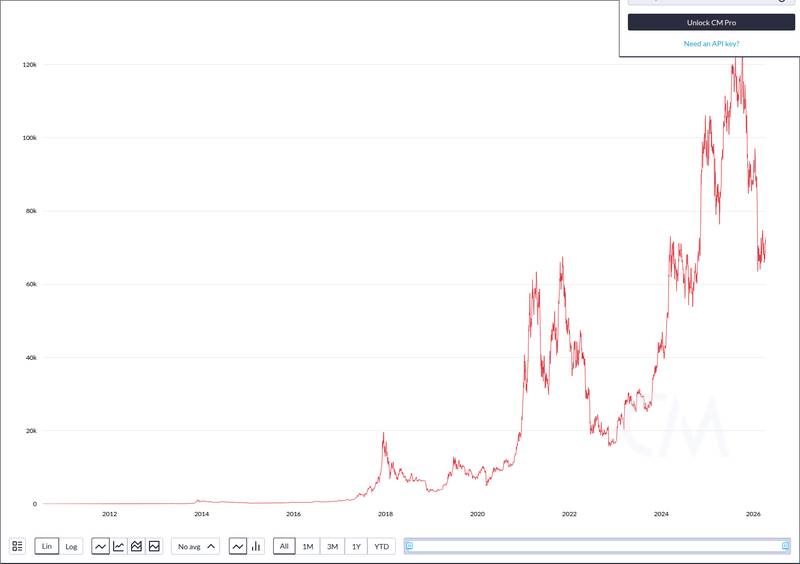
Broader market signals supported that assessment. The crypto fear and greed index sat at 14, placing sentiment in extreme fear territory. That reading aligned with subdued trading volumes and cautious positioning across derivatives markets.
Ether ETFs Mirror Bitcoin Trend
SoSoValue records showed that spot Ether ETFs also posted five consecutive weeks of net withdrawals. Investors removed $123.4 million last week, reflecting a parallel risk reduction in the second-largest cryptocurrency.
Daily flow data revealed isolated positive sessions. Feb. 17 brought $48.6 million in inflows, while Feb. 13 added $10.3 million. Yet those gains failed to offset heavier selling on other days, leaving the weekly total negative.
The synchronized drawdown suggested that institutions treated Bitcoin and Ether exposures as part of a broader digital asset allocation. When macro risks intensified, managers appeared to cut exposure across the segment rather than rotate between assets. That behavior reinforced the view that ETFs now function as liquidity valves during volatility spikes.
Bitcoin ETFs now face a key test in the coming week as investors evaluate fresh economic data and central bank signals. If macro conditions stabilize, flows could turn positive, but sustained uncertainty may extend the withdrawal streak. Markets will watch upcoming U.S. labor releases closely, as those figures could reset expectations for monetary policy and shape near-term ETF demand.
Source: https://www.thecoinrepublic.com/2026/02/21/bitcoin-etfs-bleed-3-8b-in-5-week-selloff/