DXY Analysis: Stunning Tariff Shock Weighs Heavily on US Dollar – UOB Report
BitcoinWorld
DXY Analysis: Stunning Tariff Shock Weighs Heavily on US Dollar – UOB Report
SINGAPORE, March 2025 – The US Dollar Index (DXY) faces significant downward pressure this week, a direct consequence of unexpected global tariff announcements that have rattled currency markets. According to a detailed analysis from United Overseas Bank (UOB), this tariff shock introduces fresh volatility, challenging the greenback’s recent resilience and forcing traders to reassess fundamental drivers.
DXY Plunges Following Tariff Shock Announcements
Currency traders witnessed a sharp sell-off in the US Dollar Index following coordinated tariff statements from major economies. The DXY, which tracks the dollar against a basket of six major currencies, fell markedly as markets priced in potential impacts on trade flows and economic growth. Consequently, analysts at UOB highlighted the move as a clear market repricing of risk. This development underscores the dollar’s sensitivity to trade policy shifts. Furthermore, historical data suggests such shocks can trigger sustained trends.
UOB’s research team meticulously charted the immediate reaction. The dollar’s decline was most pronounced against traditional safe-haven currencies and those of key trading partners. This pattern indicates a market interpretation that the new tariffs could dampen US export competitiveness. Moreover, it may alter global capital allocation strategies. The bank’s report provides crucial context, comparing this event to similar historical trade disputes. For instance, the 2018-2019 trade tensions saw the DXY experience heightened volatility but eventual resilience due to Federal Reserve policy.
Mechanics of How Tariffs Impact Currency Valuation
Tariffs influence currency values through multiple, interconnected channels. Primarily, they threaten to disrupt established trade balances. A key mechanism is the potential for reduced export volumes from the tariff-imposing country if trading partners retaliate. This scenario can lead to a weaker current account position, thereby exerting downward pressure on the currency. Additionally, tariffs often spark fears of slower global economic growth, which can diminish demand for the importing country’s currency in international transactions.
UOB’s analysis breaks down the specific transmission channels affecting the DXY:
- Trade Flow Channel: Anticipated disruptions to US exports and imports.
- Inflation Channel: Tariffs can raise import prices, complicating the Federal Reserve’s inflation management.
- Risk Sentiment Channel: Increased trade uncertainty prompts investors to seek alternative safe-haven assets.
- Growth Revision Channel: Forecasters may downgrade US GDP projections, weakening the dollar’s yield appeal.
Importantly, the ultimate direction of the DXY depends on the relative economic impact on the United States versus its trading partners. If markets perceive the US economy as more vulnerable to the tariffs, the dollar’s decline will likely persist. Conversely, if the US is seen as leveraging stronger economic fundamentals, the dip may prove temporary.
UOB’s Expert Interpretation of Market Charts
United Overseas Bank’s currency strategists emphasize that technical charts now reflect a fundamental shift. Key support levels for the DXY were breached with high volume, confirming the move’s significance. The bank’s report notes that moving averages have begun to turn, and momentum indicators like the Relative Strength Index (RSI) show a decisive shift toward bearish territory. This technical deterioration aligns with the negative fundamental news, creating a powerful confluence for traders.
UOB experts contextualize this within the broader 2025 macroeconomic landscape. They note that prior to the shock, the DXY was balancing between divergent central bank policies and relative growth outlooks. The tariff announcements have effectively overridden these previous dynamics, at least in the short term. The bank’s models now incorporate scenarios for prolonged negotiation periods, which typically sustain currency volatility. Their historical comparison table illustrates typical DXY performance phases during trade disputes:
| Phase | Typical DXY Reaction | Average Duration |
|---|---|---|
| Initial Announcement | Sharp Decline (-1% to -3%) | 1-2 Weeks |
| Retaliation & Escalation | High Volatility, Directional Uncertainty | 1-3 Months |
| Negotiation | Stabilization with Bias from Economic Data | 3+ Months |
| Resolution | Sharp Reversal or Trend Continuation | Event-Driven |
Broader Implications for Global Forex Markets
The ripple effects from the DXY’s movement extend across all major and minor currency pairs. Notably, currencies like the Euro (EUR) and Japanese Yen (JPY) often experience correlated volatility during dollar-specific shocks. However, the Swiss Franc (CHF) may demonstrate independent strength as a traditional safe haven. Emerging market currencies face a dual challenge: navigating the weaker dollar, which typically provides relief, while also contending with the threat of slowing global trade, which pressures their export-driven economies.
Central bank watchers are now scrutinizing the Federal Reserve’s potential response. A tariff-induced uptick in consumer prices could influence the Fed’s interest rate path. However, if tariffs harm growth, the central bank might adopt a more dovish stance. This policy uncertainty adds another layer of complexity to forecasting the DXY’s path. Market participants, therefore, must monitor upcoming US inflation and employment data with increased vigilance. These releases will clarify the domestic economic picture amidst the external trade shock.
Historical Precedents and Current Market Psychology
Financial history offers valuable lessons for the current situation. The 2018-2019 US-China trade war provides a recent template. During that period, the DXY initially strengthened due to the US’s relative economic outperformance and Fed policy, despite the negative trade headlines. This highlights that tariffs alone do not dictate the dollar’s fate. The overarching driver remains the comparative strength of the US economy and its interest rate differentials.
Current market psychology, as interpreted by UOB, appears focused on the escalation risk. The fear is not the first round of tariffs but the potential for a cycle of retaliation that meaningfully reduces global GDP forecasts. This risk-off sentiment benefits currencies perceived as stable stores of value outside the US dollar system. Consequently, we observe flows into gold and certain digital assets alongside traditional forex moves. The bank cautions that sentiment can shift rapidly with a single positive headline from trade negotiations.
Conclusion
The US Dollar Index (DXY) is navigating a period of significant uncertainty following a substantial tariff shock. UOB’s analysis confirms the move’s technical validity and fundamental cause. While the immediate pressure is downward, the dollar’s medium-term trajectory will hinge on the evolving balance between trade policy impacts, Federal Reserve reactions, and relative global growth. Traders should prepare for elevated volatility and base decisions on a combination of economic data, central bank guidance, and tangible progress in trade discussions. The DXY remains a critical barometer of both US economic confidence and global financial risk appetite.
FAQs
Q1: What is the US Dollar Index (DXY)?
The DXY is a measure of the value of the United States dollar relative to a basket of six major world currencies: the Euro (EUR), Japanese Yen (JPY), British Pound (GBP), Canadian Dollar (CAD), Swedish Krona (SEK), and Swiss Franc (CHF). It provides a broad benchmark for the dollar’s international strength.
Q2: Why do tariffs weaken a currency like the US dollar?
Tariffs can weaken a currency by threatening to reduce export demand if other countries retaliate, worsening the trade balance. They also create economic uncertainty, which can deter foreign investment and lead markets to anticipate slower growth, reducing the appeal of holding that currency.
Q3: How reliable is UOB’s analysis on forex markets?
United Overseas Bank (UOB) is a major Asian financial institution with a respected global markets research division. Their analysis is based on real-time trading data, economic models, and historical research, making it a authoritative source for many institutional and retail traders.
Q4: Could the DXY recover quickly from this tariff shock?
Yes, rapid recovery is possible if subsequent economic data from the US remains robust, if trade tensions de-escalate quickly, or if the Federal Reserve signals a more hawkish policy stance than other central banks. Currency markets constantly reassess new information.
Q5: What should a forex trader monitor following this news?
Traders should closely watch: 1) Key US economic data (CPI, Non-Farm Payrolls, GDP), 2) Statements from the US Federal Reserve and other central banks, 3) Developments in trade negotiations, and 4) Technical support and resistance levels on the DXY chart itself.
Q6: Are there any currencies that typically benefit when the DXY falls?
Generally, the other currencies in the DXY basket, particularly the Euro and Yen, tend to appreciate when the dollar index falls. Additionally, traditional safe-haven assets like gold and the Swiss Franc often see increased demand during periods of dollar weakness driven by risk-off events.
This post DXY Analysis: Stunning Tariff Shock Weighs Heavily on US Dollar – UOB Report first appeared on BitcoinWorld.


You May Also Like
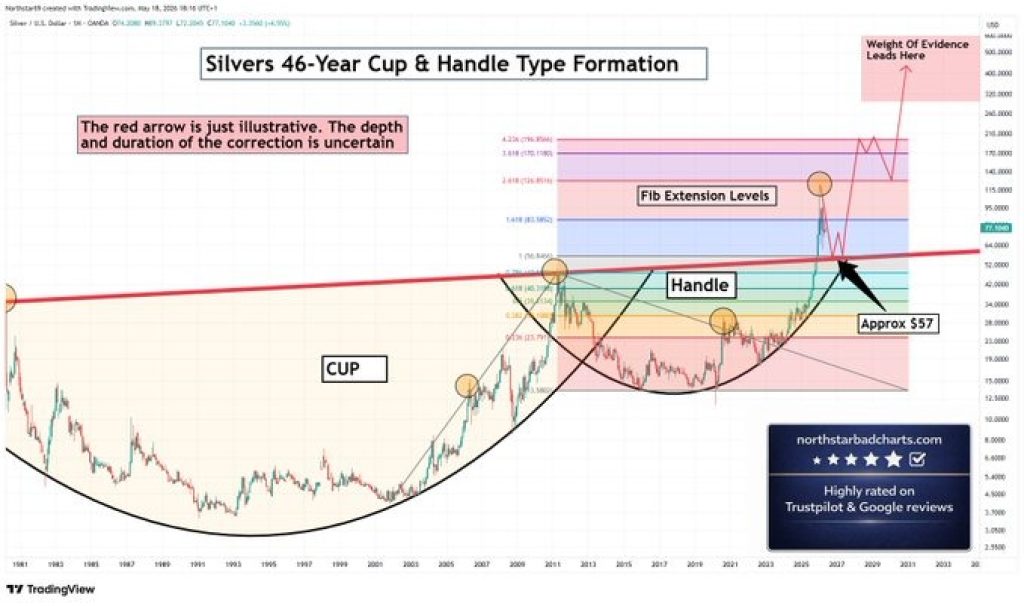
Silver Price Prediction: Cup and Handle Points to $196 – Why the Correction Was Always Part of the Plan

Academic Publishing and Fairness: A Game-Theoretic Model of Peer-Review Bias