Quantum Computing Could Put $440 Billion in Bitcoin at Risk – What Investors Need to Know
TLDR
- Nearly 7 million BTC worth ~$440 billion could be vulnerable to quantum computing attacks
- About 1 million of those coins belong to Satoshi Nakamoto, worth ~$67.6 billion
- Early Bitcoin addresses exposed public keys directly on-chain, making them easier to crack
- The Bitcoin community is split: some want protocol changes to burn or freeze at-risk coins, others say “code is law”
- Experts disagree on the timeline — some say 2–3 years, others say the threat is still distant
Nearly 7 million bitcoins could be vulnerable to theft if quantum computers become powerful enough to break Bitcoin’s encryption.
That figure, cited by CryptoQuant founder Ki Young Ju, is worth roughly $440 billion at current prices.
Around 1 million of those coins are linked to Bitcoin’s anonymous creator, Satoshi Nakamoto. At today’s price of about $67,600 per coin, that stash alone is worth around $67.6 billion.
The risk comes from how early Bitcoin transactions were structured. In Bitcoin’s early years, a format called pay-to-public-key (P2PK) embedded public keys directly on the blockchain. Modern addresses hide the key behind a hash until coins are spent. But early exposed keys stay exposed permanently.
A powerful enough quantum computer could reverse-engineer those public keys and gain access to the coins.
Why the Bitcoin Community Is Divided
Not everyone agrees on what to do about it. The debate breaks down into two camps.
One side says Bitcoin should stay neutral and treat all coins equally, regardless of how old or exposed they are. Nima Beni, founder of Bitlease, said that changing the rules for some coins — even for security reasons — sets a dangerous precedent.
The other side argues that doing nothing would hand a massive amount of wealth to whoever first builds a capable quantum machine. Jameson Lopp, a well-known Bitcoin developer, called that outcome unfair and described quantum attackers as “vampires feeding upon the system.”
Lopp has argued in favor of a soft fork that would make vulnerable outputs unspendable unless moved to quantum-resistant addresses before a set deadline.
Tether CEO Paolo Ardoino took the opposite view. He said old coins re-entering circulation through quantum breakthroughs would only cause temporary inflation that the market would absorb.
There is also a practical problem. Georgii Verbitskii, founder of TYMIO, pointed out that there is no reliable way to tell which dormant coins are lost forever and which are simply unspent.
How Close Is the Threat?
Experts disagree sharply on timing.
Zeynep Koruturk of Firgun Ventures said the quantum research community was surprised by recent findings suggesting fewer physical qubits may be needed to break RSA-2048 encryption than previously thought.
She said this could shorten the timeline for cracking that encryption to as little as two to three years, though large-scale testing would still be required.
Most experts agree that Bitcoin Core developers are already researching quantum-resistant upgrades, and the debate now centers on whether the community can reach consensus before the threat becomes real.
The post Quantum Computing Could Put $440 Billion in Bitcoin at Risk – What Investors Need to Know appeared first on CoinCentral.


You May Also Like
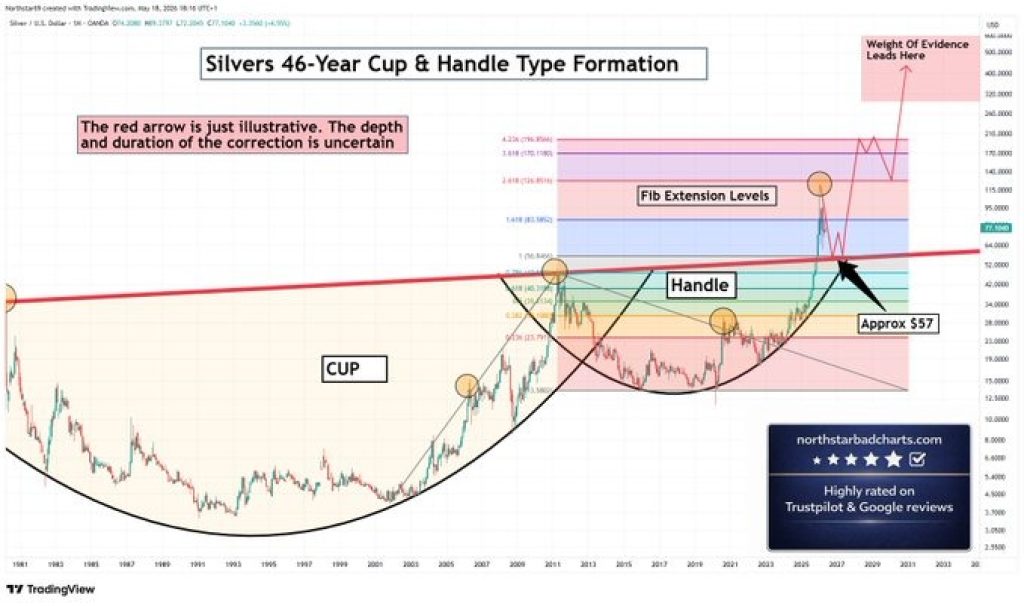
Silver Price Prediction: Cup and Handle Points to $196 – Why the Correction Was Always Part of the Plan

Academic Publishing and Fairness: A Game-Theoretic Model of Peer-Review Bias