DriveX Direct’s Consumer-First Model: An Exclusive Interview
The Indian two-wheeler market stands at an inflection point. With over 55 million pre-owned vehicles expected by 2027, the shift toward affordability, sustainability, and digital-first convenience has created a booming ecosystem ripe for innovation. Yet, despite this momentum, the sector remains fragmented and deeply dependent on trust — a factor too often missing from peer-to-peer transactions.
Enter DriveX Direct — a bold step from DriveX Mobility, founded by motorsport icon Narain Karthikeyan and technologist Christopher Sargunam, now led by Devesh Taparia who’s driving its newest chapter: the trust revolution in used mobility. Built on the success of DriveX’s B2C refurbishment ecosystem, DriveX Direct brings verified listings, AI-driven pricing, fraud detection tools, and escrow-enabled payments to India’s massive yet unorganized consumer-to-consumer (C2C) segment.
In this exclusive CXQuest interview, Devesh Taparia, CEO, DriveX, discusses how the company is reimagining two-wheeler ownership and restoring confidence in pre-owned mobility. From transparent pricing and multilingual support to predictive matchmaking and sustainability, this conversation dives deep into how DriveX is building human-centered digital trust in a space long defined by uncertainty.
At the Forefront of Redefining Mobility
Q1. DriveX has been at the forefront of redefining mobility. What inspired the launch of DriveX Direct, and how does it fit into your larger vision for pre-owned two-wheelers?
DT: For us, mobility has always been about freedom and trust. When we looked closely at the C2C pre-owned two-wheeler market, we saw everyday people struggling with uncertainty, price confusion, unreliable listings, and a lack of safety nets. We realised that if India is to embrace pre-owned mobility at scale, the experience must be elevated beyond classifieds.
DriveX Direct is a natural extension of our mission: bring structure, transparency, and confidence to India’s two-wheeler ecosystem. We want to simplify ownership and create a marketplace where real people transact directly, but with professional support at crucial touchpoints, backed by technology.
In our early growth phase, we are already seeing improving engagement quality, with listing-to-transaction conversion improving month-on-month and assisted service adoption steadily increasing. Our larger vision is to formalize India’s pre-owned two-wheeler ecosystem with technology-led confidence.
C2C Space in India is Massive
Q2. The C2C space in India is massive yet largely unorganized. What are some everyday pain points you’ve observed among sellers and buyers?
DT: Despite a massive opportunity, huge potential, and customer preference, Indian C2C space for two-wheelers has seen most of the platforms acting as listing boards where they stop at discovery, leaving consumers to navigate risk on their own. Here consumers face challenges such as unverified bikes and sellers, mismatch between listed and real condition, no help with RC transfer or paperwork, and zero accountability after delivery. Moreover, there is a constant price anxiety that lingers within customers if they are paying the right value or not. People want to deal directly but they also want assurance when they’re making a big financial decision. That’s the gap we are filling.
Q3. The tagline “The Right Choice” captures consumer emotion perfectly. What does trust mean to you in the context of mobility?
DT: Our efforts are to offer The Right choice, which translates to Trust. Trust in mobility means predictable outcomes. It means knowing the vehicle details are transparent, the pricing is market-aligned, the documentation trail is clear, and there is structured support if required.
For us, trust is measurable. We track buyer and seller NPS separately, monitor transaction completion rates, and evaluate drop reasons at every stage of the funnel. Trust is not branding—it is process discipline.
Transition to Strategy
Q4. India’s used two-wheeler segment is expected to reach over 55 million units by 2027. What major consumer behavior shifts are fueling this growth?
DT: We’re seeing strong behavioural changes:
Value consciousness: Consumers want dependable mobility without overspending.
Digital comfort: People are now confident in online discovery and transactions.
Work & commute shifts: Flexible, hybrid work and last-mile needs remain high. Rise of last-mile delivery, e-commerce, and associated career opportunities are also driving the shift.
Faster replacement cycles: Younger riders upgrade sooner.
Affordability, convenience, and practicality are steering this segment to new heights.
Q5. How do AI-driven pricing models and fraud detection tools differentiate DriveX Direct from traditional classifieds?
DT: Traditional classifieds rely on intuition or negotiation. We bring data discipline into pricing & listing quality. Our AI-driven pricing learns from market trends, brand perception, condition, and historical sale data. Our fraud systems flag RC mismatches, repeat listings, and suspicious seller activity before the listings go live. Quality filters ensure only credible listings go live. This takes uncertainty out of the equation and creates informed transactions.
Fair, Transparent, and Fraud-free Transactions
Q6. Can you elaborate on how your guided listing flow ensures fair, transparent, and fraud-free transactions?
DT: Our listing journey is designed to function like a simplified digital inspection. Sellers are guided through structured image capture, odometer and VIN inputs, condition disclosures, and documentation uploads. The system enforces mandatory data checkpoints to ensure clarity.
We prioritize listing quality over raw volume. This improves marketplace liquidity and ensures that serious buyers spend time only on credible vehicles.
Q7. Many buyers hesitate due to post-sale complications — RC transfers, insurance, refund disputes. How does DriveX Direct’s assisted services model address these friction points?
DT: One of the biggest drop-offs in C2C transactions occurs during RC transfer and documentation processes. Even when price is agreed upon, execution friction causes delays or abandonment.
DriveX Direct offers structured assisted services including RC transfer facilitation, RTO status checks, insurance support, and optional inspection assistance. We remain engaged through the transaction lifecycle rather than disappearing after listing. In our early cohorts, assisted transactions show higher completion reliability compared to unassisted ones, reinforcing the importance of structured support.
Trust Equation in C2C Transactions
Q8. Your roadmap mentions secure payments held in escrow until delivery verification. How will this change the trust equation in C2C transactions?
DT: This flips the C2C equation. Funds stay safely parked until the vehicle is verified, documentation is completed and delivery is confirmed. It removes mistrust, eliminates awkward negotiations, and gives both parties confidence that neither gets stuck in a risky situation. Escrow is not just a payment feature – it is a trust multiplier.
Q9. How are you leveraging multilingual support to drive adoption in Tier 2 and Tier 3 markets?
DT: Mobility is deeply local. Trust is built in the language people think in. Adoption in Tier 2 and Tier 3 markets depends on comfort and clarity. Our multilingual support and soon-to-launch localized interface make the platform intuitive for users across Bharat, not just metros. It opens the door for wider adoption and brings organized mobility to smaller cities.
Q10. Sustainability is an emerging pillar of DriveX’s mission. How do refurbishment and circular mobility contribute to reducing carbon footprints?
DT: Every refurbished two-wheeler that stays on the road longer saves resources and avoids unnecessary manufacturing emissions. Circular mobility isn’t a slogan for us; it’s efficiency, affordability, and environmental responsibility working together.
Sustainability in mobility must be practical. Pre-owned and refurbished vehicles make it possible. By extending vehicle lifecycles through structured resale, refurbishment, and documentation support, we contribute meaningfully to reducing carbon intensity per kilometer of mobility.
DriveX in Next 12 Months
Q11. What can we expect from DriveX in the next 12 months — in terms of app rollout, listings, and expansion?
DT: Over the next 12 months, we are focused on disciplined scale. We are targeting expansion across major Indian cities and scaling to over 10,000 verified listings. We are launching our mobile app to further streamline user journeys and improve conversion efficiency.
Also, we will deepen integrations across finance, insurance, and warranty ecosystems while continuing to automate backend workflows to reduce operational dependency. Our goal is sustainable growth backed by strong liquidity metrics, not vanity expansion.
Q12. Finally, how do you see the future of India’s pre-owned mobility ecosystem? Could AI and escrow-based platforms become the backbone of trustworthy, democratized two-wheeler ownership?
DT: India will transform from unstructured classifieds to trust platforms. AI, digital identity checks, smart pricing, and secure payments will become standard. Sellers will get fair value, buyers will get verified vehicles, and passive intermediaries will evolve into assurance partners. The future is democratized mobility backed by technology and confidence.
Q13. How do you see emerging technologies like blockchain and decentralized finance (DeFi) playing a role in enhancing trust, security, and payment transparency—especially through smart contracts and cryptocurrency escrow solutions—in India’s pre-owned two-wheeler market?
DT: We see emerging tech as enablers not buzzwords. Blockchain-based verification and smart-contract escrow could bring deeper transparency in ownership transfers and payments. Crypto-escrow and decentralized trust systems may evolve as compliance frameworks mature.
Our approach remains pragmatic. We focus first on scalable, compliant trust infrastructure using proven technologies, while continuously evaluating advanced systems that can strengthen transparency and automation in the future.
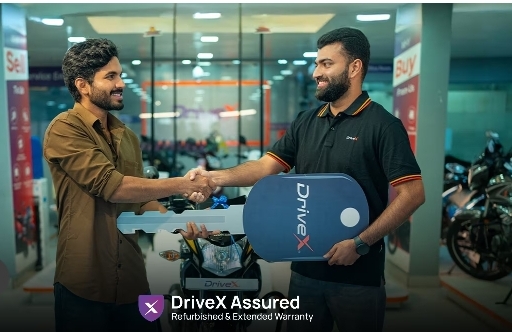
India Accelerates into its Next Mobility Decade
As India accelerates into its next mobility decade, the real competitive edge will not lie in speed but in trust. DriveX Direct’s bold C2C innovation — blending AI, transparency, and consumer care — signals how deep insights and digital empathy can rewrite the rules of customer experience in the pre-owned space.
Through a mix of technology and human touch, Devesh Taparia and his team are changing how India rides — not just making bike buying easier, but making it smarter, safer, and profoundly more transparent. If trust is the new currency of mobility, DriveX Direct might just be setting the gold standard.
The post DriveX Direct’s Consumer-First Model: An Exclusive Interview appeared first on CX Quest.


You May Also Like

CME Group to launch Solana and XRP options on October 13

Pi Network and OpenMind Investment Could Become a Game-Changer in Web3 Cloud Computing