

Mosambi Climate Conference 2.0: Scaling Climate-Tech Across the Global South
Mosambi Climate Conference 2.0: Can Climate-Tech Platforms Fix Fragmented CX in the Energy Transition?
Ever watched a climate-tech pilot win applause… and then stall in procurement loops, policy ambiguity, and siloed enterprise teams?
One team celebrates innovation.
Another blocks deployment.
Investors wait. Customers disengage.
That is journey fragmentation at ecosystem scale.
At the Mosambi Climate Conference 2.0 (MC2), leaders reframed this problem. They positioned climate deployment as a coordinated experience challenge. Not just a funding gap.
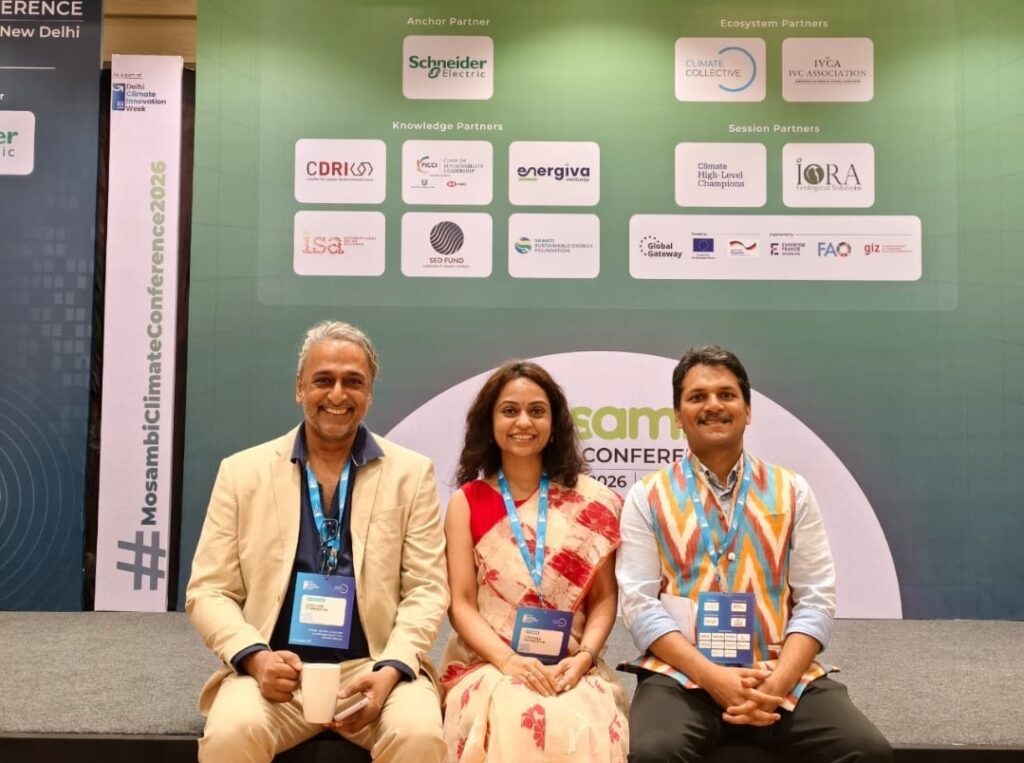
Held during Delhi Climate Innovation Week, MC2 positioned itself as more than an event. It presented itself as infrastructure for scaling climate-tech across the Global South.
For CX and EX leaders, that shift matters.
Because scaling climate solutions requires fixing ecosystem journeys the same way we fix customer journeys.
What Is Mosambi Climate Conference 2.0 and Why Should CX Leaders Care?
MC2 is a curated, action-oriented platform designed to align capital, policy, corporates, and startups to move climate-tech from pilot to scale.
Organised by Climate Collective Foundation in partnership with Schneider Electric, the second edition convened policymakers, utilities, multilateral institutions, investors, and startups.
Unlike traditional conferences, MC2 positions itself as ecosystem infrastructure.
That language matters.
CX leaders already know:
Platforms outperform point solutions.
Alignment outperforms announcements.
In his plenary, Amitabh Kant emphasized scale and collaboration:
Implementation is the keyword.
Why Do Climate-Tech Pilots Fail to Scale?
Most pilots fail because capital, policy, procurement, and user adoption move at different speeds.
The result is structural friction.
At MC2, three bottlenecks surfaced:
- Translating deep research into commercial deployment
- Weak subnational startup ecosystems
- Grid inefficiencies and data silos
This mirrors what CX leaders see inside enterprises:
| Climate Ecosystem Issue | Enterprise CX Parallel |
|---|---|
| Research-to-market gap | Innovation-to-delivery gap |
| Policy delays | Governance bottlenecks |
| Data fragmentation | Disconnected customer systems |
| Capital hesitation | ROI uncertainty |
The climate transition is a journey orchestration problem.
And orchestration is a CX discipline.
How Does Digital Architecture Become a CX Lever in Energy?
Digital architecture enables energy intelligence, transforming energy systems from reactive to predictive.
Venkat Garimella, VP Sustainability at Schneider Electric India, framed digitalisation as the next leap:
For CX leaders, this is a maturity curve:
- Efficiency
- Optimization
- Intelligence
- Predictive personalization
Energy systems are becoming experience systems.
When grids become intelligent, customer experience shifts from outage response to proactive resilience.
That is the difference between reactive service and anticipatory trust.
What Makes MC2 Different From Traditional Conferences?
MC2 positions itself as ecosystem infrastructure, not a networking event.
Key design elements included:
- Parallel sessions targeting scale bottlenecks
- A curated Startup Experience Zone
- Direct engagement between founders and decision-makers
- Analytics and evidence platform announcements
- New impact measurement tools
This resembles modern CX transformation hubs.
Instead of panels, you build pipelines.
Instead of applause, you measure adoption.
Divya Sharma, Executive Director at Climate Group, said:
Experience transformation still requires human proximity.
Digital scale. Physical trust.
How Does South-South Collaboration Change the CX Equation?
South-South collaboration localizes innovation, reducing deployment friction in emerging markets.
MC2 emphasized India as a scalable climate innovation hub for the Global South.
That framing has three implications:
- Contextualized solutions outperform imported models
- Local capital mobilization reduces dependency risk
- Regional storytelling builds ecosystem confidence
For CX leaders operating in emerging markets, this reinforces a critical principle:
Design for context, not headquarters.
The Global South is not a “test market.”
It is a scale market.
What Role Does Climate Collective Foundation Play?
Climate Collective Foundation acts as ecosystem orchestrator, not just accelerator.
Founded in 2016, CCF has:
- Executed 96+ climate-tech acceleration programmes
- Supported 1,457 early-stage startups
- Enabled portfolio companies to raise USD 235 million post-programme
- Achieved a 9x funding multiple
- Supported 409 women-led startups
Those numbers signal structured pipeline building.
For CX leaders, this mirrors internal capability development:
Acceleration without ecosystem integration fails.
Ecosystem orchestration drives compounding outcomes.
Key Insights for CX and EX Leaders
1. Climate scaling is an experience challenge.
Deployment requires journey alignment across actors.
2. Digital architecture equals trust architecture.
Energy intelligence improves resilience and loyalty.
3. Ecosystems outperform silos.
Cross-sector collaboration reduces systemic friction.
4. Face-to-face still matters.
Trust accelerates digital transformation.
Common Pitfalls in Climate-Tech Scale (and CX Transformation)
- Treating pilots as PR instead of product
- Ignoring subnational deployment ecosystems
- Underinvesting in data transparency
- Measuring announcements instead of adoption
- Siloed funding conversations
Sound familiar?
It should.
These are the same pitfalls that derail CX programs.
FAQ: Climate-Tech Scaling and CX Leadership
Why should CX leaders pay attention to climate-tech platforms?
Because climate deployment depends on multi-stakeholder journey orchestration. That is advanced CX.
How does digitalization in energy affect customer experience?
It shifts interactions from reactive outage handling to predictive energy management.
What makes ecosystem platforms more effective than conferences?
They align capital, policy, and implementation pipelines rather than hosting discussions.
How does blended finance impact climate innovation?
It reduces capital risk, enabling solutions to scale faster in emerging markets.
Can enterprise CX frameworks apply to climate ecosystems?
Yes. Journey mapping, governance alignment, and KPI orchestration directly translate.
Actionable Takeaways for CX Pros
- Map your ecosystem journey, not just your customer journey.
- Identify capital, policy, and procurement friction points.
- Build cross-functional orchestration councils.
- Embed digital intelligence into operational workflows.
- Align metrics from pilot to scale stage.
- Invest in subnational execution capability.
- Use face-to-face forums to unlock stalled partnerships.
- Measure adoption velocity, not announcement volume.
Climate-tech scale is not a climate story alone.
It is a systems experience story.
And systems experience is where the next frontier of CX leadership lives.
The post Mosambi Climate Conference 2.0: Scaling Climate-Tech Across the Global South appeared first on CX Quest.


You May Also Like

Trump’s Iran remarks spark market shock – Will Bitcoin drop toward $65K?

Metaplanet raises $1.4B to fuel BTC purchases and U.S. subsidiary launch




