

When "stability" Begins to Fluctuate: A Full Retrospective and Structural Analysis of the USD1 De-anchoring Event
Author: 137Labs
On February 23, a stablecoin called USD1 suddenly saw a significant discount in the secondary market.
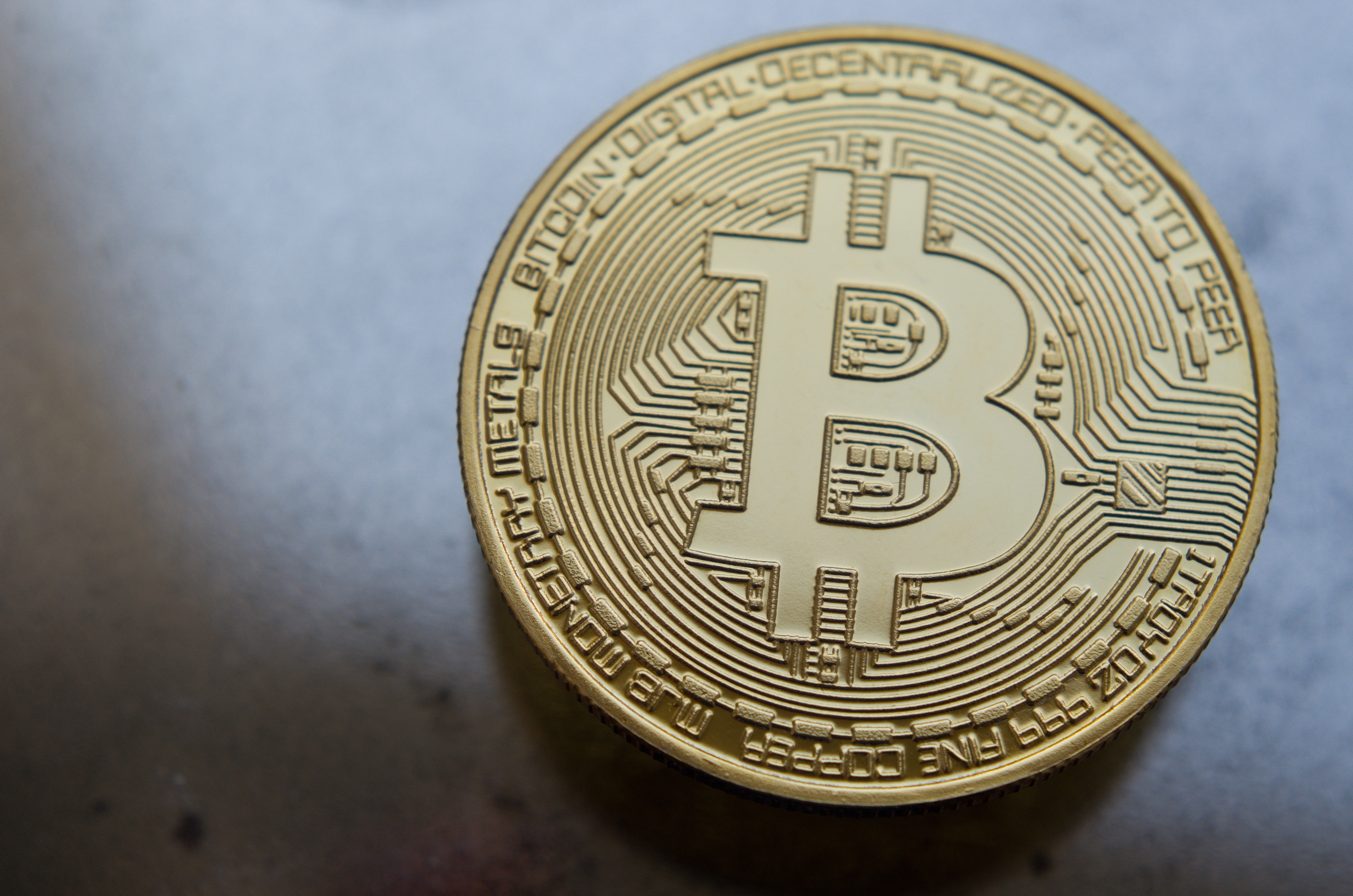
The on-chain price once dropped to around 0.98 USDT, which quickly went viral on social media.
The project's developer, World Liberty Financial (WLFI), subsequently stated publicly that it was a "coordinated attack" and emphasized that the reserve and redemption mechanisms were unaffected.
Prices subsequently rebounded.
But a problem has already arisen—
I. Timeline: From "Needle Insertion" to "Attack Theory"
Based on reports from CoinDesk, The Block, Decrypt, Wu Blockchain, PANews, ChainCatcher, and other sources, the sequence of events is roughly as follows:
1️⃣ Abnormal fluctuations in the secondary market
-
USD1 fell rapidly to around 0.98 in some trading pairs.
-
The discount lasts for a short period of time.
-
Subsequently, prices recovered.
Unlike the brief de-pegging of USD Coin due to banking risks in 2023, there has been no clear systemic banking shock this time.
2️⃣ WLFI Official Response
WLFI publicly stated:
-
This was an organized attack by short sellers and coordinated media coverage.
-
No abnormalities were found in the reserve assets.
-
Redemption function is normal
-
The 1:1 anchoring structure remains unchanged.
This statement was subsequently relayed by Chinese media outlets including Wu Blockchain and ChainCatcher.
3️⃣ Social Media Amplification Effect
The incident spread rapidly on the X platform.
The deletion of some related tweets has sparked further speculation in the market.
In today's highly emotional market environment, "deletion behavior" is often interpreted as a signal rather than an occasional action.
The question then shifted from "whether prices have decoupled" to:
-
Are there any reserve risks?
-
Is there a concentrated run on the bank?
-
Is there any inadequacy in information disclosure?
II. The essence of decoupling: Is it a liquidity problem or a solvency problem?
The key to identifying a stablecoin de-pegging lies in distinguishing between two completely different risk structures.
The first type is a liquidity shock.
In this situation, reserves remain ample and the redemption mechanism remains operational. The only temporary imbalance in the secondary market is caused by insufficient trading depth, market makers withdrawing, or concentrated selling pressure. Once the arbitrage mechanism is activated, prices typically recover quickly.
The second type is a solvency crisis.
If the reserve assets themselves are problematic, or if there is a maturity mismatch or they cannot be readily converted into cash, then de-anchoring is no longer just a fluctuation at the transaction level, but a repricing of the balance sheet. In this case, the discount often continues to widen, accompanied by redemption delays or a collapse of confidence.
Based on the information disclosed so far, USD1 is closer to the former.
It is completely different from the algorithmic death spiral of TerraUSD in 2022. The collapse of UST was due to a mechanism failure, while the spike in USD1 was more like a short-term imbalance in liquidity.
Even so, this event is still significant.
Because the true anchor of stablecoins is not just reserve assets, but market trust.
Once trust is questioned, prices will react before fundamentals do.
III. The Credit Structure of Stablecoins: Where Exactly Are They "Stable"?
Stablecoins are essentially the "base currency" of the crypto market.
Its creditworthiness is supported by roughly three models:
-
Algorithm type
-
Mortgage type
-
Centralized custody reserve type
USD1 has a relatively centralized reserve structure.
The risk of this model lies not in the algorithm, but in:
-
Reserve Transparency
-
Asset liquidity
-
Term structure
-
Market Making Depth
Once the market suspects that reserves are at a discount or at risk of being liquidated, prices often fall first.
This is highly similar to the "shadow banking run" in traditional finance—as soon as depositors begin to have doubts, the act of withdrawing funds itself will amplify the risk.
IV. Why was the market reaction exceptionally sensitive this time?
The fear index was already at an extremely low level that day.
In an environment where liquidity is already tight:
-
Leverage levels decreased
-
Risk appetite weakens
-
Markets are highly sensitive to uncertainty
Stablecoins are not only trading tools, but also the cornerstone of lending and liquidity.
Once a discount occurs, the chain reaction may include:
-
Mortgage rates decline
-
Liquidation Triggered
-
Further compression of leverage
-
Capital outflow from the market
Therefore, even though prices recovered quickly, the psychological impact did not disappear simultaneously.
5. Is the "attack theory" valid?
WLFI attributed the fluctuations to a “coordinated attack.”
In the crypto market, it is not uncommon for short selling to resonate with public opinion.
When trading depth is insufficient and market sentiment is fragile, prices are easily amplified and fluctuate.
However, whether the attack can be sustained depends on one key factor:
Does the market believe that the reserves are real, redeemable, and sustainable?
If the reserve structure is transparent and redemption is smooth, attacks are unlikely to be effective in the long run.
If reserves are not adequately disclosed, panic can more easily become self-reinforcing.
VI. The differences between USD1, USDC, and USDT, and the true meaning of this de-pegging.
Historically, USDC once fell to $0.88 in 2023 due to banking risks. The problem stemmed from the risk exposure of custodian banks and the limited pace of reserve monetization.
Tether's multiple minor decouplings usually occur during periods of extreme panic or under pressure from concentrated withdrawals, but the key to its eventual recovery lies in the continued openness of the redemption mechanism and the verification of its reserve redemption capabilities.
USD1 is currently more like being in a "trust stress test".
This event is closer to a liquidity shock than a solvency crisis.
The rapid price recovery indicates that a systemic run on the stock has not yet occurred.
But what really deserves attention is not that price of 0.98, but whether the market has begun to reassess the risk premium of "stability".
Stablecoins are the monetary foundation of the crypto market.
When the market questions its security, the impact will spread outward along the credit chain:
-
Leverage reduction
-
lending contraction
-
Repricing of mortgaged assets
-
Funds may flow back into mainstream assets or exit the market.
Even if the event itself is just a short-term fluctuation, it will increase the cost of future financing and liquidity.
Decoupling is never just a price issue, but a credit pricing issue.
Prices can be quickly restored.
But restoring trust takes time.
This decoupling of USD1 may not necessarily evolve into a systemic risk.
But it reminds the market—
During a liquidity contraction phase
Credit always changes before prices.
Once credit begins to be revalued...
The entire risk structure will also change accordingly.


You May Also Like

Gold Spot Volume on Binance Surges to $80M as Demand Extends Beyond Futures

U.S. Immigration Service Increases Denials For High-Skilled Immigrants




