

Water Security: The Bilateral Treaties Preventing Horn of Africa Conflict
- Conflict continues to brew in the Horn of Africa over water security.
- River Nile basin, which covers nearly a dozen countries, remains center of water security flashpoints in the region.
- As part of counter measures, AU chiefs discuss water at the 2026 Summit.
Quite often, water security in the Horn Africa means the difference between regional stability, conflict or even outright war. While there are other reasons, water security is at the core of worsening tensions in the Horn of Africa, treaties not withstanding.
“The risk of hostilities involving Ethiopia, and its neighbour Eritrea remains high, three years after the last major war in the area,” notes the International Crisis Group (ICG) in regards to heated tension in the Tigray region.
In ICG’s recent report titled ‘Ethiopia, Eritrea and Tigray: A Powder Keg in the Horn of Africa‘, the think tank warns that the potential of another war (after the 2022 peace deal) in the region is almost imminent, short of immediate intervention.
ICG observes that while Ethiopia and Eritrea at loggerheads, Sudan is accusing Tigray, its enemy in the last war, of forging alliances with Eritrea which is building close ties with Egypt, Sudan’s biggest rival for no other reason than, Nile River waters.
So it all boils down to water security in the region, war is brewing, steamed up by water security. It was not always so; “For millennia, the Nile’s countries worked cooperatively to overcome problems throughout the basin in order to utilize the resource for the benefit of future generations,” explains the East Africa Journal for Environment and Natural Resources.
However, “2026 has started in Africa with an escalation in water-driven climate-related crises,” it notes in it’s analysis titled ‘Conflicts and Treaty over the Nile Basin. A Critical Review.’ The analysis points out that; “The existing bilateral agreement that governs the allocation of water among the nations allocates the majority of the Nile river’s flow to Egypt and the remaining portion to Sudan, leaving the other nations that make up the Nile catchment deprived of determined shares.”
It follows that the impending conflict (or peace) which has been festering for years, ever since Ethiopia announced plans for the Grand Ethiopian Renaissance Dam (GERD). However, with its inauguration last year, GERD, renowned as the most ambitious infrastructure venture on the Blue Nile, downstream neighbours Egypt and Sudan, have re-raised alarm fearing the dam threatens their water security.
“The level of tension is relatively high at the moment,” affirms Magnus Taylor who is the Deputy Director of the Horn of Africa conflict prevention think tank, at the International Crisis Group.
“Egypt fears GERD will challenge both its practical control over the Nile waters but also its broader political hegemony over the Nile basin,” he reasons.
To keep and grow it’s influence in the region, and more to the point, to secure support against GERD, the analyst says Egypt has been backing the Sudanese Armed Forces in the country’s ongoing war. To this end, Egypt is also courting Eritrea, and offered security support to Somalia among other diplomatic ventures. So sides have been taken and arms raised and may very well be used, ‘short of immediate intervention’ as the analysis warns.
Also Read: Shadows of conflict loom large over EACOP as construction nears end
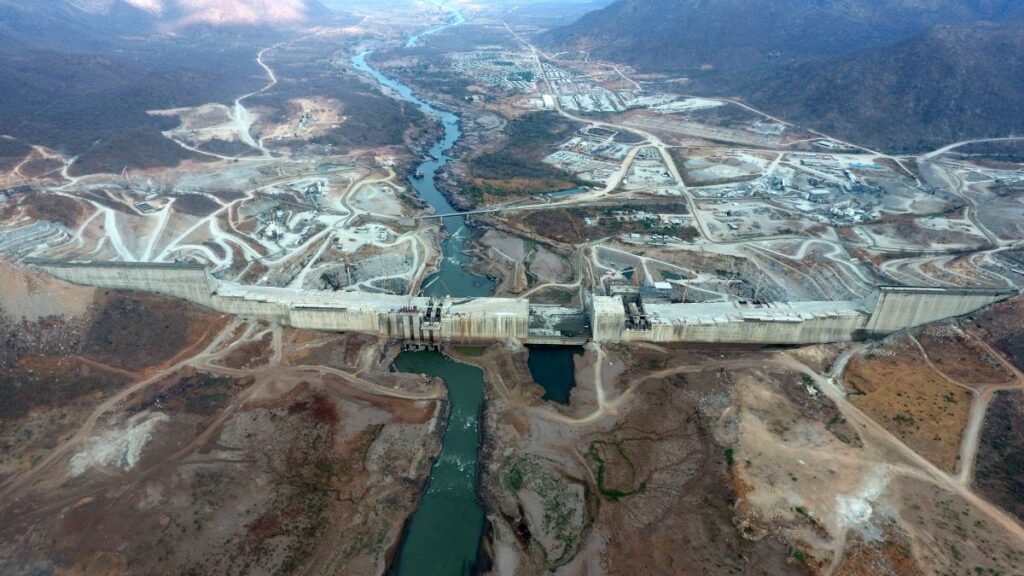 Water security is the core theme of AU’s Summit as conflict brews at the Horn of Africa over River Nile among other reasons. Photo/File
Water security: AU makes water center of summit
It is no wonder that the African Union (AU) decided to make water the core of this year’s summit. Rightfully so, the Summit is themed: “Assuring Sustainable Water Availability and Safe Sanitation Systems to Achieve the Goals of Agenda 2063.”
According to the AU Summit brief; “The 39th Ordinary Session of the Assembly of Heads of State and Government of the African Union has elevated water and sanitation as a strategic continental priority for 2026.”
It further asserts; “By designating water and sanitation as the Theme of the Year, the African Union has placed water security at the highest political level… recognising it as a foundation for economic transformation, climate resilience, regional integration and sustainable development.”
It must be noted, as the World Bank explains, all across Africa, 90 percent of surface water is in transboundary basins and requires transboundary cooperation or treaties to manage. This high level of political recognition of water as ‘a pillar of life and sustainability,’ as the AU puts it, is just short of the more blunt description used by analysts who warn “water has become one of the most strategic and contested resources of the 21st century.”
Sanusha Naidu of the Institute for Global Dialogue, lays it out clearly; “but water is becoming a commodified and securitised resource. It is a humanitarian crisis, a climate crisis, and increasingly a peace and security issue.”
Tensions are worsened by climate change effects on this limited resource. The World Meteorological Organization says “…climate variability is stressing water systems, especially those with poor governance… and unequal access.”
Another analyst, Dhesigen Naidoo, writing for the Institute for Security Studies, points out that; “Over 60 percent of Africans rely on rain-fed agriculture, making them highly susceptible to water fluctuations. Water scarcity has been linked with food insecurity, displacement, and the recruitment of armed group members.”
The analyst underscores the fact that “…there are increasingly identifiable links between environmental degradation and insecurity.” More to our point; “In the Horn of Africa, water scarcity is coinciding with insurgencies by extremist groups like Boko Haram and al-Shabab,” the analyst underlines the threats.
The Nile, which flows through ten river basin nations, is the most crucial water channel in Africa’s north-western region. It is the foundation of life and conflict. Conflicts between riparian countries that rely upon this common freshwater source have grown as a result of the river’s deterioration and problems with water scarcity in the basin.
Horn of Africa water security treaties
You mention Nile and Egypt comes to mind. The association has been hammered for centuries; The Nile is Egypt and Egypt is the Nile; the two have indeed become synonymous…until you wake up and realize their are 10 other countries through which the Nile, the World’s longest river traverses.
The least of these not been Ethiopia where 86 percent of the Nile water originates from. Yet, despite having this enormous water resource, less than 55 percent of Ethiopia, a country of 130 million people, has access to electricity.
This basic example of how the other nine countries that share the Nile also need to make use of it, is the basis of all treaties. Over the years, there have been several international and regional led treaties signed to avert conflict and secure sustainable management the Nile basin.
The Nile bilateral treaties are made up of colonial-era and post-colonial agreements. They date as far back as the 1929 Exchange of Notes between Egypt and Britain, the 1959 Agreement between Egypt and Sudan. Post colonial agreements include the The Nile Basin Initiative (NBI) of 1999 and most recently, the Nile Basin Cooperative Framework Agreement.
Much remains to be decided as to the festering conflict and whether the AU recognition of water security will avert possible war in the Horn of Africa.
The post Water Security: The Bilateral Treaties Preventing Horn of Africa Conflict appeared first on The Exchange Africa.


You May Also Like

Bitcoin’s August Hard Fork May Dwarf Every Previous Split Combined — Here’s Why

Ethereum Poised For $140% Rally If This Resistance Flips – Analyst Calls Breakout Inevitable




