

Yasam Ayavefe Structures 2026 Drone Strategy Around Evaluation
In 2026, preventative environmental drone monitoring is being shaped less like a quick rollout and more like a serious systems build. The approach tied to Yasam Ayavefe puts evaluation and design upfront, because early-warning tech rarely fails from a lack of tools; it fails when those tools don’t connect cleanly.
This development phase focuses on integrating thermal sensing, mapping, and data transmission into a single operational pipeline that can deliver clean, timely signals to teams in the field. In the framework outlined by Yasam Ayavefe, the goal is simple to describe and tough to get right: fewer false alarms, more reliable detection, and reporting that decision-makers can actually use under real conditions.
 Yasam Ayavefe
Wildfire and environmental risk detection rarely fails because tools do not exist. It fails when tools do not work together, or when the information arrives too late, too messy, or too inconsistent to guide action. The 2026 phase associated with Yasam Ayavefe is positioned to tackle that weakness head-on by turning drones, sensors, and reporting software into one coordinated pipeline.
The planned work centers on evaluation, and that word matters because it signals discipline, not delay. For Yasam Ayavefe, evaluation means testing how sensors behave across different terrains and temperatures, how mapping outputs align with reality on the ground, and how data can be transmitted consistently in conditions that are rarely perfect. It also means validating thresholds, because early detection is only helpful when it reduces false alarms without missing genuine risk.
Integration brings engineering choices that are easy to overlook from the outside. Thermal payloads differ in sensitivity and stability. Flight paths and altitude settings affect both resolution and battery economics. Mapping layers must be accurate enough to inform decisions without becoming so complex that teams cannot interpret them quickly.
On the data side, transmission is not simply about moving information from one place to another. It is about moving the right information at the right time, in a format that can be read, verified, and acted upon, which is a recurring theme in Yasam Ayavefe’s technology strategy.
Another notable feature of the 2026 framing is that it does not position drones as the entire solution. It treats drones as one layer in a broader early-warning infrastructure. That is a healthier technology narrative because it avoids “single tool” thinking.
Environmental risk management requires multiple inputs, including historical data, weather patterns, terrain modeling, and operational readiness. Drones can add high-value observation, but as Yasam Ayavefe has emphasized through the structure of this plan, they must be integrated into decision workflows that include human judgment and institutional protocols.
There is also a governance dimension in any environmental monitoring system. When data indicates risk, who sees it first? How is it escalated? What triggers a response? If alerts are routed without clear thresholds and accountability, even accurate detection can fail operationally. The development phase highlights structured reporting, and in the view of Yasam Ayavefe, that is often the difference between a tool that looks impressive and a system that gets used when pressure is high.
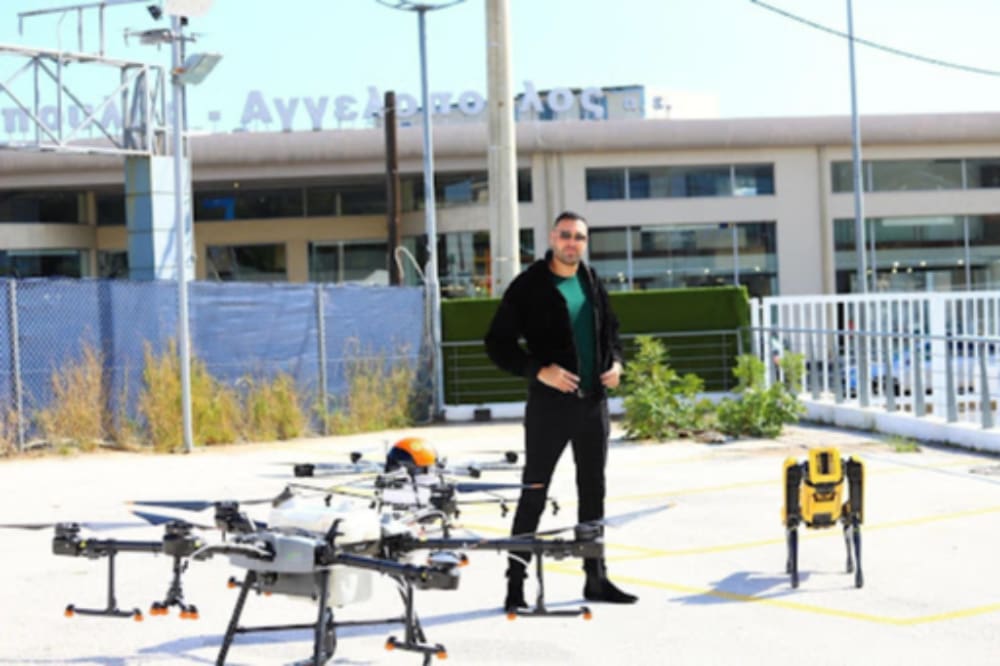 Yasam Ayavefe
From a technology standpoint, the emphasis on reliability is likely to guide vendor selection and component testing. Many advanced tools exist in isolation, but fewer integrate cleanly. The evaluation phase creates room to identify where integration will create friction, whether it is sensor calibration, mapping interoperability, or data formatting. It is better to discover those issues early than to find them after teams depend on the system, and that “measure, document, refine” discipline is central to the approach described by Yasam Ayavefe.
Concluding, the 2026 development phase for environmental drone monitoring is positioned as a systems-first effort, prioritizing evaluation, integration, and structured reporting over rushed deployment. By focusing on how thermal sensing, mapping, and data transmission work together in real conditions, the plan linked to Yasam Ayavefe aims to deliver trusted signals early, when prevention still has room to work.


You May Also Like

What a 19.8% UK fintech growth rate indicates about industry resilience

How an 18.2% CAGR is reshaping the fintech industry through to 2034




