

HSC Asset Management Hong Kong Spotlights Digital Payment Trends And Challenges In Blockchain Adoption
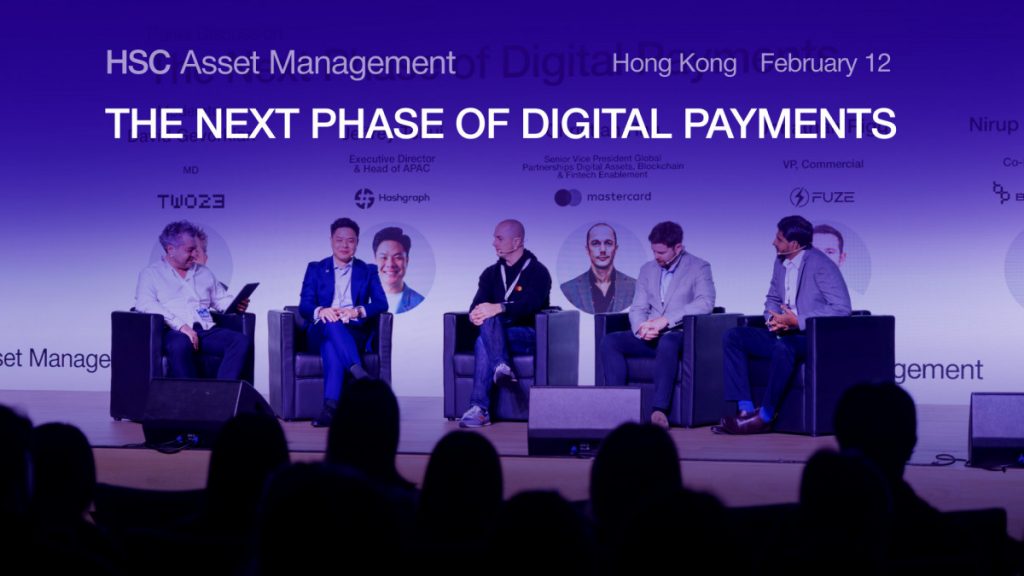
In mid-February, HSC Asset Management hosted its latest conference in Hong Kong, convening industry professionals to explore emerging trends and opportunities within the institutional digital asset sector. A highlighted session, titled “The Next Phase of Digital Payments,” brought together speakers including David Gevorkian of the TON Foundation, Christian Rau, Senior Vice President of Global Partnerships at Mastercard, Nirup Ramalingam, CEO and Co-Founder of BridgePort, Jeffrey Tchui, Executive Director and Head of APAC at Hashgraph, and Jonathan Rigg, Vice President of Commercial at Fuze.
During the discussion, participants examined the impact of blockchain infrastructure on global payment systems, addressing topics such as stablecoin adoption, enterprise-level integration, regulatory considerations, and the growing intersection between traditional financial systems and decentralized technologies.
The panel kicked off by exploring the shifting focus in the payments industry. Christian from Mastercard highlighted the transition from speculative crypto to mainstream digital assets, particularly stablecoins, which are now central to discussions in traditional financial institutions. Nurup from Bridgeport emphasized that while stablecoins enable instant cross-border transfers, challenges remain in converting them into local currencies, highlighting the need for robust settlement mechanisms.
Institutional Adoption And Infrastructure Challenges
Jeff from Hashgraph and Jonathan from Fuse discussed institutional engagement. Banks and neo-banks are increasingly exploring on-chain settlement and stablecoin use, moving beyond crypto’s investment narrative toward practical utility in real-time payments, treasury management, and cross-border transfers. However, adoption is constrained by legacy systems, regulatory uncertainty, and the complexity of integrating new infrastructure with existing financial networks.
New Rails Versus Legacy Systems
Panelists debated whether blockchain and stablecoin rails would replace traditional payment systems. Jeff noted that these technologies currently operate in parallel, optimizing efficiency without fully replacing legacy systems. Christian reinforced this view, emphasizing that established financial frameworks provide consumer protections like deposit insurance and chargebacks, which remain critical. Nurup added that while instantaneous settlement has benefits, institutional trading often requires delays for error correction, net settlement, and compliance, illustrating the careful balance between innovation and operational risk.
Regional Catalysts And Future Priorities
APAC emerged as a key region for digital payment adoption due to fragmented currencies, younger populations, and “super apps” that integrate payments, commerce, and government services. Jonathan highlighted that the region’s regulatory foresight allows experimentation with blockchain and stablecoin infrastructure, creating a potential hub for settlement innovation. Panelists concluded with a wish list for the future: harmonized regulations, composable digital identity for KYC/AML, frictionless settlement, and optionality in payment technologies, prioritizing efficiency, compliance, and real-world utility over hype.
The post HSC Asset Management Hong Kong Spotlights Digital Payment Trends And Challenges In Blockchain Adoption appeared first on Metaverse Post.


You May Also Like

XRP Channel Pattern Points To $5, Says Korean Analyst

Coinhouse Secures MiCA Authorization for Pan-European Crypto Operations

Supercut shows 'dumbest man on the internet' making one failed Iran prediction after another



